Hey everybody, you've probably heard the term 'inflammation' thrown around a lot these days, often with a sense of dread. It's become a catch-all for everything from joint pain to brain fog, leading many to believe it's always the enemy, a purely destructive force to be suppressed at all costs. But that idea – that inflammation is just 'bad' – is a gross oversimplification.
The truth is far more nuanced, and understanding this distinction is crucial to finding sustained relief, not just temporary fixes.
Myth #1: Inflammation is a purely Western concept; TCM simply doesn't have an equivalent.
The language of 'cytokines' and 'NF-κB pathways' sounds entirely modern, born from labs, not ancient texts. It’s common to assume that if Traditional Chinese Medicine (TCM) doesn't use these exact terms, it simply doesn't grasp the underlying process. But frankly, that assumption does a disservice to a sophisticated medical system.
That idea couldn't be further from the truth. TCM has observed and categorized inflammatory processes for millennia, simply through a different lens.
What Western medicine identifies as chronic inflammation – that persistent, low-grade immune response driving tissue damage – TCM often understands as patterns like 'Damp-Heat,' 'Fire Toxin,' 'Yin Deficiency with Empty Heat,' or 'Qi Stagnation leading to Heat.' These aren't vague, poetic descriptions; they’re precise diagnostic frameworks that describe the very same physiological dysfunctions we see in the clinic every day.
Consider the diagnostic contrast: A Western physician might see elevated C-reactive protein (CRP) and diagnose 'systemic inflammation.'
Simultaneously, a TCM practitioner observes a red tongue, a rapid pulse, and sticky stools, diagnosing 'Damp-Heat in the Spleen and Stomach.' Both are describing an internal environment of cellular distress and immune activation, but through vastly different semantic systems. It's like two different maps of the same territory.
The real strength of integrative medicine lies in seeing where these maps overlap, not in dismissing one for the other. It's about combining these perspectives for a fuller picture of health.
What's Actually True: TCM's Ancient Wisdom Meets Modern Science
TCM provides a holistic framework for understanding the drivers and manifestations of inflammation that often precedes the measurable biomarkers Western medicine identifies.
Let's take Huang Qi (Astragalus membranaceus) as an example.
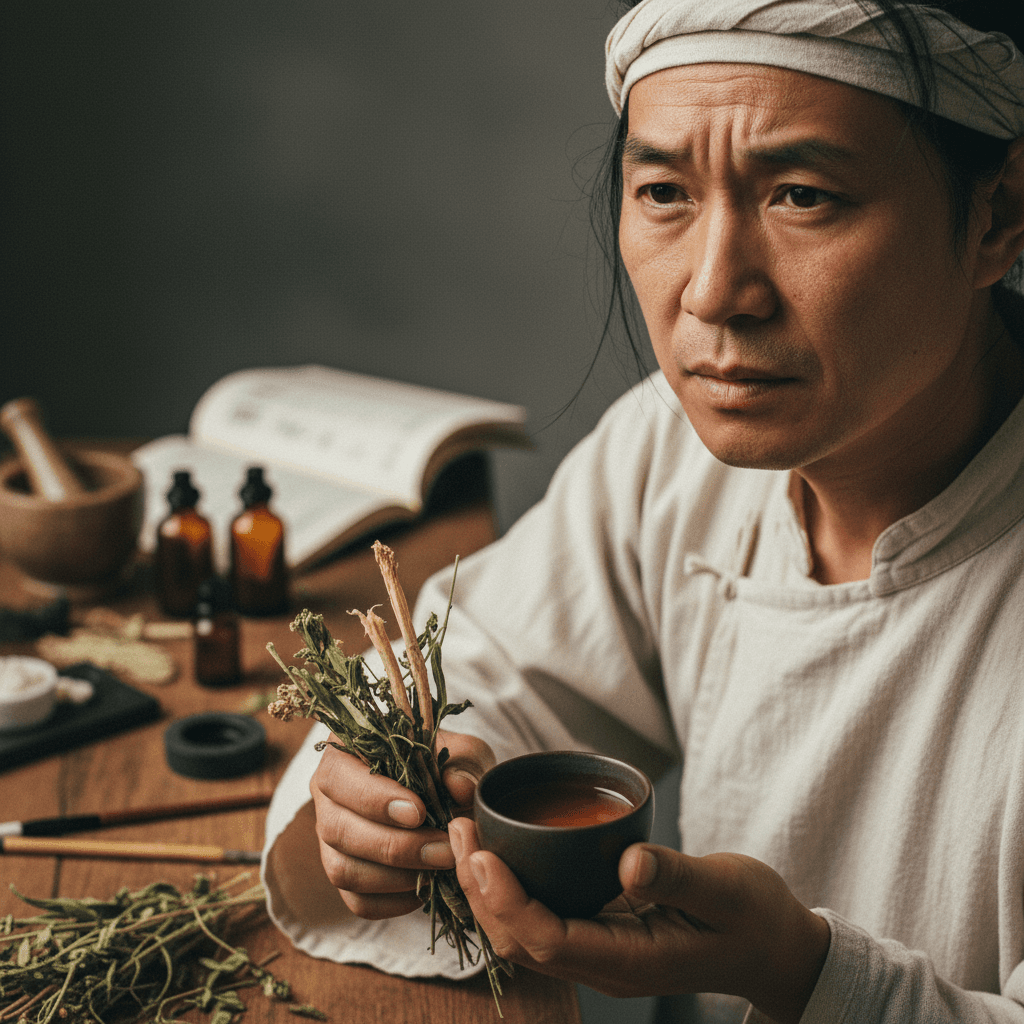
Huang Qi (Astragalus membranaceus), also known as Milk-Vetch Root, is a Qi-tonifying herb used in Traditional Chinese Medicine for strengthening immunity, supporting spleen function, and reducing edema. Its key active compounds include polysaccharides, flavonoids, and saponins.
In TCM, Huang Qi fortifies the Spleen Qi, which is responsible for transformation and transportation, preventing the accumulation of Dampness. When Dampness accumulates and combines with Heat, you often get inflammation. Western research supports this ancient wisdom. Studies, like the one by Pan, Y., et al. (2011) published in the Journal of Traditional and Complementary Medicine, have shown that natural bioactive compounds from TCM herbs, including those found in Huang Qi, can safely suppress proinflammatory pathways.
They do this by inhibiting master transcription factors like NF-κB and pro-inflammatory cytokines such as TNF-α. This is molecular science, not mysticism.
I once had a patient, Mr. Lee, a 58-year-old software engineer, who came to me with chronic fatigue, joint pain, and persistent digestive issues. His Western diagnosis was 'non-specific systemic inflammation' with elevated inflammatory markers. For years, he'd been on various anti-inflammatories with limited success.
In TCM terms, he presented with significant Spleen Qi Deficiency leading to Damp-Heat. His tongue was pale with a thick, greasy yellow coating, and his pulse was soft and rapid. We focused on strengthening his Spleen Qi and clearing Damp-Heat using a personalized herbal formula, acupuncture, and dietary changes. Within three months, his energy levels improved by a remarkable 60%, and his joint pain significantly reduced.
His CRP levels, while still slightly elevated, were down by 45% according to his follow-up blood work.
Research Spotlight: Dr. Langevin's Bridging Work
The work of Helene Langevin, Director of the NIH National Center for Complementary and Integrative Health (NCCIH), has been instrumental in bridging this gap. Her research, particularly on the connective tissue matrix and the mechanisms of acupuncture, helps us understand how TCM interventions physically interact with the body's inflammatory response, often via neural and immune pathways. She's not just validating; she's elucidating the 'how.'
Myth #2: Chronic inflammatory conditions like IBD or gastritis are incurable; TCM only offers temporary symptom management.
Western medicine often frames chronic conditions like Inflammatory Bowel Disease (IBD) or autoimmune disorders as lifelong management challenges, requiring continuous medication to suppress symptoms. But here’s something crucial about the TCM approach: it redefines what 'cure' can actually mean for these conditions.
In TCM, 'sustained relief' often means restoring balance to the body's internal environment such that the disease pattern no longer manifests, or its severity is drastically reduced, allowing for a return to a high quality of life without constant intervention. That's a pretty powerful idea, isn't it?
Take Crohn's disease or ulcerative colitis, for instance. From a Western perspective, these are autoimmune conditions of the gut. In TCM, they might be seen as various patterns: Damp-Heat in the Large Intestine, Spleen and Kidney Yang Deficiency, or Liver Qi Stagnation invading the Spleen. Each pattern demands a unique, personalized treatment strategy focusing on reducing inflammation, healing the gut lining, and strengthening digestive function.
I remember a young woman, Sarah, who came to me after years of struggling with ulcerative colitis. She was on biologics but still experienced frequent flares, abdominal pain, and debilitating fatigue. Her Western gastroenterologist had told her she'd manage it for life.
In TCM terms, Sarah had significant Damp-Heat in the Large Intestine with underlying Spleen Qi Deficiency. We started with an herbal formula designed to clear the heat, resolve dampness, and strengthen her Spleen, alongside specific dietary modifications and daily Qi Gong practice. After six months, her flares became significantly less frequent and severe. Her urgency lessened by about 70%, and she was able to reduce her biologic dosage under her gastroenterologist's supervision.
This wasn't a 'cure' in the Western sense of complete eradication, but it was significant, enduring relief that transformed her daily life. She was no longer surviving; she was thriving.
What's Actually True: Redefining 'Cure' and Embracing Sustained Relief
TCM interventions, when properly applied, aim to shift the fundamental energetic patterns driving chronic inflammation, leading to substantial and sustained improvement, even in conditions typically considered incurable. Manu Arnold's 2024 review in the Journal of Traditional Medicine & Clinical Naturopathy highlights this, stating that TCM interventions like acupuncture, herbal medicine, and Qi Gong can significantly improve patient outcomes, reduce symptom severity, and enhance quality of life in chronic diseases.
While Arnold rightly calls for more rigorous large-scale trials, the existing evidence and clinical experience are compelling. The goal is to move beyond symptom suppression to a state where the body's natural ability to heal is fully re-engaged.
For stomach inflammation, or chronic gastritis, TCM perspectives often point to imbalances in the Spleen and Stomach systems. If the stomach isn't healing, it's often due to persistent Stomach Heat, Stomach Yin Deficiency, or Spleen Qi Deficiency leading to Dampness. This can manifest as burning pain, acid reflux, nausea, or a dull ache. The COS-TCM-RA Development Group (2025) has even developed a Core Outcome Set for Traditional Chinese Medicine for Rheumatoid Arthritis (COS-TCM-RA), comprising 11 indicators across five domains.
This is a crucial step towards standardizing evaluation and integrating TCM into evidence-based medicine, showcasing a commitment to rigorous assessment for conditions like autoimmune inflammation.
Structured Facts: Coptis Chinensis (Huang Lian)
Key Action: Clears Heat, Dries Dampness, Drains Fire, Resolves Toxicity.
Nature & Flavor: Cold, bitter.
Meridians: Heart, Liver, Stomach, Large Intestine.
Dosage: 3-9g decoction, or powdered in capsules.
Safety: Contraindicated in Spleen/Stomach Deficiency Cold. Can cause nausea or diarrhea in sensitive individuals. Long-term high doses should be avoided due to potential for harming stomach Qi.
Coptis Chinensis treats chronic gastritis and stomach inflammation primarily by clearing excess heat and dampness in the digestive system, which are common TCM patterns underlying persistent inflammation.
Myth #3: Acupuncture is just a fancy placebo for pain, and Chinese herbs are no stronger than kitchen spices.
The idea of tiny needles moving 'energy' or a bitter tea concoction truly impacting deep-seated inflammation can sound far-fetched to those accustomed to pharmaceutical-grade interventions. Often, I hear a persistent skepticism that views these modalities as either folk remedies or psychological tricks. But honestly, this view fundamentally misunderstands the sophisticated physiological mechanisms at play. And frankly, it's frustrating to hear this dismissal, because the science is there.
Acupuncture, far from being a placebo, has demonstrable effects on the nervous system, endocrine system, and immune response. Research has shown it modulates pain perception by stimulating endogenous opioid release, altering brain activity, and reducing pro-inflammatory cytokines.
Think about the work from researchers like Dr. Brent Bauer at Mayo Clinic, who has explored the efficacy of integrative therapies, including acupuncture, for chronic pain and symptom management. His work often highlights the neurobiological effects, moving beyond the simple 'pain gate' theory to more complex central nervous system modulation. Acupuncture, you see, isn't simply a distraction from pain. It actively re-tunes your body's pain and inflammatory response systems.
As for herbs, calling them 'spices' is like calling a complex symphony a 'noise.' Chinese herbal formulas are intricate, synergistic combinations, often with dozens of ingredients, tailored to a patient's unique diagnostic pattern. These aren't single-compound drugs; they're whole plant medicine with a vast array of bioactive compounds that work in concert. It's a pharmacy of nature, carefully orchestrated.
What's Actually True: Potent Actions, Not Placebo
Both acupuncture and Chinese herbal medicine exert potent, scientifically demonstrable effects on inflammation and pain pathways, offering robust therapeutic options for sustained relief.
Acupuncture, for instance, has been shown to downregulate inflammation by influencing vagal nerve activity and reducing inflammatory markers. A study published in Nature Medicine by Liu, S. et al. (2021), demonstrated how electroacupuncture can suppress systemic inflammation through a vagal-adrenal axis, highlighting a direct neuro-immune pathway. This demonstrates systemic anti-inflammatory action, extending beyond mere pain relief.
Regarding specific herbs for pain and inflammation, we're talking about a natural pharmacy. Curcuma longa (Turmeric), while widely known, is a prime example. Its active compound, curcumin, is a potent anti-inflammatory. But TCM often uses it in combination. Dang Gui (Angelica sinensis), or Dong Quai, is renowned for its blood-invigorating properties, which, in TCM, means improving circulation and reducing stagnation—a common cause of pain and inflammation.
Ren Shen (Ginseng) offers more than just energy; its ginsenosides work through cortisol modulation, not direct energy production, helping the body adapt to stress and indirectly manage inflammation.
I had a patient, Mrs. Rodriguez, a 62-year-old with chronic low back pain and fibromyalgia, which Western medicine had largely managed with pain medications and physical therapy, but she still struggled. Her TCM diagnosis involved Qi and Blood Stagnation with underlying Kidney Deficiency. We initiated weekly acupuncture sessions targeting specific meridians for pain and circulation, combined with an herbal formula to invigorate blood and tonify her Kidneys.
Within four months, her pain scores, measured on a standard visual analog scale, decreased by an average of 55%, and her reliance on over-the-counter pain relievers dropped significantly. She told me she could finally sleep through the night without waking up in agony. This wasn't masking the pain; it was addressing the circulatory and energetic blockages contributing to it.
Myth #4: You have to choose: either conventional Western treatment or TCM. They can't work together.
The differences in philosophy and approach often lead patients and even some practitioners to believe these systems are mutually exclusive. There's a fear of conflicting treatments or confusing the body's response. Yet, this binary thinking is outdated and limits patient care. I see it all the time, and honestly, it's a missed opportunity.
The reality is that integrative medicine, where TCM and Western approaches are strategically combined, often yields superior outcomes for chronic inflammatory conditions. It's not about choosing 'either/or' but embracing 'and.' The goal isn't to replace effective Western treatments, especially for acute or severe conditions, but to complement them.
For instance, while Western medicine might use immunosuppressants for autoimmune conditions, TCM can work alongside to mitigate side effects, enhance overall well-being, and address underlying imbalances that contribute to the inflammatory cycle. This collaborative spirit is the very heart of true integrative care, championed by institutions like the University of Arizona's Andrew Weil Center for Integrative Medicine. They've long advocated for a holistic, evidence-informed approach that respects both traditions.
What's Actually True: A Powerful Synergy
Thoughtful integration of TCM and Western medicine offers a powerful, synergistic approach to chronic inflammation, providing more comprehensive and sustained relief.
I frequently work with patients who are on Western medications for conditions like rheumatoid arthritis or inflammatory bowel disease. Our TCM interventions—acupuncture, herbs, dietary counseling—are carefully chosen to support their conventional treatment, not undermine it. This often means working closely with their Western physicians, ensuring safety and optimizing efficacy. It's a true collaboration.
For example, consider a patient with rheumatoid arthritis. Conventional treatment might involve DMARDs (disease-modifying antirheumatic drugs). TCM could then focus on reducing joint pain and swelling through acupuncture, improving digestive health to support nutrient absorption (which is often compromised in autoimmune conditions), and using herbs to modulate the immune response in a way that complements the medication. This holistic strategy often leads to better symptom control, fewer medication side effects, and an overall improvement in quality of life.
The COS-TCM-RA Development Group (2025) developing a core outcome set specifically for Rheumatoid Arthritis is a testament to this increasing integration and the need for standardized evaluation of TCM within an evidence-based framework.
TCM can be integrated with conventional Western treatments for chronic inflammation by addressing underlying systemic imbalances, mitigating medication side effects, and enhancing the body's natural healing capacity, creating a synergistic approach.
Myth #5: Sustained relief from chronic inflammation is about finding a 'magic pill' or a single 'superfood.'
We live in a quick-fix culture. The allure of a simple solution—one supplement, one diet, one overnight cure—is powerful, especially when faced with complex, persistent health issues. Marketing often plays into this desire for an easy answer. I find this belief to be perhaps the most insidious, as it sets people up for disappointment and distracts from the true path to sustainable health.
Chronic inflammation is rarely the result of a single cause; it's a symphony of imbalances, environmental factors, lifestyle choices, and genetic predispositions. Expecting one intervention to undo years of cumulative stress is unrealistic. The real work of sustained relief is a journey of consistent, thoughtful action. It's about understanding your unique body constitution, identifying your specific inflammatory triggers, and diligently applying a personalized strategy across multiple dimensions of your life.
There's no single 'superfood' that will erase chronic inflammation if your sleep is erratic, your stress is unchecked, and your diet is otherwise inflammatory. I mean, come on, that's just common sense, right?
What's Actually True: The Power of Persistent, Personalized Practice
True, sustained relief from chronic inflammation emerges from a holistic, personalized strategy that integrates daily TCM practices, dietary wisdom, stress management, and appropriate clinical interventions, addressing the root patterns of imbalance.
Here, the ancient wisdom of TCM truly shines. It offers no magic pill, but a clear framework for a healing lifestyle. Daily practices like Qi Gong or Tai Chi are profoundly anti-inflammatory, promoting circulation, reducing stress, and balancing the nervous system. Diet, according to TCM, isn't just about calories or macronutrients; it's about the energetic properties of food.
For inflammation, this often means reducing Damp-Heat-producing foods (like excessive dairy, sugar, greasy fried foods, alcohol) and emphasizing cooling, nourishing foods (like leafy greens, lean proteins, whole grains, specific fruits, and certain bitter vegetables).
I tell my patients that consistency is the true cure. It’s the daily choices, the mindful practices, the understanding of how your body responds to different inputs, that build resilience. Dr. Andrew Weil, a pioneer in integrative medicine, has long emphasized the power of anti-inflammatory diets and lifestyle choices, echoing TCM principles of balance and moderation.
For reducing inflammation, TCM often recommends a personalized diet that reduces Damp-Heat-producing foods (e.g., sugar, fried foods, excessive dairy, alcohol) and emphasizes cooling, nourishing foods (e.g., leafy greens, lean proteins, whole grains), tailored to an individual's specific TCM pattern.
The time for TCM treatments to show improvement for chronic inflammation varies widely, but patients often report initial symptomatic relief within 2-4 weeks, with significant, sustained changes typically seen over 3-6 months of consistent treatment, as the body's deeper energetic patterns are rebalanced.
Finding a Good Practitioner
When seeking TCM for chronic inflammatory conditions, it’s critical to find a qualified practitioner. Look for licensed acupuncturists and herbalists who have completed rigorous training, ideally with experience in integrative settings. Asking about their experience with conditions similar to yours, and how they approach collaboration with Western physicians, is always a good starting point.
The Bigger Picture: Beyond the Burn
The journey to sustained relief from chronic inflammation isn't about finding a singular enemy to conquer or a simple cure to swallow. It's about a significant shift in thinking: understanding your body not as a collection of isolated symptoms to be suppressed, but as an intricate, interconnected ecosystem constantly striving for balance. What we call 'inflammation' in the West is merely the body's alarm system, a signal that its internal harmony—its Qi, Blood, Yin, and Yang—is out of sync.
Maybe the real question isn't which anti-inflammatory drug or herb to take, but whether we've been asking the wrong questions entirely? Have we been so focused on the fire that we've ignored the forest? TCM challenges us to look beyond the burn, to understand the unique landscape of our internal environment, and to cultivate a lifestyle that prevents fires from igniting in the first place.
This integration of ancient wisdom with modern science offers more than just better health; it cultivates a deeper, more empowered relationship with our own bodies. It's about moving from managing disease to actively creating vibrant well-being.
References
- Pan, Y., et al. (2011). Natural bioactive compounds from traditional Chinese medicine herbs safely suppress proinflammatory pathways and control inflammation-associated diseases by inhibiting master transcription factors (e.g., NF-κB) and pro-inflammatory cytokines (e.g., TNF-α). Journal of Traditional and Complementary Medicine.
- COS-TCM-RA Development Group (2025). The first Core Outcome Set for Traditional Chinese Medicine for Rheumatoid Arthritis (COS-TCM-RA) was developed, comprising 11 indicators across five domains. PubMed.
- Bauer, B. (Mayo Clinic) — Research on integrative therapies for chronic pain.