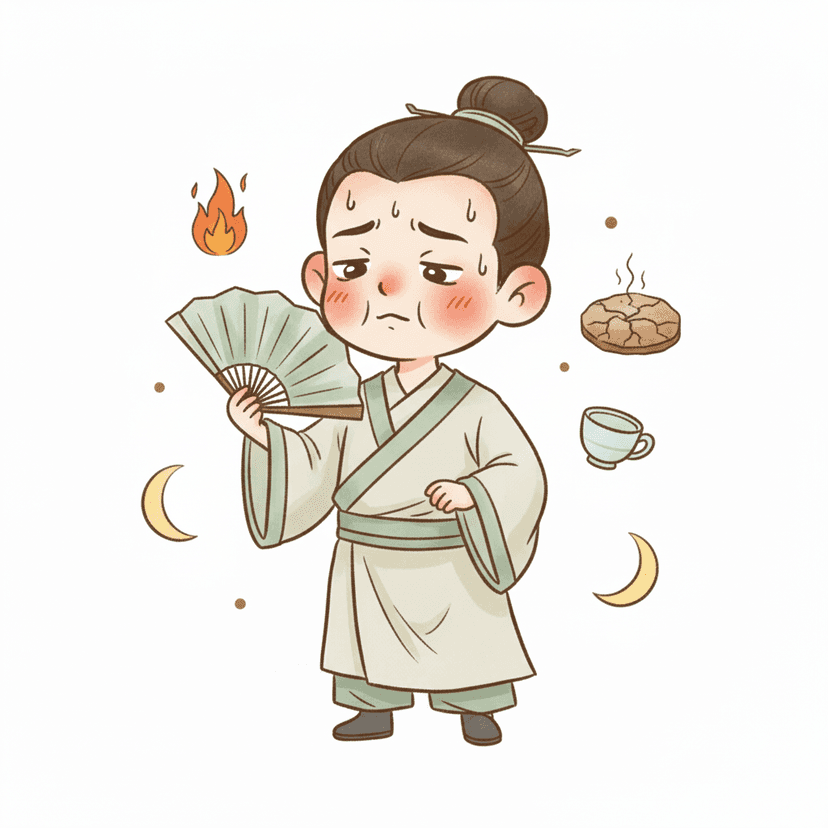
Caratteristiche principali
Palmi e piante dei piedi caldi
Bocca e gola secche
Sudorazioni notturne
Corporatura esile
Guance arrossate
Sonno agitato
Sintomi comuni
- •Pelle e capelli secchi
- •Stipsi con feci secche
- •Irritabilità
- •Capogiri
- •Acufeni
- •Vampate di calore (in particolare in menopausa)
Raccomandazioni dietetiche
✓Alimenti rinfrescanti e idratanti: pera, cetriolo, tofu, anatra
✓Abbondanza di liquidi, ma non ghiacciati
✓Zuppe e congee nutrienti per lo Yin
✓Evitare cibi piccanti, fritti e alla griglia
✓Sesamo nero, bulbo di giglio, fungo della neve
Alimenti da evitare
✗Cibi piccanti (peperoncino, pepe, aglio)
✗Cibi fritti
✗Caffè e alcol
✗Agnello e carne di cervo (troppo riscaldanti)
Consigli sullo stile di vita
Evitare il lavoro eccessivo e i pernottamenti tardivi
Esercizio dolce e rinfrescante: nuoto, camminata
Meditazione e pratiche calmanti
Dormire a sufficienza (coricarsi prima delle 23:00)
Evitare saune ed esposizione eccessiva al sole
Erbe raccomandate
Guida stagionale
Il caldo estivo è difficile da tollerare. La siccità autunnale peggiora i sintomi. L'inverno è la stagione migliore per nutrire lo Yin.
Parere dell'esperto
La Carenza di Yin (阴虚质) nella Medicina Tradizionale Cinese (MTC) si riferisce a uno stato in cui lo Yin del corpo — gli aspetti rinfrescanti e nutrienti — è insufficiente. Questo squilibrio colpisce spesso i Reni, il Fegato e i Polmoni, causando sintomi come secchezza, sensazioni di calore, sudorazioni notturne e irritabilità. Il problema fondamentale è un impoverimento dei fluidi corporei e una mancanza delle funzioni rinfrescanti e idratanti, che può dar luogo a una serie di sintomi fisici ed emotivi.
In medicina occidentale, la Carenza di Yin può correlarsi con condizioni come la sindrome da stanchezza cronica, il surrenale affaticato e alcuni disturbi autoimmuni. Ricerche recenti hanno dimostrato che gli individui con Carenza di Yin mostrano spesso segni di stress ossidativo e infiammazione, collegabili a patologie croniche come il diabete, l'ipertensione e i disturbi tiroidei. Studi hanno anche riscontrato che i trattamenti erboristici e le modifiche dello stile di vita volti a ripristinare lo Yin possono migliorare i marcatori di stress ossidativo e infiammazione.
Clinicamente, l'approccio migliore per trattare la Carenza di Yin prevede una combinazione di medicina erboristica, adeguamenti dietetici e modifiche dello stile di vita. Erbe come Rehmannia, Ophiopogon e Schisandra sono comunemente impiegate per nutrire lo Yin e ridurre il calore. La dieta dovrebbe privilegiare alimenti rinfrescanti e idratanti come fagioli mung, alghe marine e anatra. L'esercizio fisico dovrebbe essere dolce e rigenerante, come il Tai Chi o lo yoga. Gli errori comuni includono il sovraffaticamento, il consumo eccessivo di cibi piccanti o secchi e la mancanza di un'adeguata idratazione. Sono essenziali controlli regolari con un operatore di MTC per monitorare i progressi e adattare il piano terapeutico secondo necessità.
Domande frequenti
Come viene diagnosticata la Carenza di Yin nella MTC?
La Carenza di Yin viene diagnosticata attraverso una combinazione di diagnosi del polso, esame della lingua e valutazione dei sintomi. I segni comuni includono un polso sottile e rapido, una lingua rossa con poco o nessun rivestimento, e sintomi come bocca secca, sudorazioni notturne e irritabilità.
Quali alimenti dovrei evitare se ho una Carenza di Yin?
Evitare cibi piccanti, fritti e eccessivamente processati, poiché possono esacerbare il calore e la secchezza. Limitare anche alcol e caffeina, che possono impoverire lo Yin e aumentare il calore interno.
Quali sono gli esercizi migliori per chi ha una Carenza di Yin?
Esercizi dolci e rigenerativi come il Tai Chi, lo yoga e la camminata sono ideali. Queste attività aiutano a calmare la mente, nutrire il corpo e favorire il flusso del Qi senza impoverire lo Yin.
Quali erbe sono più efficaci per trattare la Carenza di Yin?
Erbe come Rehmannia, Ophiopogon e Schisandra sono altamente efficaci. Aiutano a nutrire lo Yin, ridurre il calore e promuovere l'equilibrio generale. Consultare un operatore di MTC per formulazioni erboristiche personalizzate.
Quali modifiche allo stile di vita possono aiutare a migliorare la Carenza di Yin?
Dare priorità al riposo e al relax, gestire lo stress attraverso la mindfulness e la meditazione, e mantenere un orario di sonno regolare. Evitare il sovraffaticamento e creare un ambiente di vita calmo e fresco.
In che modo i cambiamenti stagionali influenzano la Carenza di Yin?
La Carenza di Yin può peggiorare nei climi caldi e secchi o durante l'estate. Mantenersi idratati, usare l'aria condizionata ed evitare l'esposizione eccessiva al sole. In inverno, privilegiare alimenti riscaldanti e nutrienti per riequilibrare il corpo.
Quali condizioni della medicina occidentale sono associate alla Carenza di Yin?
Condizioni come la sindrome da stanchezza cronica, il surrenale affaticato, il diabete, l'ipertensione e alcuni disturbi autoimmuni possono sovrapporsi alla Carenza di Yin. Queste condizioni spesso implicano infiammazione cronica e stress ossidativo.
Quanto tempo ci vuole per vedere miglioramenti con la Carenza di Yin?
I miglioramenti possono variare, ma molte persone notano cambiamenti entro poche settimane o qualche mese con un trattamento costante. Pazienza e perseveranza sono fondamentali, poiché il ripristino dello Yin è un processo graduale.
Quali sono i malintesi comuni riguardo alla Carenza di Yin?
Un malinteso comune è che la Carenza di Yin sia esclusivamente un problema fisico. Essa influisce anche sul benessere emotivo e mentale, e un approccio olistico è necessario per un trattamento efficace.
Quando dovrei cercare aiuto professionale per la Carenza di Yin?
Cercare aiuto professionale se i sintomi persistono o peggiorano nonostante le cure autonome. Un operatore di MTC può fornire un piano terapeutico personalizzato e monitorare i progressi per una salute ottimale.
Pensi che questo potrebbe essere il tuo tipo?
Queste informazioni sono solo a scopo educativo. La valutazione della costituzione dovrebbe essere eseguita da un professionista MTC qualificato.