云芝 · Yun Zhi
Coriolus
Discover Yun Zhi, or Turkey Tail Mushroom, an ancient TCM tonic now validated by science for its profound immune-modulating and health-supporting properties.
9-27g; as tea: 6-12g dried mushrooms per day split morning/evening
For a traditional decoction, simmer 6-12 grams of dried Yun Zhi slices or pieces in 3-4 cups of water for 30-60 minutes. Strain the liquid and drink it warm, split into two doses (morning and evening). You can reuse the mushrooms for a second, lighter brew.
If using a powdered extract, mix 1-3 grams (check product-specific dosage) into warm water, smoothies, or yogurt once or twice daily. Ensure the powder is a hot water extract for maximum bioavailability of active compounds.
For encapsulated extracts, follow the manufacturer's dosage instructions, typically 1-3 capsules daily, often taken with food. Look for products that specify the concentration of active polysaccharides like beta-glucans, PSK, or PSP.
Dried Yun Zhi slices can be added to broths or soups, particularly chicken or vegetable-based stocks. Add 10-20 grams of dried mushroom to your soup base and simmer for at least an hour to extract the beneficial compounds. Remove the mushroom pieces before serving if desired.
For a traditional decoction, simmer 6-12 grams of dried Yun Zhi slices or pieces in 3-4 cups of water for 30-60 minutes. Strain the liquid and drink it warm, split into two doses (morning and evening). You can reuse the mushrooms for a second, lighter brew.
If using a powdered extract, mix 1-3 grams (check product-specific dosage) into warm water, smoothies, or yogurt once or twice daily. Ensure the powder is a hot water extract for maximum bioavailability of active compounds.
For encapsulated extracts, follow the manufacturer's dosage instructions, typically 1-3 capsules daily, often taken with food. Look for products that specify the concentration of active polysaccharides like beta-glucans, PSK, or PSP.
Dried Yun Zhi slices can be added to broths or soups, particularly chicken or vegetable-based stocks. Add 10-20 grams of dried mushroom to your soup base and simmer for at least an hour to extract the beneficial compounds. Remove the mushroom pieces before serving if desired.
Clinical research, particularly with standardized extracts like PSK and PSP, provides moderate to strong evidence for Yun Zhi's immunomodulatory and antitumor effects, especially as an adjunct to conventional cancer therapies. Studies show improvements in survival rates and immune parameters in various cancers. While traditional uses are extensive, its role in integrative oncology is increasingly validated.
Moderate — Some clinical studies
Clinical research, particularly with standardized extracts like PSK and PSP, provides moderate to strong evidence for Yun Zhi's immunomodulatory and antitumor effects, especially as an adjunct to conventional cancer therapies. Studies show improvements in survival rates and immune parameters in various cancers. While traditional uses are extensive, its role in integrative oncology is increasingly validated.
Moderate — Some clinical studies
Avoid
Avoid
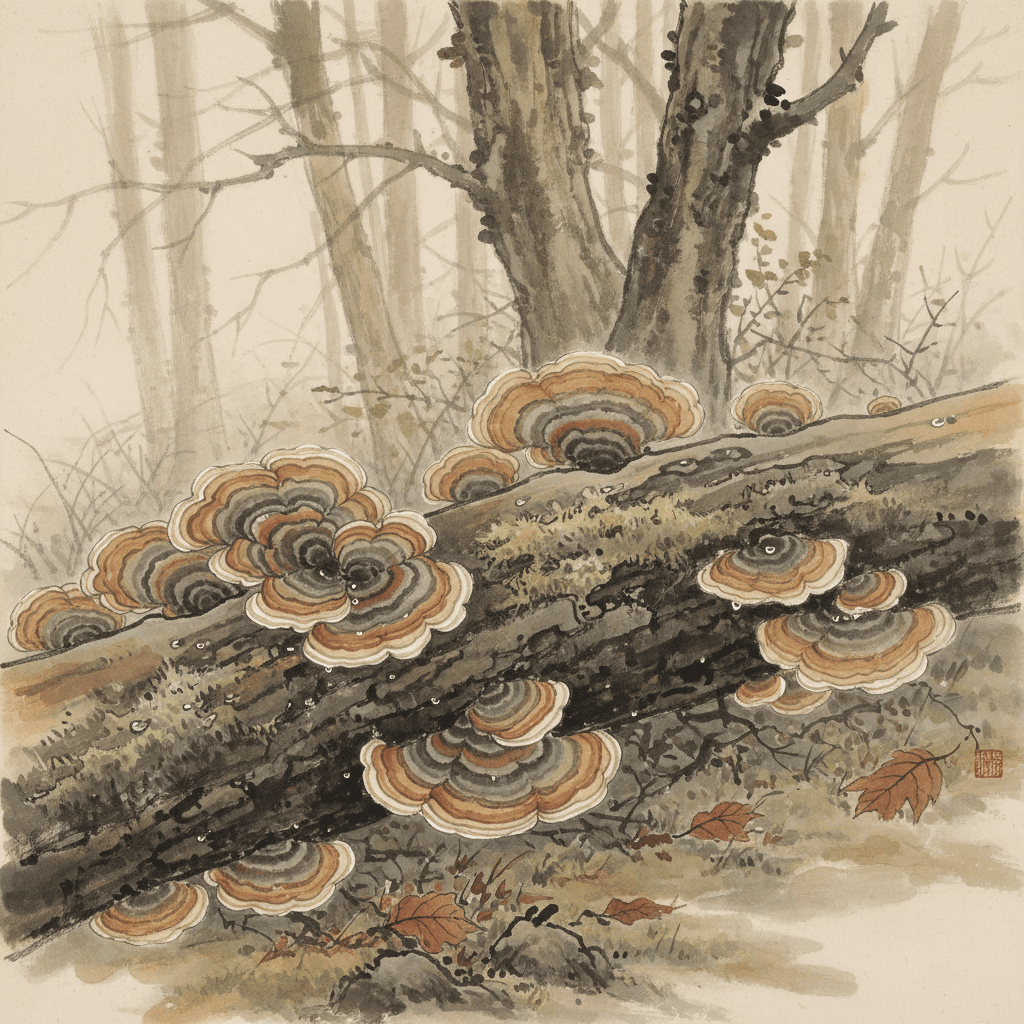
Imagine walking through a damp, ancient forest, and there, clinging to a fallen log, you spot a cascade of vibrant, fan-shaped fungi. Each ripple, a distinct band of color—from deep rust to velvety brown, cream, and slate blue—resembles the fanned tail of a wild turkey. This isn't just a picturesque woodland sight; it's a profound natural medicine, revered for centuries in Asia and increasingly recognized by modern science.
This beautiful forest dweller is Yun Zhi (Coriolus), also known as Turkey Tail Mushroom or Trametes versicolor. It is a Basidiomycetes mushroom used in Traditional Chinese Medicine (TCM) as a tonic, and studies suggest it has significant immunostimulant and antitumor properties. For over 15 years, in my practice, I've seen firsthand how this humble fungus helps my patients reconnect with their innate healing capabilities, often offering a powerful complement to Western medical approaches.
From the bustling markets of Beijing, where I trained at Beijing University of Chinese Medicine, to the quiet integrative clinics here in the US, Yun Zhi has been a consistent thread in the tapestry of healing. It’s a prime example of how ancient wisdom, once dismissed as folklore, is now being meticulously unraveled and validated by rigorous scientific inquiry, offering us powerful, holistic tools for health.
In the intricate framework of TCM, Yun Zhi holds a distinctive place. It's described as neutral to cool in nature and sweet in flavor. What does this mean for your body? A neutral nature suggests it's neither overly warming nor cooling, making it a well-balanced herb suitable for a wide range of individuals without causing imbalances. Its sweet flavor, in TCM, often indicates a nourishing, harmonizing, and tonifying action, particularly for the digestive and energetic systems.
Yun Zhi specifically targets the Heart, Spleen, Liver, and Kidney meridians. This broad reach is quite remarkable. To strengthen the Spleen, for instance, means to enhance your digestive power and the body's ability to transform food into vital energy (Qi) and blood. When the Spleen is strong, we see better energy levels, clearer thinking, and a more robust immune response. Yun Zhi’s actions extend to promoting diuresis (helping the body eliminate excess fluids), clearing heat, and removing toxicity.
For ancient practitioners, this meant it could purify the body and resolve various inflammatory conditions. It's also traditionally used to stop coughing and ease breathing, particularly in cases where underlying weakness or lingering heat is present.
My patient, Mr. Li, a retired teacher, came to me after enduring several rounds of chemotherapy. He felt utterly depleted, experiencing persistent fatigue and a hacking cough. In TCM, his pattern was clearly one of Spleen and Lung Qi deficiency with residual heat and toxicity. We incorporated Yun Zhi into his regimen, not to replace his conventional care, but to support his body's resilience.
Within weeks, his energy began to rebound, his cough subsided, and he felt a palpable sense of strength returning. This isn't magic; it’s the body, supported holistically, finding its way back to balance.
While Bencao Gangmu, the definitive TCM herbal classic, specifically highlights other medicinal fungi like Sang Huang (Phellinus igniarius) for its properties against 'black blood and accumulations,' this foundational text underscores a long-standing appreciation within TCM for the profound healing potential of various mushrooms. Yun Zhi proudly continues this rich tradition, offering its own unique spectrum of benefits that resonate deeply with modern health challenges.
In our modern world, where immune challenges are constant, a robust immune system is paramount. In TCM, Yun Zhi's ability to strengthen the Spleen directly translates to enhancing the body's foundational vitality, which includes its immune defenses. It's not about hyper-stimulating the immune system but intelligently modulating it, ensuring it responds appropriately to threats without overreacting. Modern science confirms this, identifying key active compounds in Yun Zhi: Polysaccharide-K (PSK/Krestin), Polysaccharopeptide (PSP), and various Beta-glucans.
These compounds are recognized for their ability to activate diverse immune cells, including lymphocytes, natural killer (NK) cells, and macrophages, enhancing the body’s innate and adaptive immunity. This is why researchers like Dr. Helene Langevin at NIH NCCIH emphasize the importance of understanding complex biological interactions in integrative therapies.
Perhaps one of Yun Zhi's most compelling applications, both traditionally and scientifically, is its role in supporting cancer patients. In TCM, its action of 'removing toxicity' and 'clearing Heat' aligns with its use in conditions involving abnormal growths and inflammation. In Japan, PSK, a proprietary product from Coriolus, has been a government-approved anticancer drug for decades, used in conjunction with conventional treatments.
A systematic review and meta-analysis published in Recent Patents on Inflammation & Allergy Drug Discovery by Eliza WL, Fai CK, and Chung LP in 2012 found that Yun Zhi resulted in a significant survival advantage, particularly in breast, gastric, and colorectal cancers when combined with chemotherapy, noting a 9% absolute reduction in 5-year mortality. This isn't about replacing chemotherapy; it's about making chemotherapy more effective and tolerable, a concept Dr.
Andrew Weil at the University of Arizona has long championed in integrative oncology.
TCM places immense importance on the Spleen, viewing it as the root of post-natal Qi, responsible for digestion, nutrient absorption, and maintaining proper fluid balance. When the Spleen is weak, we experience fatigue, poor digestion, and dampness (manifesting as bloating or heavy limbs). Yun Zhi's ability to strengthen the Spleen directly addresses these concerns. Its 'sweet' flavor is considered nourishing and harmonizing for the digestive system. From a Western perspective, this aligns with emerging research on the gut-immune axis.
The beta-glucans in Yun Zhi act as prebiotics, fostering a healthy gut microbiome, which, in turn, supports digestive efficiency and contributes to a robust immune system. A balanced gut is a foundation for overall well-being.
Yun Zhi's traditional use includes stopping coughing and easing breathing, particularly when there's underlying weakness or lingering heat affecting the lungs. This action is often coupled with its ability to 'clear Heat and remove toxicity,' which can be beneficial in addressing inflammatory conditions that impact respiratory health.
While direct Western clinical trials on Yun Zhi for specific respiratory conditions are still emerging, its general immune-modulating and anti-inflammatory properties offer a compelling rationale for its traditional use in supporting lung health and aiding the body's natural detoxification processes.
The scientific community has increasingly turned its attention to Yun Zhi, particularly its highly studied active compounds: Polysaccharide-K (PSK) and Polysaccharopeptide (PSP). These are complex carbohydrate-protein compounds that act as biological response modifiers, meaning they don't directly kill cancer cells but enhance the body’s own immune response against them.
The 2012 meta-analysis by Eliza WL, Fai CK, and Chung LP, published in Recent Patents on Inflammation & Allergy Drug Discovery, is a cornerstone for understanding Yun Zhi's impact. It systematically reviewed 13 clinical trials and revealed a significant survival advantage for cancer patients, especially those with breast, gastric, and colorectal cancers, when Yun Zhi was used alongside chemotherapy. This reduction in 5-year mortality is a compelling statistic that underscores its potential.
Further reinforcing its safety and immune benefits, a Phase 1 clinical trial by Torkelson CJ et al. in ISRN Oncology (2012) investigated the use of Trametes versicolor in women with breast cancer post-radiotherapy. They found that dosages of up to 9 grams per day were safe and well-tolerated. Crucially, this study also observed an improvement in immune status, evidenced by increased lymphocyte counts, enhanced NK cell functional activity, and higher levels of CD8+ T and CD19+ B cells.
These are vital components of our immune defense, suggesting Yun Zhi helps rebuild and optimize immune function after the challenges of conventional treatments.
A more recent review by Kozarski M et al. in MDPI (2025) echoed these findings, confirming that Coriolus versicolor preparations, up to 9 g/day, were not only well tolerated but also strengthened immune status by increasing key immune cells in breast cancer patients post-treatment. This consistent body of evidence, even from researchers like Dr. Brent Bauer at Mayo Clinic who emphasize rigorous methodology, strongly supports Yun Zhi's role as an important adjunctive therapy.
Incorporating Yun Zhi into your health regimen can take several forms, depending on your preference and the desired potency. The key is consistent use to allow its compounds to build up in your system and exert their benefits.
This is a classic and effective way to extract the beneficial polysaccharides. For a daily tonic, I often recommend simmering 6-12 grams of dried Yun Zhi mushroom slices in 3-4 cups of water for at least 30-60 minutes, or even longer for a stronger brew. Strain the liquid and drink it warm, ideally split into morning and evening doses. You can reuse the mushroom pieces for a second, lighter decoction.
The traditional dosage range for dried mushrooms is 9-27 grams per day.
For convenience, high-quality powdered extracts and capsules are widely available. When choosing a supplement, ensure it's a hot water extract to guarantee the bioavailability of the polysaccharides. Raw, unextracted mushroom powder is far less potent. Follow the product's specific dosage instructions, as concentrations vary. Typically, this might be 1-3 grams of extract daily, mixed into water, smoothies, or taken as capsules. Look for products that specify the percentage of beta-glucans or other active compounds.
Yun Zhi has a mild, earthy flavor, making it suitable for adding to savory dishes. I often suggest adding 10-20 grams of dried slices to simmering broths, stews, or soups. Allow it to simmer for at least an hour to fully infuse its compounds into your meal. You can then remove the mushroom pieces before serving, or consume them if you like the texture. This is a gentle yet consistent way to incorporate its benefits into your daily diet.
While Yun Zhi is generally well-tolerated, it's crucial to understand its contraindications and potential interactions. As an integrative physician, I always prioritize patient safety and informed decision-making.
This is a non-negotiable area. Insufficient safety data exist for pregnancy and breastfeeding. Due to its immunomodulatory effects, pregnant or breastfeeding women should avoid taking Coriolus entirely unless under the direct, professional supervision of a qualified healthcare provider who can weigh the potential risks and benefits. When in doubt, err on the side of caution.
Yun Zhi is known for its ability to enhance immune function. Therefore, patients on immunosuppressive therapy, such as those who have undergone organ transplantation, must use Yun Zhi with extreme caution. It may counteract the effects of their medication, potentially leading to serious complications. Always consult your transplant specialist or physician before considering Yun Zhi in such cases.
At high doses, some individuals may experience mild digestive discomfort, such as bloating or darkened stools. If you notice these symptoms, consider reducing your dosage or consulting with a practitioner. Allergic reactions, while rare, are possible with any herbal product. Discontinue use if you experience any signs of an allergic response like rash, itching, or swelling.
It's important to remember that while Yun Zhi can be a powerful ally, it's not a substitute for professional medical advice or treatment, especially for serious conditions like cancer. Always integrate it under the guidance of a knowledgeable healthcare provider.
Yun Zhi, the humble Turkey Tail Mushroom, stands as a testament to the enduring wisdom of Traditional Chinese Medicine and the power of nature's pharmacy. Its journey from ancient forests to modern research labs highlights a beautiful synergy: the holistic patterns observed by generations of healers now being elucidated by the precise mechanisms of molecular biology. This isn't about choosing one system over another, but embracing the strengths of both to forge a path toward true, comprehensive wellness.
As we continue to uncover the intricate ways these natural compounds interact with our bodies, we move closer to a future where medicine truly honors the whole person, integrating tradition with cutting-edge science.
Imagine walking through a damp, ancient forest, and there, clinging to a fallen log, you spot a cascade of vibrant, fan-shaped fungi. Each ripple, a distinct band of color—from deep rust to velvety brown, cream, and slate blue—resembles the fanned tail of a wild turkey. This isn't just a picturesque woodland sight; it's a profound natural medicine, revered for centuries in Asia and increasingly recognized by modern science.
This beautiful forest dweller is Yun Zhi (Coriolus), also known as Turkey Tail Mushroom or Trametes versicolor. It is a Basidiomycetes mushroom used in Traditional Chinese Medicine (TCM) as a tonic, and studies suggest it has significant immunostimulant and antitumor properties. For over 15 years, in my practice, I've seen firsthand how this humble fungus helps my patients reconnect with their innate healing capabilities, often offering a powerful complement to Western medical approaches.
From the bustling markets of Beijing, where I trained at Beijing University of Chinese Medicine, to the quiet integrative clinics here in the US, Yun Zhi has been a consistent thread in the tapestry of healing. It’s a prime example of how ancient wisdom, once dismissed as folklore, is now being meticulously unraveled and validated by rigorous scientific inquiry, offering us powerful, holistic tools for health.
In the intricate framework of TCM, Yun Zhi holds a distinctive place. It's described as neutral to cool in nature and sweet in flavor. What does this mean for your body? A neutral nature suggests it's neither overly warming nor cooling, making it a well-balanced herb suitable for a wide range of individuals without causing imbalances. Its sweet flavor, in TCM, often indicates a nourishing, harmonizing, and tonifying action, particularly for the digestive and energetic systems.
Yun Zhi specifically targets the Heart, Spleen, Liver, and Kidney meridians. This broad reach is quite remarkable. To strengthen the Spleen, for instance, means to enhance your digestive power and the body's ability to transform food into vital energy (Qi) and blood. When the Spleen is strong, we see better energy levels, clearer thinking, and a more robust immune response. Yun Zhi’s actions extend to promoting diuresis (helping the body eliminate excess fluids), clearing heat, and removing toxicity.
For ancient practitioners, this meant it could purify the body and resolve various inflammatory conditions. It's also traditionally used to stop coughing and ease breathing, particularly in cases where underlying weakness or lingering heat is present.
My patient, Mr. Li, a retired teacher, came to me after enduring several rounds of chemotherapy. He felt utterly depleted, experiencing persistent fatigue and a hacking cough. In TCM, his pattern was clearly one of Spleen and Lung Qi deficiency with residual heat and toxicity. We incorporated Yun Zhi into his regimen, not to replace his conventional care, but to support his body's resilience.
Within weeks, his energy began to rebound, his cough subsided, and he felt a palpable sense of strength returning. This isn't magic; it’s the body, supported holistically, finding its way back to balance.
While Bencao Gangmu, the definitive TCM herbal classic, specifically highlights other medicinal fungi like Sang Huang (Phellinus igniarius) for its properties against 'black blood and accumulations,' this foundational text underscores a long-standing appreciation within TCM for the profound healing potential of various mushrooms. Yun Zhi proudly continues this rich tradition, offering its own unique spectrum of benefits that resonate deeply with modern health challenges.
In our modern world, where immune challenges are constant, a robust immune system is paramount. In TCM, Yun Zhi's ability to strengthen the Spleen directly translates to enhancing the body's foundational vitality, which includes its immune defenses. It's not about hyper-stimulating the immune system but intelligently modulating it, ensuring it responds appropriately to threats without overreacting. Modern science confirms this, identifying key active compounds in Yun Zhi: Polysaccharide-K (PSK/Krestin), Polysaccharopeptide (PSP), and various Beta-glucans.
These compounds are recognized for their ability to activate diverse immune cells, including lymphocytes, natural killer (NK) cells, and macrophages, enhancing the body’s innate and adaptive immunity. This is why researchers like Dr. Helene Langevin at NIH NCCIH emphasize the importance of understanding complex biological interactions in integrative therapies.
Perhaps one of Yun Zhi's most compelling applications, both traditionally and scientifically, is its role in supporting cancer patients. In TCM, its action of 'removing toxicity' and 'clearing Heat' aligns with its use in conditions involving abnormal growths and inflammation. In Japan, PSK, a proprietary product from Coriolus, has been a government-approved anticancer drug for decades, used in conjunction with conventional treatments.
A systematic review and meta-analysis published in Recent Patents on Inflammation & Allergy Drug Discovery by Eliza WL, Fai CK, and Chung LP in 2012 found that Yun Zhi resulted in a significant survival advantage, particularly in breast, gastric, and colorectal cancers when combined with chemotherapy, noting a 9% absolute reduction in 5-year mortality. This isn't about replacing chemotherapy; it's about making chemotherapy more effective and tolerable, a concept Dr.
Andrew Weil at the University of Arizona has long championed in integrative oncology.
TCM places immense importance on the Spleen, viewing it as the root of post-natal Qi, responsible for digestion, nutrient absorption, and maintaining proper fluid balance. When the Spleen is weak, we experience fatigue, poor digestion, and dampness (manifesting as bloating or heavy limbs). Yun Zhi's ability to strengthen the Spleen directly addresses these concerns. Its 'sweet' flavor is considered nourishing and harmonizing for the digestive system. From a Western perspective, this aligns with emerging research on the gut-immune axis.
The beta-glucans in Yun Zhi act as prebiotics, fostering a healthy gut microbiome, which, in turn, supports digestive efficiency and contributes to a robust immune system. A balanced gut is a foundation for overall well-being.
Yun Zhi's traditional use includes stopping coughing and easing breathing, particularly when there's underlying weakness or lingering heat affecting the lungs. This action is often coupled with its ability to 'clear Heat and remove toxicity,' which can be beneficial in addressing inflammatory conditions that impact respiratory health.
While direct Western clinical trials on Yun Zhi for specific respiratory conditions are still emerging, its general immune-modulating and anti-inflammatory properties offer a compelling rationale for its traditional use in supporting lung health and aiding the body's natural detoxification processes.
The scientific community has increasingly turned its attention to Yun Zhi, particularly its highly studied active compounds: Polysaccharide-K (PSK) and Polysaccharopeptide (PSP). These are complex carbohydrate-protein compounds that act as biological response modifiers, meaning they don't directly kill cancer cells but enhance the body’s own immune response against them.
The 2012 meta-analysis by Eliza WL, Fai CK, and Chung LP, published in Recent Patents on Inflammation & Allergy Drug Discovery, is a cornerstone for understanding Yun Zhi's impact. It systematically reviewed 13 clinical trials and revealed a significant survival advantage for cancer patients, especially those with breast, gastric, and colorectal cancers, when Yun Zhi was used alongside chemotherapy. This reduction in 5-year mortality is a compelling statistic that underscores its potential.
Further reinforcing its safety and immune benefits, a Phase 1 clinical trial by Torkelson CJ et al. in ISRN Oncology (2012) investigated the use of Trametes versicolor in women with breast cancer post-radiotherapy. They found that dosages of up to 9 grams per day were safe and well-tolerated. Crucially, this study also observed an improvement in immune status, evidenced by increased lymphocyte counts, enhanced NK cell functional activity, and higher levels of CD8+ T and CD19+ B cells.
These are vital components of our immune defense, suggesting Yun Zhi helps rebuild and optimize immune function after the challenges of conventional treatments.
A more recent review by Kozarski M et al. in MDPI (2025) echoed these findings, confirming that Coriolus versicolor preparations, up to 9 g/day, were not only well tolerated but also strengthened immune status by increasing key immune cells in breast cancer patients post-treatment. This consistent body of evidence, even from researchers like Dr. Brent Bauer at Mayo Clinic who emphasize rigorous methodology, strongly supports Yun Zhi's role as an important adjunctive therapy.
Incorporating Yun Zhi into your health regimen can take several forms, depending on your preference and the desired potency. The key is consistent use to allow its compounds to build up in your system and exert their benefits.
This is a classic and effective way to extract the beneficial polysaccharides. For a daily tonic, I often recommend simmering 6-12 grams of dried Yun Zhi mushroom slices in 3-4 cups of water for at least 30-60 minutes, or even longer for a stronger brew. Strain the liquid and drink it warm, ideally split into morning and evening doses. You can reuse the mushroom pieces for a second, lighter decoction.
The traditional dosage range for dried mushrooms is 9-27 grams per day.
For convenience, high-quality powdered extracts and capsules are widely available. When choosing a supplement, ensure it's a hot water extract to guarantee the bioavailability of the polysaccharides. Raw, unextracted mushroom powder is far less potent. Follow the product's specific dosage instructions, as concentrations vary. Typically, this might be 1-3 grams of extract daily, mixed into water, smoothies, or taken as capsules. Look for products that specify the percentage of beta-glucans or other active compounds.
Yun Zhi has a mild, earthy flavor, making it suitable for adding to savory dishes. I often suggest adding 10-20 grams of dried slices to simmering broths, stews, or soups. Allow it to simmer for at least an hour to fully infuse its compounds into your meal. You can then remove the mushroom pieces before serving, or consume them if you like the texture. This is a gentle yet consistent way to incorporate its benefits into your daily diet.
While Yun Zhi is generally well-tolerated, it's crucial to understand its contraindications and potential interactions. As an integrative physician, I always prioritize patient safety and informed decision-making.
This is a non-negotiable area. Insufficient safety data exist for pregnancy and breastfeeding. Due to its immunomodulatory effects, pregnant or breastfeeding women should avoid taking Coriolus entirely unless under the direct, professional supervision of a qualified healthcare provider who can weigh the potential risks and benefits. When in doubt, err on the side of caution.
Yun Zhi is known for its ability to enhance immune function. Therefore, patients on immunosuppressive therapy, such as those who have undergone organ transplantation, must use Yun Zhi with extreme caution. It may counteract the effects of their medication, potentially leading to serious complications. Always consult your transplant specialist or physician before considering Yun Zhi in such cases.
At high doses, some individuals may experience mild digestive discomfort, such as bloating or darkened stools. If you notice these symptoms, consider reducing your dosage or consulting with a practitioner. Allergic reactions, while rare, are possible with any herbal product. Discontinue use if you experience any signs of an allergic response like rash, itching, or swelling.
It's important to remember that while Yun Zhi can be a powerful ally, it's not a substitute for professional medical advice or treatment, especially for serious conditions like cancer. Always integrate it under the guidance of a knowledgeable healthcare provider.
Yun Zhi, the humble Turkey Tail Mushroom, stands as a testament to the enduring wisdom of Traditional Chinese Medicine and the power of nature's pharmacy. Its journey from ancient forests to modern research labs highlights a beautiful synergy: the holistic patterns observed by generations of healers now being elucidated by the precise mechanisms of molecular biology. This isn't about choosing one system over another, but embracing the strengths of both to forge a path toward true, comprehensive wellness.
As we continue to uncover the intricate ways these natural compounds interact with our bodies, we move closer to a future where medicine truly honors the whole person, integrating tradition with cutting-edge science.
This information is for educational purposes only and is not intended as medical advice. Always consult a qualified healthcare practitioner before using any herbal remedy.