薏苡仁 · Yi Yi Ren
Semen Coicis
Discover Yi Yi Ren (Job's Tears), an ancient TCM herb revered for strengthening digestion, clearing dampness, and enhancing skin. Learn how this versatile seed bridges traditional wisdom with modern science for holistic well-being.
9-30g May use up to 60-90g Tincture: 2-4ml
Simmer 9-30 grams (or up to 60-90g under professional guidance) of dried Yi Yi Ren in 3-4 cups of water for 30-45 minutes until the liquid reduces by about a third. Strain and drink the liquid throughout the day.
Take 2-4 ml of Yi Yi Ren tincture, typically 2-3 times daily, or as directed by a qualified practitioner.
Rinse seeds thoroughly, then soak for at least 4-6 hours or overnight. Cook like rice: simmer in plenty of water for 45-60 minutes until soft and chewy. Use in porridges, soups, or mixed with other grains.
Simmer 9-30 grams (or up to 60-90g under professional guidance) of dried Yi Yi Ren in 3-4 cups of water for 30-45 minutes until the liquid reduces by about a third. Strain and drink the liquid throughout the day.
Take 2-4 ml of Yi Yi Ren tincture, typically 2-3 times daily, or as directed by a qualified practitioner.
Rinse seeds thoroughly, then soak for at least 4-6 hours or overnight. Cook like rice: simmer in plenty of water for 45-60 minutes until soft and chewy. Use in porridges, soups, or mixed with other grains.
While many human clinical trials are still needed, *in vitro* and animal studies have demonstrated Yi Yi Ren's antiproliferative effects on cancer cells, inhibition of COX-2 expression, and a wide array of properties including antimicrobial, antiviral, antioxidant, and anti-inflammatory actions. Traditional use spans millennia, supported by these preliminary scientific findings.
Preliminary — In vitro / animal studies
While many human clinical trials are still needed, *in vitro* and animal studies have demonstrated Yi Yi Ren's antiproliferative effects on cancer cells, inhibition of COX-2 expression, and a wide array of properties including antimicrobial, antiviral, antioxidant, and anti-inflammatory actions. Traditional use spans millennia, supported by these preliminary scientific findings.
Preliminary — In vitro / animal studies
Insufficient Data
Insufficient Data
I often tell my patients that the wisdom of ancient traditions often holds surprising keys to modern wellness. Take Yi Yi Ren, for example. In China, this humble seed has been cultivated for over 6,000 years, with archaeological findings at the Hemudu site confirming its early significance. This isn't just a grain; it’s a foundational herb, woven into both culinary and medicinal practices for millennia.
Yi Yi Ren (Semen Coicis), also known as Job’s Tears Seed or Coix Seed, is a versatile grain-like herb deeply revered in Traditional Chinese Medicine for its ability to strengthen the Spleen, resolve dampness, and clear heat. It's a testament to nature's enduring power, offering benefits that resonate with our contemporary understanding of health.
In the lexicon of Traditional Chinese Medicine, Yi Yi Ren occupies a unique and crucial space. Its "slightly cold" nature gently cools heat, while its "sweet" and "bland" flavors speak to its ability to nourish and harmonize without being overwhelming. Think of it not as a forceful intervention, but as a subtle rebalancing agent. These qualities allow it to influence key organ systems, or what we call "meridians": the Spleen, Stomach, Lung, Kidney, and Large Intestine.
This comprehensive reach explains its broad spectrum of applications.
The Spleen and Stomach meridians are particularly central to Yi Yi Ren's actions. In TCM, the Spleen is responsible for transforming food into energy (Qi) and transporting fluids. When the Spleen isn't functioning optimally, it can lead to an accumulation of "Dampness" – a concept that often maps to issues like bloating, fluid retention, a heavy sensation in the limbs, or even skin conditions.
Yi Yi Ren excels at strengthening the Spleen and resolving this Dampness, helping the body restore its natural fluid balance. It's like gently draining a soggy marshland, allowing healthy growth to return.
I remember a patient, let's call her Sarah, who came to me with persistent bloating and a feeling of fatigue that Western tests couldn't quite pinpoint. She described herself as feeling "heavy and stuck." Through the lens of TCM, her symptoms pointed directly to Spleen Qi deficiency with internal Dampness. We incorporated Yi Yi Ren into her diet and herbal regimen, and within weeks, she noticed a remarkable difference.
Her bloating subsided, her energy levels improved, and that "heavy" feeling began to lift. It was a clear illustration of how ancient principles can provide elegant solutions. As recorded in the 神农本草经 (Divine Farmer's Materia Medica), Yi Yi Ren was listed as a superior herb, noting its ability to "govern stiff contraction, long-standing wind-damp impediment, and descend Qi." This highlights its long-recognized role in addressing issues related to pain and fluid stagnation.
One of Yi Yi Ren’s most celebrated actions in TCM is its profound ability to address "Dampness." This isn't just about water retention; it's a broader concept encompassing sluggish digestion, a feeling of heaviness, brain fog, and even certain types of metabolic imbalances. By strengthening the Spleen meridian, Yi Yi Ren helps the body efficiently process and eliminate excess fluids. This translates to less bloating, improved bowel regularity, and a general feeling of lightness.
Modern functional medicine might view this through the lens of supporting lymphatic drainage, gut microbiome balance, or reducing systemic inflammation that contributes to fluid dysregulation.
The connection between internal balance and external appearance is a cornerstone of integrative medicine. In TCM, many skin conditions like acne, eczema, or even dull complexion are often linked to "Damp-Heat" or Spleen dysfunction. Yi Yi Ren, with its ability to clear heat and resolve dampness, makes it a traditional go-to for promoting clearer, healthier skin.
This isn't just anecdotal; the trending use of "Hatomugi" (the Japanese name for Job's Tears) in Asian skincare products for hydration and anti-inflammatory effects speaks volumes. The Nurkolis et al. (2022) systematic review noted its anti-inflammatory properties, which can certainly contribute to improving inflammatory skin conditions.
If you’ve ever experienced stiff, achy joints that feel worse in damp weather, you’ve encountered what TCM calls "Wind-Damp Bi Syndrome." Yi Yi Ren is traditionally used to "expel Wind-Dampness and relieve pain," making it a valuable ally for those seeking natural support for joint comfort. It doesn't just mask symptoms; it addresses the underlying pattern of stagnation and inflammation.
While more direct human clinical trials on joint pain are needed, the broad anti-inflammatory properties identified in research, such as those mentioned in the Nurkolis et al. (2022) review, provide a plausible scientific bridge to its traditional use.
While not its primary action, Yi Yi Ren’s general strengthening of the Spleen and its ability to clear dampness indirectly supports a robust immune system. A healthy Spleen generates strong Qi and blood, which are vital for immunity. Furthermore, the systematic review by Nurkolis, Gunawan, Hardinsyah, Mayulu, & Wijayanti (2022) published in Current Developments in Nutrition highlighted that Coix seed possesses antimicrobial, antiviral, and immunomodulatory properties.
This suggests a multifaceted role in helping the body defend itself against various challenges, though the review did note the need for more human clinical trials.
The scientific community is increasingly turning its attention to herbs like Yi Yi Ren, seeking to validate ancient wisdom with modern research. One significant area of inquiry has been its potential anti-cancer effects. Researchers Chang H.C., Huang Y.C., and Hung W.C. published findings in the Journal of Agricultural and Food Chemistry in 2003, demonstrating that a methanolic extract of adlay seed (Yi Yi Ren) showed impressive antiproliferative effects on human lung cancer cells in vitro.
Even more compelling, their in vivo studies showed it inhibited tumor growth, reducing surface lung tumors by approximately 50% in mice. In a related study the same year, Hung W.C. and Chang H.C. elucidated a potential mechanism, reporting that the methanolic extract suppressed COX-2 expression in human lung cancer cells by inhibiting gene transcription. This offers a scientific explanation for some of its traditional anti-inflammatory and potentially anti-proliferative actions.
Beyond cancer research, the broader pharmacological scope of Yi Yi Ren is gaining recognition. A comprehensive systematic review by Nurkolis, F. et al. in Current Developments in Nutrition in 2022, analyzing 109 studies, concluded that Coix seed exhibits a wide array of beneficial properties. These include antimicrobial, antiviral, antitoxin, wound healing, anti-aging, diuretic, immunomodulatory, antioxidant, and anti-inflammatory effects.
While the authors prudently noted the limitation of human clinical trials, the breadth of these findings from in vitro and animal studies is considerable.
Chinese researchers have also contributed valuable insights. For instance, 张怡一 (Zhang Yiyi) in Food and Nutrition Sciences (2015) highlighted the significant antioxidant effects of Coix polyphenols, with a methanol extract of adlay husk showing a DPPH free radical scavenging ability of 91.1%. Furthermore, 付敬菊 (Fu Jingju) et al.
from the Shandong Academy of Traditional Chinese Medicine Report (2023) discussed the anti-tumor activity of ester components found in Yi Yi Ren, specifically mentioning their role in the effective compound Kanglaite Injection. These studies underscore the presence of active compounds that align with many of Yi Yi Ren’s traditional therapeutic uses.
It's clear that while the bulk of the evidence is still in the preliminary and in vitro stages, the scientific interest and early findings are promising, bridging the gap between historical use and modern validation.
Incorporating Yi Yi Ren into your wellness routine is both simple and versatile, reflecting its long history as both a medicine and a food source. The most common traditional method is through a decoction, essentially a strong tea. For this, I generally recommend a dosage of 9-30 grams of dried Yi Yi Ren. You can simmer the seeds in 3-4 cups of water for 30-45 minutes, reducing the liquid by about a third.
Strain and drink the resulting liquid throughout the day. For more intensive needs, especially under the guidance of a practitioner, dosages can be increased up to 60-90 grams.
From a culinary perspective, Yi Yi Ren makes an excellent addition to your diet. It has a slightly chewy texture and a mild, nutty flavor, similar to pearl barley but with its own distinct character. You can cook it into a hearty porridge, add it to soups for extra substance and its damp-resolving properties, or even mix it into rice dishes.
Always remember to rinse the seeds thoroughly and soak them for at least 4-6 hours, or preferably overnight, before cooking to ensure proper softening and digestibility. This also helps to reduce cooking time significantly.
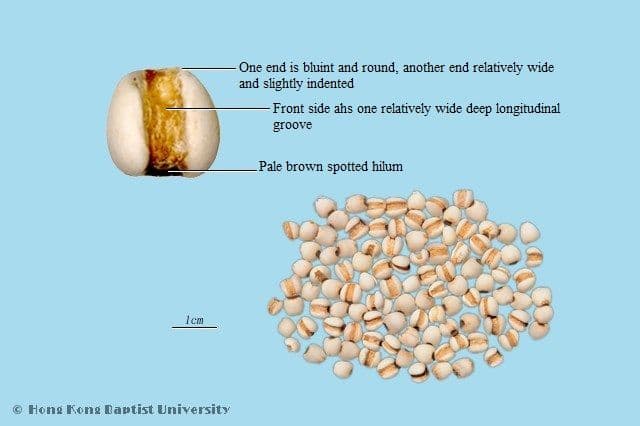
For those preferring concentrated forms, a tincture can be a convenient option, typically dosed at 2-4 ml, usually taken 2-3 times daily. However, I always emphasize that whole food forms like the decoction or cooked grain allow you to absorb the full spectrum of the herb's constituents, along with its nutritional benefits as a grain. When sourcing, look for pearly white, plump seeds that are uniform in color, indicating good quality.
While Yi Yi Ren is generally well-tolerated and cherished for its benefits, it is crucial to approach its use with awareness, especially concerning specific health conditions. As an integrative physician, I prioritize patient safety, and certain contraindications are non-negotiable.
First, Yi Yi Ren should not be used for individuals with Deficiency with sinking tendencies. In TCM, this refers to conditions where the body's energy (Qi) is weak and unable to hold things in place, potentially leading to issues like prolapse or chronic diarrhea not caused by dampness. Using Yi Yi Ren, which has a descending action, could exacerbate these conditions.
Secondly, exercise caution with long-term use during pregnancy. While some traditional texts might suggest specific applications, the generally cooling and diuretic nature of Yi Yi Ren means it could potentially affect fluid balance or have other subtle effects on the developing fetus, especially with prolonged use.
Given the delicate nature of pregnancy, I always advise pregnant patients to consult their healthcare provider before using any herbal remedies, and often, it's best to err on the side of caution and avoid it.
Lastly, use with caution for those with spermatorrhea and polyuria. These conditions involve excessive discharge of semen or urine, respectively. Yi Yi Ren's diuretic properties, while beneficial for clearing dampness, could potentially worsen these symptoms by further promoting fluid excretion.
Currently, there are no well-documented, specific drug interactions for Yi Yi Ren in Western pharmacological literature that would cause acute danger. However, its mild diuretic properties mean that if you are taking prescription diuretics or medications for blood pressure, it's wise to discuss its use with your doctor to monitor for any potential additive effects on fluid balance or electrolyte levels.
My rule of thumb is always transparency: inform your primary care physician about any herbs or supplements you are taking.
Yi Yi Ren stands as a beautiful illustration of how ancient botanical wisdom continues to offer relevant solutions in our modern world. It reminds us that health is not merely the absence of disease, but a dynamic state of balance, particularly in how our bodies manage fluids and energy. Whether you're exploring it for digestive comfort, radiant skin, or simply as a nourishing grain, Yi Yi Ren invites us to reconnect with the subtle yet profound power of nature.
It’s a gentle whisper from the past, urging us to listen to our bodies and find harmony in the simplest of seeds.
I often tell my patients that the wisdom of ancient traditions often holds surprising keys to modern wellness. Take Yi Yi Ren, for example. In China, this humble seed has been cultivated for over 6,000 years, with archaeological findings at the Hemudu site confirming its early significance. This isn't just a grain; it’s a foundational herb, woven into both culinary and medicinal practices for millennia.
Yi Yi Ren (Semen Coicis), also known as Job’s Tears Seed or Coix Seed, is a versatile grain-like herb deeply revered in Traditional Chinese Medicine for its ability to strengthen the Spleen, resolve dampness, and clear heat. It's a testament to nature's enduring power, offering benefits that resonate with our contemporary understanding of health.
In the lexicon of Traditional Chinese Medicine, Yi Yi Ren occupies a unique and crucial space. Its "slightly cold" nature gently cools heat, while its "sweet" and "bland" flavors speak to its ability to nourish and harmonize without being overwhelming. Think of it not as a forceful intervention, but as a subtle rebalancing agent. These qualities allow it to influence key organ systems, or what we call "meridians": the Spleen, Stomach, Lung, Kidney, and Large Intestine.
This comprehensive reach explains its broad spectrum of applications.
The Spleen and Stomach meridians are particularly central to Yi Yi Ren's actions. In TCM, the Spleen is responsible for transforming food into energy (Qi) and transporting fluids. When the Spleen isn't functioning optimally, it can lead to an accumulation of "Dampness" – a concept that often maps to issues like bloating, fluid retention, a heavy sensation in the limbs, or even skin conditions.
Yi Yi Ren excels at strengthening the Spleen and resolving this Dampness, helping the body restore its natural fluid balance. It's like gently draining a soggy marshland, allowing healthy growth to return.
I remember a patient, let's call her Sarah, who came to me with persistent bloating and a feeling of fatigue that Western tests couldn't quite pinpoint. She described herself as feeling "heavy and stuck." Through the lens of TCM, her symptoms pointed directly to Spleen Qi deficiency with internal Dampness. We incorporated Yi Yi Ren into her diet and herbal regimen, and within weeks, she noticed a remarkable difference.
Her bloating subsided, her energy levels improved, and that "heavy" feeling began to lift. It was a clear illustration of how ancient principles can provide elegant solutions. As recorded in the 神农本草经 (Divine Farmer's Materia Medica), Yi Yi Ren was listed as a superior herb, noting its ability to "govern stiff contraction, long-standing wind-damp impediment, and descend Qi." This highlights its long-recognized role in addressing issues related to pain and fluid stagnation.
One of Yi Yi Ren’s most celebrated actions in TCM is its profound ability to address "Dampness." This isn't just about water retention; it's a broader concept encompassing sluggish digestion, a feeling of heaviness, brain fog, and even certain types of metabolic imbalances. By strengthening the Spleen meridian, Yi Yi Ren helps the body efficiently process and eliminate excess fluids. This translates to less bloating, improved bowel regularity, and a general feeling of lightness.
Modern functional medicine might view this through the lens of supporting lymphatic drainage, gut microbiome balance, or reducing systemic inflammation that contributes to fluid dysregulation.
The connection between internal balance and external appearance is a cornerstone of integrative medicine. In TCM, many skin conditions like acne, eczema, or even dull complexion are often linked to "Damp-Heat" or Spleen dysfunction. Yi Yi Ren, with its ability to clear heat and resolve dampness, makes it a traditional go-to for promoting clearer, healthier skin.
This isn't just anecdotal; the trending use of "Hatomugi" (the Japanese name for Job's Tears) in Asian skincare products for hydration and anti-inflammatory effects speaks volumes. The Nurkolis et al. (2022) systematic review noted its anti-inflammatory properties, which can certainly contribute to improving inflammatory skin conditions.
If you’ve ever experienced stiff, achy joints that feel worse in damp weather, you’ve encountered what TCM calls "Wind-Damp Bi Syndrome." Yi Yi Ren is traditionally used to "expel Wind-Dampness and relieve pain," making it a valuable ally for those seeking natural support for joint comfort. It doesn't just mask symptoms; it addresses the underlying pattern of stagnation and inflammation.
While more direct human clinical trials on joint pain are needed, the broad anti-inflammatory properties identified in research, such as those mentioned in the Nurkolis et al. (2022) review, provide a plausible scientific bridge to its traditional use.
While not its primary action, Yi Yi Ren’s general strengthening of the Spleen and its ability to clear dampness indirectly supports a robust immune system. A healthy Spleen generates strong Qi and blood, which are vital for immunity. Furthermore, the systematic review by Nurkolis, Gunawan, Hardinsyah, Mayulu, & Wijayanti (2022) published in Current Developments in Nutrition highlighted that Coix seed possesses antimicrobial, antiviral, and immunomodulatory properties.
This suggests a multifaceted role in helping the body defend itself against various challenges, though the review did note the need for more human clinical trials.
The scientific community is increasingly turning its attention to herbs like Yi Yi Ren, seeking to validate ancient wisdom with modern research. One significant area of inquiry has been its potential anti-cancer effects. Researchers Chang H.C., Huang Y.C., and Hung W.C. published findings in the Journal of Agricultural and Food Chemistry in 2003, demonstrating that a methanolic extract of adlay seed (Yi Yi Ren) showed impressive antiproliferative effects on human lung cancer cells in vitro.
Even more compelling, their in vivo studies showed it inhibited tumor growth, reducing surface lung tumors by approximately 50% in mice. In a related study the same year, Hung W.C. and Chang H.C. elucidated a potential mechanism, reporting that the methanolic extract suppressed COX-2 expression in human lung cancer cells by inhibiting gene transcription. This offers a scientific explanation for some of its traditional anti-inflammatory and potentially anti-proliferative actions.
Beyond cancer research, the broader pharmacological scope of Yi Yi Ren is gaining recognition. A comprehensive systematic review by Nurkolis, F. et al. in Current Developments in Nutrition in 2022, analyzing 109 studies, concluded that Coix seed exhibits a wide array of beneficial properties. These include antimicrobial, antiviral, antitoxin, wound healing, anti-aging, diuretic, immunomodulatory, antioxidant, and anti-inflammatory effects.
While the authors prudently noted the limitation of human clinical trials, the breadth of these findings from in vitro and animal studies is considerable.
Chinese researchers have also contributed valuable insights. For instance, 张怡一 (Zhang Yiyi) in Food and Nutrition Sciences (2015) highlighted the significant antioxidant effects of Coix polyphenols, with a methanol extract of adlay husk showing a DPPH free radical scavenging ability of 91.1%. Furthermore, 付敬菊 (Fu Jingju) et al.
from the Shandong Academy of Traditional Chinese Medicine Report (2023) discussed the anti-tumor activity of ester components found in Yi Yi Ren, specifically mentioning their role in the effective compound Kanglaite Injection. These studies underscore the presence of active compounds that align with many of Yi Yi Ren’s traditional therapeutic uses.
It's clear that while the bulk of the evidence is still in the preliminary and in vitro stages, the scientific interest and early findings are promising, bridging the gap between historical use and modern validation.
Incorporating Yi Yi Ren into your wellness routine is both simple and versatile, reflecting its long history as both a medicine and a food source. The most common traditional method is through a decoction, essentially a strong tea. For this, I generally recommend a dosage of 9-30 grams of dried Yi Yi Ren. You can simmer the seeds in 3-4 cups of water for 30-45 minutes, reducing the liquid by about a third.
Strain and drink the resulting liquid throughout the day. For more intensive needs, especially under the guidance of a practitioner, dosages can be increased up to 60-90 grams.
From a culinary perspective, Yi Yi Ren makes an excellent addition to your diet. It has a slightly chewy texture and a mild, nutty flavor, similar to pearl barley but with its own distinct character. You can cook it into a hearty porridge, add it to soups for extra substance and its damp-resolving properties, or even mix it into rice dishes.
Always remember to rinse the seeds thoroughly and soak them for at least 4-6 hours, or preferably overnight, before cooking to ensure proper softening and digestibility. This also helps to reduce cooking time significantly.
For those preferring concentrated forms, a tincture can be a convenient option, typically dosed at 2-4 ml, usually taken 2-3 times daily. However, I always emphasize that whole food forms like the decoction or cooked grain allow you to absorb the full spectrum of the herb's constituents, along with its nutritional benefits as a grain. When sourcing, look for pearly white, plump seeds that are uniform in color, indicating good quality.
While Yi Yi Ren is generally well-tolerated and cherished for its benefits, it is crucial to approach its use with awareness, especially concerning specific health conditions. As an integrative physician, I prioritize patient safety, and certain contraindications are non-negotiable.
First, Yi Yi Ren should not be used for individuals with Deficiency with sinking tendencies. In TCM, this refers to conditions where the body's energy (Qi) is weak and unable to hold things in place, potentially leading to issues like prolapse or chronic diarrhea not caused by dampness. Using Yi Yi Ren, which has a descending action, could exacerbate these conditions.
Secondly, exercise caution with long-term use during pregnancy. While some traditional texts might suggest specific applications, the generally cooling and diuretic nature of Yi Yi Ren means it could potentially affect fluid balance or have other subtle effects on the developing fetus, especially with prolonged use.
Given the delicate nature of pregnancy, I always advise pregnant patients to consult their healthcare provider before using any herbal remedies, and often, it's best to err on the side of caution and avoid it.
Lastly, use with caution for those with spermatorrhea and polyuria. These conditions involve excessive discharge of semen or urine, respectively. Yi Yi Ren's diuretic properties, while beneficial for clearing dampness, could potentially worsen these symptoms by further promoting fluid excretion.
Currently, there are no well-documented, specific drug interactions for Yi Yi Ren in Western pharmacological literature that would cause acute danger. However, its mild diuretic properties mean that if you are taking prescription diuretics or medications for blood pressure, it's wise to discuss its use with your doctor to monitor for any potential additive effects on fluid balance or electrolyte levels.
My rule of thumb is always transparency: inform your primary care physician about any herbs or supplements you are taking.
Yi Yi Ren stands as a beautiful illustration of how ancient botanical wisdom continues to offer relevant solutions in our modern world. It reminds us that health is not merely the absence of disease, but a dynamic state of balance, particularly in how our bodies manage fluids and energy. Whether you're exploring it for digestive comfort, radiant skin, or simply as a nourishing grain, Yi Yi Ren invites us to reconnect with the subtle yet profound power of nature.
It’s a gentle whisper from the past, urging us to listen to our bodies and find harmony in the simplest of seeds.
This information is for educational purposes only and is not intended as medical advice. Always consult a qualified healthcare practitioner before using any herbal remedy.