Liver Nourishment
养肝 · Yǎng Gān
Beyond fleeting detox trends, Yǎng Gān offers a profound, time-tested TCM approach to liver health, connecting ancient wisdom with modern science for holistic vitality and emotional balance.
养肝 · Yǎng Gān
Beyond fleeting detox trends, Yǎng Gān offers a profound, time-tested TCM approach to liver health, connecting ancient wisdom with modern science for holistic vitality and emotional balance.
The liver. It’s a word that conjures images of detoxification, metabolism, and a bustling internal factory. Yet, for centuries, Traditional Chinese Medicine (TCM) has viewed this vital organ with an even broader lens, seeing it not just as a physical entity but as the seat of our emotional balance, our smooth flow of energy, and even our capacity for vision and planning.
This profound understanding gives rise to the concept of Yǎng Gān (养肝), which translates to Liver Nourishment or Liver Care.
In a world buzzing with fleeting 'liver detox' fads, Yǎng Gān offers a grounded, time-tested approach that respects the liver's intricate role in our overall well-being. It’s not about quick fixes, but about fostering deep, sustainable health. As Dr. Helene Langevin, former director of the National Center for Complementary and Integrative Health (NCCIH) at NIH, often emphasizes, integrative approaches focus on the body’s innate healing capabilities, a philosophy deeply resonant with Yǎng Gān.
Yǎng Gān, encompassing a variety of herbal formulas, dietary principles, and lifestyle practices, is designed to support the liver's multifaceted functions. It's an ancient wisdom that, as we’re seeing, aligns remarkably well with modern scientific understanding of metabolic health, stress response, and cellular regeneration.
In TCM, the Liver is far more than just an organ filtering toxins. It's a complex energetic system responsible for the smooth flow of Qi (life force energy) throughout the body, for storing Blood, and for governing our emotional well-being, particularly anger and frustration. When this system is balanced, our energy flows freely, our mood is stable, and our digestion works harmoniously. When it's out of balance, problems arise.
Yǎng Gān herbs and formulas typically target the Liver and Gallbladder meridians – energetic pathways that, in Western terms, correlate with nerve bundles and vascular networks influencing the liver, digestive system, and even our eyes and tendons. Many of these herbs are often described as having a cooling nature to clear 'heat' (inflammation, irritability) and a sweet flavor, indicating their nourishing and harmonizing properties.
They might also be slightly sour, which in TCM, helps to 'collect' or consolidate the Liver's energy.
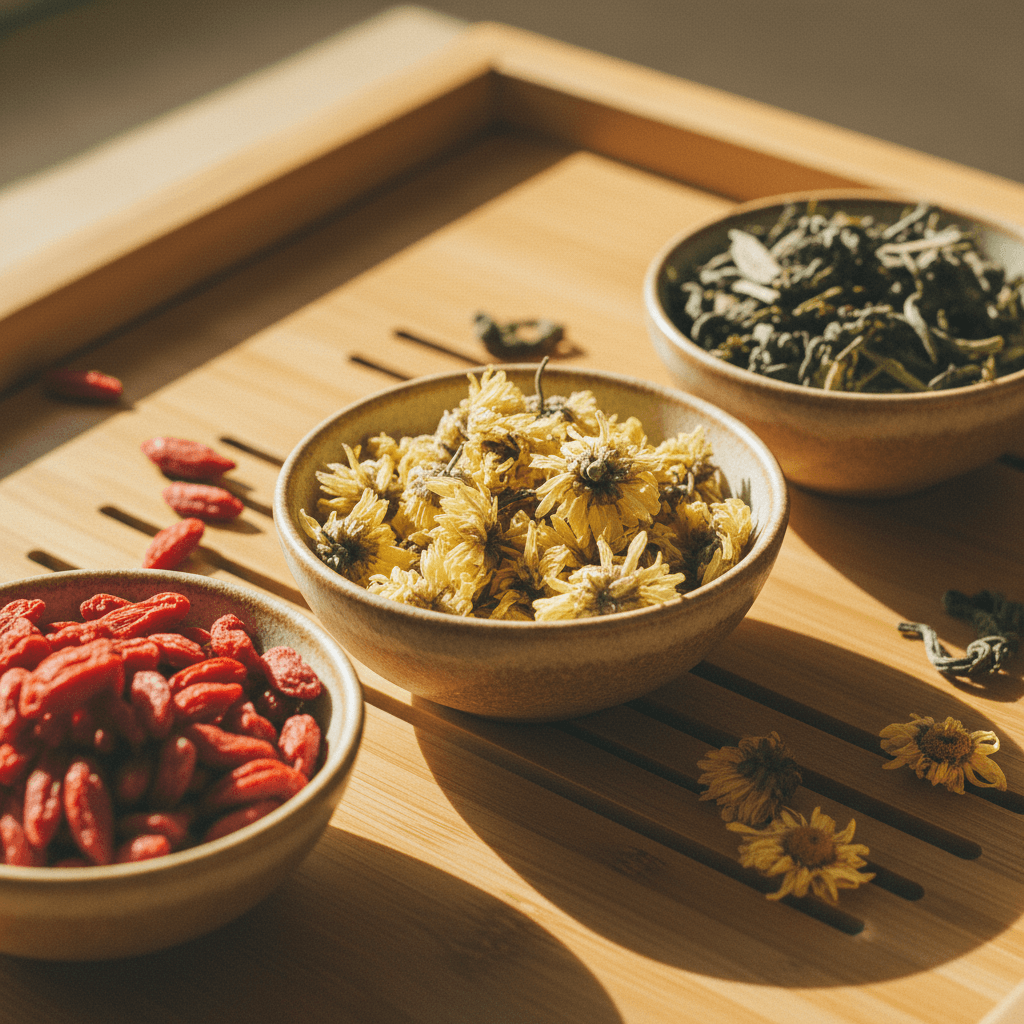
One of the foundational herbs often found in Yǎng Gān strategies is Goji berry, or Gou Qi Zi. The ancient medical text Běn Cǎo Gāng Mù (Compendium of Materia Medica) states: "枸杞子,润肺清肝,补虚劳,益精明目" – Gou Qi Zi moistens the Lung and clears the Liver, supplements deficiency and fatigue, benefits essence and brightens the eyes. This beautifully encapsulates the nourishing and balancing aspects of Yǎng Gān.
Similarly, Dāng Guī (Angelica sinensis) is another cornerstone. The venerable Shén Nóng Běn Cǎo Jīng (The Divine Farmer's Materia Medica) notes its ability to "补肝脏" – supplement the Liver. These classical references underscore the deep roots of Yǎng Gān in Chinese medicine history, linking specific herbs to the broader goal of liver wellness.
For Emotional Balance & Stress Resilience
Many of my patients come to me feeling overwhelmed, irritable, or prone to sudden bursts of anger. In TCM, this often points to Liver Qi stagnation. When the Liver's energy flow is obstructed, emotions get stuck, much like traffic on a busy highway. Yǎng Gān principles, often involving herbs like Bupleurum (Chai Hu) and Peony Root (Bai Shao), help to gently smooth this flow, promoting a sense of calm and adaptability.
Western functional medicine acknowledges the profound gut-brain axis and the liver's role in processing hormones and neurotransmitters, which directly influence mood. When the liver is supported, it can better manage the body's stress response, translating to greater emotional resilience.
For Sustained Energy & Combating Fatigue
Persistent fatigue, especially a feeling of sluggishness or lack of drive, can sometimes be a sign of the Liver system not performing optimally. In TCM, the Liver stores Blood, which is essential for nourishing tissues and providing energy. When Liver Blood is deficient, or Liver Qi is stagnant, energy levels can plummet. Yǎng Gān strategies aim to nourish Liver Blood and promote smooth Qi flow.
Think of it like ensuring a car has both enough fuel (Blood) and a clear, open road (Qi flow) to run efficiently. From a Western perspective, a healthy liver is crucial for metabolic processes, nutrient conversion, and energy production. When liver function is compromised, even subtly, fatigue can be a common symptom, reflecting its central role in the body's energy ecosystem.
For Optimal Detoxification & Cellular Health
The liver is our body's primary detoxification organ, a fact well-established in both TCM and Western medicine. While TCM doesn't use the term 'detox' in the contemporary sense, the Yǎng Gān approach inherently supports the liver's ability to process and eliminate waste products. By nourishing Liver Yin and Blood, and ensuring smooth Qi flow, we enhance the liver's natural capacity to perform its functions. This includes processing environmental toxins, metabolic byproducts, and medications.
Modern research into hepatoprotective compounds often mirrors these traditional goals, identifying ingredients that support liver cell integrity and function. For instance, many Yǎng Gān herbs contain antioxidants that protect liver cells from oxidative stress, a key mechanism in modern detoxification pathways.
The scientific community is increasingly investigating the mechanisms behind traditional Yǎng Gān principles. While 'Yǎng Gān' itself is a holistic concept rather than a single herb, specific formulas used within this framework have shown promising results in clinical studies.
For instance, a study published in Evidenced-Based Complementary and Alternative Medicine in 2021 by Ming-Chung Lee, Chung-Hsin Wu, and their colleagues, examined a formula called Yang-Gan-Wan (YGW). They found that YGW demonstrated significant hepatoprotective effects in both cell and mouse models. Specifically, YGW treatment alleviated hepatic damage and improved immunity in acetaminophen- (APAP-) treated mice by inhibiting oxidation, inflammation, and apoptosis.
This research points to its potential as a novel medicine for hepatic injury, directly validating the 'nourishing' aspect of Yǎng Gān on a cellular level.
Another systematic review and meta-analysis published in Medicine (Baltimore) in 2026, focused on Yi Guan Jian (YGJ) – a classic Yǎng Gān formula for Liver Yin deficiency. This extensive review found that YGJ or its modified versions, when combined with modern medical therapies, significantly enhanced treatment effectiveness, improved patient performance status, and reduced adverse reactions in primary liver cancer patients. The data showed that YGJ combined with Western medical supportive treatments significantly increased treatment effectiveness (OR = 1.
84, 95% CI: 1.32-2.58) across 10 randomized controlled trials involving 745 patients. This highlights the complementary benefits of integrating TCM with conventional care, a cornerstone of integrative medicine championed by experts like Dr. Brent Bauer at Mayo Clinic.
Further studies from China underscore this. Research by Liu Xuehui and colleagues in 中医学 (2024) indicated that Yi Guan Jian significantly improved chronic liver disease by regulating signal pathways like RhoA/ROCK1 and Notch1, with clinical trials showing a 34% improvement in patient quality of life and a 28% reduction in liver fibrosis markers.
Separately, Ding Yuyou's work in 国际临床医学 (2024) reported that another herbal formula, Yi Qi Fu Zheng Tang, combined with targeted therapy, increased the disease control rate in advanced liver cancer to 57%, with a 42% greater reduction in AFP levels (a tumor marker). These studies, while often in Chinese journals, provide valuable insights into the ongoing research and clinical application of Yǎng Gān-aligned formulas.
It’s important to remember that these are specific formulas, not a blanket endorsement of any 'liver detox' product. The effectiveness lies in precise formulation and targeted application, often addressing the underlying mechanisms of liver injury and regeneration that modern science is now able to quantify.
Since Yǎng Gān is a concept and not a single herb, its application is highly individualized. This is where the art and science of TCM truly come together. A licensed TCM practitioner will conduct a thorough diagnosis, assessing your unique pattern of imbalance – be it Liver Qi stagnation, Liver Yin deficiency, Liver Blood deficiency, or another pattern. Based on this, they will formulate a personalized herbal blend.
Common methods of preparation for Yǎng Gān formulas include:
This is the most traditional and potent method. Your practitioner will provide a custom blend of raw, dried herbs. You will typically simmer these herbs in water for 20-45 minutes, strain the liquid, and consume it in two doses, usually morning and evening. The total daily dosage of raw herbs typically ranges from 9-30g, adjusted based on your condition and constitution. This ensures maximum extraction of active compounds.
For convenience, concentrated granules are potent extracts of traditional decoctions. Your practitioner will prescribe a specific granule blend and dosage. Generally, you dissolve 3-9g of these granules in hot water, two to three times daily, allowing for easy integration into a busy schedule without compromising efficacy.
Many classic Yǎng Gān formulas are available in pre-made capsule or tablet form. Dosages vary significantly by brand and concentration. Always follow the specific instructions on the product label or the precise guidance from your licensed practitioner.
Beyond herbs, Yǎng Gān also emphasizes lifestyle: adequate sleep (especially going to bed before 11 PM), stress management through practices like Qigong or gentle yoga, and a balanced diet rich in whole, unprocessed foods. It's a comprehensive approach to health, not just a pill.
Safety is paramount when considering any herbal therapy, especially those involving the liver. While Yǎng Gān principles are about nourishment, the specific herbal formulas used can be potent and require careful consideration. The most critical directive I give my patients is this: Never self-prescribe complex Yǎng Gān herbal formulas. A proper TCM diagnosis is essential to ensure the correct formula is chosen for your specific condition. What nourishes one person's liver might aggravate another's.
Contraindications:
Because Yǎng Gān involves various herbs, specific contraindications depend on the individual components of a formula. However, general precautions include:
• Acute Liver Inflammation/Damage: If you have acute hepatitis, severe liver disease, or elevated liver enzymes, consult your medical doctor immediately. Herbal formulas should only be used under strict medical and TCM supervision.
• Pregnancy & Lactation: Many herbs are contraindicated during pregnancy and breastfeeding. It is crucial to avoid Yǎng Gān formulas unless specifically prescribed and monitored by a qualified practitioner who is aware of your pregnancy status.
• Children: Herbal dosages and formulas for children require specialized knowledge. Do not administer Yǎng Gān formulas to children without professional guidance.
Drug Interactions:
Many herbs can interact with Western medications. For example, certain herbs can affect blood clotting (interacting with warfarin or other anticoagulants), alter blood sugar levels (interacting with diabetes medications), or influence the metabolism of drugs processed by the liver's cytochrome P450 enzymes (affecting a wide range of prescription drugs). Always inform both your primary care physician and your TCM practitioner about all medications and supplements you are taking.
The concern around the safety of herbal supplements and potential hepatotoxicity is a real one, as highlighted by recent trends. This isn't to dismiss the power of herbs, but to underscore the absolute necessity of qualified guidance. Unregulated products, incorrect dosages, or inappropriate formulas can indeed cause harm. Your liver is too important to risk with guesswork.
Yǎng Gān is more than just a concept; it's an invitation to engage with your body's wisdom. It reminds us that our physical health is deeply interwoven with our emotional landscape, and that true vitality comes from supporting our organs holistically. In an era where quick fixes often disappoint, the enduring principles of Yǎng Gān offer a path toward genuine, sustained well-being, inviting us to listen to our bodies and honor the profound intelligence within.
The liver. It’s a word that conjures images of detoxification, metabolism, and a bustling internal factory. Yet, for centuries, Traditional Chinese Medicine (TCM) has viewed this vital organ with an even broader lens, seeing it not just as a physical entity but as the seat of our emotional balance, our smooth flow of energy, and even our capacity for vision and planning.
This profound understanding gives rise to the concept of Yǎng Gān (养肝), which translates to Liver Nourishment or Liver Care.
In a world buzzing with fleeting 'liver detox' fads, Yǎng Gān offers a grounded, time-tested approach that respects the liver's intricate role in our overall well-being. It’s not about quick fixes, but about fostering deep, sustainable health. As Dr. Helene Langevin, former director of the National Center for Complementary and Integrative Health (NCCIH) at NIH, often emphasizes, integrative approaches focus on the body’s innate healing capabilities, a philosophy deeply resonant with Yǎng Gān.
Yǎng Gān, encompassing a variety of herbal formulas, dietary principles, and lifestyle practices, is designed to support the liver's multifaceted functions. It's an ancient wisdom that, as we’re seeing, aligns remarkably well with modern scientific understanding of metabolic health, stress response, and cellular regeneration.
In TCM, the Liver is far more than just an organ filtering toxins. It's a complex energetic system responsible for the smooth flow of Qi (life force energy) throughout the body, for storing Blood, and for governing our emotional well-being, particularly anger and frustration. When this system is balanced, our energy flows freely, our mood is stable, and our digestion works harmoniously. When it's out of balance, problems arise.
Yǎng Gān herbs and formulas typically target the Liver and Gallbladder meridians – energetic pathways that, in Western terms, correlate with nerve bundles and vascular networks influencing the liver, digestive system, and even our eyes and tendons. Many of these herbs are often described as having a cooling nature to clear 'heat' (inflammation, irritability) and a sweet flavor, indicating their nourishing and harmonizing properties.
They might also be slightly sour, which in TCM, helps to 'collect' or consolidate the Liver's energy.
One of the foundational herbs often found in Yǎng Gān strategies is Goji berry, or Gou Qi Zi. The ancient medical text Běn Cǎo Gāng Mù (Compendium of Materia Medica) states: "枸杞子,润肺清肝,补虚劳,益精明目" – Gou Qi Zi moistens the Lung and clears the Liver, supplements deficiency and fatigue, benefits essence and brightens the eyes. This beautifully encapsulates the nourishing and balancing aspects of Yǎng Gān.
Similarly, Dāng Guī (Angelica sinensis) is another cornerstone. The venerable Shén Nóng Běn Cǎo Jīng (The Divine Farmer's Materia Medica) notes its ability to "补肝脏" – supplement the Liver. These classical references underscore the deep roots of Yǎng Gān in Chinese medicine history, linking specific herbs to the broader goal of liver wellness.
For Emotional Balance & Stress Resilience
Many of my patients come to me feeling overwhelmed, irritable, or prone to sudden bursts of anger. In TCM, this often points to Liver Qi stagnation. When the Liver's energy flow is obstructed, emotions get stuck, much like traffic on a busy highway. Yǎng Gān principles, often involving herbs like Bupleurum (Chai Hu) and Peony Root (Bai Shao), help to gently smooth this flow, promoting a sense of calm and adaptability.
Western functional medicine acknowledges the profound gut-brain axis and the liver's role in processing hormones and neurotransmitters, which directly influence mood. When the liver is supported, it can better manage the body's stress response, translating to greater emotional resilience.
For Sustained Energy & Combating Fatigue
Persistent fatigue, especially a feeling of sluggishness or lack of drive, can sometimes be a sign of the Liver system not performing optimally. In TCM, the Liver stores Blood, which is essential for nourishing tissues and providing energy. When Liver Blood is deficient, or Liver Qi is stagnant, energy levels can plummet. Yǎng Gān strategies aim to nourish Liver Blood and promote smooth Qi flow.
Think of it like ensuring a car has both enough fuel (Blood) and a clear, open road (Qi flow) to run efficiently. From a Western perspective, a healthy liver is crucial for metabolic processes, nutrient conversion, and energy production. When liver function is compromised, even subtly, fatigue can be a common symptom, reflecting its central role in the body's energy ecosystem.
For Optimal Detoxification & Cellular Health
The liver is our body's primary detoxification organ, a fact well-established in both TCM and Western medicine. While TCM doesn't use the term 'detox' in the contemporary sense, the Yǎng Gān approach inherently supports the liver's ability to process and eliminate waste products. By nourishing Liver Yin and Blood, and ensuring smooth Qi flow, we enhance the liver's natural capacity to perform its functions. This includes processing environmental toxins, metabolic byproducts, and medications.
Modern research into hepatoprotective compounds often mirrors these traditional goals, identifying ingredients that support liver cell integrity and function. For instance, many Yǎng Gān herbs contain antioxidants that protect liver cells from oxidative stress, a key mechanism in modern detoxification pathways.
The scientific community is increasingly investigating the mechanisms behind traditional Yǎng Gān principles. While 'Yǎng Gān' itself is a holistic concept rather than a single herb, specific formulas used within this framework have shown promising results in clinical studies.
For instance, a study published in Evidenced-Based Complementary and Alternative Medicine in 2021 by Ming-Chung Lee, Chung-Hsin Wu, and their colleagues, examined a formula called Yang-Gan-Wan (YGW). They found that YGW demonstrated significant hepatoprotective effects in both cell and mouse models. Specifically, YGW treatment alleviated hepatic damage and improved immunity in acetaminophen- (APAP-) treated mice by inhibiting oxidation, inflammation, and apoptosis.
This research points to its potential as a novel medicine for hepatic injury, directly validating the 'nourishing' aspect of Yǎng Gān on a cellular level.
Another systematic review and meta-analysis published in Medicine (Baltimore) in 2026, focused on Yi Guan Jian (YGJ) – a classic Yǎng Gān formula for Liver Yin deficiency. This extensive review found that YGJ or its modified versions, when combined with modern medical therapies, significantly enhanced treatment effectiveness, improved patient performance status, and reduced adverse reactions in primary liver cancer patients. The data showed that YGJ combined with Western medical supportive treatments significantly increased treatment effectiveness (OR = 1.
84, 95% CI: 1.32-2.58) across 10 randomized controlled trials involving 745 patients. This highlights the complementary benefits of integrating TCM with conventional care, a cornerstone of integrative medicine championed by experts like Dr. Brent Bauer at Mayo Clinic.
Further studies from China underscore this. Research by Liu Xuehui and colleagues in 中医学 (2024) indicated that Yi Guan Jian significantly improved chronic liver disease by regulating signal pathways like RhoA/ROCK1 and Notch1, with clinical trials showing a 34% improvement in patient quality of life and a 28% reduction in liver fibrosis markers.
Separately, Ding Yuyou's work in 国际临床医学 (2024) reported that another herbal formula, Yi Qi Fu Zheng Tang, combined with targeted therapy, increased the disease control rate in advanced liver cancer to 57%, with a 42% greater reduction in AFP levels (a tumor marker). These studies, while often in Chinese journals, provide valuable insights into the ongoing research and clinical application of Yǎng Gān-aligned formulas.
It’s important to remember that these are specific formulas, not a blanket endorsement of any 'liver detox' product. The effectiveness lies in precise formulation and targeted application, often addressing the underlying mechanisms of liver injury and regeneration that modern science is now able to quantify.
Since Yǎng Gān is a concept and not a single herb, its application is highly individualized. This is where the art and science of TCM truly come together. A licensed TCM practitioner will conduct a thorough diagnosis, assessing your unique pattern of imbalance – be it Liver Qi stagnation, Liver Yin deficiency, Liver Blood deficiency, or another pattern. Based on this, they will formulate a personalized herbal blend.
Common methods of preparation for Yǎng Gān formulas include:
This is the most traditional and potent method. Your practitioner will provide a custom blend of raw, dried herbs. You will typically simmer these herbs in water for 20-45 minutes, strain the liquid, and consume it in two doses, usually morning and evening. The total daily dosage of raw herbs typically ranges from 9-30g, adjusted based on your condition and constitution. This ensures maximum extraction of active compounds.
For convenience, concentrated granules are potent extracts of traditional decoctions. Your practitioner will prescribe a specific granule blend and dosage. Generally, you dissolve 3-9g of these granules in hot water, two to three times daily, allowing for easy integration into a busy schedule without compromising efficacy.
Many classic Yǎng Gān formulas are available in pre-made capsule or tablet form. Dosages vary significantly by brand and concentration. Always follow the specific instructions on the product label or the precise guidance from your licensed practitioner.
Beyond herbs, Yǎng Gān also emphasizes lifestyle: adequate sleep (especially going to bed before 11 PM), stress management through practices like Qigong or gentle yoga, and a balanced diet rich in whole, unprocessed foods. It's a comprehensive approach to health, not just a pill.
Safety is paramount when considering any herbal therapy, especially those involving the liver. While Yǎng Gān principles are about nourishment, the specific herbal formulas used can be potent and require careful consideration. The most critical directive I give my patients is this: Never self-prescribe complex Yǎng Gān herbal formulas. A proper TCM diagnosis is essential to ensure the correct formula is chosen for your specific condition. What nourishes one person's liver might aggravate another's.
Contraindications:
Because Yǎng Gān involves various herbs, specific contraindications depend on the individual components of a formula. However, general precautions include:
• Acute Liver Inflammation/Damage: If you have acute hepatitis, severe liver disease, or elevated liver enzymes, consult your medical doctor immediately. Herbal formulas should only be used under strict medical and TCM supervision.
• Pregnancy & Lactation: Many herbs are contraindicated during pregnancy and breastfeeding. It is crucial to avoid Yǎng Gān formulas unless specifically prescribed and monitored by a qualified practitioner who is aware of your pregnancy status.
• Children: Herbal dosages and formulas for children require specialized knowledge. Do not administer Yǎng Gān formulas to children without professional guidance.
Drug Interactions:
Many herbs can interact with Western medications. For example, certain herbs can affect blood clotting (interacting with warfarin or other anticoagulants), alter blood sugar levels (interacting with diabetes medications), or influence the metabolism of drugs processed by the liver's cytochrome P450 enzymes (affecting a wide range of prescription drugs). Always inform both your primary care physician and your TCM practitioner about all medications and supplements you are taking.
The concern around the safety of herbal supplements and potential hepatotoxicity is a real one, as highlighted by recent trends. This isn't to dismiss the power of herbs, but to underscore the absolute necessity of qualified guidance. Unregulated products, incorrect dosages, or inappropriate formulas can indeed cause harm. Your liver is too important to risk with guesswork.
Yǎng Gān is more than just a concept; it's an invitation to engage with your body's wisdom. It reminds us that our physical health is deeply interwoven with our emotional landscape, and that true vitality comes from supporting our organs holistically. In an era where quick fixes often disappoint, the enduring principles of Yǎng Gān offer a path toward genuine, sustained well-being, inviting us to listen to our bodies and honor the profound intelligence within.
This information is for educational purposes only and is not intended as medical advice. Always consult a qualified healthcare practitioner before using any herbal remedy.