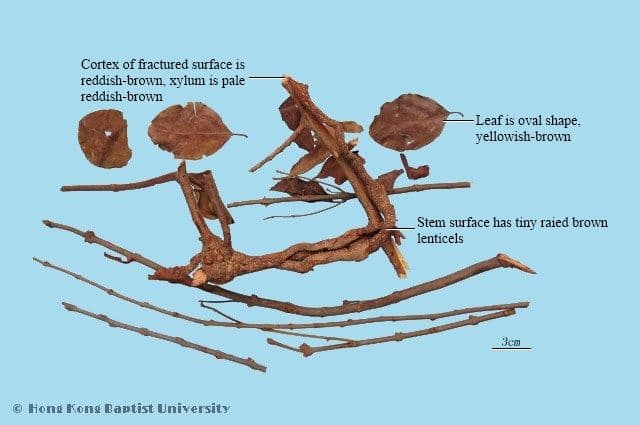
桑寄生 · Sang Ji Sheng
Herba Taxilli
Discover Sang Ji Sheng, a revered TCM herb, as we explore its traditional uses for joint pain, pregnancy support, and overall vitality, now being validated by modern scientific research.
9-30g
9-30g
Place 9-30 grams of dried Sang Ji Sheng stems in a non-metallic pot with 2-3 cups of water. Bring to a boil, then reduce heat and simmer gently for 20-30 minutes. Strain and drink the liquid. This can be done 1-2 times daily. For enhanced effects, some traditional preparations involve steaming the herb with yellow wine (酒蒸桑寄生) before decoction, as noted in studies optimizing processing methods.
If using a powdered extract or capsules, follow the manufacturer's instructions carefully. A typical dosage for powdered forms, as seen in traditional pill or powder formulas, might range from 1 to 2.4 grams daily, divided into doses. Always ensure the product is from a reputable source and consult a qualified practitioner for appropriate dosage.
While less common for Sang Ji Sheng than decoctions, tinctures offer a concentrated form. Follow product-specific instructions from your herbalist or manufacturer. Dosages vary widely depending on the concentration of the tincture.
Place 9-30 grams of dried Sang Ji Sheng stems in a non-metallic pot with 2-3 cups of water. Bring to a boil, then reduce heat and simmer gently for 20-30 minutes. Strain and drink the liquid. This can be done 1-2 times daily. For enhanced effects, some traditional preparations involve steaming the herb with yellow wine (酒蒸桑寄生) before decoction, as noted in studies optimizing processing methods.
If using a powdered extract or capsules, follow the manufacturer's instructions carefully. A typical dosage for powdered forms, as seen in traditional pill or powder formulas, might range from 1 to 2.4 grams daily, divided into doses. Always ensure the product is from a reputable source and consult a qualified practitioner for appropriate dosage.
While less common for Sang Ji Sheng than decoctions, tinctures offer a concentrated form. Follow product-specific instructions from your herbalist or manufacturer. Dosages vary widely depending on the concentration of the tincture.
Modern research is increasingly investigating Sang Ji Sheng, confirming the presence of numerous bioactive compounds, particularly flavonoids, with demonstrated anti-inflammatory, antioxidant, and even anticancer properties in preclinical studies. Its traditional uses for conditions like rheumatoid arthritis, threatened abortion, and hypertension are being explored through a scientific lens, though more human clinical trials are needed.
Preliminary — In vitro / animal studies
Modern research is increasingly investigating Sang Ji Sheng, confirming the presence of numerous bioactive compounds, particularly flavonoids, with demonstrated anti-inflammatory, antioxidant, and even anticancer properties in preclinical studies. Its traditional uses for conditions like rheumatoid arthritis, threatened abortion, and hypertension are being explored through a scientific lens, though more human clinical trials are needed.
Preliminary — In vitro / animal studies
Insufficient Data
Insufficient Data
Imagine a hardy plant, not rooted in the soil itself, but drawing life from the branches of mulberry trees, thriving as a 'guest' high above the earth. This is Sang Ji Sheng, or Herba Taxilli, also affectionately known as Chinese Mistletoe or Mulberry Mistletoe Stems. For centuries, this remarkable herb has been a cornerstone in Traditional Chinese Medicine (TCM), revered not for its dramatic flair, but for its profound, quiet strength in nurturing the body's foundations.
I often tell my patients that some of the most potent remedies are the ones that grow in unexpected ways, mirroring how our bodies sometimes need support from unusual angles. Sang Ji Sheng, a parasitic herb that flourishes on mulberry trees, is a perfect example. It's a tonic herb used in TCM primarily to nourish the Liver and Kidney, strengthen sinews and bones, and calm the womb.
Its ability to draw vital essence from its host plant is, in a way, symbolic of how it helps our bodies draw strength from within.
Ancient texts speak highly of its broad applications. The Shennong Ben Cao Jing, one of the oldest Chinese pharmacopoeias, lists it as a superior herb, noting its ability to 'mainstay waist pain, infantile spinal rigidity, carbuncles, stabilize pregnancy, enrich skin and hair, strengthen teeth, and lengthen beard and eyebrows.' This speaks to its deep nourishing qualities, a holistic approach to health that we in integrative medicine constantly strive to rediscover.
In the intricate language of Traditional Chinese Medicine, every herb possesses a unique energetic signature. Sang Ji Sheng is described as neutral in nature, meaning it won't unduly warm or cool the body. This makes it a balanced, gentle tonic suitable for a wider range of individuals without causing significant energetic shifts.
Its flavors are bitter and sweet. The bitter quality often indicates a clearing or descending action, while the sweet quality points to a nourishing and harmonizing effect. This combination suggests that Sang Ji Sheng can both address stagnation and replenish deficiencies—a powerful dual action that makes it highly valued.
But perhaps its most defining characteristic is its meridian affinity: the Kidney and Liver meridians. In TCM, the Kidneys are considered the root of life, governing essence, growth, reproduction, and the strength of bones and marrow. The Liver governs the smooth flow of Qi (energy) and Blood, influencing sinews, ligaments, and emotional well-being.
By targeting these two vital organ systems, Sang Ji Sheng offers comprehensive support for foundational health, much like how Western functional medicine focuses on systemic balance rather than isolated symptoms.
This profound connection to the Liver and Kidney is why Sang Ji Sheng is so versatile. When I see a patient struggling with chronic lower back pain, weak knees, or early signs of bone density loss, I often think of the Kidney meridian's role. For those with stiff joints, muscle spasms, or even certain types of hypertension, the Liver meridian's influence on smooth flow becomes critical. Sang Ji Sheng addresses these interconnected patterns at their energetic root.
Sang Ji Sheng's unique actions translate into several key benefits that resonate deeply with common health concerns today.
One of Sang Ji Sheng's most celebrated actions is its ability to strengthen the sinews and bones and expel Wind-Dampness. In TCM, 'Wind-Dampness' describes a pattern often associated with joint pain, stiffness, and conditions like rheumatoid arthritis, where symptoms might migrate (wind) or feel heavy and swollen (dampness). By addressing the Liver (sinews) and Kidney (bones), it helps to fortify the underlying structures that become vulnerable to these external influences.
I recall a patient, a former gardener named Sarah, who came to me with nagging knee pain that worsened with damp weather. Western scans showed mild osteoarthritis, but the pain was disproportionate. We incorporated Sang Ji Sheng into her herbal formula, and over several months, she noticed a remarkable reduction in stiffness and discomfort, especially when the weather turned. Her body felt more resilient. This aligns perfectly with the comprehensive review published in Chin Med.
in 2022, which highlighted Taxillus chinensis's traditional uses for rheumatoid arthritis and arthralgia, alongside its documented anti-inflammatory properties. It’s a beautiful example of ancient wisdom finding modern scientific echoes.
Another crucial action of Sang Ji Sheng is to nourish the Blood and calm the womb. This makes it a valued herb in women's health, particularly for conditions related to threatened abortion or restless fetus syndrome, where a deficiency of Liver Blood or Kidney Essence might lead to uterine instability.
While this is a profound traditional application, it's one I approach with the utmost caution and collaboration with my Western medical colleagues, given the critical nature of pregnancy. However, the classical text Ben Cao Gang Mu explicitly states its efficacy in 'stabilizing the fetus' (安胎元), underscoring its historical importance. Modern research continues to investigate these mechanisms, looking at how its chemical constituents might support uterine health.
By nourishing the Liver and Kidney, Sang Ji Sheng also contributes to overall vitality. The Kidney energy is our fundamental life force, and strong Kidney essence often translates to better aging, robust energy, and healthy hair and teeth. The Liver's role in circulating Blood also means that good Liver health reflects in the skin. The herb is traditionally noted to benefit the skin, suggesting that its internal nourishing actions have outward manifestations of health and radiance.
This holistic view understands that true beauty emanates from within.
The beauty of integrative medicine is seeing ancient practices illuminated by modern scientific inquiry. Sang Ji Sheng is a prime example of an herb garnering increasing attention from researchers worldwide. A comprehensive review published in Chin Med. in 2022, involving institutions like Southwest Medical University and Chengdu University of Traditional Chinese Medicine, summarized its traditional uses for conditions like rheumatoid arthritis, arthralgia, threatened abortion, and hypertension.
Crucially, this review highlighted its various pharmacological properties, including anti-inflammatory, antioxidant, and even anticancer effects, while emphasizing the need for future clinical trials to further validate these findings.
One fascinating area of modern exploration is Sang Ji Sheng's potential role in metabolic health. In 2008, researchers Wang Y, Deng M, Zhang SY, Zhou ZK, and Tian W published a study in the Journal of Ethnopharmacology demonstrating that extracts from Loranthaceae (the plant family to which Taxillus chinensis belongs) showed significantly stronger inhibition of fatty acid synthase (FAS) compared to other mistletoe varieties.
FAS is a key enzyme involved in the synthesis of fatty acids, and its inhibition can impact fat storage. Even more compelling, oral administration of Taxillus chinensis extract reduced body weight and food intake in mice, suggesting its potential for weight control and metabolic support. This opens up entirely new avenues for research into obesity and metabolic syndrome, conditions that are prevalent in our modern society.
The identified bioactive ingredients, particularly flavonoids, are thought to be key players in these observed effects. While these findings are largely from preclinical and in vitro studies, they provide crucial scientific grounding for many of Sang Ji Sheng's traditional applications and point towards exciting future clinical investigations.
Integrating Sang Ji Sheng into your wellness routine often involves traditional preparations, which enhance its therapeutic properties. The most common method is a decoction, essentially a concentrated herbal tea.
For a decoction, you would typically use 9 to 30 grams of dried Sang Ji Sheng stems. Place the herb in a non-metallic pot (glass or ceramic is ideal) with about 2-3 cups of water. Bring it to a boil, then reduce the heat and simmer gently for 20-30 minutes. Strain the liquid and drink it warm. This can be done once or twice daily.
Some traditional preparations involve 'wine-steaming' (jiu zheng) the herb before decoction, which, as Li Huifeng et al. explored in China Pharmacy in 2024, can optimize the content of active compounds like avicularin and quercetin.
If you prefer the convenience of powders or capsules, the dosage will be significantly lower due to concentration. Research by Jin Zishan et al. in 2022, published in the Journal of Changchun University of Chinese Medicine, indicated that typical dosages for pills or powders range from 1 to 2.4 grams.
Always ensure you purchase from a reputable brand and follow their specific instructions, ideally under the guidance of a qualified herbal practitioner who can tailor the dosage to your individual needs and constitution. They can also advise on optimal combinations, such as pairing it with Du Zhong (Eucommia Bark) or Niu Xi (Achyranthes Root) to enhance its liver and kidney tonic effects, as suggested by the same research.
As with any potent medicinal herb, safety is paramount. While Sang Ji Sheng is valued for its gentle, neutral nature, there are critical considerations to keep in mind.
Sang Ji Sheng is contraindicated for individuals with underlying conditions of 'Dampness and Heat' in their body. These patterns in TCM can manifest as specific symptoms like acute inflammation, strong fevers, or certain skin conditions. A qualified TCM practitioner can accurately diagnose these patterns. Crucially, large overdoses of Sang Ji Sheng may result in severe vomiting, diarrhea, and can even be fatal. Strict adherence to prescribed dosages is non-negotiable.
This herb must be used with extreme caution if you are taking certain Western medications due to potential additive or synergistic effects:
Anticoagulants and Antiplatelet Drugs: If you are on blood thinners such as heparin, warfarin (Coumadin), or enoxaparin (Lovenox), or antiplatelet drugs like aspirin, dipyridamole (Persantine), or clopidogrel (Plavix), concurrent use with Sang Ji Sheng may increase the risk of bleeding. This interaction can be serious. Always consult your physician immediately before combining.
Diuretics: Using Sang Ji Sheng alongside diuretics such as may lead to increased elimination of water and/or electrolytes, potentially causing imbalances. Monitor closely and discuss with your doctor.
While TCM traditionally uses Sang Ji Sheng to calm the womb and support threatened abortion, I cannot overstate the importance of caution here. Given the potential for severe adverse effects with overdose and the general lack of extensive, rigorous human clinical trials on its safety during pregnancy and lactation, it should only be used under the direct, vigilant supervision of both your obstetrician and a highly experienced integrative medicine physician or TCM practitioner. Never self-prescribe during these sensitive periods.
Always inform all your healthcare providers about any herbs or supplements you are taking to ensure your safety and well-being.
Sang Ji Sheng reminds us that healing can come from unexpected places and that the intricate web of nature often holds answers we are only just beginning to scientifically articulate. Its journey from ancient reverence for strengthening the body's core to modern scientific investigation into anti-inflammatory and metabolic pathways is a testament to its enduring power.
As we continue to bridge the wisdom of traditions with the rigor of modern science, herbs like Sang Ji Sheng offer a profound invitation to understand our bodies, and the world around us, with greater depth and respect.
It’s a journey of continuous learning, one that promises a richer, more integrated approach to health and well-being for all of us.
Imagine a hardy plant, not rooted in the soil itself, but drawing life from the branches of mulberry trees, thriving as a 'guest' high above the earth. This is Sang Ji Sheng, or Herba Taxilli, also affectionately known as Chinese Mistletoe or Mulberry Mistletoe Stems. For centuries, this remarkable herb has been a cornerstone in Traditional Chinese Medicine (TCM), revered not for its dramatic flair, but for its profound, quiet strength in nurturing the body's foundations.
I often tell my patients that some of the most potent remedies are the ones that grow in unexpected ways, mirroring how our bodies sometimes need support from unusual angles. Sang Ji Sheng, a parasitic herb that flourishes on mulberry trees, is a perfect example. It's a tonic herb used in TCM primarily to nourish the Liver and Kidney, strengthen sinews and bones, and calm the womb.
Its ability to draw vital essence from its host plant is, in a way, symbolic of how it helps our bodies draw strength from within.
Ancient texts speak highly of its broad applications. The Shennong Ben Cao Jing, one of the oldest Chinese pharmacopoeias, lists it as a superior herb, noting its ability to 'mainstay waist pain, infantile spinal rigidity, carbuncles, stabilize pregnancy, enrich skin and hair, strengthen teeth, and lengthen beard and eyebrows.' This speaks to its deep nourishing qualities, a holistic approach to health that we in integrative medicine constantly strive to rediscover.
In the intricate language of Traditional Chinese Medicine, every herb possesses a unique energetic signature. Sang Ji Sheng is described as neutral in nature, meaning it won't unduly warm or cool the body. This makes it a balanced, gentle tonic suitable for a wider range of individuals without causing significant energetic shifts.
Its flavors are bitter and sweet. The bitter quality often indicates a clearing or descending action, while the sweet quality points to a nourishing and harmonizing effect. This combination suggests that Sang Ji Sheng can both address stagnation and replenish deficiencies—a powerful dual action that makes it highly valued.
But perhaps its most defining characteristic is its meridian affinity: the Kidney and Liver meridians. In TCM, the Kidneys are considered the root of life, governing essence, growth, reproduction, and the strength of bones and marrow. The Liver governs the smooth flow of Qi (energy) and Blood, influencing sinews, ligaments, and emotional well-being.
By targeting these two vital organ systems, Sang Ji Sheng offers comprehensive support for foundational health, much like how Western functional medicine focuses on systemic balance rather than isolated symptoms.
This profound connection to the Liver and Kidney is why Sang Ji Sheng is so versatile. When I see a patient struggling with chronic lower back pain, weak knees, or early signs of bone density loss, I often think of the Kidney meridian's role. For those with stiff joints, muscle spasms, or even certain types of hypertension, the Liver meridian's influence on smooth flow becomes critical. Sang Ji Sheng addresses these interconnected patterns at their energetic root.
Sang Ji Sheng's unique actions translate into several key benefits that resonate deeply with common health concerns today.
One of Sang Ji Sheng's most celebrated actions is its ability to strengthen the sinews and bones and expel Wind-Dampness. In TCM, 'Wind-Dampness' describes a pattern often associated with joint pain, stiffness, and conditions like rheumatoid arthritis, where symptoms might migrate (wind) or feel heavy and swollen (dampness). By addressing the Liver (sinews) and Kidney (bones), it helps to fortify the underlying structures that become vulnerable to these external influences.
I recall a patient, a former gardener named Sarah, who came to me with nagging knee pain that worsened with damp weather. Western scans showed mild osteoarthritis, but the pain was disproportionate. We incorporated Sang Ji Sheng into her herbal formula, and over several months, she noticed a remarkable reduction in stiffness and discomfort, especially when the weather turned. Her body felt more resilient. This aligns perfectly with the comprehensive review published in Chin Med.
in 2022, which highlighted Taxillus chinensis's traditional uses for rheumatoid arthritis and arthralgia, alongside its documented anti-inflammatory properties. It’s a beautiful example of ancient wisdom finding modern scientific echoes.
Another crucial action of Sang Ji Sheng is to nourish the Blood and calm the womb. This makes it a valued herb in women's health, particularly for conditions related to threatened abortion or restless fetus syndrome, where a deficiency of Liver Blood or Kidney Essence might lead to uterine instability.
While this is a profound traditional application, it's one I approach with the utmost caution and collaboration with my Western medical colleagues, given the critical nature of pregnancy. However, the classical text Ben Cao Gang Mu explicitly states its efficacy in 'stabilizing the fetus' (安胎元), underscoring its historical importance. Modern research continues to investigate these mechanisms, looking at how its chemical constituents might support uterine health.
By nourishing the Liver and Kidney, Sang Ji Sheng also contributes to overall vitality. The Kidney energy is our fundamental life force, and strong Kidney essence often translates to better aging, robust energy, and healthy hair and teeth. The Liver's role in circulating Blood also means that good Liver health reflects in the skin. The herb is traditionally noted to benefit the skin, suggesting that its internal nourishing actions have outward manifestations of health and radiance.
This holistic view understands that true beauty emanates from within.
The beauty of integrative medicine is seeing ancient practices illuminated by modern scientific inquiry. Sang Ji Sheng is a prime example of an herb garnering increasing attention from researchers worldwide. A comprehensive review published in Chin Med. in 2022, involving institutions like Southwest Medical University and Chengdu University of Traditional Chinese Medicine, summarized its traditional uses for conditions like rheumatoid arthritis, arthralgia, threatened abortion, and hypertension.
Crucially, this review highlighted its various pharmacological properties, including anti-inflammatory, antioxidant, and even anticancer effects, while emphasizing the need for future clinical trials to further validate these findings.
One fascinating area of modern exploration is Sang Ji Sheng's potential role in metabolic health. In 2008, researchers Wang Y, Deng M, Zhang SY, Zhou ZK, and Tian W published a study in the Journal of Ethnopharmacology demonstrating that extracts from Loranthaceae (the plant family to which Taxillus chinensis belongs) showed significantly stronger inhibition of fatty acid synthase (FAS) compared to other mistletoe varieties.
FAS is a key enzyme involved in the synthesis of fatty acids, and its inhibition can impact fat storage. Even more compelling, oral administration of Taxillus chinensis extract reduced body weight and food intake in mice, suggesting its potential for weight control and metabolic support. This opens up entirely new avenues for research into obesity and metabolic syndrome, conditions that are prevalent in our modern society.
The identified bioactive ingredients, particularly flavonoids, are thought to be key players in these observed effects. While these findings are largely from preclinical and in vitro studies, they provide crucial scientific grounding for many of Sang Ji Sheng's traditional applications and point towards exciting future clinical investigations.
Integrating Sang Ji Sheng into your wellness routine often involves traditional preparations, which enhance its therapeutic properties. The most common method is a decoction, essentially a concentrated herbal tea.
For a decoction, you would typically use 9 to 30 grams of dried Sang Ji Sheng stems. Place the herb in a non-metallic pot (glass or ceramic is ideal) with about 2-3 cups of water. Bring it to a boil, then reduce the heat and simmer gently for 20-30 minutes. Strain the liquid and drink it warm. This can be done once or twice daily.
Some traditional preparations involve 'wine-steaming' (jiu zheng) the herb before decoction, which, as Li Huifeng et al. explored in China Pharmacy in 2024, can optimize the content of active compounds like avicularin and quercetin.
If you prefer the convenience of powders or capsules, the dosage will be significantly lower due to concentration. Research by Jin Zishan et al. in 2022, published in the Journal of Changchun University of Chinese Medicine, indicated that typical dosages for pills or powders range from 1 to 2.4 grams.
Always ensure you purchase from a reputable brand and follow their specific instructions, ideally under the guidance of a qualified herbal practitioner who can tailor the dosage to your individual needs and constitution. They can also advise on optimal combinations, such as pairing it with Du Zhong (Eucommia Bark) or Niu Xi (Achyranthes Root) to enhance its liver and kidney tonic effects, as suggested by the same research.
As with any potent medicinal herb, safety is paramount. While Sang Ji Sheng is valued for its gentle, neutral nature, there are critical considerations to keep in mind.
Sang Ji Sheng is contraindicated for individuals with underlying conditions of 'Dampness and Heat' in their body. These patterns in TCM can manifest as specific symptoms like acute inflammation, strong fevers, or certain skin conditions. A qualified TCM practitioner can accurately diagnose these patterns. Crucially, large overdoses of Sang Ji Sheng may result in severe vomiting, diarrhea, and can even be fatal. Strict adherence to prescribed dosages is non-negotiable.
This herb must be used with extreme caution if you are taking certain Western medications due to potential additive or synergistic effects:
Anticoagulants and Antiplatelet Drugs: If you are on blood thinners such as heparin, warfarin (Coumadin), or enoxaparin (Lovenox), or antiplatelet drugs like aspirin, dipyridamole (Persantine), or clopidogrel (Plavix), concurrent use with Sang Ji Sheng may increase the risk of bleeding. This interaction can be serious. Always consult your physician immediately before combining.
Diuretics: Using Sang Ji Sheng alongside diuretics such as may lead to increased elimination of water and/or electrolytes, potentially causing imbalances. Monitor closely and discuss with your doctor.
While TCM traditionally uses Sang Ji Sheng to calm the womb and support threatened abortion, I cannot overstate the importance of caution here. Given the potential for severe adverse effects with overdose and the general lack of extensive, rigorous human clinical trials on its safety during pregnancy and lactation, it should only be used under the direct, vigilant supervision of both your obstetrician and a highly experienced integrative medicine physician or TCM practitioner. Never self-prescribe during these sensitive periods.
Always inform all your healthcare providers about any herbs or supplements you are taking to ensure your safety and well-being.
Sang Ji Sheng reminds us that healing can come from unexpected places and that the intricate web of nature often holds answers we are only just beginning to scientifically articulate. Its journey from ancient reverence for strengthening the body's core to modern scientific investigation into anti-inflammatory and metabolic pathways is a testament to its enduring power.
As we continue to bridge the wisdom of traditions with the rigor of modern science, herbs like Sang Ji Sheng offer a profound invitation to understand our bodies, and the world around us, with greater depth and respect.
It’s a journey of continuous learning, one that promises a richer, more integrated approach to health and well-being for all of us.
This information is for educational purposes only and is not intended as medical advice. Always consult a qualified healthcare practitioner before using any herbal remedy.