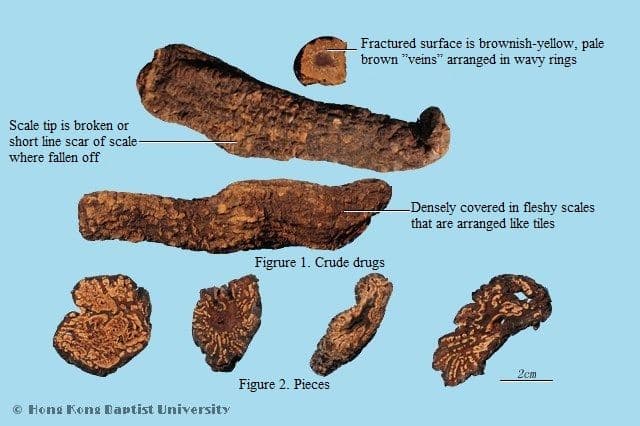
肉苁蓉 · Rou Cong Rong
Herba Cistanches
Often called 'Desert Ginseng,' Rou Cong Rong is a powerful Traditional Chinese Medicine herb revered for boosting vitality, cognitive function, and supporting healthy aging. Dr. Maya Chen explores its ancient wisdom and modern scientific validation.
6-21g Tincture: 2-4ml
For a traditional decoction, take 6-21 grams of dried Rou Cong Rong slices. Rinse them briefly to remove any surface dust. Combine the herb with 2-3 cups of water in a non-metallic pot. Bring to a boil, then reduce heat and simmer gently for 20-30 minutes. Strain and drink the liquid. This can be done once or twice daily.
If using a powdered extract or encapsulated form, follow the manufacturer's specific dosage instructions, which are often concentrated. Typical powder dosages might range from 1-3 grams per day, mixed into water or a smoothie. Capsules usually provide a pre-measured dose; check the label for exact recommendations, often taken once or twice daily with meals.
A tincture provides a convenient, concentrated form. The typical dosage is 2-4 milliliters, taken 1-3 times daily. You can add the tincture to a small amount of water or directly under your tongue for faster absorption. Always shake the bottle well before use.
Rou Cong Rong can also be incorporated into nourishing soups and stews. Add 10-20 grams of dried slices to your broth base along with other ingredients. Allow it to simmer for at least an hour to extract its beneficial compounds. Its slightly sweet and salty flavor can complement savory dishes, especially those with meats or root vegetables.
For a traditional decoction, take 6-21 grams of dried Rou Cong Rong slices. Rinse them briefly to remove any surface dust. Combine the herb with 2-3 cups of water in a non-metallic pot. Bring to a boil, then reduce heat and simmer gently for 20-30 minutes. Strain and drink the liquid. This can be done once or twice daily.
If using a powdered extract or encapsulated form, follow the manufacturer's specific dosage instructions, which are often concentrated. Typical powder dosages might range from 1-3 grams per day, mixed into water or a smoothie. Capsules usually provide a pre-measured dose; check the label for exact recommendations, often taken once or twice daily with meals.
A tincture provides a convenient, concentrated form. The typical dosage is 2-4 milliliters, taken 1-3 times daily. You can add the tincture to a small amount of water or directly under your tongue for faster absorption. Always shake the bottle well before use.
Rou Cong Rong can also be incorporated into nourishing soups and stews. Add 10-20 grams of dried slices to your broth base along with other ingredients. Allow it to simmer for at least an hour to extract its beneficial compounds. Its slightly sweet and salty flavor can complement savory dishes, especially those with meats or root vegetables.
Clinical and preclinical research, particularly on Cistanche deserticola and Cistanche tubulosa, indicates significant neuroprotective, anti-oxidative, anti-inflammatory, and immunomodulatory activities. Studies have identified phenylethanoid glycosides as key active compounds responsible for these effects, suggesting potential benefits for cognitive function and anti-aging processes. While traditional use is extensive, human clinical trials, particularly large-scale randomized controlled trials, are still emerging, though open-label studies show promise for conditions like mild Alzheimer's.
Moderate — Some clinical studies
Clinical and preclinical research, particularly on Cistanche deserticola and Cistanche tubulosa, indicates significant neuroprotective, anti-oxidative, anti-inflammatory, and immunomodulatory activities. Studies have identified phenylethanoid glycosides as key active compounds responsible for these effects, suggesting potential benefits for cognitive function and anti-aging processes. While traditional use is extensive, human clinical trials, particularly large-scale randomized controlled trials, are still emerging, though open-label studies show promise for conditions like mild Alzheimer's.
Moderate — Some clinical studies
Insufficient Data
Insufficient Data
Imagine a plant that thrives in the harshest desert conditions, drawing life from sand and sun, becoming a potent symbol of resilience and vitality. This isn't a mirage; it’s Rou Cong Rong, known in English as Broomrape Stem or Cistanche. Often dubbed 'Desert Ginseng' – though it's no botanical relative to true ginseng – this fascinating herb has been a cornerstone of Traditional Chinese Medicine (TCM) for millennia, revered for its profound ability to invigorate the body and mind.
My journey into integrative medicine, bridging my training at Beijing University of Chinese Medicine with Western functional approaches, has always sought to illuminate the ancient with the modern. Rou Cong Rong is a perfect example of how these two perspectives can beautifully align. Rou Cong Rong (Herba Cistanches), also known as Broomrape Stem or Fleshy Broomrape Herb, is a tonic herb used in TCM for tonifying the Kidneys, strengthening Yang, and benefiting Jing (essence) and marrow.
It also plays a unique role in moistening the intestines to facilitate the passage of stool.
For 15 years, I've seen how understanding herbs like Rou Cong Rong can transform a patient's health narrative. It’s not just about what an herb does, but how it interacts with your body's intricate systems, offering a holistic pathway to deeper wellness.
In the nuanced language of Traditional Chinese Medicine, Rou Cong Rong holds a distinctive place. Its nature is warm, its flavors are sweet and salty, and it primarily enters the Large Intestine, Kidney, Ren, and Dai meridians. Let's break down what these qualities mean for your health.
The warm nature of Rou Cong Rong translates to its ability to gently heat and stimulate the body's internal functions. Think of it as a subtle internal glow, rather than a blazing fire. This warmth is crucial for invigorating what we call Kidney Yang, the foundational energy that drives metabolism, reproductive function, and overall vitality. When Kidney Yang is deficient, people often feel cold, tired, and experience a decline in libido or mental sharpness.
Rou Cong Rong helps rekindle this essential spark.
Its sweet flavor indicates its nourishing and harmonizing properties—it can relax tension and provide sustenance. The salty flavor, in TCM, is associated with the Kidneys and the ability to soften hardness, moisten, and purge. This combination makes Rou Cong Rong uniquely effective: it nourishes deeply while also promoting healthy elimination.
The herb’s affinity for the Kidney meridian means it directly supports what Western medicine might call the adrenal glands, reproductive organs, and bone marrow. The Large Intestine meridian connection explains its gentle laxative effect, helping to moisten dry bowels – a common issue for those with aging bodies or compromised Jing (essence).
As the ancient text Shennong Ben Cao Jing (神农本草经) states, it 'primarily addresses five labors and seven injuries, replenishes the center, and nourishes the five zang organs,' highlighting its comprehensive nourishing effect on the body's core systems.
I recall a patient, a 58-year-old executive named David, who came to me feeling utterly drained. He was experiencing chronic fatigue, a nagging sense of 'brain fog,' and struggled with occasional constipation. His Western doctor found nothing overtly wrong, but he knew something was off. In TCM, we identified a clear pattern of Kidney Yang deficiency.
Incorporating Rou Cong Rong into his personalized herbal formula, alongside dietary shifts, we saw a gradual but steady return of his energy and mental clarity. His constipation eased, and he felt a renewed sense of vigor. It was a profound illustration of how nourishing the body's deep reserves can restore systemic balance.
Rou Cong Rong's multifaceted actions make it a powerful ally for several common health concerns.
Feeling perpetually tired, even after a full night's sleep? Rou Cong Rong is renowned as a 'Kidney Yang tonic,' meaning it helps restore your body's deep, fundamental energy. This isn't a caffeine-like jolt, but a sustained, internal warmth and resilience. In Western terms, we might think of this as supporting optimal adrenal function and mitochondrial health – the powerhouses of your cells.
It helps your body produce and manage energy more efficiently, leading to a natural boost in stamina and a reduction in chronic fatigue.
If you've noticed a decline in memory, focus, or mental clarity, Rou Cong Rong might be a valuable addition to your regimen. TCM theory links the Kidney system to the brain and marrow, considering them intimately connected to our cognitive vitality. By nourishing the Kidney's Jing (essence) and strengthening its energy, Rou Cong Rong supports robust brain function. Modern research, as we’ll see, increasingly validates its neuroprotective properties, suggesting it helps protect brain cells from damage and supports neural pathways.
Historically, Rou Cong Rong has been celebrated for its ability to enhance sexual function and libido in both men and women. In TCM, a strong Kidney Yang is essential for a healthy sex drive and reproductive vitality. The herb's actions 'strengthen Yang' and 'benefit Jing,' which are directly related to sexual performance and fertility.
While not a magic bullet, it works to restore balance and nourish the underlying systems that govern sexual health, addressing issues like low libido or mild erectile dysfunction from a holistic perspective. The Bencao Gangmu (本草纲目) notes its ability to 'strengthen yin and boost essence,' underscoring its traditional role in supporting reproductive vigor.
Unlike harsh stimulant laxatives, Rou Cong Rong works by 'moistening the intestines.' This is particularly beneficial for individuals experiencing constipation due to dryness or lack of vital fluids, often associated with aging or chronic illness. It gently lubricates the bowel, facilitating the passage of stool without causing cramping or dependency. It's a nuanced approach to digestive health, reflecting TCM's understanding of how all bodily systems are interconnected.
The pursuit of graceful aging is a universal human desire, and Rou Cong Rong has long been considered an anti-aging tonic in TCM due to its ability to preserve and nourish Jing. From a modern scientific standpoint, this translates to its robust antioxidant properties. By helping to neutralize free radicals and reduce oxidative stress, Rou Cong Rong protects cells and tissues from damage, thereby supporting overall cellular health and potentially slowing down aspects of the aging process.
The traditional wisdom surrounding Rou Cong Rong is increasingly supported by contemporary scientific investigation. Researchers are keen to understand the mechanisms behind its profound health benefits.
A comprehensive review by Zhiming Li et al., published in Frontiers in Pharmacology in 2016, highlighted that Cistanche species exhibit significant neuroprotective, anti-oxidative, and anti-aging activities. This review identified phenylethanoid glycosides as the major active compounds responsible for these effects. This aligns beautifully with the TCM concept of nourishing Jing and marrow, which are intimately tied to brain health and longevity.
Further reinforcing these findings, Tian Wang et al. summarized in Molecules in 2012 that Cistanche deserticola possesses a broad spectrum of medicinal functions, including hormone regulation, immunomodulatory, neuroprotective, antioxidative, anti-inflammatory, and anti-fatigue activities. These studies provide a scientific framework for understanding how Rou Cong Rong delivers its traditional benefits of boosting vitality and combating the effects of aging.
For cognitive support, specifically, an open-label study by Guo Q, Zhou Y, Wang C J, et al., published in the American Journal of Alzheimer's Disease and Other Dementias in 2013, indicated that Cistanche tubulosa glycoside capsules (Memoregain®) have potential as a treatment option for mild to moderate Alzheimer's Disease, with mild adverse reactions. While this was an open-label study, it offers promising insights into Cistanche's potential in neurological health.
More recent Chinese research, such as a 2024 study by Wang Lu, Wu Lie, and Jia Jianxin in Zhonghua Zhongyiyao Xuekan, further elucidates Rou Cong Rong's role in improving central nervous system diseases through antioxidant and anti-apoptotic mechanisms. They specifically note that active components like phenylethanoid glycosides and iridoids showed neuroprotective effects in models of cerebral ischemia-reperfusion injury. This highlights how modern science is meticulously dissecting the intricate pathways through which this ancient herb exerts its benefits.
Incorporating Rou Cong Rong into your wellness routine can take several forms, depending on your preference and the guidance of your practitioner. Consistency is key when working with tonic herbs.
The most common traditional method is to prepare a decoction. Take 6-21 grams of dried Rou Cong Rong slices. Gently rinse the slices, then place them in a non-metallic pot with about 2-3 cups of water. Bring the water to a boil, then reduce the heat to a simmer and let it cook for 20-30 minutes. Strain the liquid and drink. This can be done once or twice daily.
You can often reuse the herb material for a second, weaker decoction.
For convenience, high-quality tinctures or liquid extracts are available. The typical dosage for a tincture is 2-4 milliliters, usually taken 1-3 times a day. Always read the product label carefully, as concentrations can vary. These forms are excellent for busy individuals.
Rou Cong Rong can also be found in powdered form or encapsulated. If using a powder, you might mix 1-3 grams into a smoothie or warm water daily. Capsules offer a pre-measured dose; follow the manufacturer's instructions, typically one or two capsules once or twice daily. These are often standardized extracts, ensuring a consistent level of active compounds.
It's worth noting that with tonic herbs, some individuals prefer to cycle their use – taking it for a few weeks, then taking a break for a week or two. This can help the body remain responsive to the herb's effects. However, for chronic conditions, continuous use under guidance may be appropriate.
While Rou Cong Rong is generally considered safe for appropriate individuals, its potent actions mean it is not suitable for everyone. It is absolutely critical to be aware of its contraindications and potential drug interactions. This is not a herb to be taken lightly or without consideration for your unique constitution.
Rou Cong Rong is contraindicated for those with diarrhea from Spleen and Stomach Deficiency. Its moistening properties could worsen loose stools. Similarly, it is contraindicated for those with Deficient Yin with Heat signs (e.g., night sweats, hot flashes, dry mouth, red tongue) or those easily aroused with premature ejaculation. Its warm, Yang-tonifying nature would exacerbate these heat-related or overly active conditions. Lastly, it is contraindicated for those with Excess heat from other causes.
This herb is known to increase the activities of neurotransmitters such as norepinephrine, dopamine, and serotonin in the hypothalamus. Therefore, it may interact with sympathomimetics (drugs that mimic the effects of adrenaline, like pseudoephedrine), monoamine oxidase inhibitors (MAOIs), selective serotonin reuptake inhibitors (SSRIs), and tricyclic antidepressants. If you are on any of these medications, or any medication that affects neurotransmitter levels, do not use Rou Cong Rong without explicit consultation and supervision from your prescribing physician and a qualified herbalist.
The potential for adverse interactions is serious.
Due to its potent effects on hormones and internal body systems, Rou Cong Rong should be avoided entirely during pregnancy and lactation. There is insufficient safety data for these populations, and the risks outweigh any potential benefits. Always prioritize the safety of both mother and child.
Rou Cong Rong stands as a powerful testament to the enduring wisdom of Traditional Chinese Medicine and its elegant synergy with modern scientific inquiry. It reminds us that vitality isn't merely the absence of disease, but a vibrant, robust engagement with life, supported by our body's deepest energetic reserves.
As we continue to explore the intricate dance between ancient herbs and contemporary health challenges, Cistanche offers a compelling invitation to nourish our essence, sharpen our minds, and rekindle our inherent resilience. It's a reminder that sometimes, the most profound answers to modern ailments can be found thriving in the most unexpected, ancient places.
Imagine a plant that thrives in the harshest desert conditions, drawing life from sand and sun, becoming a potent symbol of resilience and vitality. This isn't a mirage; it’s Rou Cong Rong, known in English as Broomrape Stem or Cistanche. Often dubbed 'Desert Ginseng' – though it's no botanical relative to true ginseng – this fascinating herb has been a cornerstone of Traditional Chinese Medicine (TCM) for millennia, revered for its profound ability to invigorate the body and mind.
My journey into integrative medicine, bridging my training at Beijing University of Chinese Medicine with Western functional approaches, has always sought to illuminate the ancient with the modern. Rou Cong Rong is a perfect example of how these two perspectives can beautifully align. Rou Cong Rong (Herba Cistanches), also known as Broomrape Stem or Fleshy Broomrape Herb, is a tonic herb used in TCM for tonifying the Kidneys, strengthening Yang, and benefiting Jing (essence) and marrow.
It also plays a unique role in moistening the intestines to facilitate the passage of stool.
For 15 years, I've seen how understanding herbs like Rou Cong Rong can transform a patient's health narrative. It’s not just about what an herb does, but how it interacts with your body's intricate systems, offering a holistic pathway to deeper wellness.
In the nuanced language of Traditional Chinese Medicine, Rou Cong Rong holds a distinctive place. Its nature is warm, its flavors are sweet and salty, and it primarily enters the Large Intestine, Kidney, Ren, and Dai meridians. Let's break down what these qualities mean for your health.
The warm nature of Rou Cong Rong translates to its ability to gently heat and stimulate the body's internal functions. Think of it as a subtle internal glow, rather than a blazing fire. This warmth is crucial for invigorating what we call Kidney Yang, the foundational energy that drives metabolism, reproductive function, and overall vitality. When Kidney Yang is deficient, people often feel cold, tired, and experience a decline in libido or mental sharpness.
Rou Cong Rong helps rekindle this essential spark.
Its sweet flavor indicates its nourishing and harmonizing properties—it can relax tension and provide sustenance. The salty flavor, in TCM, is associated with the Kidneys and the ability to soften hardness, moisten, and purge. This combination makes Rou Cong Rong uniquely effective: it nourishes deeply while also promoting healthy elimination.
The herb’s affinity for the Kidney meridian means it directly supports what Western medicine might call the adrenal glands, reproductive organs, and bone marrow. The Large Intestine meridian connection explains its gentle laxative effect, helping to moisten dry bowels – a common issue for those with aging bodies or compromised Jing (essence).
As the ancient text Shennong Ben Cao Jing (神农本草经) states, it 'primarily addresses five labors and seven injuries, replenishes the center, and nourishes the five zang organs,' highlighting its comprehensive nourishing effect on the body's core systems.
I recall a patient, a 58-year-old executive named David, who came to me feeling utterly drained. He was experiencing chronic fatigue, a nagging sense of 'brain fog,' and struggled with occasional constipation. His Western doctor found nothing overtly wrong, but he knew something was off. In TCM, we identified a clear pattern of Kidney Yang deficiency.
Incorporating Rou Cong Rong into his personalized herbal formula, alongside dietary shifts, we saw a gradual but steady return of his energy and mental clarity. His constipation eased, and he felt a renewed sense of vigor. It was a profound illustration of how nourishing the body's deep reserves can restore systemic balance.
Rou Cong Rong's multifaceted actions make it a powerful ally for several common health concerns.
Feeling perpetually tired, even after a full night's sleep? Rou Cong Rong is renowned as a 'Kidney Yang tonic,' meaning it helps restore your body's deep, fundamental energy. This isn't a caffeine-like jolt, but a sustained, internal warmth and resilience. In Western terms, we might think of this as supporting optimal adrenal function and mitochondrial health – the powerhouses of your cells.
It helps your body produce and manage energy more efficiently, leading to a natural boost in stamina and a reduction in chronic fatigue.
If you've noticed a decline in memory, focus, or mental clarity, Rou Cong Rong might be a valuable addition to your regimen. TCM theory links the Kidney system to the brain and marrow, considering them intimately connected to our cognitive vitality. By nourishing the Kidney's Jing (essence) and strengthening its energy, Rou Cong Rong supports robust brain function. Modern research, as we’ll see, increasingly validates its neuroprotective properties, suggesting it helps protect brain cells from damage and supports neural pathways.
Historically, Rou Cong Rong has been celebrated for its ability to enhance sexual function and libido in both men and women. In TCM, a strong Kidney Yang is essential for a healthy sex drive and reproductive vitality. The herb's actions 'strengthen Yang' and 'benefit Jing,' which are directly related to sexual performance and fertility.
While not a magic bullet, it works to restore balance and nourish the underlying systems that govern sexual health, addressing issues like low libido or mild erectile dysfunction from a holistic perspective. The Bencao Gangmu (本草纲目) notes its ability to 'strengthen yin and boost essence,' underscoring its traditional role in supporting reproductive vigor.
Unlike harsh stimulant laxatives, Rou Cong Rong works by 'moistening the intestines.' This is particularly beneficial for individuals experiencing constipation due to dryness or lack of vital fluids, often associated with aging or chronic illness. It gently lubricates the bowel, facilitating the passage of stool without causing cramping or dependency. It's a nuanced approach to digestive health, reflecting TCM's understanding of how all bodily systems are interconnected.
The pursuit of graceful aging is a universal human desire, and Rou Cong Rong has long been considered an anti-aging tonic in TCM due to its ability to preserve and nourish Jing. From a modern scientific standpoint, this translates to its robust antioxidant properties. By helping to neutralize free radicals and reduce oxidative stress, Rou Cong Rong protects cells and tissues from damage, thereby supporting overall cellular health and potentially slowing down aspects of the aging process.
The traditional wisdom surrounding Rou Cong Rong is increasingly supported by contemporary scientific investigation. Researchers are keen to understand the mechanisms behind its profound health benefits.
A comprehensive review by Zhiming Li et al., published in Frontiers in Pharmacology in 2016, highlighted that Cistanche species exhibit significant neuroprotective, anti-oxidative, and anti-aging activities. This review identified phenylethanoid glycosides as the major active compounds responsible for these effects. This aligns beautifully with the TCM concept of nourishing Jing and marrow, which are intimately tied to brain health and longevity.
Further reinforcing these findings, Tian Wang et al. summarized in Molecules in 2012 that Cistanche deserticola possesses a broad spectrum of medicinal functions, including hormone regulation, immunomodulatory, neuroprotective, antioxidative, anti-inflammatory, and anti-fatigue activities. These studies provide a scientific framework for understanding how Rou Cong Rong delivers its traditional benefits of boosting vitality and combating the effects of aging.
For cognitive support, specifically, an open-label study by Guo Q, Zhou Y, Wang C J, et al., published in the American Journal of Alzheimer's Disease and Other Dementias in 2013, indicated that Cistanche tubulosa glycoside capsules (Memoregain®) have potential as a treatment option for mild to moderate Alzheimer's Disease, with mild adverse reactions. While this was an open-label study, it offers promising insights into Cistanche's potential in neurological health.
More recent Chinese research, such as a 2024 study by Wang Lu, Wu Lie, and Jia Jianxin in Zhonghua Zhongyiyao Xuekan, further elucidates Rou Cong Rong's role in improving central nervous system diseases through antioxidant and anti-apoptotic mechanisms. They specifically note that active components like phenylethanoid glycosides and iridoids showed neuroprotective effects in models of cerebral ischemia-reperfusion injury. This highlights how modern science is meticulously dissecting the intricate pathways through which this ancient herb exerts its benefits.
Incorporating Rou Cong Rong into your wellness routine can take several forms, depending on your preference and the guidance of your practitioner. Consistency is key when working with tonic herbs.
The most common traditional method is to prepare a decoction. Take 6-21 grams of dried Rou Cong Rong slices. Gently rinse the slices, then place them in a non-metallic pot with about 2-3 cups of water. Bring the water to a boil, then reduce the heat to a simmer and let it cook for 20-30 minutes. Strain the liquid and drink. This can be done once or twice daily.
You can often reuse the herb material for a second, weaker decoction.
For convenience, high-quality tinctures or liquid extracts are available. The typical dosage for a tincture is 2-4 milliliters, usually taken 1-3 times a day. Always read the product label carefully, as concentrations can vary. These forms are excellent for busy individuals.
Rou Cong Rong can also be found in powdered form or encapsulated. If using a powder, you might mix 1-3 grams into a smoothie or warm water daily. Capsules offer a pre-measured dose; follow the manufacturer's instructions, typically one or two capsules once or twice daily. These are often standardized extracts, ensuring a consistent level of active compounds.
It's worth noting that with tonic herbs, some individuals prefer to cycle their use – taking it for a few weeks, then taking a break for a week or two. This can help the body remain responsive to the herb's effects. However, for chronic conditions, continuous use under guidance may be appropriate.
While Rou Cong Rong is generally considered safe for appropriate individuals, its potent actions mean it is not suitable for everyone. It is absolutely critical to be aware of its contraindications and potential drug interactions. This is not a herb to be taken lightly or without consideration for your unique constitution.
Rou Cong Rong is contraindicated for those with diarrhea from Spleen and Stomach Deficiency. Its moistening properties could worsen loose stools. Similarly, it is contraindicated for those with Deficient Yin with Heat signs (e.g., night sweats, hot flashes, dry mouth, red tongue) or those easily aroused with premature ejaculation. Its warm, Yang-tonifying nature would exacerbate these heat-related or overly active conditions. Lastly, it is contraindicated for those with Excess heat from other causes.
This herb is known to increase the activities of neurotransmitters such as norepinephrine, dopamine, and serotonin in the hypothalamus. Therefore, it may interact with sympathomimetics (drugs that mimic the effects of adrenaline, like pseudoephedrine), monoamine oxidase inhibitors (MAOIs), selective serotonin reuptake inhibitors (SSRIs), and tricyclic antidepressants. If you are on any of these medications, or any medication that affects neurotransmitter levels, do not use Rou Cong Rong without explicit consultation and supervision from your prescribing physician and a qualified herbalist.
The potential for adverse interactions is serious.
Due to its potent effects on hormones and internal body systems, Rou Cong Rong should be avoided entirely during pregnancy and lactation. There is insufficient safety data for these populations, and the risks outweigh any potential benefits. Always prioritize the safety of both mother and child.
Rou Cong Rong stands as a powerful testament to the enduring wisdom of Traditional Chinese Medicine and its elegant synergy with modern scientific inquiry. It reminds us that vitality isn't merely the absence of disease, but a vibrant, robust engagement with life, supported by our body's deepest energetic reserves.
As we continue to explore the intricate dance between ancient herbs and contemporary health challenges, Cistanche offers a compelling invitation to nourish our essence, sharpen our minds, and rekindle our inherent resilience. It's a reminder that sometimes, the most profound answers to modern ailments can be found thriving in the most unexpected, ancient places.
This information is for educational purposes only and is not intended as medical advice. Always consult a qualified healthcare practitioner before using any herbal remedy.