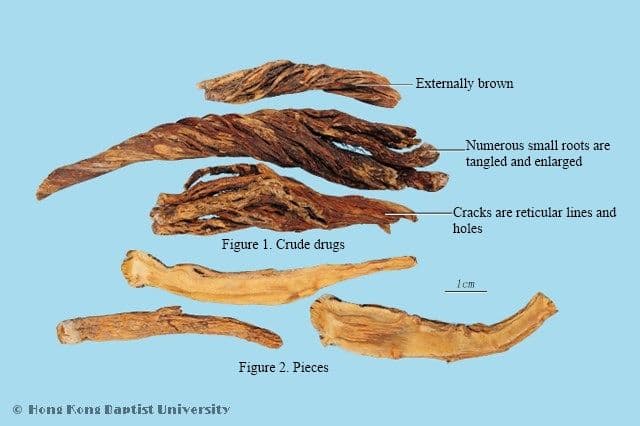
The first chill of autumn always brings a particular kind of ache to my clinic. Patients arrive describing stiff joints, a pervasive heaviness, and a dull, lingering pain that seems to deepen with the changing weather. Many have tried various remedies, often with limited success. This is where an ancient root, unassuming in appearance but profound in its actions, often enters the conversation: Qin Jiao.
For centuries, practitioners in Traditional Chinese Medicine (TCM) have turned to this remarkable herb to address what they call 'wind-dampness' – a pervasive imbalance that manifests as joint pain, muscle stiffness, and even systemic inflammation. Qin Jiao (Radix Gentianae Macrophyllae), also known as Gentiana Macrophylla Root or Chin-Chiu, is a potent root used in TCM primarily for expelling wind-dampness, clearing heat, and soothing discomfort within the body's intricate network of channels.
Its gentle yet effective nature makes it a cornerstone in formulas aimed at restoring fluidity and ease.
I remember a patient, Sarah, a retired gardener who loved her rose bushes but found her hands growing increasingly painful and swollen with each passing year. Western treatments offered some relief, but she still felt a deep, gnawing stiffness. When we integrated Qin Jiao into her regimen, carefully tailored to her specific pattern, she noticed a distinct shift.
'It's like the dampness in my bones finally started to dry up,' she told me, her eyes alight with hope, 'I can prune my roses again, Dr. Chen.' Her experience isn't unique; it echoes the wisdom passed down through generations. The classical text, Shennong Ben Cao Jing (The Divine Farmer's Materia Medica), noted Qin Jiao's ability to 'govern cold and heat evil qi, cold-damp wind bi, pain in the limbs and joints.
' This observation, from thousands of years ago, still resonates profoundly in modern practice.
What Makes Qin Jiao Special
In the intricate language of Traditional Chinese Medicine, every herb possesses a unique 'nature' and 'flavor' that dictates its therapeutic actions and the specific energetic pathways, or 'meridians,' it influences. Qin Jiao, with its slightly cold nature and a combination of bitter and acrid flavors, is a perfect example of this sophisticated system at work.
Its slightly cold nature indicates a capacity to clear heat and cool the body, which can be particularly beneficial in conditions marked by inflammation or a sensation of warmth. Think of it as a gentle internal coolant, but one that doesn't plunge the body into an extreme chill. This cooling property is balanced by its bitter flavor. In TCM, bitter herbs are often associated with draining, drying, and clearing.
They can help resolve dampness, stimulate digestion, and direct rebellious energy downwards. When we talk about 'dampness' in TCM, we're not just referring to water, but a pathological accumulation of fluids that can manifest as swelling, heaviness, or sluggishness.
Then there's the acrid flavor. Acrid herbs are known for their ability to move and disperse. This quality is crucial for Qin Jiao's role in 'expelling wind-dampness' and 'opening the channels.' Imagine a stagnant river: the bitter taste helps to dry the excess mud, while the acrid taste creates the current to get things flowing again.
This combination allows Qin Jiao to effectively penetrate deep into the body's tissues, particularly the sinews and collaterals, which are the connective tissues, tendons, and ligaments that support our movement.
Qin Jiao primarily influences the gallbladder, liver, and stomach meridians. The liver meridian, in TCM, governs the smooth flow of Qi (vital energy) and blood, and is intimately connected to our sinews and joints. The gallbladder, often paired with the liver, assists in the proper functioning of these systems. The stomach meridian is involved in digestion and providing nourishment, so affecting it allows the herb to address dampness that might accumulate from digestive imbalances.
By targeting these meridians, Qin Jiao can address the root causes of musculoskeletal discomfort and systemic dampness, offering a holistic approach to wellness that Western medicine is increasingly recognizing.
Top Benefits of Qin Jiao
Qin Jiao's multifaceted actions, rooted in centuries of TCM practice and increasingly validated by modern research, offer a range of significant benefits for health and well-being.
For Soothing Joint & Muscle Discomfort
One of Qin Jiao’s most celebrated applications in TCM is its ability to 'expel Wind-Dampness, open the channels and soothe the sinews and collaterals.' This is the classic TCM explanation for addressing conditions like arthritis, rheumatism, and generalized joint pain, often referred to as 'Bi syndrome.' When external factors like wind, cold, and dampness penetrate the body, they can obstruct the flow of Qi and blood in the meridians, leading to pain, stiffness, and swelling.
Qin Jiao acts to clear these obstructions, much like clearing debris from a blocked pathway, allowing for smoother movement and reduced discomfort. I’ve seen this firsthand with patients, like Mark, a carpenter whose knees would ache relentlessly after a long day. Incorporating Qin Jiao into his herbal formula helped him regain flexibility and significantly reduce his daily pain, allowing him to continue his craft with greater ease.
Modern pharmacological studies, including a 2018 review from Xi'an Jiaotong University researchers, have highlighted its significant anti-inflammatory and analgesic properties, which align perfectly with its traditional use for conditions like arthritis and stroke sequelae.
For Clearing Deficiency Heat & Reducing Inflammation
While many conditions involve 'excess heat,' some individuals experience 'Deficiency Heat,' which arises when the body's cooling (Yin) resources are depleted, allowing a relative excess of warmth to emerge. This can manifest as low-grade fevers, night sweats, or a persistent feeling of internal heat. Qin Jiao's slightly cold nature allows it to gently clear this type of heat without causing excessive cooling, making it suitable for more delicate individuals.
Its ability to 'clear Deficiency Heat' is particularly valuable in chronic inflammatory conditions where a subtle, underlying warmth may contribute to persistent symptoms. Researchers at Tianjin University of Traditional Chinese Medicine, in a 2025 review, noted that Gentianae Macrophyllae Radix plays an important role in the modern integrated treatment of rheumatic and immune diseases, which often involve inflammatory processes.
For Supporting Liver Health & Resolving Dampness
Qin Jiao's bitter flavor and influence on the liver and gallbladder meridians make it an excellent herb for 'resolving Dampness and reducing jaundice.' In TCM, the liver is responsible for the smooth flow of bile, and when its function is impaired, dampness and heat can accumulate, potentially leading to symptoms like jaundice, indigestion, or a general feeling of sluggishness.
The modern understanding of liver function aligns well with this; research published by Taylor & Francis in 2023 indicated that Qin Jiao possesses hepatoprotective and bile-promoting effects. This means it can help protect liver cells and encourage the healthy flow of bile, which is essential for digestion and detoxification.
For patients experiencing signs of dampness, such as a heavy head or a thick tongue coating, Qin Jiao can be a valuable addition to their regimen, helping the body to process and eliminate excess fluids.
For Gentle Bowel Regularity
While not its primary action, Qin Jiao also 'moistens the Intestines and unblocks the bowels.' This is a secondary benefit, often observed in cases where damp-heat or dryness contributes to occasional constipation. The gentle moistening action can help promote smoother bowel movements, especially when combined with its ability to resolve dampness and clear heat.
What the Science Says
The bridge between ancient wisdom and modern understanding is continually being strengthened, and Qin Jiao is a compelling example of this convergence. While Traditional Chinese Medicine has utilized Gentiana Macrophylla Root for millennia, contemporary scientific investigation is now unraveling the complex pharmacological mechanisms behind its observed benefits.
A systemic review published in the Journal of Ethnopharmacology in 2025 by researchers from the State Key Laboratory of Chinese Medicine Modernization at Tianjin University of Traditional Chinese Medicine highlighted Qin Jiao’s diverse bioactivities. The findings indicated that Gentianae Macrophyllae Radix exhibits antiviral, liver-protective, bile-promoting, and immune-regulating activities. This review underscored its significant role in the modern integrated treatment of rheumatic and immune diseases, directly validating many of its traditional applications for joint and systemic inflammation.
Further confirming these findings, a 2023 publication by Taylor & Francis elaborated on modern pharmacological studies, stating that Gentianae Macrophyllae Radix possesses anti-inflammatory, anti-tumor, hepatoprotective, immunomodulatory, and cardioprotective effects. The authors noted its primary clinical uses for conditions such as rheumatoid arthritis, ulcerative colitis, and stroke, showcasing its broad therapeutic potential. These effects are attributed to a rich array of active compounds.
Research, including a 2023 quality control study in RSC Advances, has identified 93 compounds within Qin Jiao, with key quality markers including gentianine (龙胆苦苷) and swertiamarin (獐牙菜苦苷). These cycloiridoid glycosides are believed to be central to the herb’s anti-inflammatory and immune-modulating properties. Indeed, the 2025 Journal of Ethnopharmacology review emphasized that the total content of gentianine and swertiamarin should exceed 2.5% to ensure its pharmacological efficacy.
A 2018 study from Xi'an Jiaotong University, published on PubMed, provided a comprehensive overview, noting that Radix Gentianae Macrophyllae displays a wide range of bioactivities including anti-inflammatory, anti-oxidant, hepato-protective, cardio- and neuro-protective, insecticidal, and anti-influenza effects. The researchers specifically mentioned its traditional use for conditions like arthritis, stroke, and facial paralysis, directly echoing the classical TCM texts.
While much of this research is preclinical or in the early stages of human clinical trials, the consistency of findings across different research groups, including those from the Key Laboratory of Tibetan Medicine Research, Northwest Institute of Plateau Biology, Chinese Academy of Sciences, provides a strong scientific foundation for Qin Jiao’s traditional uses. It's clear that this ancient root holds a significant place in the future of integrative medicine.
How to Use Qin Jiao
Bringing Qin Jiao into your wellness routine requires a mindful approach, respectful of its potency and traditional preparation methods. As with any potent herb, quality and correct dosage are paramount.
Traditional Decoction (Tea)
This is the most common and traditional method of preparation. To make a decoction, you'll typically use the dried root slices.
Instructions: Combine 3 to 12 grams of dried Qin Jiao root slices with 2-3 cups of water in a non-metallic pot (ceramic or glass is ideal). Bring to a boil, then reduce heat and simmer for 20-30 minutes. Strain the liquid and drink it warm. This can be taken once or twice daily. For a stronger effect or as part of a multi-herb formula, the simmering time might be extended.
Tincture
A tincture offers a convenient way to consume Qin Jiao, as it's a concentrated liquid extract.
Instructions: Follow the dosage recommendations on the product label, which typically range from 1 to 4 ml, taken 1-3 times daily. Tinctures can be taken directly or diluted in a small amount of water or juice.
Powder/Capsules
For those who prefer convenience or dislike the bitter taste, Qin Jiao can be found in powdered form or encapsulated.
Instructions: Dosage for powdered root or capsules can vary significantly based on concentration. Always adhere to the manufacturer's recommendations, or consult with a qualified practitioner to determine an appropriate dose, typically within the equivalent of 3-12g of crude herb per day.
When sourcing Qin Jiao, quality is key. A 2022 study on classical formulas published in 《中国实验方剂学杂志》 noted that the Gentiana macrophylla species is the prevalent base for Qin Jiao in traditional recipes, with wild varieties from Gansu and Shaanxi provinces in China often considered to be of superior quality. Look for reputable suppliers who can provide information on the herb's origin and testing for purity. High-quality Qin Jiao should have a distinct, slightly bitter scent and a firm texture.
I advise my patients to always prioritize organic, sustainably sourced herbs to ensure both efficacy and safety.
Safety & Who Should Avoid Qin Jiao
While Qin Jiao is a valuable herb, its potent nature means it is not suitable for everyone. It is critical to understand the contraindications and potential interactions before considering its use. Your safety is my highest priority.
Contraindications:
Spleen Deficiency Cold with loose stools or diarrhea: Qin Jiao's cold nature and bitter flavor can further cool the digestive system and exacerbate symptoms like loose stools or diarrhea in individuals with a pre-existing Spleen Deficiency Cold pattern. This condition often presents with a pale tongue, fatigue, and poor appetite.
Frequent urination: Due to its actions on fluid metabolism, Qin Jiao is contraindicated for those experiencing frequent urination, as it may worsen this symptom.
Chronic pain with emaciation: Individuals suffering from chronic pain accompanied by significant weight loss or emaciation should avoid Qin Jiao. Its draining and cooling properties may further weaken an already deficient body.
Potential Side Effects:
Nausea and vomiting: High doses of Qin Jiao may cause gastrointestinal upset, including nausea and vomiting. Always start with a lower dose and gradually increase, if needed, under professional guidance.
Drowsiness: This herb may cause drowsiness in some individuals. Exercise caution when driving or operating machinery until you know how Qin Jiao affects you.
Drug Interactions:
Barbiturates: Qin Jiao has been shown to potentiate the sedative effect of barbiturates. If you are taking medications such as phenobarbital, butalbital, or other barbiturate-containing drugs, do not use Qin Jiao without strict medical supervision. The combined sedative effects could be dangerous.
Pregnancy and Breastfeeding:
There is insufficient research to definitively establish the safety of Qin Jiao during pregnancy or breastfeeding. As a general rule in integrative medicine, I strongly advise against the use of most potent herbs during these sensitive periods unless specifically recommended and monitored by a qualified healthcare practitioner. Always consult your doctor before using any new herb if you are pregnant, breastfeeding, or planning to become pregnant.
Always remember, herbs are powerful medicines. Do not self-diagnose or self-prescribe, especially if you have underlying health conditions or are taking other medications. A consultation with a qualified integrative medicine physician or TCM practitioner is essential to ensure Qin Jiao is appropriate for your individual health needs.
Closing Thoughts
As we journey through the intricate world of medicinal plants, Qin Jiao stands as a compelling reminder of the profound wisdom embedded in Traditional Chinese Medicine. It's a root that quietly dispels discomfort, clears subtle heat, and restores fluidity, bridging the gap between ancient observations of 'wind-dampness' and modern understandings of inflammation and immune regulation.
In my practice, I find immense satisfaction in witnessing patients connect with their bodies through this holistic lens. It’s not just about alleviating symptoms; it’s about understanding the deeper patterns at play, recognizing that the stiffness in a joint might be a manifestation of dampness, or a lingering ache a sign of subtle heat. Qin Jiao empowers us to address these imbalances with precision and respect for the body's innate healing capacity.
As research continues to unfold, revealing more about its complex compounds and pharmacological actions, I believe Qin Jiao will continue to earn its rightful place as a celebrated herb in the integrative health toolkit, guiding us towards a more harmonious and pain-free existence.
References
- Gentianae Macrophyllae Radix (Qin-Jiao) exhibits antiviral, liver-protective, bile-promoting, and immune-regulating activities, playing an important role in the modern integrated treatment of rheumatic and immune diseases. (J Ethnopharmacol, Tianjin University of Traditional Chinese Medicine, 2025)
- Radix Gentianae Macrophyllae (Qinjiao) plants display a wide range of bioactivities including anti-inflammatory, anti-oxidant, hepato-protective, cardio- and neuro-protective, insecticidal, and anti-influenza effects, traditionally used for conditions like arthritis, stroke, and facial paralysis. (PubMed, Xi'an Jiaotong University, 2018)
- 秦艽含有环烯醚萜苷类等活性成分,具有抗炎、免疫调节等药理作用 (《Journal of Ethnopharmacology》系统综述, 2025)
- 经典名方中秦艽基原植物以Gentiana macrophylla为主流,甘肃、陕西产野生品质量最佳 (《中国实验方剂学杂志》本草考证, 2022)
- 建立基于UPLC-Orbitrap-MS/MS的多基原秦艽质量控制方法 (《RSC Advances》质量控制研究, 2023)
- 《神农本草经》:'秦艽,味苦平,主寒热邪气,寒湿风痹,肢节痛,下水,利小便。'
- 《本草纲目》:'秦艽治手足不遂,口噤,口歪,祛邪,除湿,止痛。'