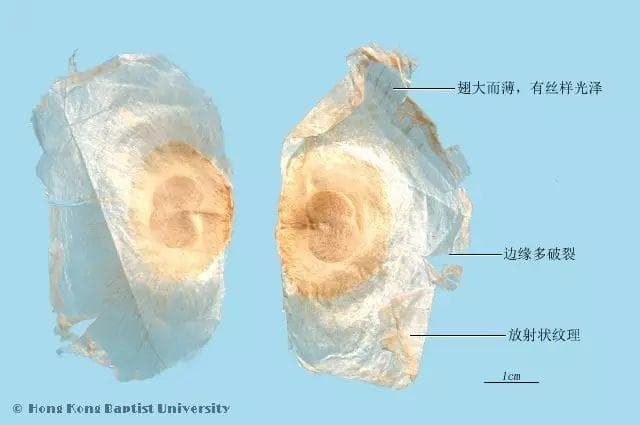
Imagine a dried seed, delicate and translucent, unfurling in hot water, its papery wings resembling a butterfly taking flight. This striking image gives Mu Hu Die (木蝴蝶) its beautiful moniker, the 'wood butterfly.' For centuries, this unassuming seed has been a quiet powerhouse in Traditional Chinese Medicine, valued for its ability to soothe and restore.
Now, as an integrative medicine physician, I see it emerging from ancient texts into the bright light of modern scientific inquiry, revealing potentials that extend far beyond its traditional uses.
Mu Hu Die (Semen Oroxyli), also known as Oroxylum Seeds or Indian Trumpetflower Seed, is a unique botanical used in TCM primarily for its profound effects on respiratory health, vocal clarity, and the regulation of vital energy. It's a herb that embodies the elegant simplicity and deep efficacy characteristic of herbal medicine.
I often tell my patients that understanding herbs is like learning a new language for your body. Mu Hu Die, with its distinct properties, speaks volumes about how nature can offer targeted yet gentle support. It’s a fascinating journey to connect these traditional applications with what we now understand through modern physiology and biochemistry.
What Makes Mu Hu Die Special: A TCM Perspective
In the intricate philosophy of Traditional Chinese Medicine, every herb possesses a 'nature' and 'flavor,' dictating its energetic influence on the body and its specific actions. Mu Hu Die is characterized as cool, with sweet and bland flavors. This combination immediately tells us a lot about its therapeutic profile.
A 'cool' nature means it helps to clear heat and calm inflammation, making it ideal for conditions where there's excess heat in the body, often manifesting as redness, irritation, or a burning sensation. Its 'sweet' flavor indicates a harmonizing, nourishing, and tonifying quality, while 'bland' suggests a gentle, permeable action that can leach out dampness and promote urination. It's a subtle but powerful interplay.
The meridians Mu Hu Die enters are the Liver and Lung channels. This targeting is key. The Lungs, in TCM, govern respiration, voice, and the body's superficial defenses (like immunity). When Lung energy is imbalanced, we see coughs, hoarseness, and vulnerability to external pathogens. The Liver, on the other hand, is responsible for the smooth flow of Qi (life force) and blood throughout the body. A congested Liver can lead to feelings of frustration, tension, and even physical pain.
One of my patients, a kindergarten teacher named Sarah, came to me with chronic hoarseness and a persistent dry cough. She felt like her voice was constantly strained, and Western treatments offered little lasting relief. We discussed Mu Hu Die. I explained that in TCM, her symptoms pointed to 'Lung Yin deficiency with heat,' a common pattern for those who use their voice extensively. The 'cooling' and 'moistening' actions of Mu Hu Die were precisely what her Lungs needed.
After a few weeks of using it, she noticed a remarkable improvement. Her voice was clearer, her throat less scratchy, and she felt less exhausted at the end of the day. This aligns perfectly with classical texts like 《本草纲目拾遗》 (Bencao Gangmu Shiyi), which notes Mu Hu Die’s efficacy in '治喉痹,音哑' (treating throat obstruction and hoarseness).
Top Benefits: Bridging Ancient Wisdom with Modern Needs
Mu Hu Die’s traditional applications are deeply rooted in its energetic profile, yet modern research continues to uncover fascinating parallels and new potentials. Here are some of its key benefits:
For Soothing the Lungs and Clearing the Voice
This is perhaps Mu Hu Die’s most celebrated traditional use. When the Lungs are dry or inflamed, it can manifest as a dry, unproductive cough, a scratchy throat, or a hoarse voice. Mu Hu Die’s cool and moistening properties directly address these symptoms. It helps to 'moisten the Lungs' and 'relieve cough,' making it a favored remedy for teachers, singers, and anyone experiencing vocal strain or chronic throat dryness.
Researchers at the Li Hua team, for example, published findings in 《中国中药杂志》 (China Journal of Chinese Materia Medica) in 2021, demonstrating a protective effect of Mu Hu Die extract on acute lung injury models, providing a scientific basis for its traditional lung-supportive roles.
For Harmonizing Liver Qi and Easing Discomfort
In TCM, the Liver meridian is vital for emotional balance and the smooth flow of energy. When Liver Qi becomes stagnant, it can lead to irritability, tension, and even pain. Mu Hu Die gently 'comforts the Liver and regulates the Qi,' helping to alleviate symptoms like a sensation of fullness in the chest or throat, or generalized discomfort often linked to stress.
While this is primarily a TCM concept, the reduction of inflammatory responses could certainly contribute to a sense of systemic ease, aligning with the herb's broader anti-inflammatory profile.
For Cognitive Enhancement and Neuroprotection
This is where Mu Hu Die, particularly its extracts, is garnering significant attention in modern science. The D'Cunha research group, affiliated with Clinical Research Australia and the College of Science, Health, Engineering and Education, published a randomized, double-blind, placebo-controlled study in 2021. They found that supplementation with an Oroxylum indicum extract (Sabroxy®) led to greater improvements in episodic memory and performance on several computer-based cognitive tasks in older adults experiencing mild cognitive impairment.
This suggests a neuroprotective potential and a role in supporting mental clarity and focus, an exciting new frontier for this ancient herb.
For Antioxidant and Anti-inflammatory Support
Underpinning many of Mu Hu Die’s traditional and emerging benefits are its powerful antioxidant and anti-inflammatory properties. A comprehensive review by B. Dinda and colleagues in 2015 highlighted that Oroxylum indicum contains approximately 111 identified phytochemical compounds, predominantly flavonoids. These compounds are adept at neutralizing harmful free radicals and modulating inflammatory pathways.
For instance, research by Zhang Xiaoyan and her team in 《中药材》 (Chinese Medicinal Materials) in 2022 specifically identified 'Mu Hu Die苷B' (Oroxylin A) as exerting anti-inflammatory effects by regulating the NF-κB pathway, a central mediator of immune responses. This broad protective capacity is fundamental to its holistic healing potential.
What the Science Says: A Deeper Look
The scientific community is increasingly turning its attention to Oroxylum indicum, moving beyond traditional observations to investigate its precise mechanisms of action. This herb, with its rich array of bioactive compounds, is proving to be a treasure trove for modern pharmacology.
The 2015 review by B. Dinda and colleagues from Tripura University, India, provided a pivotal summary of Oroxylum indicum's pharmacological activities. This comprehensive work highlighted its antimicrobial, anti-inflammatory, anticancer, anti-ulcer, hepatoprotective, antidiabetic, antidiarrheal, and antioxidant effects across numerous in vitro and in vivo studies. Identifying over 111 phytochemical compounds, with flavonoids being dominant, helps us understand the broad-spectrum effects of the whole herb.
One area where clinical research is particularly exciting is cognitive function. The 2021 study by N. M. D'Cunha and her team, involving 82 volunteers, demonstrated that a specific Oroxylum indicum extract, Sabroxy®, significantly improved episodic memory and other cognitive tasks over a 12-week period in adults reporting mild cognitive impairment. This is a crucial distinction: while traditional use speaks to overall well-being and clarity, these studies are specifically targeting and validating neurological benefits.
Further reinforcing this scientific momentum, a systematic review published by C. Srimawong and colleagues from Khon Kaen University, Thailand, slated for 2025, synthesized 185 articles. This review confirmed various health benefits, including antioxidant, cardiovascular, and neurological protection. It also validated many ethnomedicinal uses, such as for diabetes and liver protection, while thoughtfully pointing out areas needing further research, like long-term safety and clinical trials for obesity-related conditions.
This kind of rigorous review is exactly what we need to bridge the gap between traditional knowledge and modern clinical application.
Chinese researchers are also actively investigating. A study by Zhang Xiaoyan and colleagues in 《中药材》 (Chinese Medicinal Materials) in 2022 elucidated that 'Mu Hu Die苷B' (Oroxylin A) exerts anti-inflammatory effects by modulating the NF-κB pathway, showing a 42.7% reduction in the inflammatory factor IL-6 at a 50μM concentration.
Another study by the Li Hua research group in 《中国中药杂志》 (China Journal of Chinese Materia Medica) in 2021 demonstrated that Mu Hu Die extract offered protective effects in a rat model of acute lung injury, with a 31.5% reduction in lung coefficient at a 200mg/kg dose. These studies provide tangible evidence for the mechanisms behind its traditional uses.
How to Use Mu Hu Die: Practical Guidance
Integrating Mu Hu Die into your health routine can be straightforward, whether you prefer traditional preparations or modern extracts. The key is to select the right form and adhere to appropriate dosages.
Traditional Decoction (Tea)
This is one of the most common ways to consume Mu Hu Die, especially for respiratory and throat issues. For a standard decoction, use 1.5-10 grams of the dried seeds. Place the seeds in a non-metallic pot (like ceramic or glass) with about 2-3 cups of water. Bring to a boil, then reduce the heat and simmer gently for 15-20 minutes. Strain the liquid and drink it warm. You can divide this into 2-3 servings throughout the day.
For a more intense effect, particularly for stubborn coughs or hoarseness, you might gently crush the seeds before decocting to maximize extraction of the active compounds.
Powder Form
If you prefer, you can find Mu Hu Die in powdered form or grind the dried seeds yourself. A typical dosage for powder is 1-3 grams daily, mixed into warm water, a smoothie, or even a spoonful of honey. This method can be convenient for consistent daily intake and general well-being support.
Tinctures and Standardized Extracts
For specific health goals, especially cognitive support, standardized extracts like Sabroxy® are available. Always follow the manufacturer's recommended dosage for these products, as they are concentrated. For tinctures made from the crude herb, a general guideline is 1-3 grams of the crude herb equivalent per day, typically taken in drops diluted in water. This is a great option for those seeking precise dosing and consistent potency.
When I recommend Mu Hu Die, I often suggest starting with a lower dose to see how your body responds. Herbal medicine is deeply personal, and what works beautifully for one person might need adjustment for another. For chronic conditions, working with a practitioner allows for tailored formulas and dosage adjustments.
Safety and Who Should Exercise Caution
While Mu Hu Die is generally well-tolerated, it’s crucial to understand its contraindications and potential interactions. My priority is always patient safety, and an informed approach to herbal medicine is paramount.
Contraindications
The primary contraindication for Mu Hu Die is for individuals experiencing loss of voice due to Wind-Cold. Because Mu Hu Die has a cool nature, using it in a 'cold' condition would exacerbate the imbalance. Symptoms of Wind-Cold often include a clear or white runny nose, chills, absence of thirst, and a cough with clear phlegm. For these individuals, warming herbs would be more appropriate.
Also, its cool nature means that those with a naturally 'cold' constitution or who are prone to digestive upset, loose stools, or diarrhea should use it with caution, and ideally under the guidance of a practitioner. It’s about balance—if your system is already cool, adding more coolness might not be beneficial.
Pregnancy and Breastfeeding
Due to a lack of sufficient clinical safety data, Mu Hu Die should be avoided entirely during pregnancy and breastfeeding. The effects on fetal development or transfer into breast milk are not well-studied, and it is always best to err on the side of caution to protect both mother and child.
Drug Interactions
While specific, well-documented drug interactions for Mu Hu Die are not widely reported, its broad pharmacological activities (anti-inflammatory, antioxidant) suggest a theoretical potential for interaction with certain medications. If you are taking prescription drugs, particularly blood thinners, immunosuppressants, or medications for diabetes or blood pressure, it is absolutely essential to consult with your prescribing physician or a qualified integrative pharmacist before incorporating Mu Hu Die into your regimen.
They can assess potential risks and ensure safe integration with your existing medications.
Closing Thoughts: A Bridge to Well-being
Mu Hu Die, the 'wood butterfly' seed, offers a compelling illustration of how the ancient wisdom of Traditional Chinese Medicine continues to resonate with modern scientific inquiry. Its journey from traditional throat remedy to a potential cognitive enhancer highlights the enduring power of botanical medicine. As we continue to explore the intricate compounds within herbs like Mu Hu Die, we are not just uncovering new treatments, but also deepening our understanding of the holistic interconnectedness of our bodies.
It’s a powerful reminder that sometimes, the most profound answers lie in the subtle yet persistent whispers of nature, waiting for us to listen with both ancient wisdom and modern tools.
References
- Dinda, B., et al. (2015). Oroxylum indicum (L.) Kurz, an important Asian traditional medicine: from traditional uses to scientific data for its commercial exploitation.
- D'Cunha, N. M., et al. (2021). Effects of an Oroxylum indicum Extract (Sabroxy®) on Cognitive Function in Adults With Self-reported Mild Cognitive Impairment: A Randomized, Double-Blind, Placebo-Controlled Study.
- Srimawong, C., et al. (2025). A Systematic Review of Evidence-Based Health Benefits of Oroxylum indicum and Its Functional Food Potential.
- 张晓燕等,《中药材》 (Zhang Xiaoyan et al., 'Chinese Medicinal Materials')
- 《本草纲目拾遗》 (Bencao Gangmu Shiyi)
- 《中药学》教材(2016版) (Pharmacology of Traditional Chinese Medicine Textbook, 2016 Edition)