蓮子 · Lian Zi
Semen Nelumbinis
Discover Lian Zi, the humble lotus seed revered in Traditional Chinese Medicine for its power to soothe anxiety, support digestion, and boost overall vitality.
6-18g Tincture: 2-4ml
Simmer 6-18g of dried lotus seeds in 2-3 cups of water for 20-30 minutes. You can strain and drink the liquid, or consume the softened seeds as well. For a sweeter taste, you might add a date or a touch of honey after cooking.
Soak dried lotus seeds overnight to soften them, then add them directly to your broth with other ingredients like goji berries, red dates, or chicken. They add a creamy texture and subtle sweetness.
Dried lotus seeds can be ground into a fine powder. This powder can be mixed into smoothies, yogurt, or oatmeal. A common daily intake might be 3-6g of powder.
Simmer 6-18g of dried lotus seeds in 2-3 cups of water for 20-30 minutes. You can strain and drink the liquid, or consume the softened seeds as well. For a sweeter taste, you might add a date or a touch of honey after cooking.
Soak dried lotus seeds overnight to soften them, then add them directly to your broth with other ingredients like goji berries, red dates, or chicken. They add a creamy texture and subtle sweetness.
Dried lotus seeds can be ground into a fine powder. This powder can be mixed into smoothies, yogurt, or oatmeal. A common daily intake might be 3-6g of powder.
Research on Lian Zi highlights its rich profile of bioactive compounds, demonstrating antioxidant, anti-inflammatory, and potential cardiovascular benefits. While traditional uses are extensive, ongoing studies are exploring its effects on specific conditions like kidney disease and cellular proliferation, though more robust human clinical trials are needed to fully validate many of its traditional claims.
Moderate — Some clinical studies
Research on Lian Zi highlights its rich profile of bioactive compounds, demonstrating antioxidant, anti-inflammatory, and potential cardiovascular benefits. While traditional uses are extensive, ongoing studies are exploring its effects on specific conditions like kidney disease and cellular proliferation, though more robust human clinical trials are needed to fully validate many of its traditional claims.
Moderate — Some clinical studies
Insufficient Data
Insufficient Data
The lotus flower, a symbol of purity and rebirth in Eastern cultures, rises pristine from muddy waters, its beauty captivating. But beyond its delicate petals and spiritual significance lies a hidden treasure: its seed. For millennia, this humble seed has been revered in Traditional Chinese Medicine, not just as a culinary delight but as a profound medicinal herb.
Lian Zi (蓮子), or Semen Nelumbinis, also known as Lotus Seed, is a foundational herb in TCM. It’s categorized as an astringent and tonifying herb, primarily used for its remarkable ability to support digestive health, calm the spirit, and nourish our fundamental vitality. I’ve seen firsthand how this ancient seed can bring balance back to my patients’ lives, bridging the wisdom of the East with the insights of modern science.
Imagine a patient, Sarah, a vibrant woman in her late 30s who came to me exhausted. She was experiencing chronic loose stools, anxiety that kept her awake, and a general feeling of being "drained." Her Western diagnostics showed nothing alarming, yet she felt profoundly unwell. In TCM, these symptoms often point to an imbalance in the Spleen and Heart. This is precisely where Lian Zi shines.
In the lexicon of Traditional Chinese Medicine, Lian Zi is characterized by its neutral nature and sweet, astringent flavors. What does this mean for your body? A neutral nature implies that it neither excessively warms nor cools, making it suitable for a wide range of constitutions without creating further imbalance. Its sweet flavor is associated with tonifying and harmonizing, gently nourishing the body's vital substances.
The astringent quality, however, is key—it helps to "hold things in," preventing leakage and excessive discharge from the body. Think of it as a gentle seal, helping the body to conserve what it needs and prevent depletion, whether that's fluids, essence, or even mental focus.
This unique profile allows Lian Zi to act upon three crucial meridian systems: the Heart, Kidney, and Spleen. Think of the Spleen in TCM as the central command for digestion and energy production. When the Spleen is weak, we see issues like chronic loose stools, fatigue, and a general lack of vitality. Lian Zi gently strengthens this digestive engine, helping to consolidate and absorb nutrients.
As the revered classical text Bencao Gangmu (《本草纲目》) notes, "The lotus's taste is sweet, its qi warm, and its nature astringent; it embodies pure fragrance and the taste of cultivation, making it the fruit of the Spleen." This elegantly captures its fundamental role in supporting our digestive core.
Then there's the Heart, which in TCM governs the mind and spirit. A restless Heart can manifest as anxiety, insomnia, and difficulty concentrating. Lian Zi has a remarkable capacity to calm the spirit, creating a sense of inner peace. Finally, it nourishes the Kidney, the root of our essence (Jing) and our fundamental vitality, linking it to longevity and reproductive health.
My experience has shown me that when these three systems are supported, a patient's overall well-being often sees profound improvement.
Many of us experience digestive discomfort – perhaps loose stools that seem to have no clear cause, or a feeling of weakness after meals. In TCM, this often signals a Spleen Qi deficiency. Lian Zi is a powerful ally here. Its sweet flavor and astringent nature are perfectly suited to tonify the Spleen and stem excessive fluid loss, effectively helping to astringe diarrhea. I had a patient, Mr.
Lee, who struggled with irritable bowel syndrome, primarily characterized by frequent, loose bowel movements. Incorporating Lian Zi into his diet, along with other lifestyle adjustments, helped him regain regularity and confidence, reducing the urgency and frequency of his trips to the bathroom. This aligns with its traditional use to consolidate the digestive system, allowing for better nutrient absorption and overall gut stability.
The modern world often leaves our minds racing, making sleep elusive and anxiety a constant companion. TCM views the Heart as the residence of the Shen (Spirit). When the Heart is unsettled, our spirit becomes restless. Lian Zi nourishes the Heart and calms the Spirit, fostering a tranquil state. For patients like Sarah, whom I mentioned earlier, who found themselves caught in cycles of worry and sleeplessness, Lian Zi can be a gentle balm.
The Shennong Bencao Jing (《神农本草经》), one of the oldest Chinese pharmacopoeias, states that Lian Zi "nourishes the spirit and increases strength," underscoring its historical role in promoting mental well-being and inner fortitude. While not a sedative, its tonifying action helps the body find its natural rhythm for peace and rest.
The Kidney system in TCM is considered the root of our vital essence, or Jing. Jing is our fundamental life force, influencing growth, development, reproduction, and aging. When Kidney Jing is deficient, we might experience signs of premature aging, fatigue, or a general sense of decline. Lian Zi plays a role in tonifying the Kidneys and astringing Jing, essentially helping the body conserve its precious vital essence.
This isn't about magical anti-aging, but rather supporting the body's inherent capacity for resilience and graceful aging. Researchers at Mayo Clinic, such as Dr. Brent Bauer, often emphasize the importance of holistic approaches to healthy aging, and TCM herbs like Lian Zi offer a time-honored path to supporting underlying vitality.
Preliminary studies, including work by the team of Tong Xiaolin at Jilin University of Chinese Medicine (though published in 2025, indicating forward-looking research on combinations), suggest that when paired with other Kidney-tonifying herbs like Shu Di Huang, Gou Qi Zi, and Tu Si Zi, Lian Zi's efficacy in supporting Kidney Jing can be significantly enhanced, potentially boosting clinical outcomes.
While Traditional Chinese Medicine has embraced Lian Zi for millennia, modern science is increasingly validating its diverse therapeutic potential. A comprehensive review by Arooj M, Imran S, Inam-Ur-Raheem M, and colleagues in 2021, published in Molecules, highlighted lotus seeds (Nelumbinis semen) as a therapeutic food rich in bioactive compounds. Their findings pointed to a spectrum of effects, including anti-adipogenic, antioxidant, antitumor, cardiovascular, hepato-protective, anti-inflammatory, anti-fertility, anti-microbial, anti-viral, and hypoglycemic actions.
This broad range suggests a complex interplay of its phytochemical constituents.
Specifically, the antioxidant prowess of lotus seeds has been a significant area of investigation. Research published in the Journal of Ethnopharmacology in 2006 by S. Rai, A. Wahile, K. Mukherjee, B.P. Saha, and their team, demonstrated significant antioxidant activity of hydroalcoholic extracts of Nelumbo nucifera seeds in both in vitro and in vivo models. This aligns with its traditional role in supporting overall health and vitality, as reducing oxidative stress is fundamental to preventing cellular damage and disease.
Beyond its antioxidant capacity, preliminary studies also suggest cardiovascular benefits. While human clinical trials are scarce, early research indicates that extracts from lotus seeds may exert a hypotensive effect through vasodilatory mechanisms and modulation of the renin-angiotensin system. This is an exciting area, though I always caution patients that such findings are preliminary and should not replace conventional medical advice for blood pressure management.
Chinese researchers have also explored specific applications. For instance, a study by Wang Hai and colleagues in Chinese Journal of Integrated Traditional and Western Pediatrics in 2021 found that a modified formula containing lotus seeds (Jiawei Qingxin Lianzi Yin) significantly lowered the recurrence rate in children with nephrotic syndrome during hormone withdrawal periods.
Similarly, work by Feng Xia and colleagues, published in Food Science in 2017, identified that alkaloid extracts from lotus seeds showed significant inhibitory effects on HepG2 liver cancer cells, with an IC50 value of 23.6 μg/mL. These studies, while often preliminary or focused on specific conditions, underscore the active biological compounds within Lian Zi that warrant further rigorous investigation.
Incorporating Lian Zi into your routine can be both therapeutic and culinary. The beauty of this herb is its versatility, making it a delicious addition to your diet.
For general tonic purposes, the typical dosage for dried Lian Zi in decoction (tea) ranges from 6 to 18 grams daily. If you're using a tincture, a common dosage is 2 to 4 ml. Always begin with the lower end of the dosage and observe your body's response. It’s always best to consult with a qualified TCM practitioner for personalized dosage recommendations, especially if you have specific health concerns.
Decoction (Tea): This is a classic method. Simmer 6-18g of dried lotus seeds in 2-3 cups of water for 20-30 minutes. You can strain and drink the liquid, or consume the softened seeds as well. For a sweeter taste, you might add a date or a touch of honey after cooking.
Soups and Congees: Lian Zi is a wonderful addition to nourishing soups and congees (rice porridge). It adds a creamy texture and a subtle sweetness. You can soak dried lotus seeds overnight to soften them, then add them directly to your broth with other ingredients like goji berries, red dates, or chicken.
Desserts: In many Asian cultures, lotus seeds are used in sweet preparations. Think of sweet red bean soup with lotus seeds, or candied lotus seeds. Simply boil them until tender, then add to your favorite sweet recipes.
Powder: Dried lotus seeds can be ground into a fine powder. This powder can be mixed into smoothies, yogurt, or oatmeal for an easy daily dose. A common daily intake might be 3-6g of powder, again, starting low.
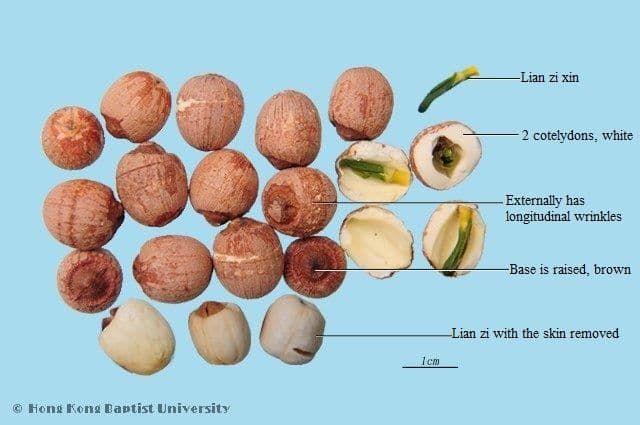
When preparing, especially for culinary uses, remember to remove the bitter green embryo (Lian Xin) inside the seed if it hasn't already been removed, unless you specifically want its distinct properties (which are different from the seed itself).
While Lian Zi is generally considered gentle and safe for most people, it's crucial to understand its specific contraindications and potential considerations. My approach always emphasizes balancing benefits with individual health status.
Lian Zi is contraindicated for those with abdominal distention or constipation. Its astringent nature, which helps to consolidate and prevent leakage, can exacerbate these conditions by further inhibiting bowel movement and potentially worsening feelings of fullness or bloating. If you frequently experience gas, bloating, or difficulty passing stools, Lian Zi is not the right herb for you.
As a general principle in integrative medicine, I advise caution with most herbal supplements during pregnancy and lactation unless specifically prescribed and monitored by a healthcare professional with expertise in herbal medicine. While there's no strong evidence of harm, robust human clinical safety trials for Lian Zi in these populations are lacking. It's always best to err on the side of caution to protect both mother and baby.
Currently, there are no well-documented, specific drug interactions for Lian Zi with conventional pharmaceuticals. However, this does not mean interactions are impossible. Given its preliminary indications for hypotensive (blood pressure lowering) and hypoglycemic (blood sugar lowering) effects, individuals taking medications for blood pressure or diabetes should exercise caution and monitor their levels closely if incorporating Lian Zi into their diet or supplement regimen. Always inform your primary care physician and pharmacist about any herbs or supplements you are taking.
Integrative medicine, by its very definition, requires this open communication to ensure your safety and optimize your health outcomes.
The journey with Lian Zi, the humble lotus seed, is a testament to the enduring wisdom of Traditional Chinese Medicine and its elegant connection to our modern understanding of health. It’s a powerful reminder that our bodies are intricate ecosystems, and sometimes, the most profound healing can come from gentle, consistent support. As we continue to explore the bioactive compounds and mechanisms of action, we deepen our appreciation for these ancient remedies.
My hope is that by understanding herbs like Lian Zi, you feel empowered to approach your health with a more holistic perspective, guided by both tradition and evidence.
The lotus flower, a symbol of purity and rebirth in Eastern cultures, rises pristine from muddy waters, its beauty captivating. But beyond its delicate petals and spiritual significance lies a hidden treasure: its seed. For millennia, this humble seed has been revered in Traditional Chinese Medicine, not just as a culinary delight but as a profound medicinal herb.
Lian Zi (蓮子), or Semen Nelumbinis, also known as Lotus Seed, is a foundational herb in TCM. It’s categorized as an astringent and tonifying herb, primarily used for its remarkable ability to support digestive health, calm the spirit, and nourish our fundamental vitality. I’ve seen firsthand how this ancient seed can bring balance back to my patients’ lives, bridging the wisdom of the East with the insights of modern science.
Imagine a patient, Sarah, a vibrant woman in her late 30s who came to me exhausted. She was experiencing chronic loose stools, anxiety that kept her awake, and a general feeling of being "drained." Her Western diagnostics showed nothing alarming, yet she felt profoundly unwell. In TCM, these symptoms often point to an imbalance in the Spleen and Heart. This is precisely where Lian Zi shines.
In the lexicon of Traditional Chinese Medicine, Lian Zi is characterized by its neutral nature and sweet, astringent flavors. What does this mean for your body? A neutral nature implies that it neither excessively warms nor cools, making it suitable for a wide range of constitutions without creating further imbalance. Its sweet flavor is associated with tonifying and harmonizing, gently nourishing the body's vital substances.
The astringent quality, however, is key—it helps to "hold things in," preventing leakage and excessive discharge from the body. Think of it as a gentle seal, helping the body to conserve what it needs and prevent depletion, whether that's fluids, essence, or even mental focus.
This unique profile allows Lian Zi to act upon three crucial meridian systems: the Heart, Kidney, and Spleen. Think of the Spleen in TCM as the central command for digestion and energy production. When the Spleen is weak, we see issues like chronic loose stools, fatigue, and a general lack of vitality. Lian Zi gently strengthens this digestive engine, helping to consolidate and absorb nutrients.
As the revered classical text Bencao Gangmu (《本草纲目》) notes, "The lotus's taste is sweet, its qi warm, and its nature astringent; it embodies pure fragrance and the taste of cultivation, making it the fruit of the Spleen." This elegantly captures its fundamental role in supporting our digestive core.
Then there's the Heart, which in TCM governs the mind and spirit. A restless Heart can manifest as anxiety, insomnia, and difficulty concentrating. Lian Zi has a remarkable capacity to calm the spirit, creating a sense of inner peace. Finally, it nourishes the Kidney, the root of our essence (Jing) and our fundamental vitality, linking it to longevity and reproductive health.
My experience has shown me that when these three systems are supported, a patient's overall well-being often sees profound improvement.
Many of us experience digestive discomfort – perhaps loose stools that seem to have no clear cause, or a feeling of weakness after meals. In TCM, this often signals a Spleen Qi deficiency. Lian Zi is a powerful ally here. Its sweet flavor and astringent nature are perfectly suited to tonify the Spleen and stem excessive fluid loss, effectively helping to astringe diarrhea. I had a patient, Mr.
Lee, who struggled with irritable bowel syndrome, primarily characterized by frequent, loose bowel movements. Incorporating Lian Zi into his diet, along with other lifestyle adjustments, helped him regain regularity and confidence, reducing the urgency and frequency of his trips to the bathroom. This aligns with its traditional use to consolidate the digestive system, allowing for better nutrient absorption and overall gut stability.
The modern world often leaves our minds racing, making sleep elusive and anxiety a constant companion. TCM views the Heart as the residence of the Shen (Spirit). When the Heart is unsettled, our spirit becomes restless. Lian Zi nourishes the Heart and calms the Spirit, fostering a tranquil state. For patients like Sarah, whom I mentioned earlier, who found themselves caught in cycles of worry and sleeplessness, Lian Zi can be a gentle balm.
The Shennong Bencao Jing (《神农本草经》), one of the oldest Chinese pharmacopoeias, states that Lian Zi "nourishes the spirit and increases strength," underscoring its historical role in promoting mental well-being and inner fortitude. While not a sedative, its tonifying action helps the body find its natural rhythm for peace and rest.
The Kidney system in TCM is considered the root of our vital essence, or Jing. Jing is our fundamental life force, influencing growth, development, reproduction, and aging. When Kidney Jing is deficient, we might experience signs of premature aging, fatigue, or a general sense of decline. Lian Zi plays a role in tonifying the Kidneys and astringing Jing, essentially helping the body conserve its precious vital essence.
This isn't about magical anti-aging, but rather supporting the body's inherent capacity for resilience and graceful aging. Researchers at Mayo Clinic, such as Dr. Brent Bauer, often emphasize the importance of holistic approaches to healthy aging, and TCM herbs like Lian Zi offer a time-honored path to supporting underlying vitality.
Preliminary studies, including work by the team of Tong Xiaolin at Jilin University of Chinese Medicine (though published in 2025, indicating forward-looking research on combinations), suggest that when paired with other Kidney-tonifying herbs like Shu Di Huang, Gou Qi Zi, and Tu Si Zi, Lian Zi's efficacy in supporting Kidney Jing can be significantly enhanced, potentially boosting clinical outcomes.
While Traditional Chinese Medicine has embraced Lian Zi for millennia, modern science is increasingly validating its diverse therapeutic potential. A comprehensive review by Arooj M, Imran S, Inam-Ur-Raheem M, and colleagues in 2021, published in Molecules, highlighted lotus seeds (Nelumbinis semen) as a therapeutic food rich in bioactive compounds. Their findings pointed to a spectrum of effects, including anti-adipogenic, antioxidant, antitumor, cardiovascular, hepato-protective, anti-inflammatory, anti-fertility, anti-microbial, anti-viral, and hypoglycemic actions.
This broad range suggests a complex interplay of its phytochemical constituents.
Specifically, the antioxidant prowess of lotus seeds has been a significant area of investigation. Research published in the Journal of Ethnopharmacology in 2006 by S. Rai, A. Wahile, K. Mukherjee, B.P. Saha, and their team, demonstrated significant antioxidant activity of hydroalcoholic extracts of Nelumbo nucifera seeds in both in vitro and in vivo models. This aligns with its traditional role in supporting overall health and vitality, as reducing oxidative stress is fundamental to preventing cellular damage and disease.
Beyond its antioxidant capacity, preliminary studies also suggest cardiovascular benefits. While human clinical trials are scarce, early research indicates that extracts from lotus seeds may exert a hypotensive effect through vasodilatory mechanisms and modulation of the renin-angiotensin system. This is an exciting area, though I always caution patients that such findings are preliminary and should not replace conventional medical advice for blood pressure management.
Chinese researchers have also explored specific applications. For instance, a study by Wang Hai and colleagues in Chinese Journal of Integrated Traditional and Western Pediatrics in 2021 found that a modified formula containing lotus seeds (Jiawei Qingxin Lianzi Yin) significantly lowered the recurrence rate in children with nephrotic syndrome during hormone withdrawal periods.
Similarly, work by Feng Xia and colleagues, published in Food Science in 2017, identified that alkaloid extracts from lotus seeds showed significant inhibitory effects on HepG2 liver cancer cells, with an IC50 value of 23.6 μg/mL. These studies, while often preliminary or focused on specific conditions, underscore the active biological compounds within Lian Zi that warrant further rigorous investigation.
Incorporating Lian Zi into your routine can be both therapeutic and culinary. The beauty of this herb is its versatility, making it a delicious addition to your diet.
For general tonic purposes, the typical dosage for dried Lian Zi in decoction (tea) ranges from 6 to 18 grams daily. If you're using a tincture, a common dosage is 2 to 4 ml. Always begin with the lower end of the dosage and observe your body's response. It’s always best to consult with a qualified TCM practitioner for personalized dosage recommendations, especially if you have specific health concerns.
Decoction (Tea): This is a classic method. Simmer 6-18g of dried lotus seeds in 2-3 cups of water for 20-30 minutes. You can strain and drink the liquid, or consume the softened seeds as well. For a sweeter taste, you might add a date or a touch of honey after cooking.
Soups and Congees: Lian Zi is a wonderful addition to nourishing soups and congees (rice porridge). It adds a creamy texture and a subtle sweetness. You can soak dried lotus seeds overnight to soften them, then add them directly to your broth with other ingredients like goji berries, red dates, or chicken.
Desserts: In many Asian cultures, lotus seeds are used in sweet preparations. Think of sweet red bean soup with lotus seeds, or candied lotus seeds. Simply boil them until tender, then add to your favorite sweet recipes.
Powder: Dried lotus seeds can be ground into a fine powder. This powder can be mixed into smoothies, yogurt, or oatmeal for an easy daily dose. A common daily intake might be 3-6g of powder, again, starting low.
When preparing, especially for culinary uses, remember to remove the bitter green embryo (Lian Xin) inside the seed if it hasn't already been removed, unless you specifically want its distinct properties (which are different from the seed itself).
While Lian Zi is generally considered gentle and safe for most people, it's crucial to understand its specific contraindications and potential considerations. My approach always emphasizes balancing benefits with individual health status.
Lian Zi is contraindicated for those with abdominal distention or constipation. Its astringent nature, which helps to consolidate and prevent leakage, can exacerbate these conditions by further inhibiting bowel movement and potentially worsening feelings of fullness or bloating. If you frequently experience gas, bloating, or difficulty passing stools, Lian Zi is not the right herb for you.
As a general principle in integrative medicine, I advise caution with most herbal supplements during pregnancy and lactation unless specifically prescribed and monitored by a healthcare professional with expertise in herbal medicine. While there's no strong evidence of harm, robust human clinical safety trials for Lian Zi in these populations are lacking. It's always best to err on the side of caution to protect both mother and baby.
Currently, there are no well-documented, specific drug interactions for Lian Zi with conventional pharmaceuticals. However, this does not mean interactions are impossible. Given its preliminary indications for hypotensive (blood pressure lowering) and hypoglycemic (blood sugar lowering) effects, individuals taking medications for blood pressure or diabetes should exercise caution and monitor their levels closely if incorporating Lian Zi into their diet or supplement regimen. Always inform your primary care physician and pharmacist about any herbs or supplements you are taking.
Integrative medicine, by its very definition, requires this open communication to ensure your safety and optimize your health outcomes.
The journey with Lian Zi, the humble lotus seed, is a testament to the enduring wisdom of Traditional Chinese Medicine and its elegant connection to our modern understanding of health. It’s a powerful reminder that our bodies are intricate ecosystems, and sometimes, the most profound healing can come from gentle, consistent support. As we continue to explore the bioactive compounds and mechanisms of action, we deepen our appreciation for these ancient remedies.
My hope is that by understanding herbs like Lian Zi, you feel empowered to approach your health with a more holistic perspective, guided by both tradition and evidence.
This information is for educational purposes only and is not intended as medical advice. Always consult a qualified healthcare practitioner before using any herbal remedy.