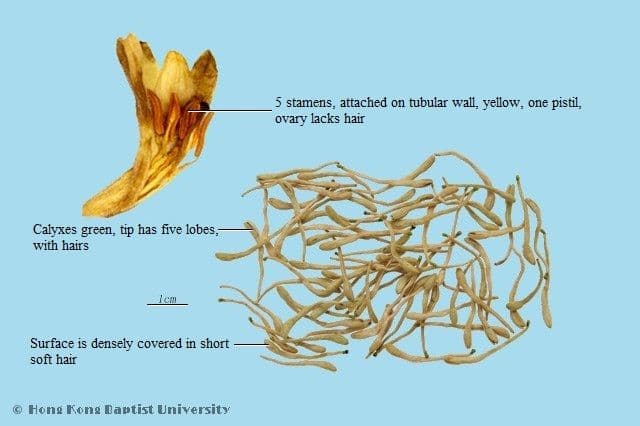
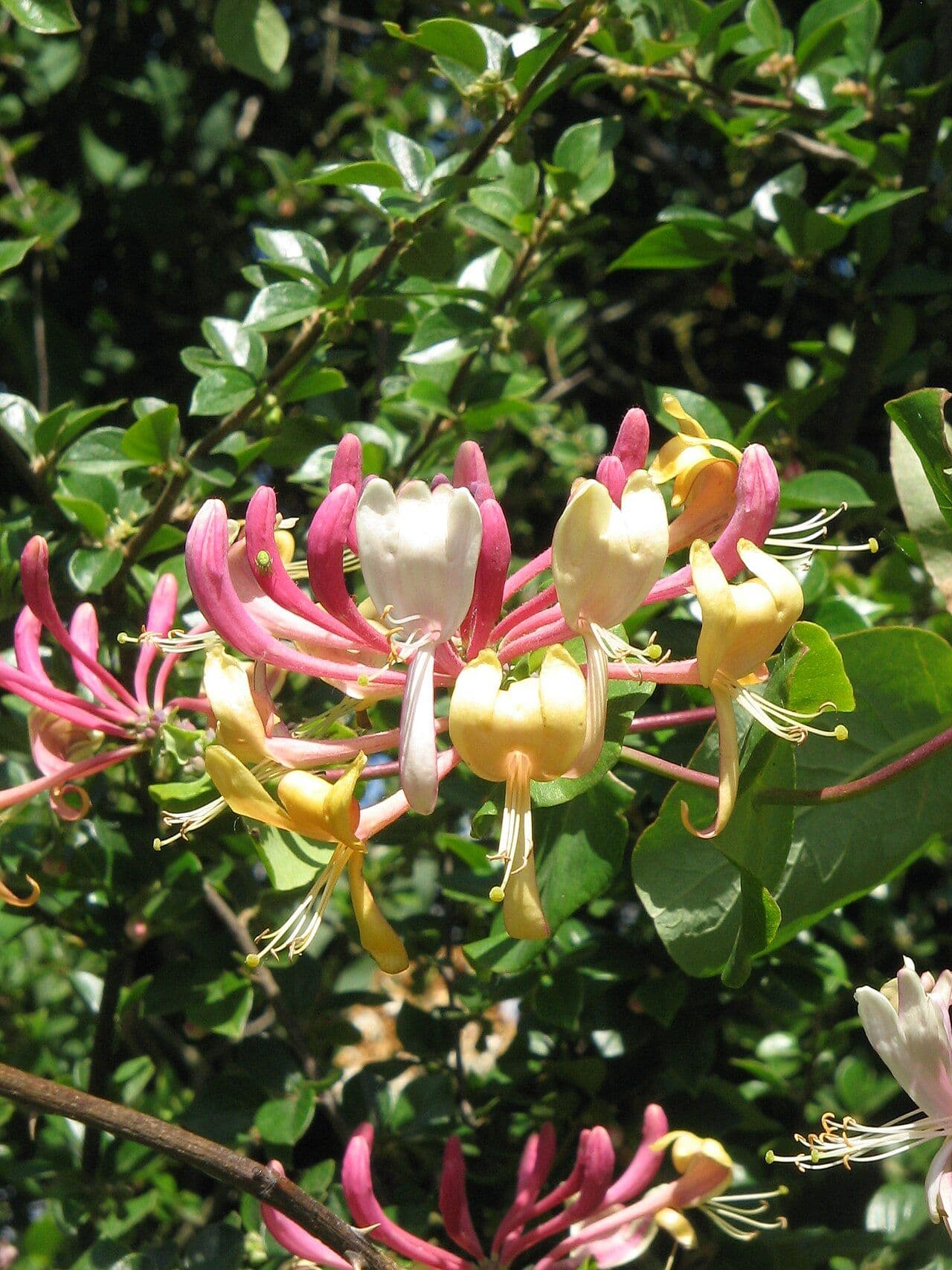
Honeysuckle Flower
Cold (寒)金银花 · Jin Yin Hua
Flos Lonicerae
TCM Properties
Nature (四气)
Cold (寒)Flavor (五味)
Sweet (甘)Astringent (涩)
Meridian Tropism
Large IntestineLungStomachHeart
金银花 · Jin Yin Hua
Flos Lonicerae
Discover Jin Yin Hua, the elegant honeysuckle flower, revered in TCM for its detoxifying and immune-boosting prowess, now backed by compelling modern research for its antiviral and anti-inflammatory benefits.
6-20g (smaller doses for Wind-Heat, larger doses for Heat toxin, sores and abscess) May use up to 60g in severe cases Tincture: 2-5 ml
6-20g (smaller doses for Wind-Heat, larger doses for Heat toxin, sores and abscess) May use up to 60g in severe cases Tincture: 2-5 ml
For general 'Wind-Heat' symptoms like a common cold, steep 6-12 grams of dried Jin Yin Hua flowers in 2-3 cups of hot water for 15-20 minutes. For more severe 'Heat toxin' conditions, such as boils or acute infections, a stronger decoction might be prepared by simmering 15-30 grams (or up to 60g in severe cases) in 4 cups of water until reduced by half, then straining and drinking warm, 2-3 times daily. Always consult a practitioner for precise dosage tailored to your condition.
Jin Yin Hua tinctures offer a concentrated form. The typical dosage is 2-5 ml, taken 2-3 times daily. It's essential to follow the specific instructions on the product label and consult with a qualified herbalist or physician to ensure proper concentration and dosage for your needs.
To use topically for skin conditions like acne, boils, or rashes, prepare a strong decoction by simmering 20-30 grams of Jin Yin Hua in 4 cups of water for 30 minutes. Let it cool, then strain. Apply the liquid as a compress to the affected area for 15-20 minutes, 2-3 times daily, or use it as a gentle wash. This can help reduce inflammation and promote healing.
For general 'Wind-Heat' symptoms like a common cold, steep 6-12 grams of dried Jin Yin Hua flowers in 2-3 cups of hot water for 15-20 minutes. For more severe 'Heat toxin' conditions, such as boils or acute infections, a stronger decoction might be prepared by simmering 15-30 grams (or up to 60g in severe cases) in 4 cups of water until reduced by half, then straining and drinking warm, 2-3 times daily. Always consult a practitioner for precise dosage tailored to your condition.
Jin Yin Hua tinctures offer a concentrated form. The typical dosage is 2-5 ml, taken 2-3 times daily. It's essential to follow the specific instructions on the product label and consult with a qualified herbalist or physician to ensure proper concentration and dosage for your needs.
To use topically for skin conditions like acne, boils, or rashes, prepare a strong decoction by simmering 20-30 grams of Jin Yin Hua in 4 cups of water for 30 minutes. Let it cool, then strain. Apply the liquid as a compress to the affected area for 15-20 minutes, 2-3 times daily, or use it as a gentle wash. This can help reduce inflammation and promote healing.
Clinical evidence for Jin Yin Hua, particularly in combination with other herbs, is growing. Recent meta-analyses and randomized controlled trials have shown its efficacy in supporting immune responses and improving outcomes in viral respiratory infections, including COVID-19, validating its traditional uses for clearing heat and resolving toxicity.
Moderate — Some clinical studies
Clinical evidence for Jin Yin Hua, particularly in combination with other herbs, is growing. Recent meta-analyses and randomized controlled trials have shown its efficacy in supporting immune responses and improving outcomes in viral respiratory infections, including COVID-19, validating its traditional uses for clearing heat and resolving toxicity.
Moderate — Some clinical studies
Insufficient Data
Insufficient Data
Imagine a warm spring day, the air thick with a honeyed, delicate fragrance that promises renewal and vitality. For centuries, this scent has led countless individuals to the beautiful, twining vines of the honeysuckle flower. Beyond its captivating aroma and elegant blossoms, this plant holds a deeply revered place in Traditional Chinese Medicine (TCM), not just for its beauty but for its profound healing capabilities. Today, I want to introduce you to Jin Yin Hua.
Jin Yin Hua (Flos Lonicerae), also known as Honeysuckle Flower, Lonicera, or Woodbine, is a potent herb used in Traditional Chinese Medicine for its remarkable heat-clearing and detoxifying properties. It’s an herb I’ve seen work wonders in my practice, helping patients navigate everything from seasonal sniffles to more stubborn inflammatory conditions. Its efficacy isn't just a matter of ancient belief; it's increasingly supported by rigorous modern scientific investigation.
My journey through both Beijing University of Chinese Medicine and a Western integrative medicine residency has shown me how beautifully these two worlds can converge. Jin Yin Hua is a prime example of an herb whose traditional applications find compelling validation in contemporary research, particularly in our current global health landscape, where immune support and antiviral strategies are more vital than ever. It's truly a golden-silver bridge between ancient wisdom and modern wellness.
In TCM, every herb has a specific nature and flavor, and targets particular meridians or energy pathways in the body. Jin Yin Hua, I often tell my patients, is like a refreshing cool breeze on a hot summer's day. It's considered cold in nature, meaning its primary action is to cool and calm overheated systems in the body. Its flavors are described as sweet and astringent.
The sweetness helps to harmonize and nourish, while the astringency helps to consolidate and prevent the leakage of fluids, often used when there’s excessive discharge or sweating.
These properties are perfectly suited for its main actions: clearing heat and resolving fire toxicity, venting and dispersing external Wind-Heat, and clearing Damp-Heat from the Lower Jiao. Imagine a young patient I once saw, a university student struggling with persistent acne breakouts and occasional fevers. Their pulse was rapid, their tongue red – classic signs of internal heat and toxicity.
Jin Yin Hua was a central part of their herbal formula, gently yet effectively cooling their system and calming the inflammation that fueled their skin issues. Within a few weeks, their complexion began to clear, and their overall sense of 'heat' diminished.
The meridians it targets are the Large Intestine, Lung, Stomach, and Heart. This broad targeting explains its diverse applications. For instance, its affinity for the Lung meridian makes it a go-to for respiratory issues like colds and sore throats. Targeting the Large Intestine helps with detoxification and certain digestive imbalances, while its action on the Stomach meridian addresses inflammation in the digestive tract.
The Heart meridian connection speaks to its ability to calm the spirit and cool 'heart fire' which can manifest as anxiety or restlessness in some individuals.
The classical text, 《本草纲目》 (Compendium of Materia Medica), notes that "忍冬 (the plant Lonicera), its stems, leaves, and flowers, share the same functions. It primarily treats chills and fevers with body swelling, and long-term consumption lightens the body and prolongs life." This timeless observation underscores Jin Yin Hua's deep roots in traditional healing, highlighting its role not just in acute conditions but in supporting long-term vitality.
The 《神农本草经》 (Shennong Ben Cao Jing) also mentions its use for "heat qi and throat pain," further cementing its role in treating external febrile diseases and inflammatory conditions of the throat.
Jin Yin Hua’s versatility makes it a powerful ally for several common health concerns, from seasonal challenges to ongoing inflammatory issues. Here’s how its traditional uses translate into tangible benefits for your health:
When the seasons change, or you feel that familiar tickle in your throat, Jin Yin Hua is often one of the first herbs I consider. In TCM, it excels at 'venting and dispersing External Wind-Heat'—a category that includes the common cold, flu, and other upper respiratory infections characterized by fever, sore throat, and headaches. Its 'cold' nature helps to bring down fever, while its 'detoxifying' action targets the invading pathogens.
Modern science has started to unpack this, revealing potent antiviral and antibacterial properties. For example, a meta-analysis by Wang et al. (2020) in Phytomedicine of 18 RCTs involving 2275 patients found that Chinese herbal medicine, including Jin Yin Hua, showed significant improvements in lung CT scans, clinical cure rates, and reduced symptoms in COVID-19 patients, without severe adverse effects. This isn't just traditional folklore; it's a testament to its real-world impact on our immune defenses.
Think of Jin Yin Hua as an internal cleanser for your skin. When the body accumulates 'Fire toxicity' or 'Damp-Heat' in TCM, it often manifests on the skin as boils, carbuncles, acne, or inflammatory rashes. Jin Yin Hua's ability to 'clear heat and resolve fire toxicity' directly addresses these underlying imbalances. I've often recommended it, both internally and topically as a wash, for patients with hot, red, angry-looking skin lesions.
The antimicrobial and anti-inflammatory activities, which researchers like Shang et al. (2015) have explored, synergistically accelerate wound repair and reduce the redness and swelling associated with these conditions. It helps the body purge what's causing the inflammation, allowing the skin to heal.
Beyond acute infections, Jin Yin Hua offers broader systemic benefits. Its rich array of active compounds contributes to significant anti-inflammatory and antioxidant activities. Chronic low-grade inflammation is now recognized as a root cause for many modern diseases. By 'clearing heat,' Jin Yin Hua helps to modulate these inflammatory pathways. Research by Shang et al. (2015) highlighted Jin Yin Hua's broad activities, including antipyretic (fever-reducing), antihyperlipidemic (cholesterol-lowering), antithrombotic (clot-preventing), anti-oxidative, and even anti-carcinogenic properties.
This makes it a fascinating herb for general wellness support, helping the body protect itself against oxidative stress and inflammatory damage at a foundational level.
The beauty of integrative medicine is seeing ancient remedies confirmed by modern scientific rigor. Jin Yin Hua is a shining example. Researchers are increasingly dissecting its complex chemistry to understand precisely how it achieves its traditional effects.
A significant area of focus recently has been Jin Yin Hua’s role in viral infections. A 2021 study by Li et al. from Chongqing Medical University, published in Frontiers in Pharmacology, revealed compelling data regarding its use alongside conventional therapy for COVID-19. In a meta-analysis of nine randomized controlled trials involving 1,286 patients, the combination therapy (including honeysuckle) was found to be more effective than conventional therapy alone. Specifically, it showed a relative risk (RR) of 1.
24 for lung CT improvement, 1.21 for clinical cure rate, and a significant 0.50 for reducing the rate of conversion to severe COVID-19 cases. This doesn't mean it’s a standalone cure, but it strongly suggests a valuable supportive role in complex viral diseases.
Further solidifying its antiviral and anti-inflammatory reputation, Shang et al. (2015) extensively reviewed the phytochemistry and pharmacology of Lonicera japonica. They highlighted that over 140 chemical compounds have been isolated, with essential oils, organic acids, and flavones being the main active components. These compounds collectively contribute to its antimicrobial, anti-inflammatory, antiendotoxin, and antioxidant activities.
Delving into specific compounds, Chinese research provides even more detail. 雷滨瑜等 (2022) identified chlorogenic acid (绿原酸) as a core component of Jin Yin Hua, demonstrating its potent antibacterial and antiviral effects. Their work showed impressive extraction rates and significant inhibitory effects against bacteria like Staphylococcus aureus.
Another study by 刘馨蔚 and 王雪峰 (2022) explored the molecular mechanisms of Jin Yin Hua when combined with Forsythia (Lian Qiao) for treating influenza, identifying 12 active components, including luteolin and quercetin, that target key inflammatory pathways like IL-6 and IL-1β. This scientific explanation directly maps to the TCM concept of clearing 'Wind-Heat' and 'toxicity' in viral infections.
Even beyond infection, the flavonoid components offer broad health benefits. 关秀锋等 (2020) demonstrated the neuroprotective effects of Jin Yin Hua flavonoids, with luteolin showing a significant reduction (up to 40%) in neuroinflammatory factors in rat models of cerebral ischemia-reperfusion injury. This suggests a potential role for Jin Yin Hua in supporting brain health, an area ripe for further exploration.
Incorporating Jin Yin Hua into your wellness routine can be quite simple, but precision is key. Always remember that dosage can vary significantly based on the specific condition and individual constitution. Consulting with a qualified TCM practitioner or integrative physician is always my strongest recommendation.
This is the most common way to prepare Jin Yin Hua. For milder symptoms of Wind-Heat, such as a sore throat or early cold symptoms, I suggest using 6-12 grams of the dried flowers. Steep them in about 2-3 cups of hot water for 15-20 minutes, then strain and drink warm, two to three times a day.
For more acute conditions, such as severe 'Heat toxin' manifesting as fevers or boils, the dosage may increase to 15-30 grams, or even up to 60 grams in very severe cases, prepared as a decoction by simmering the herbs in water for 20-30 minutes. This stronger preparation extracts more of the active compounds. Remember, higher doses are for acute, short-term use under professional guidance.
For convenience, Jin Yin Hua is also available in tincture form. A typical dosage range is 2-5 ml, taken 2-3 times daily. Always follow the specific instructions provided by the manufacturer or your healthcare practitioner, as concentrations can vary between products. Capsules containing powdered Jin Yin Hua or standardized extracts are also available, offering a precise dose for those who prefer this format.
For skin conditions like acne, boils, or rashes, a strong decoction can be prepared and allowed to cool. This liquid can then be used as a topical wash or compress. Simply soak a clean cloth in the cooled decoction and apply it to the affected area for 15-20 minutes, two to three times daily. This method directly applies its anti-inflammatory and antimicrobial properties to the skin, helping to soothe irritation and promote healing.
While Jin Yin Hua is a powerful and generally safe herb for appropriate conditions, it is crucial to understand its contraindications to ensure safe use. As a physician, I cannot overstate the importance of respecting these guidelines.
Jin Yin Hua is contraindicated for those with diarrhea due to Spleen and Stomach Deficiency Cold. Its cold nature would exacerbate these symptoms. Similarly, individuals who are generally Cold in constitution should use it with caution, and ideally, only in formulas balanced with warming herbs. It is also contraindicated for sores due to Qi Deficiency and for Yin ulcers.
If there are sores where pus has already formed and come to a head, use only in small, guided doses, as it is primarily for clearing heat and toxicity from early-stage infections. Lastly, a practical note from tradition: do not store Jin Yin Hua in iron containers, as it can react with the metal.
I strongly advise against the use of Jin Yin Hua during pregnancy and breastfeeding. The safety data is insufficient, and as a precautionary principle, it is best to avoid potent herbs during these sensitive periods unless explicitly prescribed and monitored by a healthcare provider with expertise in herbal medicine and prenatal care.
While no specific severe drug interactions with Jin Yin Hua are widely documented in Western pharmaceutical literature, its 'cold' nature and potential effects on blood (especially if charred to 'cool the blood and stop bleeding') mean it should be used with caution. If you are on medications, especially blood thinners or drugs that affect immune function, always consult your physician or pharmacist before incorporating Jin Yin Hua into your regimen.
Integrative medicine means considering the whole picture, and that includes potential interactions between herbs and pharmaceuticals.
Jin Yin Hua, the beautiful honeysuckle flower, stands as a testament to the enduring power of traditional herbal medicine. Its journey from ancient texts to modern scientific scrutiny highlights a profound truth: our ancestors observed, experimented, and codified wisdom that, when re-examined through contemporary lenses, continues to offer valuable solutions to today's health challenges. From easing a feverish cold to supporting the body against complex viral invaders, its actions are both elegantly simple and scientifically sophisticated.
As we continue to seek holistic paths to wellness, herbs like Jin Yin Hua remind us that nature holds a profound pharmacy. My hope is that by understanding both its traditional energetic properties and its validated biochemical mechanisms, you feel empowered to explore this golden-silver flower as a mindful and evidence-informed addition to your personal health journey.
It’s a plant that inspires reverence, not just for its beauty, but for its quiet, potent ability to restore balance and vitality within us.
Imagine a warm spring day, the air thick with a honeyed, delicate fragrance that promises renewal and vitality. For centuries, this scent has led countless individuals to the beautiful, twining vines of the honeysuckle flower. Beyond its captivating aroma and elegant blossoms, this plant holds a deeply revered place in Traditional Chinese Medicine (TCM), not just for its beauty but for its profound healing capabilities. Today, I want to introduce you to Jin Yin Hua.
Jin Yin Hua (Flos Lonicerae), also known as Honeysuckle Flower, Lonicera, or Woodbine, is a potent herb used in Traditional Chinese Medicine for its remarkable heat-clearing and detoxifying properties. It’s an herb I’ve seen work wonders in my practice, helping patients navigate everything from seasonal sniffles to more stubborn inflammatory conditions. Its efficacy isn't just a matter of ancient belief; it's increasingly supported by rigorous modern scientific investigation.
My journey through both Beijing University of Chinese Medicine and a Western integrative medicine residency has shown me how beautifully these two worlds can converge. Jin Yin Hua is a prime example of an herb whose traditional applications find compelling validation in contemporary research, particularly in our current global health landscape, where immune support and antiviral strategies are more vital than ever. It's truly a golden-silver bridge between ancient wisdom and modern wellness.
In TCM, every herb has a specific nature and flavor, and targets particular meridians or energy pathways in the body. Jin Yin Hua, I often tell my patients, is like a refreshing cool breeze on a hot summer's day. It's considered cold in nature, meaning its primary action is to cool and calm overheated systems in the body. Its flavors are described as sweet and astringent.
The sweetness helps to harmonize and nourish, while the astringency helps to consolidate and prevent the leakage of fluids, often used when there’s excessive discharge or sweating.
These properties are perfectly suited for its main actions: clearing heat and resolving fire toxicity, venting and dispersing external Wind-Heat, and clearing Damp-Heat from the Lower Jiao. Imagine a young patient I once saw, a university student struggling with persistent acne breakouts and occasional fevers. Their pulse was rapid, their tongue red – classic signs of internal heat and toxicity.
Jin Yin Hua was a central part of their herbal formula, gently yet effectively cooling their system and calming the inflammation that fueled their skin issues. Within a few weeks, their complexion began to clear, and their overall sense of 'heat' diminished.
The meridians it targets are the Large Intestine, Lung, Stomach, and Heart. This broad targeting explains its diverse applications. For instance, its affinity for the Lung meridian makes it a go-to for respiratory issues like colds and sore throats. Targeting the Large Intestine helps with detoxification and certain digestive imbalances, while its action on the Stomach meridian addresses inflammation in the digestive tract.
The Heart meridian connection speaks to its ability to calm the spirit and cool 'heart fire' which can manifest as anxiety or restlessness in some individuals.
The classical text, 《本草纲目》 (Compendium of Materia Medica), notes that "忍冬 (the plant Lonicera), its stems, leaves, and flowers, share the same functions. It primarily treats chills and fevers with body swelling, and long-term consumption lightens the body and prolongs life." This timeless observation underscores Jin Yin Hua's deep roots in traditional healing, highlighting its role not just in acute conditions but in supporting long-term vitality.
The 《神农本草经》 (Shennong Ben Cao Jing) also mentions its use for "heat qi and throat pain," further cementing its role in treating external febrile diseases and inflammatory conditions of the throat.
Jin Yin Hua’s versatility makes it a powerful ally for several common health concerns, from seasonal challenges to ongoing inflammatory issues. Here’s how its traditional uses translate into tangible benefits for your health:
When the seasons change, or you feel that familiar tickle in your throat, Jin Yin Hua is often one of the first herbs I consider. In TCM, it excels at 'venting and dispersing External Wind-Heat'—a category that includes the common cold, flu, and other upper respiratory infections characterized by fever, sore throat, and headaches. Its 'cold' nature helps to bring down fever, while its 'detoxifying' action targets the invading pathogens.
Modern science has started to unpack this, revealing potent antiviral and antibacterial properties. For example, a meta-analysis by Wang et al. (2020) in Phytomedicine of 18 RCTs involving 2275 patients found that Chinese herbal medicine, including Jin Yin Hua, showed significant improvements in lung CT scans, clinical cure rates, and reduced symptoms in COVID-19 patients, without severe adverse effects. This isn't just traditional folklore; it's a testament to its real-world impact on our immune defenses.
Think of Jin Yin Hua as an internal cleanser for your skin. When the body accumulates 'Fire toxicity' or 'Damp-Heat' in TCM, it often manifests on the skin as boils, carbuncles, acne, or inflammatory rashes. Jin Yin Hua's ability to 'clear heat and resolve fire toxicity' directly addresses these underlying imbalances. I've often recommended it, both internally and topically as a wash, for patients with hot, red, angry-looking skin lesions.
The antimicrobial and anti-inflammatory activities, which researchers like Shang et al. (2015) have explored, synergistically accelerate wound repair and reduce the redness and swelling associated with these conditions. It helps the body purge what's causing the inflammation, allowing the skin to heal.
Beyond acute infections, Jin Yin Hua offers broader systemic benefits. Its rich array of active compounds contributes to significant anti-inflammatory and antioxidant activities. Chronic low-grade inflammation is now recognized as a root cause for many modern diseases. By 'clearing heat,' Jin Yin Hua helps to modulate these inflammatory pathways. Research by Shang et al. (2015) highlighted Jin Yin Hua's broad activities, including antipyretic (fever-reducing), antihyperlipidemic (cholesterol-lowering), antithrombotic (clot-preventing), anti-oxidative, and even anti-carcinogenic properties.
This makes it a fascinating herb for general wellness support, helping the body protect itself against oxidative stress and inflammatory damage at a foundational level.
The beauty of integrative medicine is seeing ancient remedies confirmed by modern scientific rigor. Jin Yin Hua is a shining example. Researchers are increasingly dissecting its complex chemistry to understand precisely how it achieves its traditional effects.
A significant area of focus recently has been Jin Yin Hua’s role in viral infections. A 2021 study by Li et al. from Chongqing Medical University, published in Frontiers in Pharmacology, revealed compelling data regarding its use alongside conventional therapy for COVID-19. In a meta-analysis of nine randomized controlled trials involving 1,286 patients, the combination therapy (including honeysuckle) was found to be more effective than conventional therapy alone. Specifically, it showed a relative risk (RR) of 1.
24 for lung CT improvement, 1.21 for clinical cure rate, and a significant 0.50 for reducing the rate of conversion to severe COVID-19 cases. This doesn't mean it’s a standalone cure, but it strongly suggests a valuable supportive role in complex viral diseases.
Further solidifying its antiviral and anti-inflammatory reputation, Shang et al. (2015) extensively reviewed the phytochemistry and pharmacology of Lonicera japonica. They highlighted that over 140 chemical compounds have been isolated, with essential oils, organic acids, and flavones being the main active components. These compounds collectively contribute to its antimicrobial, anti-inflammatory, antiendotoxin, and antioxidant activities.
Delving into specific compounds, Chinese research provides even more detail. 雷滨瑜等 (2022) identified chlorogenic acid (绿原酸) as a core component of Jin Yin Hua, demonstrating its potent antibacterial and antiviral effects. Their work showed impressive extraction rates and significant inhibitory effects against bacteria like Staphylococcus aureus.
Another study by 刘馨蔚 and 王雪峰 (2022) explored the molecular mechanisms of Jin Yin Hua when combined with Forsythia (Lian Qiao) for treating influenza, identifying 12 active components, including luteolin and quercetin, that target key inflammatory pathways like IL-6 and IL-1β. This scientific explanation directly maps to the TCM concept of clearing 'Wind-Heat' and 'toxicity' in viral infections.
Even beyond infection, the flavonoid components offer broad health benefits. 关秀锋等 (2020) demonstrated the neuroprotective effects of Jin Yin Hua flavonoids, with luteolin showing a significant reduction (up to 40%) in neuroinflammatory factors in rat models of cerebral ischemia-reperfusion injury. This suggests a potential role for Jin Yin Hua in supporting brain health, an area ripe for further exploration.
Incorporating Jin Yin Hua into your wellness routine can be quite simple, but precision is key. Always remember that dosage can vary significantly based on the specific condition and individual constitution. Consulting with a qualified TCM practitioner or integrative physician is always my strongest recommendation.
This is the most common way to prepare Jin Yin Hua. For milder symptoms of Wind-Heat, such as a sore throat or early cold symptoms, I suggest using 6-12 grams of the dried flowers. Steep them in about 2-3 cups of hot water for 15-20 minutes, then strain and drink warm, two to three times a day.
For more acute conditions, such as severe 'Heat toxin' manifesting as fevers or boils, the dosage may increase to 15-30 grams, or even up to 60 grams in very severe cases, prepared as a decoction by simmering the herbs in water for 20-30 minutes. This stronger preparation extracts more of the active compounds. Remember, higher doses are for acute, short-term use under professional guidance.
For convenience, Jin Yin Hua is also available in tincture form. A typical dosage range is 2-5 ml, taken 2-3 times daily. Always follow the specific instructions provided by the manufacturer or your healthcare practitioner, as concentrations can vary between products. Capsules containing powdered Jin Yin Hua or standardized extracts are also available, offering a precise dose for those who prefer this format.
For skin conditions like acne, boils, or rashes, a strong decoction can be prepared and allowed to cool. This liquid can then be used as a topical wash or compress. Simply soak a clean cloth in the cooled decoction and apply it to the affected area for 15-20 minutes, two to three times daily. This method directly applies its anti-inflammatory and antimicrobial properties to the skin, helping to soothe irritation and promote healing.
While Jin Yin Hua is a powerful and generally safe herb for appropriate conditions, it is crucial to understand its contraindications to ensure safe use. As a physician, I cannot overstate the importance of respecting these guidelines.
Jin Yin Hua is contraindicated for those with diarrhea due to Spleen and Stomach Deficiency Cold. Its cold nature would exacerbate these symptoms. Similarly, individuals who are generally Cold in constitution should use it with caution, and ideally, only in formulas balanced with warming herbs. It is also contraindicated for sores due to Qi Deficiency and for Yin ulcers.
If there are sores where pus has already formed and come to a head, use only in small, guided doses, as it is primarily for clearing heat and toxicity from early-stage infections. Lastly, a practical note from tradition: do not store Jin Yin Hua in iron containers, as it can react with the metal.
I strongly advise against the use of Jin Yin Hua during pregnancy and breastfeeding. The safety data is insufficient, and as a precautionary principle, it is best to avoid potent herbs during these sensitive periods unless explicitly prescribed and monitored by a healthcare provider with expertise in herbal medicine and prenatal care.
While no specific severe drug interactions with Jin Yin Hua are widely documented in Western pharmaceutical literature, its 'cold' nature and potential effects on blood (especially if charred to 'cool the blood and stop bleeding') mean it should be used with caution. If you are on medications, especially blood thinners or drugs that affect immune function, always consult your physician or pharmacist before incorporating Jin Yin Hua into your regimen.
Integrative medicine means considering the whole picture, and that includes potential interactions between herbs and pharmaceuticals.
Jin Yin Hua, the beautiful honeysuckle flower, stands as a testament to the enduring power of traditional herbal medicine. Its journey from ancient texts to modern scientific scrutiny highlights a profound truth: our ancestors observed, experimented, and codified wisdom that, when re-examined through contemporary lenses, continues to offer valuable solutions to today's health challenges. From easing a feverish cold to supporting the body against complex viral invaders, its actions are both elegantly simple and scientifically sophisticated.
As we continue to seek holistic paths to wellness, herbs like Jin Yin Hua remind us that nature holds a profound pharmacy. My hope is that by understanding both its traditional energetic properties and its validated biochemical mechanisms, you feel empowered to explore this golden-silver flower as a mindful and evidence-informed addition to your personal health journey.
It’s a plant that inspires reverence, not just for its beauty, but for its quiet, potent ability to restore balance and vitality within us.
This information is for educational purposes only and is not intended as medical advice. Always consult a qualified healthcare practitioner before using any herbal remedy.