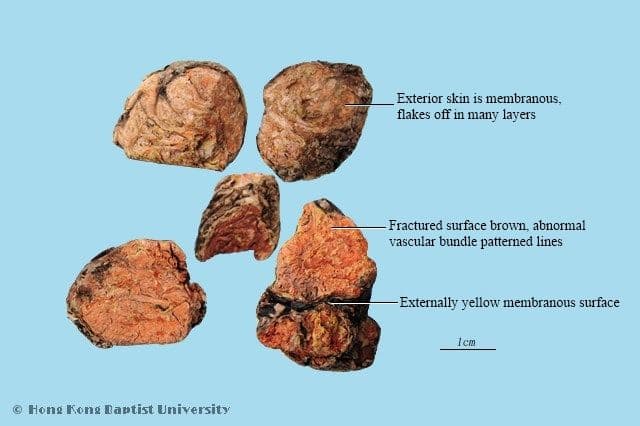

Rhodiola
Cold (寒)红景天 · Hong Jing Tian
Radix Rhodiolae Crenulatae
TCM Properties
Nature (四气)
Cold (寒)Flavor (五味)
Sweet (甘)Bitter (苦)Astringent (涩)
Meridian Tropism
HeartKidneyLiverSpleenLung
红景天 · Hong Jing Tian
Radix Rhodiolae Crenulatae
Discover Hong Jing Tian (Rhodiola), an ancient Traditional Chinese Medicine herb now gaining modern scientific acclaim for its powerful adaptogenic properties, helping your body and mind thrive amidst today's stressors.
3-12g; powdered for topical use
3-12g; powdered for topical use
For a traditional decoction, steep 3-12g of dried Hong Jing Tian root slices in 2-3 cups of water. Bring to a boil, then reduce heat and simmer gently for 20-30 minutes. Strain and drink 1-2 times daily. For a simpler tea, steep the slices in hot water for 15 minutes.
Dried Hong Jing Tian can be ground into a fine powder. For internal use, take 1-3g mixed into water or a smoothie daily. For topical use, particularly for minor skin irritations or promoting contraction, a paste can be made with the powder and a small amount of water.
Standardized extracts are widely available in capsule or liquid form. Follow the specific dosage instructions provided by the manufacturer, as concentrations of active compounds (salidroside, rosavin) can vary. Typically, these are taken once or twice daily, preferably in the morning or early afternoon to avoid potential insomnia.
For a traditional decoction, steep 3-12g of dried Hong Jing Tian root slices in 2-3 cups of water. Bring to a boil, then reduce heat and simmer gently for 20-30 minutes. Strain and drink 1-2 times daily. For a simpler tea, steep the slices in hot water for 15 minutes.
Dried Hong Jing Tian can be ground into a fine powder. For internal use, take 1-3g mixed into water or a smoothie daily. For topical use, particularly for minor skin irritations or promoting contraction, a paste can be made with the powder and a small amount of water.
Standardized extracts are widely available in capsule or liquid form. Follow the specific dosage instructions provided by the manufacturer, as concentrations of active compounds (salidroside, rosavin) can vary. Typically, these are taken once or twice daily, preferably in the morning or early afternoon to avoid potential insomnia.
There is moderate to strong preliminary clinical evidence supporting Rhodiola's efficacy in combating fatigue, improving mental performance, and enhancing resilience to stress. Its role in mitigating acute mountain sickness is also gaining stronger scientific validation, particularly for _Rhodiola crenulata_.
Moderate — Some clinical studies
There is moderate to strong preliminary clinical evidence supporting Rhodiola's efficacy in combating fatigue, improving mental performance, and enhancing resilience to stress. Its role in mitigating acute mountain sickness is also gaining stronger scientific validation, particularly for _Rhodiola crenulata_.
Moderate — Some clinical studies
In preclinical studies, rhodiola inhibits CYP3A4 and can affect the intracellular concentration of drugs metabolized by this enzyme (12) (21). Clinical relevance is yet to be determined.
Rhodiola modestly inhibits CYP2C9, and may affect drugs metabolized by this enzyme, particularly those with a narrow therapeutic index such as phenytoin and warfarin (23).
In preclinical studies, rhodiola was shown to inhibit P-gp activity and can interfere with the metabolism of certain drugs (12) (21). Clinical relevance is yet to be determined.
Rhodiola has MAO inhibition activity and may increase serotonergic side effects (13). Clinical relevance is yet to be determined.
Rhodiola has MAO inhibition activity and may increase hypotensive side effects (13). Clinical relevance is yet to be determined.
Rhodiola has MAO inhibition activity and may enhance the hypertensive effect (13). Clinical relevance is yet to be determined.
Avoid
In preclinical studies, rhodiola inhibits CYP3A4 and can affect the intracellular concentration of drugs metabolized by this enzyme (12) (21). Clinical relevance is yet to be determined.
Rhodiola modestly inhibits CYP2C9, and may affect drugs metabolized by this enzyme, particularly those with a narrow therapeutic index such as phenytoin and warfarin (23).
In preclinical studies, rhodiola was shown to inhibit P-gp activity and can interfere with the metabolism of certain drugs (12) (21). Clinical relevance is yet to be determined.
Rhodiola has MAO inhibition activity and may increase serotonergic side effects (13). Clinical relevance is yet to be determined.
Rhodiola has MAO inhibition activity and may increase hypotensive side effects (13). Clinical relevance is yet to be determined.
Rhodiola has MAO inhibition activity and may enhance the hypertensive effect (13). Clinical relevance is yet to be determined.
Avoid
Imagine standing on a windswept plateau, the air thin and crisp, your body pushing its limits against the biting cold and reduced oxygen. For centuries, the people living in the high-altitude regions of Tibet, Siberia, and Scandinavia have relied on a hardy plant, its roots dug from the rocky soil, to sustain their strength and spirit in such demanding environments.
This is the story of Hong Jing Tian (Radix Rhodiolae Crenulatae), a powerhouse herb also known as Rhodiola, Golden Root, or Rose-root. It's a treasured adaptogenic herb used in Traditional Chinese Medicine (TCM) for invigorating blood, strengthening Qi, and building resilience against various stressors, both physical and mental.
My journey through both Beijing University of Chinese Medicine and an integrative medicine residency in the US has shown me time and again how ancient wisdom often provides the blueprint for modern health breakthroughs. Hong Jing Tian is a prime example. The revered Shennong Ben Cao Jing, a foundational text of Chinese herbal medicine, classified Rhodiola as a 'superior herb,' noting that 'long-term consumption lightens the body and prolongs life.
' This historical perspective, written millennia ago, resonates profoundly with contemporary research into its anti-aging and anti-fatigue properties. It’s a remarkable convergence of traditional observation and scientific validation.
In the language of Traditional Chinese Medicine, Hong Jing Tian possesses a unique energetic profile that explains its profound effects on the body. It is considered Cold in nature, with Sweet, Bitter, and Astringent flavors. This combination is not just a description of taste; it tells us how the herb interacts with our internal landscape. The Sweet flavor signifies its nourishing and tonifying qualities, helping to build and restore.
The Bitter points to its ability to clear heat and dry dampness, while Astringent suggests its capacity to consolidate and prevent leakage, promoting contraction within the body.
Hong Jing Tian targets multiple vital meridians: the Heart, Kidney, Liver, Spleen, and Lung. This broad reach allows it to exert a holistic effect. For instance, its action of 'fortifying the Spleen and tonifying Qi' speaks to its ability to bolster your digestive and energy production systems, enhancing overall vitality and combating fatigue. The Spleen in TCM is central to transforming food into usable energy (Qi) and Blood, so strengthening it is key to sustained energy levels.
My patients often describe feeling a more grounded and consistent energy, rather than the jittery boost some stimulants provide.
Beyond energy, it 'clears Lung Heat and nourishes Lung Yin,' making it beneficial for respiratory health, especially when cough or dryness is present. Its ability to 'invigorate Blood and transform Stasis' is crucial for circulation and reducing stagnation, which can manifest as pain or poor tissue oxygenation. This multifaceted action is why Hong Jing Tian is not just a simple pick-me-up; it’s a sophisticated modulator that helps the body maintain balance and adapt to internal and external challenges.
Hong Jing Tian’s unique profile makes it incredibly relevant for many common health concerns I see in my practice. Here are some of its key benefits:
In our fast-paced world, chronic stress and persistent fatigue are almost epidemic. Here, Hong Jing Tian shines as a quintessential adaptogen. In TCM, by 'tonifying Qi' and 'fortifying the Spleen,' it enhances the body's fundamental energy reserves, helping you withstand prolonged mental and physical demands. From a Western perspective, Rhodiola helps regulate the body's stress response system, specifically the hypothalamic-pituitary-adrenal (HPA) axis, and modulates neurotransmitters like serotonin, norepinephrine, and dopamine. This helps maintain a balanced mood and sustained energy.
I remember a patient, a young executive named Sarah, who came to me utterly exhausted despite getting enough sleep. She felt constantly wired but tired. After incorporating Hong Jing Tian, she reported a marked improvement in her stamina and a newfound calm under pressure, saying she felt less 'frayed at the edges.
Beyond physical energy, Hong Jing Tian is valued for its ability to sharpen the mind. The 'Heart' meridian in TCM governs mental clarity and spirit, and by acting on it, Rhodiola can help calm the mind and improve focus. Modern research supports this, indicating potential for improved concentration, memory, and mental stamina, especially during periods of stress or sleep deprivation.
This is particularly appealing for students or anyone in a cognitively demanding profession looking for natural ways to support their brain health.
This is perhaps one of Hong Jing Tian's most historically celebrated and scientifically validated uses. Its traditional role in strengthening the body against harsh environmental conditions aligns perfectly with its modern application for acute mountain sickness (AMS). In TCM, its action of 'clearing Lung Heat and nourishing Lung Yin' can be seen as helping the respiratory system adapt to the thinner, drier air at high altitudes.
From a Western standpoint, its active compounds like salidroside appear to enhance oxygen utilization and protect cells from hypoxia, the oxygen deprivation that causes altitude sickness. It’s why I often recommend it to patients preparing for mountain treks.
The 'invigorating Blood' action in TCM points to enhanced circulation and vitality, which has strong parallels with modern understanding of cardiovascular health. Hong Jing Tian contains potent antioxidants, notably salidroside, which combat oxidative stress – a key contributor to many chronic diseases, including cardiovascular issues and aging. A 2013 review by Li Fenglin in Modern Food Science and Technology highlighted Rhodiola glycosides' multi-targeted pharmacological actions, including cardiovascular protection and protection against hepatic and renal ischemia-reperfusion injury.
While TCM has relied on centuries of empirical observation, modern science has begun to peel back the layers of Hong Jing Tian’s efficacy, identifying its active compounds and elucidating its mechanisms. The key active compounds, salidroside, rosavin, and tyrosol, are at the forefront of much of this research.
Clinical studies have significantly advanced our understanding. A systematic review published in 2012 by S. Ishaque and colleagues in BMC Complementary and Alternative Medicine concluded that Rhodiola rosea has robust traditional and pharmacological evidence for use in fatigue, with emerging evidence supporting improvements in cognition and mood, including significant positive effects on hand-eye coordination and general well-being in certain studies. This aligns perfectly with its adaptogenic reputation.
For its remarkable ability to aid in high-altitude adaptation, a 2024 systematic review and meta-analysis specifically on Rhodiola crenulata extract (RCE) found it to be more effective than placebo in improving arterial oxygen saturation (SaO2), arterial partial pressure of oxygen (PaO2), and total clinical efficacy for acute high-altitude disease, alongside a superior safety profile.
While a 2013 systematic review on Chinese Herbal Medicine for AMS, including Rhodiola rosae, also showed beneficial effects, it noted a need for higher methodological quality in the studies. The 2024 meta-analysis for R. crenulata addresses some of those earlier concerns.
Beyond its adaptogenic and altitude-related uses, ongoing Chinese research continues to uncover its broader pharmacological potential. Li Xueping and colleagues, in a forthcoming 2025 publication in the Shanghai Journal of Traditional Chinese Medicine, highlight the diverse chemical components of Rhodiola crenulata, noting its antioxidant and anti-hypoxia properties.
Furthermore, a 2024 study by Yu Qiting and Yu Qixiang in Advances in Clinical Medicine indicates that salidroside may improve osteoporosis through its anti-oxidative stress mechanisms, suggesting yet another exciting avenue for its therapeutic application.
Embracing Hong Jing Tian into your wellness routine means understanding its various forms and appropriate dosages. Always start with a lower dose to assess your body’s response. For most traditional preparations using the dried root, the recommended dosage is 3-12 grams per day.
As a Tea or Decoction: This is a classic method. You can gently simmer 3-9g of dried Hong Jing Tian root slices in 2-3 cups of water for 20-30 minutes. Strain the liquid and drink it once or twice daily. For a quicker preparation, simply steep the slices in hot water for 15 minutes. Its slightly bitter and sweet profile can be quite grounding.
Powdered Form: For convenience, Hong Jing Tian can be found as a finely ground powder. A typical dosage for internal use is 1-3g mixed into water, juice, or a smoothie. I often suggest patients add it to their morning routine. The powdered form is also indicated for topical use, where it can be mixed with a little water to form a paste for external application, though this is less common today.
Capsules or Extracts: These offer a standardized dose of active compounds like salidroside and rosavin. Always follow the manufacturer’s instructions on the label, as potency varies. It’s best to take Rhodiola earlier in the day to avoid any potential impact on sleep. Remember, consistency is often more important than a high dose.
As with any potent herb, I always advise consulting with an integrative physician or a qualified TCM practitioner to determine the best form and dosage for your individual constitution and health goals.
While Hong Jing Tian is generally well-tolerated, its potent nature means certain precautions are essential. Your safety is paramount, and understanding contraindications and potential interactions is critical.
Pregnancy and Breastfeeding: There is currently a lack of sufficient evidence evaluating the safety of Rhodiola during pregnancy or lactation. For this reason, avoidance is strongly warranted during these periods. The well-being of both mother and child is not worth any unknown risks.
Medication Interactions: This is a critical area. Patients taking prescription antidepressant medications should use Rhodiola with extreme caution and only under the direct supervision of their healthcare provider. Concurrent use has been reported to cause tachyarrhythmia (a rapid or irregular heartbeat), and Rhodiola may also have additive serotonergic effects. Additionally, interactions between Rhodiola and losartan (a drug used for high blood pressure) have been reported. Always disclose all medications and supplements you are taking to your doctor before starting Rhodiola.
Potential Side Effects: While generally safe for up to 12 weeks of use, some individuals may experience side effects. These can include dizziness, headache, insomnia (particularly if taken too late in the day), and either dry mouth or, conversely, excessive saliva production. If you experience any of these, consider reducing your dosage or discontinuing use and consulting a practitioner.
It’s also prudent for individuals with bipolar disorder or other significant mood disorders to consult their psychiatrist before using Rhodiola, as its mood-modulating effects could potentially exacerbate certain conditions.
Hong Jing Tian stands as a powerful testament to the enduring wisdom of Traditional Chinese Medicine, now increasingly illuminated by the rigorous lens of modern science. From the ancient texts that praised its life-prolonging qualities to today’s clinical trials validating its adaptogenic and protective effects, this 'golden root' offers a pathway to enhanced resilience in a world that constantly demands more from us.
It reminds us that balance is not merely a state of being, but an active process of adaptation – a process that herbs like Rhodiola can beautifully support. As we continue to explore the intricate dance between our bodies and our environment, Hong Jing Tian offers a bridge, connecting the profound insights of the past with the health challenges of the present, guiding us towards a more vibrant and adaptable future.
Imagine standing on a windswept plateau, the air thin and crisp, your body pushing its limits against the biting cold and reduced oxygen. For centuries, the people living in the high-altitude regions of Tibet, Siberia, and Scandinavia have relied on a hardy plant, its roots dug from the rocky soil, to sustain their strength and spirit in such demanding environments.
This is the story of Hong Jing Tian (Radix Rhodiolae Crenulatae), a powerhouse herb also known as Rhodiola, Golden Root, or Rose-root. It's a treasured adaptogenic herb used in Traditional Chinese Medicine (TCM) for invigorating blood, strengthening Qi, and building resilience against various stressors, both physical and mental.
My journey through both Beijing University of Chinese Medicine and an integrative medicine residency in the US has shown me time and again how ancient wisdom often provides the blueprint for modern health breakthroughs. Hong Jing Tian is a prime example. The revered Shennong Ben Cao Jing, a foundational text of Chinese herbal medicine, classified Rhodiola as a 'superior herb,' noting that 'long-term consumption lightens the body and prolongs life.
' This historical perspective, written millennia ago, resonates profoundly with contemporary research into its anti-aging and anti-fatigue properties. It’s a remarkable convergence of traditional observation and scientific validation.
In the language of Traditional Chinese Medicine, Hong Jing Tian possesses a unique energetic profile that explains its profound effects on the body. It is considered Cold in nature, with Sweet, Bitter, and Astringent flavors. This combination is not just a description of taste; it tells us how the herb interacts with our internal landscape. The Sweet flavor signifies its nourishing and tonifying qualities, helping to build and restore.
The Bitter points to its ability to clear heat and dry dampness, while Astringent suggests its capacity to consolidate and prevent leakage, promoting contraction within the body.
Hong Jing Tian targets multiple vital meridians: the Heart, Kidney, Liver, Spleen, and Lung. This broad reach allows it to exert a holistic effect. For instance, its action of 'fortifying the Spleen and tonifying Qi' speaks to its ability to bolster your digestive and energy production systems, enhancing overall vitality and combating fatigue. The Spleen in TCM is central to transforming food into usable energy (Qi) and Blood, so strengthening it is key to sustained energy levels.
My patients often describe feeling a more grounded and consistent energy, rather than the jittery boost some stimulants provide.
Beyond energy, it 'clears Lung Heat and nourishes Lung Yin,' making it beneficial for respiratory health, especially when cough or dryness is present. Its ability to 'invigorate Blood and transform Stasis' is crucial for circulation and reducing stagnation, which can manifest as pain or poor tissue oxygenation. This multifaceted action is why Hong Jing Tian is not just a simple pick-me-up; it’s a sophisticated modulator that helps the body maintain balance and adapt to internal and external challenges.
Hong Jing Tian’s unique profile makes it incredibly relevant for many common health concerns I see in my practice. Here are some of its key benefits:
In our fast-paced world, chronic stress and persistent fatigue are almost epidemic. Here, Hong Jing Tian shines as a quintessential adaptogen. In TCM, by 'tonifying Qi' and 'fortifying the Spleen,' it enhances the body's fundamental energy reserves, helping you withstand prolonged mental and physical demands. From a Western perspective, Rhodiola helps regulate the body's stress response system, specifically the hypothalamic-pituitary-adrenal (HPA) axis, and modulates neurotransmitters like serotonin, norepinephrine, and dopamine. This helps maintain a balanced mood and sustained energy.
I remember a patient, a young executive named Sarah, who came to me utterly exhausted despite getting enough sleep. She felt constantly wired but tired. After incorporating Hong Jing Tian, she reported a marked improvement in her stamina and a newfound calm under pressure, saying she felt less 'frayed at the edges.
Beyond physical energy, Hong Jing Tian is valued for its ability to sharpen the mind. The 'Heart' meridian in TCM governs mental clarity and spirit, and by acting on it, Rhodiola can help calm the mind and improve focus. Modern research supports this, indicating potential for improved concentration, memory, and mental stamina, especially during periods of stress or sleep deprivation.
This is particularly appealing for students or anyone in a cognitively demanding profession looking for natural ways to support their brain health.
This is perhaps one of Hong Jing Tian's most historically celebrated and scientifically validated uses. Its traditional role in strengthening the body against harsh environmental conditions aligns perfectly with its modern application for acute mountain sickness (AMS). In TCM, its action of 'clearing Lung Heat and nourishing Lung Yin' can be seen as helping the respiratory system adapt to the thinner, drier air at high altitudes.
From a Western standpoint, its active compounds like salidroside appear to enhance oxygen utilization and protect cells from hypoxia, the oxygen deprivation that causes altitude sickness. It’s why I often recommend it to patients preparing for mountain treks.
The 'invigorating Blood' action in TCM points to enhanced circulation and vitality, which has strong parallels with modern understanding of cardiovascular health. Hong Jing Tian contains potent antioxidants, notably salidroside, which combat oxidative stress – a key contributor to many chronic diseases, including cardiovascular issues and aging. A 2013 review by Li Fenglin in Modern Food Science and Technology highlighted Rhodiola glycosides' multi-targeted pharmacological actions, including cardiovascular protection and protection against hepatic and renal ischemia-reperfusion injury.
While TCM has relied on centuries of empirical observation, modern science has begun to peel back the layers of Hong Jing Tian’s efficacy, identifying its active compounds and elucidating its mechanisms. The key active compounds, salidroside, rosavin, and tyrosol, are at the forefront of much of this research.
Clinical studies have significantly advanced our understanding. A systematic review published in 2012 by S. Ishaque and colleagues in BMC Complementary and Alternative Medicine concluded that Rhodiola rosea has robust traditional and pharmacological evidence for use in fatigue, with emerging evidence supporting improvements in cognition and mood, including significant positive effects on hand-eye coordination and general well-being in certain studies. This aligns perfectly with its adaptogenic reputation.
For its remarkable ability to aid in high-altitude adaptation, a 2024 systematic review and meta-analysis specifically on Rhodiola crenulata extract (RCE) found it to be more effective than placebo in improving arterial oxygen saturation (SaO2), arterial partial pressure of oxygen (PaO2), and total clinical efficacy for acute high-altitude disease, alongside a superior safety profile.
While a 2013 systematic review on Chinese Herbal Medicine for AMS, including Rhodiola rosae, also showed beneficial effects, it noted a need for higher methodological quality in the studies. The 2024 meta-analysis for R. crenulata addresses some of those earlier concerns.
Beyond its adaptogenic and altitude-related uses, ongoing Chinese research continues to uncover its broader pharmacological potential. Li Xueping and colleagues, in a forthcoming 2025 publication in the Shanghai Journal of Traditional Chinese Medicine, highlight the diverse chemical components of Rhodiola crenulata, noting its antioxidant and anti-hypoxia properties.
Furthermore, a 2024 study by Yu Qiting and Yu Qixiang in Advances in Clinical Medicine indicates that salidroside may improve osteoporosis through its anti-oxidative stress mechanisms, suggesting yet another exciting avenue for its therapeutic application.
Embracing Hong Jing Tian into your wellness routine means understanding its various forms and appropriate dosages. Always start with a lower dose to assess your body’s response. For most traditional preparations using the dried root, the recommended dosage is 3-12 grams per day.
As a Tea or Decoction: This is a classic method. You can gently simmer 3-9g of dried Hong Jing Tian root slices in 2-3 cups of water for 20-30 minutes. Strain the liquid and drink it once or twice daily. For a quicker preparation, simply steep the slices in hot water for 15 minutes. Its slightly bitter and sweet profile can be quite grounding.
Powdered Form: For convenience, Hong Jing Tian can be found as a finely ground powder. A typical dosage for internal use is 1-3g mixed into water, juice, or a smoothie. I often suggest patients add it to their morning routine. The powdered form is also indicated for topical use, where it can be mixed with a little water to form a paste for external application, though this is less common today.
Capsules or Extracts: These offer a standardized dose of active compounds like salidroside and rosavin. Always follow the manufacturer’s instructions on the label, as potency varies. It’s best to take Rhodiola earlier in the day to avoid any potential impact on sleep. Remember, consistency is often more important than a high dose.
As with any potent herb, I always advise consulting with an integrative physician or a qualified TCM practitioner to determine the best form and dosage for your individual constitution and health goals.
While Hong Jing Tian is generally well-tolerated, its potent nature means certain precautions are essential. Your safety is paramount, and understanding contraindications and potential interactions is critical.
Pregnancy and Breastfeeding: There is currently a lack of sufficient evidence evaluating the safety of Rhodiola during pregnancy or lactation. For this reason, avoidance is strongly warranted during these periods. The well-being of both mother and child is not worth any unknown risks.
Medication Interactions: This is a critical area. Patients taking prescription antidepressant medications should use Rhodiola with extreme caution and only under the direct supervision of their healthcare provider. Concurrent use has been reported to cause tachyarrhythmia (a rapid or irregular heartbeat), and Rhodiola may also have additive serotonergic effects. Additionally, interactions between Rhodiola and losartan (a drug used for high blood pressure) have been reported. Always disclose all medications and supplements you are taking to your doctor before starting Rhodiola.
Potential Side Effects: While generally safe for up to 12 weeks of use, some individuals may experience side effects. These can include dizziness, headache, insomnia (particularly if taken too late in the day), and either dry mouth or, conversely, excessive saliva production. If you experience any of these, consider reducing your dosage or discontinuing use and consulting a practitioner.
It’s also prudent for individuals with bipolar disorder or other significant mood disorders to consult their psychiatrist before using Rhodiola, as its mood-modulating effects could potentially exacerbate certain conditions.
Hong Jing Tian stands as a powerful testament to the enduring wisdom of Traditional Chinese Medicine, now increasingly illuminated by the rigorous lens of modern science. From the ancient texts that praised its life-prolonging qualities to today’s clinical trials validating its adaptogenic and protective effects, this 'golden root' offers a pathway to enhanced resilience in a world that constantly demands more from us.
It reminds us that balance is not merely a state of being, but an active process of adaptation – a process that herbs like Rhodiola can beautifully support. As we continue to explore the intricate dance between our bodies and our environment, Hong Jing Tian offers a bridge, connecting the profound insights of the past with the health challenges of the present, guiding us towards a more vibrant and adaptable future.
This information is for educational purposes only and is not intended as medical advice. Always consult a qualified healthcare practitioner before using any herbal remedy.