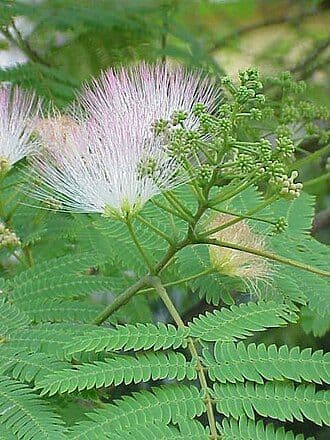
合歡皮 · He Huan Pi
Cortex Albizziae
Discover He Huan Pi (Silktree Bark), an ancient Traditional Chinese Medicine herb known as the 'happiness bark,' bridging traditional wisdom with modern science for emotional balance, better sleep, and physical comfort.
6-30g Tincture: 2-4ml
Place 6-30 grams of dried He Huan Pi into a non-reactive pot (glass or ceramic). Add 3-4 cups of water and bring to a boil. Reduce heat and simmer gently for 20-30 minutes, or until the liquid is reduced by about one-third. Strain and drink 1-2 times daily. The taste is mildly sweet and slightly woody.
Finely ground He Huan Pi powder can be taken directly, typically 1-3 grams, mixed into warm water, juice, or a smoothie, 1-2 times per day. Ensure the powder is from a reputable source for purity and potency.
Liquid tinctures are a convenient way to consume He Huan Pi. Follow the product's specific instructions, but a general dosage is 2-4 milliliters, taken 1-3 times daily. Mix with a small amount of water or juice before consuming.
Place 6-30 grams of dried He Huan Pi into a non-reactive pot (glass or ceramic). Add 3-4 cups of water and bring to a boil. Reduce heat and simmer gently for 20-30 minutes, or until the liquid is reduced by about one-third. Strain and drink 1-2 times daily. The taste is mildly sweet and slightly woody.
Finely ground He Huan Pi powder can be taken directly, typically 1-3 grams, mixed into warm water, juice, or a smoothie, 1-2 times per day. Ensure the powder is from a reputable source for purity and potency.
Liquid tinctures are a convenient way to consume He Huan Pi. Follow the product's specific instructions, but a general dosage is 2-4 milliliters, taken 1-3 times daily. Mix with a small amount of water or juice before consuming.
Pre-clinical studies, primarily in animal models, have shown that Albizia julibrissin extracts may influence serotonin and GABAergic pathways, supporting its traditional use for anti-anxiety, antidepressant, and sleep-regulating effects. Research also suggests neuroprotective and anti-inflammatory properties. Human clinical trials are needed to fully establish these benefits.
Preliminary — In vitro / animal studies
Pre-clinical studies, primarily in animal models, have shown that Albizia julibrissin extracts may influence serotonin and GABAergic pathways, supporting its traditional use for anti-anxiety, antidepressant, and sleep-regulating effects. Research also suggests neuroprotective and anti-inflammatory properties. Human clinical trials are needed to fully establish these benefits.
Preliminary — In vitro / animal studies
Insufficient Data
Insufficient Data
Imagine a tree, its branches spreading wide like welcoming arms, adorned with delicate, feathery leaves that gracefully fold themselves to sleep each night. This is the Mimosa tree, or Silktree (Albizia julibrissin), and within its unassuming bark lies one of Traditional Chinese Medicine's (TCM) most cherished treasures: He Huan Pi (合歡皮).
For centuries, this remarkable bark has been known as the 'happiness bark' or 'collective happiness bark,' a testament to its profound ability to soothe the spirit and bring a sense of calm and joy. It’s an herb that literally puts a smile on your face.
As an integrative medicine physician, I’ve seen firsthand how He Huan Pi (Cortex Albizziae), also known as Silktree Bark or Mimosa Tree Bark, is a bark-derived herb used in Traditional Chinese Medicine (TCM) primarily for calming the spirit, harmonizing blood, and alleviating pain. Its gentle yet potent actions offer a holistic approach to emotional well-being that resonates deeply with modern health needs.
It's a prime example of how ancient wisdom, when viewed through a scientific lens, offers practical solutions for the stresses of contemporary life.
The classical text, Shennong Ben Cao Jing, notes that He Huan Pi 'governs the five viscera, harmonizes the heart and mind, and makes people joyful and without worry.' This isn't just poetic language; it speaks to the core of this herb's function: to help us find our inner equilibrium and cultivate emotional resilience.
In TCM, every herb has a unique energetic signature, and He Huan Pi is no exception. It is described as having a neutral nature and a sweet flavor. What does this mean for your body? A neutral nature indicates that it won't unduly heat or cool your system, making it suitable for a wide range of constitutions. The sweet flavor in TCM often points to an herb's ability to nourish, harmonize, and soothe.
Think of it as a gentle, comforting presence for your internal landscape.
He Huan Pi primarily targets the heart, liver, lung, and spleen meridians. This broad reach is key to its holistic impact. The Heart meridian governs the Shen (Spirit), which encompasses our consciousness, emotions, and mental activities. By nourishing the Heart, He Huan Pi helps to stabilize our emotional core, alleviating restlessness and anxiety.
The Liver meridian is responsible for the smooth flow of Qi (life force) and blood, and when it becomes 'constrained' by stress or frustration, we experience irritability, anger, and physical tension. He Huan Pi helps to gently release this stagnation, promoting a more even temper and relaxed state. Its action on the Lung and Spleen meridians further supports overall energetic balance and nutrient absorption, which indirectly contributes to emotional stability.
One patient, let's call her Sarah, came to me struggling with chronic anxiety and a feeling of being constantly on edge. Her sleep was fragmented, and she often described a 'tight knot' in her chest. From a TCM perspective, her Liver Qi was constrained, and her Shen was disturbed. We incorporated He Huan Pi into her herbal formula, and over several weeks, she reported a significant shift.
The 'knot' eased, her sleep improved, and she found herself reacting to stressors with greater calm. It was a beautiful example of how addressing the root imbalance, not just the symptoms, can transform well-being.
This is where He Huan Pi truly shines. If you’ve ever felt overwhelmed, easily irritated, or found your mind racing at night, He Huan Pi’s calming properties can be deeply supportive. In TCM, it directly 'Calms the Spirit' and 'relieves constraint,' which are the foundational actions for addressing conditions like anxiety, depression, and insomnia. When our Spirit is unanchored, our minds become restless. He Huan Pi helps to ground that energy, allowing for mental tranquility.
Pre-clinical studies have indeed shown that Albizia julibrissin extracts can influence serotonin pathways and GABAergic activity, two critical neurotransmitter systems involved in mood regulation and relaxation. This scientific insight provides a clear bridge between the ancient wisdom of 'calming the Shen' and our modern understanding of brain chemistry. Research also suggests it supports sleep and mood regulation in stress-related insomnia models, validating centuries of traditional use.
Beyond its emotional benefits, He Huan Pi is also valued for its physical healing properties. It's described as 'Invigorating and harmonizing the Blood, stopping pain, and reconnecting sinews and bones.' This makes it a valuable herb in formulas for injuries, sprains, or even fractures. The famous Ben Cao Gang Mu states it 'harmonizes blood, dissipates swelling, and stops pain,' reflecting these actions.
By improving blood circulation, it helps to resolve stagnation that often contributes to pain and facilitates the body's natural healing processes. For instance, in an interesting traditional case cited in 《浙江中医杂志》 from 1983, He Huan Pi combined with Jin Qian Cao was reported to have a 100% efficacy rate in treating three cases of liver abscess, with patients recovering within 6-12 days. This highlights its historical use in addressing deeper physical concerns.
He Huan Pi also 'Regulates Qi, alleviates pain, dissipates swellings, and reduces abscesses.' This action makes it relevant for conditions involving localized inflammation and fluid accumulation. Whether applied topically or taken internally, its ability to move Qi and blood can help resolve stagnant conditions that manifest as swelling or even certain skin irritations. Pre-clinical studies suggest Albizia extracts may possess anti-inflammatory actions, providing a potential mechanism for these traditional applications.
While He Huan Pi’s traditional uses are extensive and well-documented, modern research is increasingly providing scientific backing for its benefits. Pre-clinical studies, often involving animal models and in vitro experiments, have begun to unravel the complex pharmacology of Albizia julibrissin.
Key findings highlight the presence of bioactive compounds like saponins and flavonoids in He Huan Pi, which are believed to be responsible for many of its therapeutic effects. Researchers at institutions like the Shandong Provincial Hospital of Traditional Chinese Medicine have noted that these compounds contribute to its sedative and anti-tumor properties. Specifically, preclinical studies (as cited by 1st Chinese Herbs, with findings published in journals accessible via PubMed, e.g.
, PMID: 23406049) demonstrate that Albizia julibrissin has shown promising effects on serotonin pathways and GABAergic activity. These are crucial for regulating mood and reducing anxiety, directly supporting the herb's traditional use for calming the Spirit.
Further pre-clinical investigations (e.g., PMID: 32370089) suggest that Albizia extracts may exert neuroprotective and anti-inflammatory actions. This provides a potential modern explanation for its role in enhancing emotional resilience and its traditional application in reducing swellings and pain. The connection between inflammation and mood disorders is a rapidly expanding area of Western medicine, and these findings suggest that He Huan Pi could be working on multiple fronts. Additionally, pre-clinical studies (e.g.
, PMID: 24467543) have also supported its role in sleep and mood regulation in stress-related insomnia models, directly validating its centuries-old use for restless nights.
While these pre-clinical results are exciting and align well with traditional knowledge, it's important to remember that they are foundational. We still need more human clinical trials to fully understand the efficacy and optimal dosages for various conditions in people. However, the existing research offers a compelling glimpse into the sophisticated ways this ancient herb interacts with our physiology.
He Huan Pi can be incorporated into your wellness routine in several forms, depending on your preference and the guidance of your practitioner. The dosage typically varies based on the form and individual needs.
This is the most common method in TCM. For a single serving, you would typically use 6-30 grams of dried He Huan Pi. Place the bark in a non-reactive pot (like ceramic or glass, avoid metal), add about 3-4 cups of water, and bring to a boil. Reduce the heat and simmer gently for 20-30 minutes. Strain the liquid and drink it warm, 1-2 times daily. The flavor is mildly sweet and earthy, quite pleasant for an herbal tea.
For those seeking convenience, tinctures offer a concentrated form. The typical dosage is 2-4 milliliters, taken 1-3 times daily, usually mixed with a small amount of water or juice. Always follow the specific instructions on the product label and consult your practitioner for personalized guidance.
He Huan Pi is also available in powdered form or encapsulated. Dosages for powders usually range from 1-3 grams, 1-2 times daily, mixed into water or a smoothie. Capsules will have specific instructions on their labels, typically 1-2 capsules taken daily. These forms offer a consistent dose and are convenient for daily use.
Remember, the best way to determine the right dosage and form for your unique needs is to consult with a qualified TCM practitioner or integrative medicine physician. They can assess your individual constitution and health goals to recommend a personalized approach.
While He Huan Pi is generally well-tolerated, certain precautions are essential. As an integrative physician, I cannot stress enough the importance of understanding who should use this herb and under what circumstances.
Use caution during pregnancy. While some traditional uses may exist, the safety profile during pregnancy has not been definitively established through rigorous clinical trials. Given its actions on invigorating blood and regulating Qi, which can be potent, it's generally best to avoid He Huan Pi unless specifically advised and monitored by a healthcare professional with expertise in herbal medicine during pregnancy. My advice is always: when in doubt, avoid.
He Huan Pi is contraindicated if there are no symptoms of Qi and Blood Stagnation. Its actions are aimed at moving and harmonizing, so if these patterns are not present, it may not be suitable. A proper TCM diagnosis is crucial to determine if this herb is right for you. It's not a general tonic for everyone; it's a specific remedy for specific imbalances.
Given He Huan Pi's pre-clinical evidence of affecting serotonin and GABAergic pathways, there is a theoretical potential for interaction with pharmaceutical medications that act on these systems. This includes sedatives, anxiolytics, and antidepressants. Combining He Huan Pi with such drugs could potentially lead to additive effects, such as increased drowsiness or altered drug metabolism. Always inform your prescribing physician about any herbs you are taking, and consult with an integrative medicine doctor to safely manage any potential interactions.
Self-medicating with herbs alongside pharmaceuticals can be risky, and professional guidance is non-negotiable.
Your health and safety are paramount. Always consult with a qualified healthcare provider before starting any new herbal supplement, especially if you have pre-existing medical conditions or are taking other medications.
He Huan Pi offers us a profound connection to nature's wisdom, reminding us that emotional well-being is not separate from our physical health. It’s a testament to the enduring power of herbs that a bark from a tree known for its delicate, folding leaves can provide such deep, grounding support for our modern, often overstimulated lives.
As we continue to bridge the insights of Traditional Chinese Medicine with the rigor of Western science, herbs like He Huan Pi stand as beacons, guiding us toward a more integrated understanding of health—one where ancient remedies find new relevance in our quest for balance and joy. This 'happiness bark' isn't just about feeling better; it's about reclaiming a deeper sense of peace within ourselves, a timeless pursuit that connects us to generations past and promises resilience for the future.
Imagine a tree, its branches spreading wide like welcoming arms, adorned with delicate, feathery leaves that gracefully fold themselves to sleep each night. This is the Mimosa tree, or Silktree (Albizia julibrissin), and within its unassuming bark lies one of Traditional Chinese Medicine's (TCM) most cherished treasures: He Huan Pi (合歡皮).
For centuries, this remarkable bark has been known as the 'happiness bark' or 'collective happiness bark,' a testament to its profound ability to soothe the spirit and bring a sense of calm and joy. It’s an herb that literally puts a smile on your face.
As an integrative medicine physician, I’ve seen firsthand how He Huan Pi (Cortex Albizziae), also known as Silktree Bark or Mimosa Tree Bark, is a bark-derived herb used in Traditional Chinese Medicine (TCM) primarily for calming the spirit, harmonizing blood, and alleviating pain. Its gentle yet potent actions offer a holistic approach to emotional well-being that resonates deeply with modern health needs.
It's a prime example of how ancient wisdom, when viewed through a scientific lens, offers practical solutions for the stresses of contemporary life.
The classical text, Shennong Ben Cao Jing, notes that He Huan Pi 'governs the five viscera, harmonizes the heart and mind, and makes people joyful and without worry.' This isn't just poetic language; it speaks to the core of this herb's function: to help us find our inner equilibrium and cultivate emotional resilience.
In TCM, every herb has a unique energetic signature, and He Huan Pi is no exception. It is described as having a neutral nature and a sweet flavor. What does this mean for your body? A neutral nature indicates that it won't unduly heat or cool your system, making it suitable for a wide range of constitutions. The sweet flavor in TCM often points to an herb's ability to nourish, harmonize, and soothe.
Think of it as a gentle, comforting presence for your internal landscape.
He Huan Pi primarily targets the heart, liver, lung, and spleen meridians. This broad reach is key to its holistic impact. The Heart meridian governs the Shen (Spirit), which encompasses our consciousness, emotions, and mental activities. By nourishing the Heart, He Huan Pi helps to stabilize our emotional core, alleviating restlessness and anxiety.
The Liver meridian is responsible for the smooth flow of Qi (life force) and blood, and when it becomes 'constrained' by stress or frustration, we experience irritability, anger, and physical tension. He Huan Pi helps to gently release this stagnation, promoting a more even temper and relaxed state. Its action on the Lung and Spleen meridians further supports overall energetic balance and nutrient absorption, which indirectly contributes to emotional stability.
One patient, let's call her Sarah, came to me struggling with chronic anxiety and a feeling of being constantly on edge. Her sleep was fragmented, and she often described a 'tight knot' in her chest. From a TCM perspective, her Liver Qi was constrained, and her Shen was disturbed. We incorporated He Huan Pi into her herbal formula, and over several weeks, she reported a significant shift.
The 'knot' eased, her sleep improved, and she found herself reacting to stressors with greater calm. It was a beautiful example of how addressing the root imbalance, not just the symptoms, can transform well-being.
This is where He Huan Pi truly shines. If you’ve ever felt overwhelmed, easily irritated, or found your mind racing at night, He Huan Pi’s calming properties can be deeply supportive. In TCM, it directly 'Calms the Spirit' and 'relieves constraint,' which are the foundational actions for addressing conditions like anxiety, depression, and insomnia. When our Spirit is unanchored, our minds become restless. He Huan Pi helps to ground that energy, allowing for mental tranquility.
Pre-clinical studies have indeed shown that Albizia julibrissin extracts can influence serotonin pathways and GABAergic activity, two critical neurotransmitter systems involved in mood regulation and relaxation. This scientific insight provides a clear bridge between the ancient wisdom of 'calming the Shen' and our modern understanding of brain chemistry. Research also suggests it supports sleep and mood regulation in stress-related insomnia models, validating centuries of traditional use.
Beyond its emotional benefits, He Huan Pi is also valued for its physical healing properties. It's described as 'Invigorating and harmonizing the Blood, stopping pain, and reconnecting sinews and bones.' This makes it a valuable herb in formulas for injuries, sprains, or even fractures. The famous Ben Cao Gang Mu states it 'harmonizes blood, dissipates swelling, and stops pain,' reflecting these actions.
By improving blood circulation, it helps to resolve stagnation that often contributes to pain and facilitates the body's natural healing processes. For instance, in an interesting traditional case cited in 《浙江中医杂志》 from 1983, He Huan Pi combined with Jin Qian Cao was reported to have a 100% efficacy rate in treating three cases of liver abscess, with patients recovering within 6-12 days. This highlights its historical use in addressing deeper physical concerns.
He Huan Pi also 'Regulates Qi, alleviates pain, dissipates swellings, and reduces abscesses.' This action makes it relevant for conditions involving localized inflammation and fluid accumulation. Whether applied topically or taken internally, its ability to move Qi and blood can help resolve stagnant conditions that manifest as swelling or even certain skin irritations. Pre-clinical studies suggest Albizia extracts may possess anti-inflammatory actions, providing a potential mechanism for these traditional applications.
While He Huan Pi’s traditional uses are extensive and well-documented, modern research is increasingly providing scientific backing for its benefits. Pre-clinical studies, often involving animal models and in vitro experiments, have begun to unravel the complex pharmacology of Albizia julibrissin.
Key findings highlight the presence of bioactive compounds like saponins and flavonoids in He Huan Pi, which are believed to be responsible for many of its therapeutic effects. Researchers at institutions like the Shandong Provincial Hospital of Traditional Chinese Medicine have noted that these compounds contribute to its sedative and anti-tumor properties. Specifically, preclinical studies (as cited by 1st Chinese Herbs, with findings published in journals accessible via PubMed, e.g.
, PMID: 23406049) demonstrate that Albizia julibrissin has shown promising effects on serotonin pathways and GABAergic activity. These are crucial for regulating mood and reducing anxiety, directly supporting the herb's traditional use for calming the Spirit.
Further pre-clinical investigations (e.g., PMID: 32370089) suggest that Albizia extracts may exert neuroprotective and anti-inflammatory actions. This provides a potential modern explanation for its role in enhancing emotional resilience and its traditional application in reducing swellings and pain. The connection between inflammation and mood disorders is a rapidly expanding area of Western medicine, and these findings suggest that He Huan Pi could be working on multiple fronts. Additionally, pre-clinical studies (e.g.
, PMID: 24467543) have also supported its role in sleep and mood regulation in stress-related insomnia models, directly validating its centuries-old use for restless nights.
While these pre-clinical results are exciting and align well with traditional knowledge, it's important to remember that they are foundational. We still need more human clinical trials to fully understand the efficacy and optimal dosages for various conditions in people. However, the existing research offers a compelling glimpse into the sophisticated ways this ancient herb interacts with our physiology.
He Huan Pi can be incorporated into your wellness routine in several forms, depending on your preference and the guidance of your practitioner. The dosage typically varies based on the form and individual needs.
This is the most common method in TCM. For a single serving, you would typically use 6-30 grams of dried He Huan Pi. Place the bark in a non-reactive pot (like ceramic or glass, avoid metal), add about 3-4 cups of water, and bring to a boil. Reduce the heat and simmer gently for 20-30 minutes. Strain the liquid and drink it warm, 1-2 times daily. The flavor is mildly sweet and earthy, quite pleasant for an herbal tea.
For those seeking convenience, tinctures offer a concentrated form. The typical dosage is 2-4 milliliters, taken 1-3 times daily, usually mixed with a small amount of water or juice. Always follow the specific instructions on the product label and consult your practitioner for personalized guidance.
He Huan Pi is also available in powdered form or encapsulated. Dosages for powders usually range from 1-3 grams, 1-2 times daily, mixed into water or a smoothie. Capsules will have specific instructions on their labels, typically 1-2 capsules taken daily. These forms offer a consistent dose and are convenient for daily use.
Remember, the best way to determine the right dosage and form for your unique needs is to consult with a qualified TCM practitioner or integrative medicine physician. They can assess your individual constitution and health goals to recommend a personalized approach.
While He Huan Pi is generally well-tolerated, certain precautions are essential. As an integrative physician, I cannot stress enough the importance of understanding who should use this herb and under what circumstances.
Use caution during pregnancy. While some traditional uses may exist, the safety profile during pregnancy has not been definitively established through rigorous clinical trials. Given its actions on invigorating blood and regulating Qi, which can be potent, it's generally best to avoid He Huan Pi unless specifically advised and monitored by a healthcare professional with expertise in herbal medicine during pregnancy. My advice is always: when in doubt, avoid.
He Huan Pi is contraindicated if there are no symptoms of Qi and Blood Stagnation. Its actions are aimed at moving and harmonizing, so if these patterns are not present, it may not be suitable. A proper TCM diagnosis is crucial to determine if this herb is right for you. It's not a general tonic for everyone; it's a specific remedy for specific imbalances.
Given He Huan Pi's pre-clinical evidence of affecting serotonin and GABAergic pathways, there is a theoretical potential for interaction with pharmaceutical medications that act on these systems. This includes sedatives, anxiolytics, and antidepressants. Combining He Huan Pi with such drugs could potentially lead to additive effects, such as increased drowsiness or altered drug metabolism. Always inform your prescribing physician about any herbs you are taking, and consult with an integrative medicine doctor to safely manage any potential interactions.
Self-medicating with herbs alongside pharmaceuticals can be risky, and professional guidance is non-negotiable.
Your health and safety are paramount. Always consult with a qualified healthcare provider before starting any new herbal supplement, especially if you have pre-existing medical conditions or are taking other medications.
He Huan Pi offers us a profound connection to nature's wisdom, reminding us that emotional well-being is not separate from our physical health. It’s a testament to the enduring power of herbs that a bark from a tree known for its delicate, folding leaves can provide such deep, grounding support for our modern, often overstimulated lives.
As we continue to bridge the insights of Traditional Chinese Medicine with the rigor of Western science, herbs like He Huan Pi stand as beacons, guiding us toward a more integrated understanding of health—one where ancient remedies find new relevance in our quest for balance and joy. This 'happiness bark' isn't just about feeling better; it's about reclaiming a deeper sense of peace within ourselves, a timeless pursuit that connects us to generations past and promises resilience for the future.
This information is for educational purposes only and is not intended as medical advice. Always consult a qualified healthcare practitioner before using any herbal remedy.