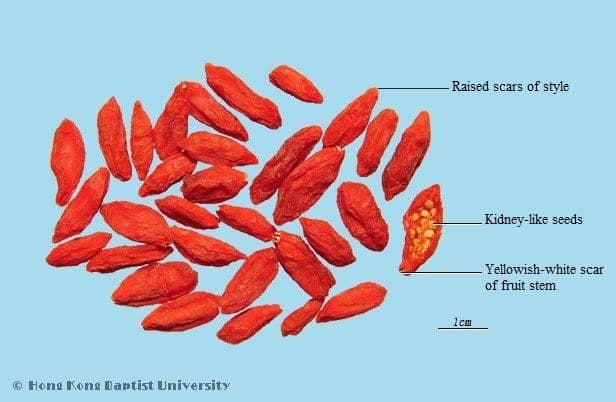

Lycium Fruit
Neutral (平)枸杞子 · Gou Qi Zi
Fructus Lycii
TCM Properties
Nature (四气)
Neutral (平)Flavor (五味)
Sweet (甘)
Meridian Tropism
LiverLungKidney
枸杞子 · Gou Qi Zi
Fructus Lycii
Often seen in traditional Chinese kitchens, Gou Qi Zi, or Lycium Fruit, is a vibrant red berry revered for its ability to nourish the body's core energy, support vision, and enhance overall well-being. Dr. Maya Chen explores its ancient roots and contemporary scientific backing.
5-18g; Tincture: 2-4ml
5-18g; Tincture: 2-4ml
Steep 5-18 grams of dried Gou Qi Zi in 8-12 ounces of hot water (just below boiling) for 10-15 minutes. The berries can be eaten after drinking the tea. For a stronger decoction, simmer the berries in water for 20-30 minutes.
Add 5-18 grams of dried Gou Qi Zi directly to soups, stews, or congee during the last 15-20 minutes of cooking. They can also be rehydrated and blended into smoothies, sprinkled over oatmeal, yogurt, or salads, or baked into muffins and breads.
Follow the specific product instructions for a standardized tincture, typically taking 2-4 ml, 1-3 times daily. It's best to take tinctures diluted in a small amount of water.
Steep 5-18 grams of dried Gou Qi Zi in 8-12 ounces of hot water (just below boiling) for 10-15 minutes. The berries can be eaten after drinking the tea. For a stronger decoction, simmer the berries in water for 20-30 minutes.
Add 5-18 grams of dried Gou Qi Zi directly to soups, stews, or congee during the last 15-20 minutes of cooking. They can also be rehydrated and blended into smoothies, sprinkled over oatmeal, yogurt, or salads, or baked into muffins and breads.
Follow the specific product instructions for a standardized tincture, typically taking 2-4 ml, 1-3 times daily. It's best to take tinctures diluted in a small amount of water.
The clinical evidence for Gou Qi Zi, particularly its Lycium barbarum polysaccharides (LBP), indicates promising effects across several areas. Studies suggest improvements in lipid profile, glucose metabolism, antioxidant status, and a significant anti-fatigue effect. While smaller human trials show positive subjective well-being outcomes, larger-scale clinical trials are still needed to fully substantiate all traditional claims.
Moderate — Some clinical studies
The clinical evidence for Gou Qi Zi, particularly its Lycium barbarum polysaccharides (LBP), indicates promising effects across several areas. Studies suggest improvements in lipid profile, glucose metabolism, antioxidant status, and a significant anti-fatigue effect. While smaller human trials show positive subjective well-being outcomes, larger-scale clinical trials are still needed to fully substantiate all traditional claims.
Moderate — Some clinical studies
Insufficient Data
Insufficient Data
Imagine a bustling street market in Beijing, the air alive with the scent of herbs and spices. Amidst the vibrant stalls, you'll often see elderly women carefully selecting handfuls of bright red, jewel-like berries. These aren't just any berries; they are Gou Qi Zi, a staple in Traditional Chinese Medicine (TCM) for centuries, revered for their ability to nourish and revitalize the body.
For many, these berries are more than just a food; they are a daily ritual, a quiet affirmation of health and longevity.
Gou Qi Zi (Fructus Lycii), also known as Lycium Fruit, Chinese Wolfberry Fruit, or Matrimony Vine Fruit, is a versatile fruit-based herb used in Traditional Chinese Medicine primarily to nourish the Liver and Kidney, support healthy vision, and boost overall vitality. As an integrative medicine physician, I’ve spent 15 years helping my patients understand how these ancient practices connect to modern health science. And Gou Qi Zi is a perfect example of that bridge.
From a TCM perspective, Gou Qi Zi holds a unique place. It's classified as Neutral in nature, meaning it doesn't create excessive heat or cold in the body. This makes it a wonderfully adaptable herb, suitable for most constitutions. Its Sweet flavor signifies its nourishing and harmonizing properties—think of it as a gentle, restorative balm for your internal systems.
The meridians it primarily influences are the Liver, Lung, and Kidney. In TCM, the Liver governs blood, vision, and the smooth flow of Qi (life energy). The Kidneys are considered the root of life, storing our fundamental essence (Jing) and governing growth, reproduction, and aging. The Lungs manage Qi and body fluids, impacting our immunity and respiratory health.
When we say Gou Qi Zi nourishes and tonifies Liver and Kidney Blood and Yin, we're talking about supporting these vital functions at their deepest level.
This holistic action is why it’s so valued. I remember a patient, Mr. Lee, who came to me complaining of chronic dry eyes, occasional blurry vision, and feeling constantly fatigued despite adequate sleep. His tongue and pulse diagnosis pointed to Liver and Kidney Yin deficiency – a common pattern in our modern, overstimulated world. Incorporating Gou Qi Zi into his daily routine, alongside other lifestyle adjustments, made a noticeable difference.
His eyes felt less strained, and he reported a subtle but definite increase in his overall energy.
The classical text Bencao Gangmu (Compendium of Materia Medica) succinctly states, "枸杞子,味甘,性平。归肝、肾经。补肾益精,养肝明目,补益精明。" (Gou Qi Zi, sweet in flavor, neutral in nature. Enters the Liver and Kidney meridians. Tonifies the Kidneys and benefits Jing, nourishes the Liver and brightens the eyes, replenishes essence and sharpens intellect.) This ancient wisdom perfectly aligns with its multifaceted benefits that we still observe today.
If you find yourself dragging through the day, feeling depleted even after rest, Gou Qi Zi might be a gentle ally. In TCM, persistent fatigue often stems from a deficiency in Kidney Jing or Liver Blood. By nourishing these fundamental energies, Gou Qi Zi helps to build a deeper reserve of vitality. Modern research supports this traditional use.
A 2024 literature overview and meta-analysis published in Nutrients by Shahrajabian, Sun, and Qi, involving 259 subjects across five randomized controlled trials, indicated that goji berries significantly improved quality of life, including a notable anti-fatigue effect. Earlier work by H. Amagase and D. M.
Nance in the Journal of the American College of Nutrition (2008) showed that daily consumption of Lycium barbarum juice for 14 days significantly increased subjective feelings of general well-being, energy level, and reduced fatigue in healthy adults.
The phrase "brightening the eyes" is a cornerstone of Gou Qi Zi's reputation in TCM. The Liver meridian, which Gou Qi Zi influences, is intimately connected to eye health. When Liver Blood and Yin are plentiful, the eyes are well-nourished and moist. Scientifically, this benefit is largely attributed to compounds like Zeaxanthin dipalmitate, a potent antioxidant that concentrates in the retina. Research published in Frontiers in Pharmacology by Jinfeng Liu et al.
(2024) demonstrated that aqueous extracts of Gou Qi Zi protected retinal ganglion cells in mice with chronic elevated eye pressure through antioxidant and anti-inflammatory actions. Another study in Journal of Hunan University of Chinese Medicine by Jiang Pengfei et al. (2021) explored how a Gou Qi Zi-Danshen compound significantly inhibited retinal Caspase expression, a marker of cellular apoptosis, in an animal model of retinal degeneration.
A healthy immune system is our body's first line of defense. In TCM, the Lungs play a key role in defensive energy (Wei Qi). By nourishing Lung Yin, Gou Qi Zi helps maintain the integrity of our protective barriers. From a Western perspective, the Lycium barbarum polysaccharides (LBP) found in Gou Qi Zi are key active compounds. A systematic review by Z. F. Ma et al.
in Oxidative Medicine and Cellular Longevity (2019) highlighted good evidence for the antioxidizing and anti-inflammatory effects of LBP. More recently, a 2024 systematic review by Luo Qun et al. in Drug Evaluation Research affirmed Gou Qi Zi's clear antioxidant, antitumor, and immune-modulating pharmacological activities, with 82% of modern research focusing on the immunomodulatory effects of LBP. This ancient berry is truly a powerhouse for supporting your body's natural defenses.
Beyond its traditional applications, modern science is increasingly validating Gou Qi Zi's health benefits, focusing on its rich array of active compounds. The primary compounds of interest include Lycium barbarum polysaccharides (LBP), Zeaxanthin dipalmitate, and Betaine.
The 2024 meta-analysis by Shahrajabian, Sun, and Qi in Nutrients provided compelling data. Across the included randomized controlled trials, goji berries were shown to significantly improve lipid profiles, reducing fasting glucose by 6–7 mg/dL and elevating HDL cholesterol by 10–15 mg/dL. They also demonstrated positive effects on oxidative stress markers.
It's interesting to note that while these metabolic benefits are clear, the studies did not find significant effects on body weight or blood pressure, helping us temper some of the 'superfood' exaggerations.
The work by H. Amagase and D. M. Nance (2008) in the Journal of the American College of Nutrition offers fascinating insights into how Gou Qi Zi affects subjective well-being. Their study, involving 16 healthy adults consuming standardized Lycium barbarum juice, reported significant improvements across various markers: increased feelings of general well-being, energy, athletic performance, sleep quality, mental acuity, calmness, and happiness, alongside reduced fatigue and stress, and improved gastrointestinal function.
This suggests a broad impact on quality of life that extends beyond specific biomarkers.
While traditional claims for Gou Qi Zi are vast, researchers like Z. F. Ma et al. (2019) in Oxidative Medicine and Cellular Longevity emphasize the need for more large-scale human clinical trials. Their systematic review, which included randomized control trials, in vivo, and in vitro studies, found good evidence for the antifibrotic, antioxidizing, neuroprotective, anticancer, and anti-inflammatory effects of LBP. This provides a strong scientific basis for many of its traditional uses, even as we await more definitive human trials.
One of the beautiful aspects of Gou Qi Zi is its versatility. It’s not just an herbal remedy; it's a food that integrates seamlessly into a modern, health-conscious lifestyle. I often recommend it to my patients not only for specific concerns but also as a general wellness tonic.
The most common form is dried berries. You can simply eat them as a snack, much like raisins, or incorporate them into your meals. The typical daily dosage ranges from 5-18 grams. If you're new to them, start with a smaller amount, perhaps 5-10 grams, and see how you feel.
As a Tea: Steep 5-18 grams of dried Gou Qi Zi in 8-12 ounces of hot water (just below boiling) for 10-15 minutes. You can eat the plumped berries afterward. Many people enjoy combining them with chrysanthemum flowers for an added eye-brightening effect, a classic TCM pairing.
In Soups & Congee: Add 5-18 grams of dried berries to your broths, stews, or rice porridge (congee) during the last 15-20 minutes of cooking. They impart a subtle sweetness and nourishing quality. This is how many Chinese families have consumed them for generations.
In Smoothies & Oatmeal: Blend them into your morning smoothie or sprinkle them on top of your oatmeal or yogurt for an antioxidant boost and a touch of natural sweetness.
If you prefer a concentrated form, a Gou Qi Zi tincture can be convenient. The typical dosage is 2-4 ml, 1-3 times daily, usually diluted in a small amount of water. Always follow the specific instructions on the product label.
While Gou Qi Zi is generally considered safe for most people when consumed in appropriate amounts, it's crucial to be aware of certain contraindications and potential interactions. As an integrative physician, I prioritize patient safety above all else, and understanding these nuances is key.
Gou Qi Zi is contraindicated for individuals with external Excess Heat, such as during the initial stages of a common cold or flu with symptoms like fever, chills, and body aches. Its nourishing nature can sometimes 'hold' pathogens within the body in such cases. Similarly, use caution if you have Internal Full Heat, including high fever.
Furthermore, if you experience Spleen Deficiency with Dampness, often characterized by symptoms like loose stools or diarrhea, you should use Gou Qi Zi with caution. Its slightly moistening quality could potentially worsen these digestive issues.
This is a critical area where caution is paramount. Gou Qi Zi has been reported to potentially interact with certain medications:
Blood Thinners (Anticoagulants): Gou Qi Zi may potentiate the effects of drugs like warfarin (Coumadin), increasing the risk of bleeding. If you are on blood thinners, you must consult your physician before consuming Gou Qi Zi.
Diabetes Medications: As studies indicate Gou Qi Zi can help lower blood glucose, combining it with diabetes medications could lead to hypoglycemia (dangerously low blood sugar). Close monitoring of blood sugar levels and dosage adjustments by your doctor would be necessary.
Blood Pressure Medications: Gou Qi Zi may also have a mild blood pressure-lowering effect. Combining it with antihypertensive drugs could potentially cause blood pressure to drop too low. Discuss this with your healthcare provider if you are on such medications.
Use with caution during pregnancy. While traditionally used in some contexts, definitive safety data for widespread use in pregnancy is limited. I strongly advise pregnant or breastfeeding individuals to consult with a qualified healthcare professional before consuming Gou Qi Zi or any other herbal supplement.
In my practice, I find Gou Qi Zi to be a testament to the enduring wisdom of TCM, now increasingly illuminated by modern scientific inquiry. It’s more than just a berry; it’s a connection to centuries of health philosophy, offering a gentle yet profound way to support our bodies. By understanding its actions through both traditional and scientific lenses, we empower ourselves to make informed choices, truly integrating ancient knowledge with contemporary health practices.
It reminds us that sometimes, the most potent remedies are found in the simplest, most vibrant forms of nature.
Imagine a bustling street market in Beijing, the air alive with the scent of herbs and spices. Amidst the vibrant stalls, you'll often see elderly women carefully selecting handfuls of bright red, jewel-like berries. These aren't just any berries; they are Gou Qi Zi, a staple in Traditional Chinese Medicine (TCM) for centuries, revered for their ability to nourish and revitalize the body.
For many, these berries are more than just a food; they are a daily ritual, a quiet affirmation of health and longevity.
Gou Qi Zi (Fructus Lycii), also known as Lycium Fruit, Chinese Wolfberry Fruit, or Matrimony Vine Fruit, is a versatile fruit-based herb used in Traditional Chinese Medicine primarily to nourish the Liver and Kidney, support healthy vision, and boost overall vitality. As an integrative medicine physician, I’ve spent 15 years helping my patients understand how these ancient practices connect to modern health science. And Gou Qi Zi is a perfect example of that bridge.
From a TCM perspective, Gou Qi Zi holds a unique place. It's classified as Neutral in nature, meaning it doesn't create excessive heat or cold in the body. This makes it a wonderfully adaptable herb, suitable for most constitutions. Its Sweet flavor signifies its nourishing and harmonizing properties—think of it as a gentle, restorative balm for your internal systems.
The meridians it primarily influences are the Liver, Lung, and Kidney. In TCM, the Liver governs blood, vision, and the smooth flow of Qi (life energy). The Kidneys are considered the root of life, storing our fundamental essence (Jing) and governing growth, reproduction, and aging. The Lungs manage Qi and body fluids, impacting our immunity and respiratory health.
When we say Gou Qi Zi nourishes and tonifies Liver and Kidney Blood and Yin, we're talking about supporting these vital functions at their deepest level.
This holistic action is why it’s so valued. I remember a patient, Mr. Lee, who came to me complaining of chronic dry eyes, occasional blurry vision, and feeling constantly fatigued despite adequate sleep. His tongue and pulse diagnosis pointed to Liver and Kidney Yin deficiency – a common pattern in our modern, overstimulated world. Incorporating Gou Qi Zi into his daily routine, alongside other lifestyle adjustments, made a noticeable difference.
His eyes felt less strained, and he reported a subtle but definite increase in his overall energy.
The classical text Bencao Gangmu (Compendium of Materia Medica) succinctly states, "枸杞子,味甘,性平。归肝、肾经。补肾益精,养肝明目,补益精明。" (Gou Qi Zi, sweet in flavor, neutral in nature. Enters the Liver and Kidney meridians. Tonifies the Kidneys and benefits Jing, nourishes the Liver and brightens the eyes, replenishes essence and sharpens intellect.) This ancient wisdom perfectly aligns with its multifaceted benefits that we still observe today.
If you find yourself dragging through the day, feeling depleted even after rest, Gou Qi Zi might be a gentle ally. In TCM, persistent fatigue often stems from a deficiency in Kidney Jing or Liver Blood. By nourishing these fundamental energies, Gou Qi Zi helps to build a deeper reserve of vitality. Modern research supports this traditional use.
A 2024 literature overview and meta-analysis published in Nutrients by Shahrajabian, Sun, and Qi, involving 259 subjects across five randomized controlled trials, indicated that goji berries significantly improved quality of life, including a notable anti-fatigue effect. Earlier work by H. Amagase and D. M.
Nance in the Journal of the American College of Nutrition (2008) showed that daily consumption of Lycium barbarum juice for 14 days significantly increased subjective feelings of general well-being, energy level, and reduced fatigue in healthy adults.
The phrase "brightening the eyes" is a cornerstone of Gou Qi Zi's reputation in TCM. The Liver meridian, which Gou Qi Zi influences, is intimately connected to eye health. When Liver Blood and Yin are plentiful, the eyes are well-nourished and moist. Scientifically, this benefit is largely attributed to compounds like Zeaxanthin dipalmitate, a potent antioxidant that concentrates in the retina. Research published in Frontiers in Pharmacology by Jinfeng Liu et al.
(2024) demonstrated that aqueous extracts of Gou Qi Zi protected retinal ganglion cells in mice with chronic elevated eye pressure through antioxidant and anti-inflammatory actions. Another study in Journal of Hunan University of Chinese Medicine by Jiang Pengfei et al. (2021) explored how a Gou Qi Zi-Danshen compound significantly inhibited retinal Caspase expression, a marker of cellular apoptosis, in an animal model of retinal degeneration.
A healthy immune system is our body's first line of defense. In TCM, the Lungs play a key role in defensive energy (Wei Qi). By nourishing Lung Yin, Gou Qi Zi helps maintain the integrity of our protective barriers. From a Western perspective, the Lycium barbarum polysaccharides (LBP) found in Gou Qi Zi are key active compounds. A systematic review by Z. F. Ma et al.
in Oxidative Medicine and Cellular Longevity (2019) highlighted good evidence for the antioxidizing and anti-inflammatory effects of LBP. More recently, a 2024 systematic review by Luo Qun et al. in Drug Evaluation Research affirmed Gou Qi Zi's clear antioxidant, antitumor, and immune-modulating pharmacological activities, with 82% of modern research focusing on the immunomodulatory effects of LBP. This ancient berry is truly a powerhouse for supporting your body's natural defenses.
Beyond its traditional applications, modern science is increasingly validating Gou Qi Zi's health benefits, focusing on its rich array of active compounds. The primary compounds of interest include Lycium barbarum polysaccharides (LBP), Zeaxanthin dipalmitate, and Betaine.
The 2024 meta-analysis by Shahrajabian, Sun, and Qi in Nutrients provided compelling data. Across the included randomized controlled trials, goji berries were shown to significantly improve lipid profiles, reducing fasting glucose by 6–7 mg/dL and elevating HDL cholesterol by 10–15 mg/dL. They also demonstrated positive effects on oxidative stress markers.
It's interesting to note that while these metabolic benefits are clear, the studies did not find significant effects on body weight or blood pressure, helping us temper some of the 'superfood' exaggerations.
The work by H. Amagase and D. M. Nance (2008) in the Journal of the American College of Nutrition offers fascinating insights into how Gou Qi Zi affects subjective well-being. Their study, involving 16 healthy adults consuming standardized Lycium barbarum juice, reported significant improvements across various markers: increased feelings of general well-being, energy, athletic performance, sleep quality, mental acuity, calmness, and happiness, alongside reduced fatigue and stress, and improved gastrointestinal function.
This suggests a broad impact on quality of life that extends beyond specific biomarkers.
While traditional claims for Gou Qi Zi are vast, researchers like Z. F. Ma et al. (2019) in Oxidative Medicine and Cellular Longevity emphasize the need for more large-scale human clinical trials. Their systematic review, which included randomized control trials, in vivo, and in vitro studies, found good evidence for the antifibrotic, antioxidizing, neuroprotective, anticancer, and anti-inflammatory effects of LBP. This provides a strong scientific basis for many of its traditional uses, even as we await more definitive human trials.
One of the beautiful aspects of Gou Qi Zi is its versatility. It’s not just an herbal remedy; it's a food that integrates seamlessly into a modern, health-conscious lifestyle. I often recommend it to my patients not only for specific concerns but also as a general wellness tonic.
The most common form is dried berries. You can simply eat them as a snack, much like raisins, or incorporate them into your meals. The typical daily dosage ranges from 5-18 grams. If you're new to them, start with a smaller amount, perhaps 5-10 grams, and see how you feel.
As a Tea: Steep 5-18 grams of dried Gou Qi Zi in 8-12 ounces of hot water (just below boiling) for 10-15 minutes. You can eat the plumped berries afterward. Many people enjoy combining them with chrysanthemum flowers for an added eye-brightening effect, a classic TCM pairing.
In Soups & Congee: Add 5-18 grams of dried berries to your broths, stews, or rice porridge (congee) during the last 15-20 minutes of cooking. They impart a subtle sweetness and nourishing quality. This is how many Chinese families have consumed them for generations.
In Smoothies & Oatmeal: Blend them into your morning smoothie or sprinkle them on top of your oatmeal or yogurt for an antioxidant boost and a touch of natural sweetness.
If you prefer a concentrated form, a Gou Qi Zi tincture can be convenient. The typical dosage is 2-4 ml, 1-3 times daily, usually diluted in a small amount of water. Always follow the specific instructions on the product label.
While Gou Qi Zi is generally considered safe for most people when consumed in appropriate amounts, it's crucial to be aware of certain contraindications and potential interactions. As an integrative physician, I prioritize patient safety above all else, and understanding these nuances is key.
Gou Qi Zi is contraindicated for individuals with external Excess Heat, such as during the initial stages of a common cold or flu with symptoms like fever, chills, and body aches. Its nourishing nature can sometimes 'hold' pathogens within the body in such cases. Similarly, use caution if you have Internal Full Heat, including high fever.
Furthermore, if you experience Spleen Deficiency with Dampness, often characterized by symptoms like loose stools or diarrhea, you should use Gou Qi Zi with caution. Its slightly moistening quality could potentially worsen these digestive issues.
This is a critical area where caution is paramount. Gou Qi Zi has been reported to potentially interact with certain medications:
Blood Thinners (Anticoagulants): Gou Qi Zi may potentiate the effects of drugs like warfarin (Coumadin), increasing the risk of bleeding. If you are on blood thinners, you must consult your physician before consuming Gou Qi Zi.
Diabetes Medications: As studies indicate Gou Qi Zi can help lower blood glucose, combining it with diabetes medications could lead to hypoglycemia (dangerously low blood sugar). Close monitoring of blood sugar levels and dosage adjustments by your doctor would be necessary.
Blood Pressure Medications: Gou Qi Zi may also have a mild blood pressure-lowering effect. Combining it with antihypertensive drugs could potentially cause blood pressure to drop too low. Discuss this with your healthcare provider if you are on such medications.
Use with caution during pregnancy. While traditionally used in some contexts, definitive safety data for widespread use in pregnancy is limited. I strongly advise pregnant or breastfeeding individuals to consult with a qualified healthcare professional before consuming Gou Qi Zi or any other herbal supplement.
In my practice, I find Gou Qi Zi to be a testament to the enduring wisdom of TCM, now increasingly illuminated by modern scientific inquiry. It’s more than just a berry; it’s a connection to centuries of health philosophy, offering a gentle yet profound way to support our bodies. By understanding its actions through both traditional and scientific lenses, we empower ourselves to make informed choices, truly integrating ancient knowledge with contemporary health practices.
It reminds us that sometimes, the most potent remedies are found in the simplest, most vibrant forms of nature.
This information is for educational purposes only and is not intended as medical advice. Always consult a qualified healthcare practitioner before using any herbal remedy.