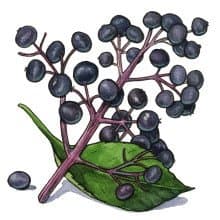
The elderberry bush, with its delicate white blossoms in spring and clusters of deep purple berries in late summer, has quietly graced landscapes and medicine cabinets across continents for centuries. From European folk traditions to the indigenous practices of North America, and even finding a place in broader Asian traditional systems, its vibrant fruit has been a go-to remedy for what ails us.
For many, the scent of simmering elderberry syrup evokes comfort, a natural shield against the chill of approaching winter.
As an integrative medicine physician, I’ve seen firsthand how this humble berry, known scientifically as Sambucus nigra, and sometimes simply Black Elder or European Elder, is far more than just a seasonal tonic. Elderberry (Sambucus nigra), also known as Black Elder or European Elder, is a fruit-bearing herb used traditionally across cultures for its supportive properties, particularly for immune health.
Its deep roots in ancient wisdom, particularly how its actions align with concepts in Traditional Chinese Medicine (TCM), offer a profound lens through which to understand its validated modern benefits.
I recall a patient, a young teacher named Sarah, who used to dread flu season. Every year, despite her best efforts, she’d be sidelined for a week, her voice hoarse, her energy depleted. When we started discussing her seasonal wellness strategy, I introduced her to elderberry, not just as a supplement, but as part of a holistic approach to bolstering her defensive energy (Wei Qi).
Seeing her confidently navigate subsequent winters, missing fewer days and recovering more quickly, truly underscores the power of integrating these ancient plant allies into modern life.
What Makes Elderberry Special: A TCM Perspective
In TCM, herbs are categorized by their nature, flavors, and the meridians they influence. Elderberry, or Jie Gu Mu (接骨木), is traditionally described as cool in nature and possessing both sweet and sour flavors. What does this mean for your body?
The cool nature suggests elderberry has a capacity to clear heat and calm inflammation, making it ideal for the early stages of a common cold or flu, which often present with symptoms like fever, sore throat, and a general feeling of 'heat' in the body. Think of it as a gentle, cooling rain that helps quell an internal fire, easing discomfort and promoting balance. This aligns perfectly with its modern scientific validation as an anti-inflammatory agent.
The sweet flavor in TCM is often associated with nourishing and harmonizing actions, helping to strengthen the body and support its innate resilience. It suggests a building quality, which resonates with elderberry's immunostimulatory effects. Meanwhile, the sour flavor is linked to astringency and preventing leakage, which can translate to helping consolidate the body's defenses and preventing the excessive loss of fluids associated with sweating or runny noses, making it a diaphoretic that helps resolve fevers.
Historically, the broader plant, known as Jie Gu Mu (接骨木) in Chinese, meaning 'bone-connecting wood,' was referenced in texts like the Bencao Gangmu (Compendium of Materia Medica). This classical text noted that “接骨木,气味苦、平,无毒。主治折伤堕坠,续筋骨,止金疮痛。” While this specific quote refers more to the wood's use for injuries, it highlights the plant's long-standing place in healing traditions, demonstrating a broader recognition of its medicinal value beyond just the berries.
My focus here, however, remains on the berries, which are the primary part used for immune support today.
Top Benefits: What Elderberry Can Do For You
Elderberry's rich composition of active compounds offers a multi-pronged approach to supporting your health, particularly when your immune system needs a helping hand.
For Seasonal Wellness & Immune Resilience
This is elderberry's superstar role. When the seasons shift, and you feel that familiar tickle in your throat or a general malaise setting in, elderberry steps in as a powerful ally. From a TCM perspective, it helps to 'release the exterior,' meaning it assists the body in expelling external pathogens and preventing them from settling deeper. Modern research illuminates this with remarkable clarity.
Elderberry boasts potent anti-viral actions by inhibiting viral neuraminidase, an enzyme crucial for viruses to replicate and spread. It also physically blocks viral entry into host cells, essentially putting up a 'no trespassing' sign for cold and flu viruses. Beyond direct viral interference, it’s also immunostimulatory, enhancing the production of cytokines (like IL-6, IL-8, and TNF-α) and boosting natural killer (NK) cell activity.
These are critical components of your innate immune response, helping your body mount a swift and effective defense.
For Soothing Inflammation & Antioxidant Protection
Inflammation is a natural part of the immune response, but when it becomes excessive, it can contribute to discomfort and tissue damage. Elderberry's cool nature in TCM directly points to its anti-inflammatory properties. Science shows it inhibits COX-2 and other pro-inflammatory cytokine cascades, much like some over-the-counter anti-inflammatory medications, but through a natural pathway.
Furthermore, the deep purple color of elderberries is a clue to their incredible antioxidant power. They are packed with anthocyanins (like cyanidin-3-glucoside and cyanidin-3-sambubioside), which are potent free radical scavengers. Think of free radicals as tiny, unstable molecules that can damage your cells and contribute to aging and disease. Antioxidants like those in elderberry act as cellular bodyguards, neutralizing these threats and supporting overall cellular health.
Some sources suggest elderberry's anthocyanin content can be 2-3 times higher than blueberries, making it a true antioxidant powerhouse.
What The Science Says: Peer-Reviewed Evidence
The traditional wisdom surrounding elderberry is increasingly being substantiated by modern scientific inquiry. Researchers are diligently studying its mechanisms of action, bringing clarity to what our ancestors instinctively knew.
One of the most encouraging findings comes from a meta-analysis published in 2019 by Janet Hawkins and her team at Southern Cross University. This review consolidated data from four randomized, controlled clinical trials involving 180 subjects and concluded that black elderberry supplementation effectively reduced the severity and duration of upper respiratory symptoms in cold and flu patients. This directly supports the idea that elderberry can help you feel better, faster.
Further supporting its role in viral respiratory diseases, a systematic review in 2021 led by L. Susan Wieland at the University of Maryland School of Medicine found that while the overall evidence is still limited in quantity and quality, elderberry may hold promise for preventing and treating viral respiratory diseases. Interestingly, it noted elderberry was found to be as effective or slightly less effective than diclofenac (a common anti-inflammatory drug) in reducing interleukin-1 over time, underscoring its anti-inflammatory capacity.
The comprehensive Natural Standard Research Collaboration review by Catherine Ulbricht (Massachusetts General Hospital) and colleagues in 2014 provides a detailed analysis of elderberry's safety and efficacy, drawing from clinical trials, expert opinion, and pharmacological data for its various traditional uses. This kind of work is crucial for bridging the gap between historical use and modern evidence-based practice.
Elderberry's efficacy is largely attributed to its wealth of active compounds. Beyond anthocyanins, it contains flavonols like quercetin, rutin, and kaempferol, which also contribute to its antioxidant and anti-inflammatory effects. Unique lectins (Sambucus nigra agglutinin/SNA-I) are also present, which are thought to play a role in its immune-modulating actions. It’s a beautifully complex botanical working in synergy.
How To Use Elderberry Safely and Effectively
Incorporating elderberry into your wellness routine is straightforward, but consistency and proper preparation are key. The most common forms you'll encounter are syrups and concentrated extracts.
Syrups: Elderberry syrup is often the most palatable, especially for children. During periods of illness like a cold or flu, the recommended dosage is typically [@portabletext/react] Unknown block type "span", specify a component for it in the `components.types` prop. For general immune support, many people take a smaller dose, perhaps 5-10ml daily. Always choose a reputable brand that ensures the berries are properly cooked and free from harmful compounds.
Extracts (Capsules or Liquid): For a more concentrated dose, standardized extracts in capsule form are convenient. A common dosage is [@portabletext/react] Unknown block type "span", specify a component for it in the `components.types` prop, particularly during times when your immune system needs extra support. Liquid tinctures can also be used, following the dosage instructions provided by the manufacturer.
Homemade Preparations: While making your own elderberry syrup or jam can be rewarding, it is absolutely critical to prioritize safety. You [@portabletext/react] Unknown block type "span", specify a component for it in the `components.types` prop to neutralize the cyanogenic glycosides. This means prolonged simmering, not just a quick boil. Never consume raw or unripe elderberries, and [@portabletext/react] Unknown block type "span", specify a component for it in the `components.types` prop, as they also contain these toxic compounds. When in doubt, commercial products from trusted sources are the safest choice.
Safety & Who Should Avoid Elderberry
While elderberry is generally well-tolerated when properly prepared, it is crucial to be aware of its contraindications and potential interactions. This is a powerful plant, and respect for its potency is essential for safe use.
Raw and Unripe Berries / Plant Parts: This is non-negotiable. [@portabletext/react] Unknown block type "span", specify a component for it in the `components.types` prop[@portabletext/react] Unknown block type "span", specify a component for it in the `components.types` prop[@portabletext/react] Unknown block type "span", specify a component for it in the `components.types` prop Symptoms of toxicity can include nausea, vomiting, diarrhea, and weakness.
Gastrointestinal Sensitivity: There has been [@portabletext/react] Unknown block type "span", specify a component for it in the `components.types` prop after elderberry supplementation. While rare, this suggests caution should be exercised, especially if you have a history of pancreatitis or sensitive digestion. The exact mechanism for this adverse effect is not yet clear due to limited research.
Pregnancy and Lactation: [@portabletext/react] Unknown block type "span", specify a component for it in the `components.types` prop There is insufficient safety data for these populations, and potential risks of toxicity and gastrointestinal distress outweigh any theoretical benefits. It's always best to err on the side of caution when carrying or nursing a child.
Drug Interactions: Elderberry can have significant interactions with certain medications. It has [@portabletext/react] Unknown block type "span", specify a component for it in the `components.types` prop, meaning it can lower blood sugar. If you are taking [@portabletext/react] Unknown block type "span", specify a component for it in the `components.types` prop, combining them with elderberry could lead to dangerously low blood glucose levels. Additionally, [@portabletext/react] Unknown block type "span", specify a component for it in the `components.types` prop, a medication used in cancer treatment. Always consult your healthcare provider or pharmacist before combining elderberry with any prescription medications.
A Holistic Vision for Wellness
Elderberry stands as a powerful testament to the enduring wisdom of traditional medicine, now illuminated by the precise validations of modern science. It reminds us that often, the most potent remedies are found not in isolation, but in the harmonious interplay of compounds within a whole plant, working in concert with our body's intricate systems.
As we continue to navigate a world full of environmental challenges and evolving health concerns, understanding how herbs like elderberry can gently yet powerfully support our well-being offers a profound sense of empowerment. It’s about more than just fighting off a cold; it’s about cultivating resilience, honoring ancient knowledge, and embracing a holistic vision for enduring health.
References
- Ulbricht, C., Basch, E., Cheung, L., Goldberg, H., Hammerness, P., Isaac, R., Khalsa, K. P. S., Romm, A., Rychlik, I., Varghese, M., & Weissner, W. (Natural Standard Research Collaboration). An evidence-based systematic review of elderberry and elderflower (Sambucus nigra). Journal of Dietary Supplements, 11(1), 1-16.
- Wieland, L. S., Piechotta, V., Feinberg, T., Ludeman, E., Hutton, B., Keenan, C., & Kanji, S. (2021). Elderberry for preventing and treating viral respiratory illnesses: A systematic review. BMC Complementary Medicine and Therapies, 21(1), 1-13.
- Hawkins, J., Baker, C., Cherry, L., & Dunne, E. (2019). Black elderberry (Sambucus nigra) supplementation effectively reduces respiratory symptoms: A meta-analysis of randomized, controlled clinical trials. Complementary Therapies in Medicine, 42, 361-365.
- 《本草纲目》. 接骨木.