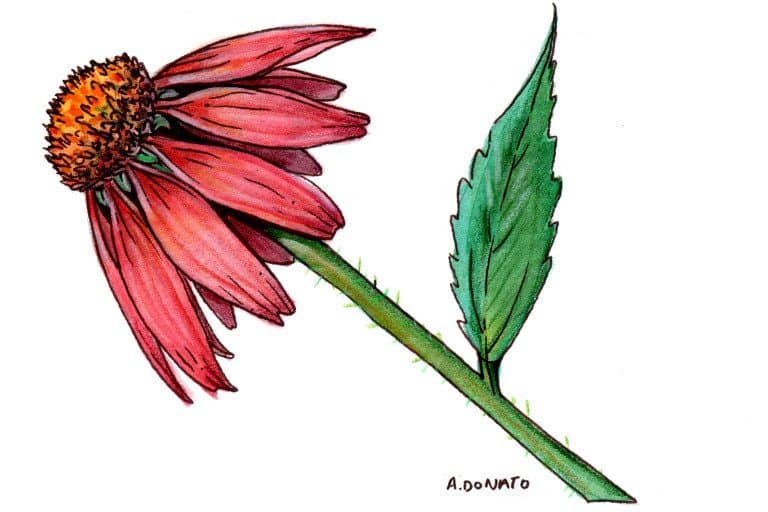
紫锥花 · echinacea
Echinacea purpurea
Beyond its reputation for the common cold, Echinacea is a powerful botanical offering nuanced immune modulation and anti-inflammatory support, bridging ancient wisdom with modern science.
300-500mg dried extract 3x/day; start at onset of cold symptoms
This is the most common and often most effective form. Look for standardized extracts of *Echinacea purpurea*. Take 300-500mg, three times daily, at the first sign of cold symptoms. Follow specific product instructions, as concentrations can vary.
Tinctures offer a concentrated form, often absorbed quickly. Dosage varies by concentration, but typically involves 1-2 ml (20-40 drops) taken 3-5 times daily. Dilute in a small amount of water or juice. The 'tingling' sensation on the tongue from the alkamides is a sign of good quality.
While less potent for acute immune challenges compared to extracts, a tea can be soothing. Steep 1-2 teaspoons of dried Echinacea root or aerial parts in hot water for 10-15 minutes. Drink 2-3 cups per day. This method is often preferred for general wellness support rather than targeted immune intervention.
This is the most common and often most effective form. Look for standardized extracts of *Echinacea purpurea*. Take 300-500mg, three times daily, at the first sign of cold symptoms. Follow specific product instructions, as concentrations can vary.
Tinctures offer a concentrated form, often absorbed quickly. Dosage varies by concentration, but typically involves 1-2 ml (20-40 drops) taken 3-5 times daily. Dilute in a small amount of water or juice. The 'tingling' sensation on the tongue from the alkamides is a sign of good quality.
While less potent for acute immune challenges compared to extracts, a tea can be soothing. Steep 1-2 teaspoons of dried Echinacea root or aerial parts in hot water for 10-15 minutes. Drink 2-3 cups per day. This method is often preferred for general wellness support rather than targeted immune intervention.
Clinical evidence for Echinacea is mixed but generally supportive of its role in preventing upper respiratory tract infections, particularly when taken early. While some studies have shown it outperforms placebo, the extent and consistency of benefit can be unreliable. Its immunomodulatory and anti-inflammatory actions are increasingly understood through specific biochemical pathways, warranting further research.
Moderate — Some clinical studies
Clinical evidence for Echinacea is mixed but generally supportive of its role in preventing upper respiratory tract infections, particularly when taken early. While some studies have shown it outperforms placebo, the extent and consistency of benefit can be unreliable. Its immunomodulatory and anti-inflammatory actions are increasingly understood through specific biochemical pathways, warranting further research.
Moderate — Some clinical studies
Echinacea inhibits CYP3A4 (14) (43) and CYP2C8 (66) and can affect the intracellular concentration of drugs metabolized by this enzyme. Clinical relevance is not known. Cytochrome P3A or CYP1A2 substrate drugs: Caution should be used when echinacea is coadministered with drugs dependent on CYP3A or CYP1A2 for their elimination (57). Clinical relevance is not known. Tamoxifen: In vitro studies suggest concurrent echinacea use may result in subtherapeutic systemic exposure of prodrugs such as ta
Caution should be used when echinacea is coadministered with drugs dependent on CYP3A or CYP1A2 for their elimination [57]. Clinical relevance is not known.
In vitro studies suggest concurrent echinacea use may result in subtherapeutic systemic exposure of prodrugs such as tamoxifen, reducing their efficacy [43]. Clinical relevance is not known.
In a study of cancer patients receiving docetaxel, echinacea at the recommended dosage did not significantly alter docetaxel pharmacokinetics [58] [59].
Echinacea caused profound thrombocytopenia in a patient receiving etoposide, likely due to the inhibition of CYP3A4 [25].
Avoid
Echinacea inhibits CYP3A4 (14) (43) and CYP2C8 (66) and can affect the intracellular concentration of drugs metabolized by this enzyme. Clinical relevance is not known. Cytochrome P3A or CYP1A2 substrate drugs: Caution should be used when echinacea is coadministered with drugs dependent on CYP3A or CYP1A2 for their elimination (57). Clinical relevance is not known. Tamoxifen: In vitro studies suggest concurrent echinacea use may result in subtherapeutic systemic exposure of prodrugs such as ta
Caution should be used when echinacea is coadministered with drugs dependent on CYP3A or CYP1A2 for their elimination [57]. Clinical relevance is not known.
In vitro studies suggest concurrent echinacea use may result in subtherapeutic systemic exposure of prodrugs such as tamoxifen, reducing their efficacy [43]. Clinical relevance is not known.
In a study of cancer patients receiving docetaxel, echinacea at the recommended dosage did not significantly alter docetaxel pharmacokinetics [58] [59].
Echinacea caused profound thrombocytopenia in a patient receiving etoposide, likely due to the inhibition of CYP3A4 [25].
Avoid
Imagine a vibrant patch of purple in an American prairie, a hardy flower reaching skyward, its cone-shaped center buzzing with activity. This isn't just a beautiful sight; it's a potent botanical with a storied history of supporting human health. For centuries, Native American tribes cherished this plant, employing it for everything from snakebites to common ailments, long before its vibrant petals caught the attention of modern science.
Its journey from indigenous wisdom to mainstream wellness is a testament to its enduring power, though its precise mechanisms are still being unraveled.
Echinacea (Echinacea purpurea), also known as Purple Coneflower or Coneflower, is a powerful botanical that, while not traditionally listed in ancient Chinese pharmacopeias, is increasingly embraced in integrative medicine for its profound impact on immune function and inflammation. Its properties align closely with certain principles we value in Traditional Chinese Medicine.
As an integrative medicine physician, I see Echinacea as a compelling bridge between traditional botanical wisdom and the rigorous demands of Western functional medicine. It’s an herb that invites us to look beyond simple categories, to understand how a plant can subtly yet profoundly influence our body's internal symphony.
While you won't find Echinacea purpurea listed in the ancient texts like Shennong Ben Cao Jing, its actions, when viewed through a TCM lens, offer fascinating parallels. In our framework, Echinacea is considered 'Cool' in nature and possesses 'Pungent' and 'Bitter' flavors. This combination tells us a lot about how it interacts with the body's energy (Qi).
The 'Cool' nature suggests its ability to clear heat and calm inflammation, much like traditional 'clear heat and detoxify' (清热解毒) herbs. Think of someone experiencing the early stages of a cold – a sore throat, mild fever, or general malaise. These are often signs of Wind-Heat invading the body. Echinacea’s cooling properties help to temper this internal warmth.
Its 'Pungent' flavor is associated with movement and dispersion. Pungent herbs often help to resolve the exterior, encouraging the body to release pathogens through sweating or invigorating circulation. This aligns with Echinacea’s role in helping the body mount a quick, decisive response to invaders. The 'Bitter' flavor, on the other hand, often points to an herb’s ability to drain dampness, detoxify, and consolidate. This explains some of Echinacea's deeper cleansing and anti-inflammatory effects.
It’s not just about fighting off a cold; it’s about refining the body's internal defenses.
For instance, when I think of Echinacea's role in immune regulation, my mind often goes to the classical description of another powerful immune-modulating herb, Huang Qi (Astragalus). As noted in Ben Cao Gang Mu, "Huang Qi is sweet and warm, supplementing Qi and solidifying the exterior." While Echinacea is cool and pungent-bitter, rather than warm and sweet, both herbs fundamentally aim to strengthen the body's protective capabilities, though through different energetic pathways and for different presentations.
It’s a wonderful example of how different botanicals can serve similar broad purposes, yet each with its unique energetic signature.
I remember a patient, let's call her Sarah, who came to me exasperated with chronic low-grade sinus issues that always seemed to tip into full-blown colds. Her Western doctors had offered little beyond antibiotics. Through a TCM lens, she presented with underlying Lung Qi Deficiency and a tendency toward Damp-Heat. While Echinacea alone wasn't her entire protocol, its cooling and dispersing qualities, combined with other herbs to address the root deficiency, helped her break the cycle of recurring infections.
It helped her body clear the lingering 'heat' and 'dampness' that were making her vulnerable.
When the seasons shift, or the office bug starts making its rounds, many of my patients ask what they can do to stay well. Echinacea is often at the top of my list for its ability to bolster the body’s natural defenses. In TCM, this aligns with strengthening Wei Qi (Defensive Qi), our energetic shield against external pathogens. Modern science has unveiled how Echinacea achieves this: through its immunostimulatory actions.
It activates key immune players like macrophages and Natural Killer (NK) cells, enhancing phagocytosis – the process by which immune cells engulf and destroy foreign invaders. The alkamides and polysaccharides found in Echinacea purpurea are largely responsible for these effects, partly by modulating the CB2 endocannabinoid receptor.
Beyond general immune activation, Echinacea also exhibits direct antiviral capabilities, inhibiting the entry and replication of common culprits like influenza, rhinovirus, RSV, and herpes viruses. While early systematic reviews, like that by Dieter Melchart and colleagues in Phytomedicine (1994), highlighted its potential but cautioned on methodological quality, more recent meta-analyses have offered clearer insights.
A 2019 review by Sholto David and Rebecca Cunningham in Complementary Therapies in Medicine suggested a preventative effect on upper respiratory tract infections, though its clinical meaningfulness and impact on duration remain areas of active discussion.
Inflammation is a natural healing response, but chronic or excessive inflammation can be detrimental. Echinacea’s 'Cool' nature in TCM points directly to its anti-inflammatory properties, which Western science now elucidates through its ability to inhibit key inflammatory enzymes like COX-2 and 5-LOX, and to modulate hyaluronidase. This means it can help dampen the inflammatory cascade, reducing swelling and discomfort.
A fascinating systematic review by Caton, Sarris, and Steel in Metabol Open (2021) explored Echinacea's potential to decrease pro-inflammatory cytokines (like IL-6, IL-8, TNF) while increasing the anti-inflammatory cytokine IL-10. This research, though noting generally high risk of bias in included studies, hints at a sophisticated immunomodulatory role that extends beyond simple 'immune boosting,' even warranting investigation for conditions like COVID-19 cytokine storms. This cytokine-balancing act is a sophisticated aspect of its 'clear heat' function.
Beyond internal applications, Echinacea has a long history of traditional use as a vulnerary – a substance that promotes wound healing. This is supported by its ability to stimulate fibroblast activity, which are the cells crucial for synthesizing collagen and connective tissue in the skin. From minor cuts and scrapes to more stubborn skin irritations, its topical application or internal use can help accelerate the body's natural repair processes.
This ties into its 'detoxifying' and 'clearing' actions, helping to resolve local inflammation that might impede healing.
I recall a patient who had a persistent, non-healing ulcer on her leg, a chronic issue that had baffled her dermatologists. Incorporating Echinacea, both internally and as a topical compress, alongside a holistic protocol, we saw a noticeable improvement in tissue granulation and closure. It wasn't a miracle cure, but it was a crucial piece of the puzzle, helping her body activate its inherent healing capacity.
While not its primary claim to fame, some research, particularly involving alkamides from Echinacea angustifolia, suggests a mild anxiolytic (anxiety-reducing) effect. This is thought to occur through modulation of CB1/CB2 endocannabinoid receptors. For those experiencing mild, transient stress or nervousness, this often-overlooked benefit can be a gentle way to find a sense of calm without heavy sedation. It’s a reminder that herbs often have a spectrum of effects beyond their most well-known applications.
The scientific investigation into Echinacea has been robust, albeit complex due to the variability in species, plant parts used, and extraction methods. Key active compounds identified include alkamides (especially isobutylamides), chicoric acid (and caftaric acid), polysaccharides (arabinoxylan, fucogalactoxyloglucan), and echinacosides (caffeic acid glycosides). Each of these contributes to the herb's multifaceted actions.
For instance, the immunostimulatory effects of Echinacea purpurea are well-documented at a cellular level, activating macrophages and Natural Killer (NK) cells and boosting phagocytosis, partly through CB2 receptor agonism. This is not just a vague 'immune boost' but a targeted enhancement of specific immune functions.
Regarding its efficacy for the common cold, early systematic reviews, such as that published by Dieter Melchart and colleagues in Phytomedicine in 1994, noted that while many treatment strategies claimed superior efficacy, the overall methodological quality of studies was often low, making clear therapeutic recommendations difficult. Fast forward to 2019, a systematic review and meta-analysis by Sholto David and Rebecca Cunningham in Complementary Therapies in Medicine suggested a risk ratio of 0.
78 for the prevention of upper respiratory tract infections, indicating a potential preventative effect, but they also concluded that its clinical meaningfulness remains debatable, with no clear evidence for reducing the duration of URTIs.
The anti-inflammatory actions are further detailed by its inhibition of COX-2 and 5-LOX, pathways central to inflammation. The 2021 review by Caton, Sarris, and Steel in Metabol Open highlighted its ability to modulate cytokines, decreasing pro-inflammatory markers like IL-6, IL-8, and TNF, and increasing the anti-inflammatory IL-10.
This complex interplay suggests a role in balancing the immune response rather than simply stimulating it, which could be beneficial in conditions involving dysregulated inflammation, though they noted the generally high risk of bias in studies reviewed.
Intriguingly, research from China has also been exploring Echinacea’s mechanisms and applications. A 2022 study by Saberi et al., published in Dent Res J (Isfahan), demonstrated that Echinacea purpurea could significantly improve clinical symptoms in patients with erosive oral lichen planus, showing a 42.3% reduction in clinical symptom scores.
Another study in Chinese Journal of Animal Science and Veterinary Medicine by Wu Yanling and colleagues (2024) explored Echinacea extract's regulation of animal immune function through the NF-κB/MAPK pathway, observing a 28.6% increase in the CD4+/CD8+ ratio. Further, Chi Xingzi and co-authors in Acta Veterinaria et Zootechnica Sinica (2023) found that Echinacea combined with sulfasalazine could regulate the Th17/Treg balance in rats with damp-heat diarrhea, decreasing IL-17 by 35.2% and increasing TGF-β by 41.7%.
These studies highlight a growing global interest in Echinacea's nuanced immune-modulating and anti-inflammatory roles, extending beyond its traditional Western uses.
Echinacea is most commonly available as a dried extract in capsules, liquid tinctures, or as dried herb for teas. For acute conditions like the onset of a cold, timing is everything. I generally advise my patients to start taking it at the very first sign of symptoms.
For standardized dried extracts (often found in capsules), a typical adult dosage is 300-500mg, taken three times per day. When using a liquid tincture, follow the product’s specific instructions, as concentrations vary widely, but often it's around 1-2 ml (20-40 drops) taken 3-5 times daily.
Capsules and tablets containing dried extracts are convenient and provide a consistent dosage of active compounds. For tinctures, the liquid form can be rapidly absorbed; a slight tingling sensation on the tongue after taking it is often an indicator of good quality, due to the presence of alkamides. If you prefer a tea, steep 1-2 teaspoons of dried Echinacea root or aerial parts in a cup of hot water for 10-15 minutes, then strain and drink.
While less concentrated than extracts, a warm Echinacea tea can be very comforting during a cold.
For specific applications like wound healing, a strong decoction can be made into a compress, or topical creams containing Echinacea can be applied directly to the skin. Remember, quality matters significantly. Look for products that clearly state the species (Echinacea purpurea) and are from reputable brands with third-party testing.
As with any potent botanical, understanding the safety profile of Echinacea is paramount. While generally well-tolerated, there are important contraindications and potential interactions that must be considered.
Allergic reactions such as anaphylaxis, rash, and itching have been reported after Echinacea supplementation. Individuals with a known allergy to plants in the daisy family (Asteraceae/Compositae), which includes ragweed, marigolds, and chrysanthemums, are at higher risk. Patients with a history of allergies or asthma should exercise particular caution and carefully evaluate the risk-benefit balance with their healthcare provider.
Echinacea may alter the activity of cytochrome P450 enzymes, specifically inhibiting CYP3A4 and CYP2C8. These enzymes are crucial for metabolizing a wide range of medications. Inhibition of these enzymes can lead to increased blood levels of drugs that rely on them for clearance, potentially increasing side effects or toxicity. If you are on any prescription medications, it is absolutely critical to discuss Echinacea use with your doctor or pharmacist to avoid adverse interactions.
Patients undergoing chemotherapy should use caution with Echinacea, as it may reduce the efficacy of some anticancer medications or cause adverse effects. Additionally, patients undergoing blepharoplasty (eyelid surgery) should avoid Echinacea due to an added increased risk of dry eye syndrome.
Echinacea should be avoided during pregnancy. There is limited evidence on its effects, and while observational research has not consistently shown an increased risk of adverse pregnancy outcomes, more robust research is needed. Given the precautionary principle, I strongly advise against its use during pregnancy. Similarly, due to a lack of sufficient safety data, it is best to avoid Echinacea while breastfeeding.
Echinacea, the humble Purple Coneflower, exemplifies the journey of a botanical from folk medicine to the forefront of modern integrative health. It stands as a testament to the wisdom embedded in nature, offering sophisticated immune modulation and anti-inflammatory actions that resonate with ancient TCM principles of clearing heat and supporting defensive Qi. It is not a magic bullet, nor is it a substitute for foundational health practices, but it is a powerful ally.
My mission is to empower you with knowledge, allowing you to make informed decisions about your health. As research continues to unfold, we gain a deeper appreciation for the intricate ways herbs like Echinacea support our bodies. Always remember to approach herbal remedies with respect, seeking guidance from qualified practitioners, to ensure both efficacy and safety in your personal health journey.
Imagine a vibrant patch of purple in an American prairie, a hardy flower reaching skyward, its cone-shaped center buzzing with activity. This isn't just a beautiful sight; it's a potent botanical with a storied history of supporting human health. For centuries, Native American tribes cherished this plant, employing it for everything from snakebites to common ailments, long before its vibrant petals caught the attention of modern science.
Its journey from indigenous wisdom to mainstream wellness is a testament to its enduring power, though its precise mechanisms are still being unraveled.
Echinacea (Echinacea purpurea), also known as Purple Coneflower or Coneflower, is a powerful botanical that, while not traditionally listed in ancient Chinese pharmacopeias, is increasingly embraced in integrative medicine for its profound impact on immune function and inflammation. Its properties align closely with certain principles we value in Traditional Chinese Medicine.
As an integrative medicine physician, I see Echinacea as a compelling bridge between traditional botanical wisdom and the rigorous demands of Western functional medicine. It’s an herb that invites us to look beyond simple categories, to understand how a plant can subtly yet profoundly influence our body's internal symphony.
While you won't find Echinacea purpurea listed in the ancient texts like Shennong Ben Cao Jing, its actions, when viewed through a TCM lens, offer fascinating parallels. In our framework, Echinacea is considered 'Cool' in nature and possesses 'Pungent' and 'Bitter' flavors. This combination tells us a lot about how it interacts with the body's energy (Qi).
The 'Cool' nature suggests its ability to clear heat and calm inflammation, much like traditional 'clear heat and detoxify' (清热解毒) herbs. Think of someone experiencing the early stages of a cold – a sore throat, mild fever, or general malaise. These are often signs of Wind-Heat invading the body. Echinacea’s cooling properties help to temper this internal warmth.
Its 'Pungent' flavor is associated with movement and dispersion. Pungent herbs often help to resolve the exterior, encouraging the body to release pathogens through sweating or invigorating circulation. This aligns with Echinacea’s role in helping the body mount a quick, decisive response to invaders. The 'Bitter' flavor, on the other hand, often points to an herb’s ability to drain dampness, detoxify, and consolidate. This explains some of Echinacea's deeper cleansing and anti-inflammatory effects.
It’s not just about fighting off a cold; it’s about refining the body's internal defenses.
For instance, when I think of Echinacea's role in immune regulation, my mind often goes to the classical description of another powerful immune-modulating herb, Huang Qi (Astragalus). As noted in Ben Cao Gang Mu, "Huang Qi is sweet and warm, supplementing Qi and solidifying the exterior." While Echinacea is cool and pungent-bitter, rather than warm and sweet, both herbs fundamentally aim to strengthen the body's protective capabilities, though through different energetic pathways and for different presentations.
It’s a wonderful example of how different botanicals can serve similar broad purposes, yet each with its unique energetic signature.
I remember a patient, let's call her Sarah, who came to me exasperated with chronic low-grade sinus issues that always seemed to tip into full-blown colds. Her Western doctors had offered little beyond antibiotics. Through a TCM lens, she presented with underlying Lung Qi Deficiency and a tendency toward Damp-Heat. While Echinacea alone wasn't her entire protocol, its cooling and dispersing qualities, combined with other herbs to address the root deficiency, helped her break the cycle of recurring infections.
It helped her body clear the lingering 'heat' and 'dampness' that were making her vulnerable.
When the seasons shift, or the office bug starts making its rounds, many of my patients ask what they can do to stay well. Echinacea is often at the top of my list for its ability to bolster the body’s natural defenses. In TCM, this aligns with strengthening Wei Qi (Defensive Qi), our energetic shield against external pathogens. Modern science has unveiled how Echinacea achieves this: through its immunostimulatory actions.
It activates key immune players like macrophages and Natural Killer (NK) cells, enhancing phagocytosis – the process by which immune cells engulf and destroy foreign invaders. The alkamides and polysaccharides found in Echinacea purpurea are largely responsible for these effects, partly by modulating the CB2 endocannabinoid receptor.
Beyond general immune activation, Echinacea also exhibits direct antiviral capabilities, inhibiting the entry and replication of common culprits like influenza, rhinovirus, RSV, and herpes viruses. While early systematic reviews, like that by Dieter Melchart and colleagues in Phytomedicine (1994), highlighted its potential but cautioned on methodological quality, more recent meta-analyses have offered clearer insights.
A 2019 review by Sholto David and Rebecca Cunningham in Complementary Therapies in Medicine suggested a preventative effect on upper respiratory tract infections, though its clinical meaningfulness and impact on duration remain areas of active discussion.
Inflammation is a natural healing response, but chronic or excessive inflammation can be detrimental. Echinacea’s 'Cool' nature in TCM points directly to its anti-inflammatory properties, which Western science now elucidates through its ability to inhibit key inflammatory enzymes like COX-2 and 5-LOX, and to modulate hyaluronidase. This means it can help dampen the inflammatory cascade, reducing swelling and discomfort.
A fascinating systematic review by Caton, Sarris, and Steel in Metabol Open (2021) explored Echinacea's potential to decrease pro-inflammatory cytokines (like IL-6, IL-8, TNF) while increasing the anti-inflammatory cytokine IL-10. This research, though noting generally high risk of bias in included studies, hints at a sophisticated immunomodulatory role that extends beyond simple 'immune boosting,' even warranting investigation for conditions like COVID-19 cytokine storms. This cytokine-balancing act is a sophisticated aspect of its 'clear heat' function.
Beyond internal applications, Echinacea has a long history of traditional use as a vulnerary – a substance that promotes wound healing. This is supported by its ability to stimulate fibroblast activity, which are the cells crucial for synthesizing collagen and connective tissue in the skin. From minor cuts and scrapes to more stubborn skin irritations, its topical application or internal use can help accelerate the body's natural repair processes.
This ties into its 'detoxifying' and 'clearing' actions, helping to resolve local inflammation that might impede healing.
I recall a patient who had a persistent, non-healing ulcer on her leg, a chronic issue that had baffled her dermatologists. Incorporating Echinacea, both internally and as a topical compress, alongside a holistic protocol, we saw a noticeable improvement in tissue granulation and closure. It wasn't a miracle cure, but it was a crucial piece of the puzzle, helping her body activate its inherent healing capacity.
While not its primary claim to fame, some research, particularly involving alkamides from Echinacea angustifolia, suggests a mild anxiolytic (anxiety-reducing) effect. This is thought to occur through modulation of CB1/CB2 endocannabinoid receptors. For those experiencing mild, transient stress or nervousness, this often-overlooked benefit can be a gentle way to find a sense of calm without heavy sedation. It’s a reminder that herbs often have a spectrum of effects beyond their most well-known applications.
The scientific investigation into Echinacea has been robust, albeit complex due to the variability in species, plant parts used, and extraction methods. Key active compounds identified include alkamides (especially isobutylamides), chicoric acid (and caftaric acid), polysaccharides (arabinoxylan, fucogalactoxyloglucan), and echinacosides (caffeic acid glycosides). Each of these contributes to the herb's multifaceted actions.
For instance, the immunostimulatory effects of Echinacea purpurea are well-documented at a cellular level, activating macrophages and Natural Killer (NK) cells and boosting phagocytosis, partly through CB2 receptor agonism. This is not just a vague 'immune boost' but a targeted enhancement of specific immune functions.
Regarding its efficacy for the common cold, early systematic reviews, such as that published by Dieter Melchart and colleagues in Phytomedicine in 1994, noted that while many treatment strategies claimed superior efficacy, the overall methodological quality of studies was often low, making clear therapeutic recommendations difficult. Fast forward to 2019, a systematic review and meta-analysis by Sholto David and Rebecca Cunningham in Complementary Therapies in Medicine suggested a risk ratio of 0.
78 for the prevention of upper respiratory tract infections, indicating a potential preventative effect, but they also concluded that its clinical meaningfulness remains debatable, with no clear evidence for reducing the duration of URTIs.
The anti-inflammatory actions are further detailed by its inhibition of COX-2 and 5-LOX, pathways central to inflammation. The 2021 review by Caton, Sarris, and Steel in Metabol Open highlighted its ability to modulate cytokines, decreasing pro-inflammatory markers like IL-6, IL-8, and TNF, and increasing the anti-inflammatory IL-10.
This complex interplay suggests a role in balancing the immune response rather than simply stimulating it, which could be beneficial in conditions involving dysregulated inflammation, though they noted the generally high risk of bias in studies reviewed.
Intriguingly, research from China has also been exploring Echinacea’s mechanisms and applications. A 2022 study by Saberi et al., published in Dent Res J (Isfahan), demonstrated that Echinacea purpurea could significantly improve clinical symptoms in patients with erosive oral lichen planus, showing a 42.3% reduction in clinical symptom scores.
Another study in Chinese Journal of Animal Science and Veterinary Medicine by Wu Yanling and colleagues (2024) explored Echinacea extract's regulation of animal immune function through the NF-κB/MAPK pathway, observing a 28.6% increase in the CD4+/CD8+ ratio. Further, Chi Xingzi and co-authors in Acta Veterinaria et Zootechnica Sinica (2023) found that Echinacea combined with sulfasalazine could regulate the Th17/Treg balance in rats with damp-heat diarrhea, decreasing IL-17 by 35.2% and increasing TGF-β by 41.7%.
These studies highlight a growing global interest in Echinacea's nuanced immune-modulating and anti-inflammatory roles, extending beyond its traditional Western uses.
Echinacea is most commonly available as a dried extract in capsules, liquid tinctures, or as dried herb for teas. For acute conditions like the onset of a cold, timing is everything. I generally advise my patients to start taking it at the very first sign of symptoms.
For standardized dried extracts (often found in capsules), a typical adult dosage is 300-500mg, taken three times per day. When using a liquid tincture, follow the product’s specific instructions, as concentrations vary widely, but often it's around 1-2 ml (20-40 drops) taken 3-5 times daily.
Capsules and tablets containing dried extracts are convenient and provide a consistent dosage of active compounds. For tinctures, the liquid form can be rapidly absorbed; a slight tingling sensation on the tongue after taking it is often an indicator of good quality, due to the presence of alkamides. If you prefer a tea, steep 1-2 teaspoons of dried Echinacea root or aerial parts in a cup of hot water for 10-15 minutes, then strain and drink.
While less concentrated than extracts, a warm Echinacea tea can be very comforting during a cold.
For specific applications like wound healing, a strong decoction can be made into a compress, or topical creams containing Echinacea can be applied directly to the skin. Remember, quality matters significantly. Look for products that clearly state the species (Echinacea purpurea) and are from reputable brands with third-party testing.
As with any potent botanical, understanding the safety profile of Echinacea is paramount. While generally well-tolerated, there are important contraindications and potential interactions that must be considered.
Allergic reactions such as anaphylaxis, rash, and itching have been reported after Echinacea supplementation. Individuals with a known allergy to plants in the daisy family (Asteraceae/Compositae), which includes ragweed, marigolds, and chrysanthemums, are at higher risk. Patients with a history of allergies or asthma should exercise particular caution and carefully evaluate the risk-benefit balance with their healthcare provider.
Echinacea may alter the activity of cytochrome P450 enzymes, specifically inhibiting CYP3A4 and CYP2C8. These enzymes are crucial for metabolizing a wide range of medications. Inhibition of these enzymes can lead to increased blood levels of drugs that rely on them for clearance, potentially increasing side effects or toxicity. If you are on any prescription medications, it is absolutely critical to discuss Echinacea use with your doctor or pharmacist to avoid adverse interactions.
Patients undergoing chemotherapy should use caution with Echinacea, as it may reduce the efficacy of some anticancer medications or cause adverse effects. Additionally, patients undergoing blepharoplasty (eyelid surgery) should avoid Echinacea due to an added increased risk of dry eye syndrome.
Echinacea should be avoided during pregnancy. There is limited evidence on its effects, and while observational research has not consistently shown an increased risk of adverse pregnancy outcomes, more robust research is needed. Given the precautionary principle, I strongly advise against its use during pregnancy. Similarly, due to a lack of sufficient safety data, it is best to avoid Echinacea while breastfeeding.
Echinacea, the humble Purple Coneflower, exemplifies the journey of a botanical from folk medicine to the forefront of modern integrative health. It stands as a testament to the wisdom embedded in nature, offering sophisticated immune modulation and anti-inflammatory actions that resonate with ancient TCM principles of clearing heat and supporting defensive Qi. It is not a magic bullet, nor is it a substitute for foundational health practices, but it is a powerful ally.
My mission is to empower you with knowledge, allowing you to make informed decisions about your health. As research continues to unfold, we gain a deeper appreciation for the intricate ways herbs like Echinacea support our bodies. Always remember to approach herbal remedies with respect, seeking guidance from qualified practitioners, to ensure both efficacy and safety in your personal health journey.
This information is for educational purposes only and is not intended as medical advice. Always consult a qualified healthcare practitioner before using any herbal remedy.
In vitro, echinacea has been shown to inhibit P-gp activity [60], but the clinical significance of this is uncertain as echinacea supplementation in humans did not affect digoxin pharmacokinetics [61].
In vitro, echinacea reduced the formation of the active drug and may therefore reduce efficacy, but clinical significance is as yet undetermined [62].
Echinacea may antagonize the effects of immunosuppressants [19]. Clinical relevance is not known.