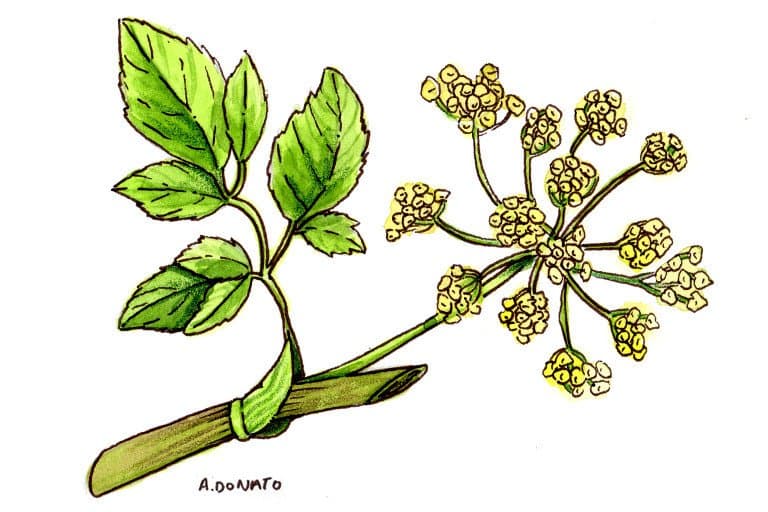
dong quai
Angelica sinensis
Dong Quai (Angelica sinensis), revered as 'female ginseng' in TCM, has been used for millennia for women's health. Modern science now explores its complex mechanisms for menstrual comfort, menopausal support, and beyond.
For a traditional decoction, steep 3-15 grams of dried Dong Quai root slices in 2-3 cups of water. Bring to a boil, then simmer for 20-30 minutes. Strain and drink the liquid. This is often combined with other herbs as prescribed by a TCM practitioner.
Dong Quai powder or encapsulated extracts offer a convenient method. Follow the dosage recommendations on the product label, typically ranging from 500 mg to 2000 mg per day, often divided into two doses. Look for standardized extracts to ensure consistent active compound levels.
Liquid tinctures are concentrated extracts. Follow the specific dosage instructions provided by the manufacturer or your practitioner, usually a few drops to a dropperful mixed in water, 1-3 times daily. Tinctures allow for quick absorption.
For a traditional decoction, steep 3-15 grams of dried Dong Quai root slices in 2-3 cups of water. Bring to a boil, then simmer for 20-30 minutes. Strain and drink the liquid. This is often combined with other herbs as prescribed by a TCM practitioner.
Dong Quai powder or encapsulated extracts offer a convenient method. Follow the dosage recommendations on the product label, typically ranging from 500 mg to 2000 mg per day, often divided into two doses. Look for standardized extracts to ensure consistent active compound levels.
Liquid tinctures are concentrated extracts. Follow the specific dosage instructions provided by the manufacturer or your practitioner, usually a few drops to a dropperful mixed in water, 1-3 times daily. Tinctures allow for quick absorption.
While Dong Quai has a long history of traditional use, modern clinical evidence is mixed. Some systematic reviews indicate potential benefits for menstrual pain when used in traditional formulas, and emerging research provides nuanced perspectives on its 'estrogenic' effects, particularly concerning breast cancer safety under expert guidance. However, randomized controlled trials on isolated Dong Quai for menopausal symptoms have shown limited efficacy compared to placebo.
Moderate — Some clinical studies
While Dong Quai has a long history of traditional use, modern clinical evidence is mixed. Some systematic reviews indicate potential benefits for menstrual pain when used in traditional formulas, and emerging research provides nuanced perspectives on its 'estrogenic' effects, particularly concerning breast cancer safety under expert guidance. However, randomized controlled trials on isolated Dong Quai for menopausal symptoms have shown limited efficacy compared to placebo.
Moderate — Some clinical studies
Dong quai may have additive anticoagulant effect [21]. However, this appears to be limited in a human study [44].
Prolonged use of dong quai can induce CYP3A4 by activating pregnane X receptor [36]. This may reduce the blood levels and effectiveness of substrate drugs. Clinical relevance is not known.
Dong quai was found to be a moderate-to-strong inducer of clozapine metabolism in two case reports [53].
Insufficient Data
Dong quai may have additive anticoagulant effect [21]. However, this appears to be limited in a human study [44].
Prolonged use of dong quai can induce CYP3A4 by activating pregnane X receptor [36]. This may reduce the blood levels and effectiveness of substrate drugs. Clinical relevance is not known.
Dong quai was found to be a moderate-to-strong inducer of clozapine metabolism in two case reports [53].
Insufficient Data
Imagine walking through a bustling traditional Chinese pharmacy, the air thick with the fragrant scent of herbs. Amidst the jars of dried roots and flowers, one herb consistently stands out, celebrated for centuries as a cornerstone of women’s health. It’s often hailed as 'female ginseng,' a testament to its profound and revered status.
I’m Dr. Maya Chen, and for fifteen years, I’ve had the privilege of guiding patients through the rich landscape where Traditional Chinese Medicine (TCM) meets Western functional medicine. My journey, from Beijing University of Chinese Medicine to an integrative medicine residency in the US, has shown me time and again how ancient wisdom often anticipates modern scientific discoveries.
Today, we're focusing on one of these remarkable herbs: Dong Quai (Angelica sinensis), also known as Chinese angelica or Dang gui. It is a root herb primarily used in TCM for nourishing and invigorating blood, regulating menstruation, and alleviating pain, particularly concerning women's reproductive health and overall vitality.
In TCM, Dong Quai holds a unique and revered position. It’s classified as a herb that tonifies blood and invigorates blood. Think of it this way: if your body’s internal river of blood (which encompasses much more than just the red fluid in Western terms – it’s a vital nourishing substance) is sluggish, Dong Quai helps it flow. If that river is depleted, Dong Quai helps replenish it. This dual action is why it’s so powerful for cyclical health.
From a TCM perspective, Dong Quai is warm in nature, sweet, and slightly pungent in flavor. These qualities allow it to enter the Liver, Heart, and Spleen meridians. The Liver meridian, in particular, is central to regulating menstruation and blood storage. A well-functioning Liver system means smooth energy (Qi) and blood flow, preventing the 'stagnation' that so often leads to pain and discomfort.
I recall a patient, Sarah, who came to me with debilitating menstrual cramps and a feeling of being constantly cold and tired. Her cycles were irregular, and her complexion pale. In TCM, this painted a clear picture of 'blood deficiency' with 'blood stasis.' Dong Quai was a core component of her personalized herbal formula. Over a few months, not only did her periods become more regular and less painful, but her overall vitality improved.
She felt warmer, her energy levels lifted, and the 'stuck' feeling she described began to dissipate. It truly resonated with the ancient texts, like 《本草纲目》 (Compendium of Materia Medica), which noted Dong Quai's ability to "harmonize and supplement blood, alleviate pain.
This is where Dong Quai truly shines. Many women experience monthly discomfort, whether it's cramps, irregular cycles, or premenstrual symptoms that throw their lives off balance. From a TCM perspective, these issues often stem from 'blood stasis' (congested blood flow) or 'blood deficiency' (insufficient nourishment). Dong Quai addresses both.
Modern research is beginning to corroborate these traditional uses. Studies from China, such as one by Zhao Lanqing et al. in 医药导报 (2023), have explored how traditional formulas containing Dong Quai, like Danggui Shaoyao San, may treat primary dysmenorrhea (menstrual cramps) by modulating inflammatory pathways, specifically targeting TNF-α and IL-6. Another study by Zhang Xianhui et al.
in 中医临床研究 (2022) suggested Dong Quai helps by improving blood rheology (flow properties) and regulating neuroendocrine factors, even showing a potential to lower serum calcium, which can play a role in muscle contractions. These findings align perfectly with Dong Quai’s traditional role in 《神农本草经》, where it was earliest recorded for "妇人漏下绝子," broadly encompassing gynecological issues.
For many years, Dong Quai gained popularity in the West as a potential remedy for menopausal symptoms like hot flashes. The reasoning was often simplistic: if it helps with women's hormonal balance, it must help with menopause. However, the science here is more nuanced.
A notable double-blind, placebo-controlled trial by Hirata et al., published in Fertility and Sterility in 1997, concluded that Dong Quai, when used alone, did not produce estrogen-like responses in endometrial thickness or vaginal maturation, and was no more effective than placebo in relieving menopausal symptoms in postmenopausal women. This study is crucial because it highlights a key difference between TCM and single-herb Western approaches.
In TCM, Dong Quai is almost never prescribed in isolation for menopause; it's always part of a multi-herb formula, tailored to the individual's specific pattern differentiation (e.g., 'Kidney Yin deficiency' or 'Heart Fire'). The synergy of multiple herbs addresses the root cause, not just the symptom. So, while Dong Quai alone might not be a silver bullet for hot flashes, its role within a holistic formula designed by a skilled practitioner can be profoundly supportive.
Dong Quai's benefits extend beyond just gynecological health. Its ability to invigorate and nourish blood makes it a general tonic for improving circulation and combating fatigue often associated with 'blood deficiency.' Patients I see who feel perpetually cold, have dull skin, or experience dizziness upon standing, often benefit from formulas that include Dong Quai to gently build and move their vital fluids.
Intriguingly, recent research is even exploring Dong Quai’s potential in more unexpected areas. A systematic review by Chen Y. et al. in Future Integrative Medicine (2023) highlighted studies suggesting a potential protective effect against breast cancer with Angelica use, with a weak but significant adjusted odds ratio (aOR) of 0.95 (95% CI 0.93–0.98).
This research advocates for its safe consumption by breast cancer patients when prescribed in appropriate doses under TCM treatment theory, challenging older assumptions about its 'estrogenic' impact in a nuanced way. It suggests that, under expert guidance, its benefits might outweigh perceived risks in certain contexts.
Modern science is actively investigating the complex pharmacology of Dong Quai. We’re moving beyond simply identifying 'active compounds' to understanding their intricate dance within the body. While traditional use focuses on the holistic impact of the whole root, researchers are honing in on specific constituents.
Key compounds like ferulic acid and N-Butylidenephthalide (BP) are drawing attention. Ferulic acid is known for its antioxidant and anti-inflammatory properties, which may contribute to Dong Quai's pain-relieving effects, especially for menstrual cramps. The Chinese studies on dysmenorrhea, mentioned earlier, point to compounds like Z-Butylidenephthalide as having strong binding capabilities to targets involved in pain and inflammation. This helps us understand the 'why' behind its traditional efficacy for conditions of 'blood stasis' and pain.
As for the debate surrounding Dong Quai's 'estrogenic' activity, the research is evolving. We know from the Hirata et al. (1997) study that Dong Quai alone didn't mimic estrogen in postmenopausal women. This suggests its action isn't a straightforward estrogenic replacement. The systematic review by Chen Y. et al.
(2023) further emphasizes that, under the careful guidance of a TCM practitioner, Dong Quai can be considered safe for breast cancer patients, suggesting a more selective or modulating effect rather than a blanket estrogenic one. This aligns with a more sophisticated understanding of herbal mechanisms, much like how researchers at institutions like the NIH NCCIH, including Dr. Helene Langevin, advocate for studying complex herbal formulations and their systems-level effects, rather than isolating single compounds.
These findings underscore the importance of distinguishing between isolated in-vitro observations and complex in-vivo effects within the human body, especially when guided by a deep understanding of TCM principles. It's not about simple 'estrogenic' activity, but rather a nuanced interaction that can be beneficial when applied correctly.
Dong Quai is versatile and can be used in several forms, though my strong recommendation is always to seek guidance from a qualified TCM practitioner for personalized formulas. They can tailor the herb and its combination with others to your specific needs and constitution.
This is the most common traditional method. You can steep 3-15 grams of dried Dong Quai root slices in 2-3 cups of water. Bring the water to a boil, then reduce heat and simmer for 20-30 minutes. Strain the liquid and drink it warm. Often, Dong Quai is decocted with other herbs as part of a classic TCM formula.
For convenience, Dong Quai is widely available in powder or encapsulated extract forms. Dosages can vary significantly depending on the extract's concentration. A general guideline for standardized extracts might be 500 mg to 2000 mg daily, typically divided into two doses. Always adhere to the specific instructions on the product label or, better yet, follow your practitioner's advice.
Dong Quai is often added to nourishing soups and stews in Chinese cuisine, especially those designed for women's health or postpartum recovery. Its earthy, slightly sweet flavor complements chicken or pork broths. You can add a few slices (5-10g) directly to your soup pot and simmer for an hour or more to infuse the broth with its beneficial properties. It’s a wonderful way to subtly incorporate its tonic effects into your diet.
This section is critical. While Dong Quai offers many benefits, it is a potent herb and not suitable for everyone.
Pregnant and breastfeeding women should avoid Dong Quai entirely. There are clear warnings against its use during these periods due to potential risks. If you are pregnant, trying to conceive, or nursing, please do not use this herb.
Dong Quai may have significant interactions with certain medications:
Anticoagulants: Dong Quai may have an additive anticoagulant effect. If you are taking blood-thinning medications like Warfarin, heparin, clopidogrel, or aspirin, combining them with Dong Quai could increase your risk of bleeding. This interaction, while appearing limited in human studies, demands caution.
Cytochrome P450 (CYP3A4) Substrates: Prolonged use of Dong Quai can induce CYP3A4, an enzyme system in the liver responsible for metabolizing many drugs. This induction can reduce the effectiveness of medications metabolized by CYP3A4. Consult your doctor or pharmacist if you are on any such medications.
Clozapine: Two case reports found Dong Quai to be a moderate-to-strong inducer of clozapine metabolism, potentially reducing the drug's efficacy. This is a serious interaction for individuals taking this antipsychotic medication.
Some individuals may experience photosensitivity, meaning increased skin sensitivity to sunlight, which can lead to sunburn or rashes. I advise patients to use sunscreen and protective clothing when using Dong Quai, especially during prolonged sun exposure.
Always consult with a qualified healthcare provider or a licensed TCM practitioner before starting Dong Quai, especially if you have existing health conditions or are taking medications. Your safety is paramount.
Dong Quai, the venerable 'female ginseng,' serves as a beautiful illustration of how ancient wisdom, when approached with scientific rigor and a nuanced understanding, can continue to offer profound insights into our health. It reminds us that our bodies are complex, interconnected systems, and that true wellness often lies in balancing these intricate parts, rather than isolating and treating symptoms in a vacuum.
My hope is that by understanding herbs like Dong Quai through both TCM's holistic lens and the ever-advancing discoveries of modern science, you feel empowered to make informed choices about your health. It’s a journey of continuous learning, and one that, I believe, leads to a deeper, more harmonious connection with our own bodies.
Imagine walking through a bustling traditional Chinese pharmacy, the air thick with the fragrant scent of herbs. Amidst the jars of dried roots and flowers, one herb consistently stands out, celebrated for centuries as a cornerstone of women’s health. It’s often hailed as 'female ginseng,' a testament to its profound and revered status.
I’m Dr. Maya Chen, and for fifteen years, I’ve had the privilege of guiding patients through the rich landscape where Traditional Chinese Medicine (TCM) meets Western functional medicine. My journey, from Beijing University of Chinese Medicine to an integrative medicine residency in the US, has shown me time and again how ancient wisdom often anticipates modern scientific discoveries.
Today, we're focusing on one of these remarkable herbs: Dong Quai (Angelica sinensis), also known as Chinese angelica or Dang gui. It is a root herb primarily used in TCM for nourishing and invigorating blood, regulating menstruation, and alleviating pain, particularly concerning women's reproductive health and overall vitality.
In TCM, Dong Quai holds a unique and revered position. It’s classified as a herb that tonifies blood and invigorates blood. Think of it this way: if your body’s internal river of blood (which encompasses much more than just the red fluid in Western terms – it’s a vital nourishing substance) is sluggish, Dong Quai helps it flow. If that river is depleted, Dong Quai helps replenish it. This dual action is why it’s so powerful for cyclical health.
From a TCM perspective, Dong Quai is warm in nature, sweet, and slightly pungent in flavor. These qualities allow it to enter the Liver, Heart, and Spleen meridians. The Liver meridian, in particular, is central to regulating menstruation and blood storage. A well-functioning Liver system means smooth energy (Qi) and blood flow, preventing the 'stagnation' that so often leads to pain and discomfort.
I recall a patient, Sarah, who came to me with debilitating menstrual cramps and a feeling of being constantly cold and tired. Her cycles were irregular, and her complexion pale. In TCM, this painted a clear picture of 'blood deficiency' with 'blood stasis.' Dong Quai was a core component of her personalized herbal formula. Over a few months, not only did her periods become more regular and less painful, but her overall vitality improved.
She felt warmer, her energy levels lifted, and the 'stuck' feeling she described began to dissipate. It truly resonated with the ancient texts, like 《本草纲目》 (Compendium of Materia Medica), which noted Dong Quai's ability to "harmonize and supplement blood, alleviate pain.
This is where Dong Quai truly shines. Many women experience monthly discomfort, whether it's cramps, irregular cycles, or premenstrual symptoms that throw their lives off balance. From a TCM perspective, these issues often stem from 'blood stasis' (congested blood flow) or 'blood deficiency' (insufficient nourishment). Dong Quai addresses both.
Modern research is beginning to corroborate these traditional uses. Studies from China, such as one by Zhao Lanqing et al. in 医药导报 (2023), have explored how traditional formulas containing Dong Quai, like Danggui Shaoyao San, may treat primary dysmenorrhea (menstrual cramps) by modulating inflammatory pathways, specifically targeting TNF-α and IL-6. Another study by Zhang Xianhui et al.
in 中医临床研究 (2022) suggested Dong Quai helps by improving blood rheology (flow properties) and regulating neuroendocrine factors, even showing a potential to lower serum calcium, which can play a role in muscle contractions. These findings align perfectly with Dong Quai’s traditional role in 《神农本草经》, where it was earliest recorded for "妇人漏下绝子," broadly encompassing gynecological issues.
For many years, Dong Quai gained popularity in the West as a potential remedy for menopausal symptoms like hot flashes. The reasoning was often simplistic: if it helps with women's hormonal balance, it must help with menopause. However, the science here is more nuanced.
A notable double-blind, placebo-controlled trial by Hirata et al., published in Fertility and Sterility in 1997, concluded that Dong Quai, when used alone, did not produce estrogen-like responses in endometrial thickness or vaginal maturation, and was no more effective than placebo in relieving menopausal symptoms in postmenopausal women. This study is crucial because it highlights a key difference between TCM and single-herb Western approaches.
In TCM, Dong Quai is almost never prescribed in isolation for menopause; it's always part of a multi-herb formula, tailored to the individual's specific pattern differentiation (e.g., 'Kidney Yin deficiency' or 'Heart Fire'). The synergy of multiple herbs addresses the root cause, not just the symptom. So, while Dong Quai alone might not be a silver bullet for hot flashes, its role within a holistic formula designed by a skilled practitioner can be profoundly supportive.
Dong Quai's benefits extend beyond just gynecological health. Its ability to invigorate and nourish blood makes it a general tonic for improving circulation and combating fatigue often associated with 'blood deficiency.' Patients I see who feel perpetually cold, have dull skin, or experience dizziness upon standing, often benefit from formulas that include Dong Quai to gently build and move their vital fluids.
Intriguingly, recent research is even exploring Dong Quai’s potential in more unexpected areas. A systematic review by Chen Y. et al. in Future Integrative Medicine (2023) highlighted studies suggesting a potential protective effect against breast cancer with Angelica use, with a weak but significant adjusted odds ratio (aOR) of 0.95 (95% CI 0.93–0.98).
This research advocates for its safe consumption by breast cancer patients when prescribed in appropriate doses under TCM treatment theory, challenging older assumptions about its 'estrogenic' impact in a nuanced way. It suggests that, under expert guidance, its benefits might outweigh perceived risks in certain contexts.
Modern science is actively investigating the complex pharmacology of Dong Quai. We’re moving beyond simply identifying 'active compounds' to understanding their intricate dance within the body. While traditional use focuses on the holistic impact of the whole root, researchers are honing in on specific constituents.
Key compounds like ferulic acid and N-Butylidenephthalide (BP) are drawing attention. Ferulic acid is known for its antioxidant and anti-inflammatory properties, which may contribute to Dong Quai's pain-relieving effects, especially for menstrual cramps. The Chinese studies on dysmenorrhea, mentioned earlier, point to compounds like Z-Butylidenephthalide as having strong binding capabilities to targets involved in pain and inflammation. This helps us understand the 'why' behind its traditional efficacy for conditions of 'blood stasis' and pain.
As for the debate surrounding Dong Quai's 'estrogenic' activity, the research is evolving. We know from the Hirata et al. (1997) study that Dong Quai alone didn't mimic estrogen in postmenopausal women. This suggests its action isn't a straightforward estrogenic replacement. The systematic review by Chen Y. et al.
(2023) further emphasizes that, under the careful guidance of a TCM practitioner, Dong Quai can be considered safe for breast cancer patients, suggesting a more selective or modulating effect rather than a blanket estrogenic one. This aligns with a more sophisticated understanding of herbal mechanisms, much like how researchers at institutions like the NIH NCCIH, including Dr. Helene Langevin, advocate for studying complex herbal formulations and their systems-level effects, rather than isolating single compounds.
These findings underscore the importance of distinguishing between isolated in-vitro observations and complex in-vivo effects within the human body, especially when guided by a deep understanding of TCM principles. It's not about simple 'estrogenic' activity, but rather a nuanced interaction that can be beneficial when applied correctly.
Dong Quai is versatile and can be used in several forms, though my strong recommendation is always to seek guidance from a qualified TCM practitioner for personalized formulas. They can tailor the herb and its combination with others to your specific needs and constitution.
This is the most common traditional method. You can steep 3-15 grams of dried Dong Quai root slices in 2-3 cups of water. Bring the water to a boil, then reduce heat and simmer for 20-30 minutes. Strain the liquid and drink it warm. Often, Dong Quai is decocted with other herbs as part of a classic TCM formula.
For convenience, Dong Quai is widely available in powder or encapsulated extract forms. Dosages can vary significantly depending on the extract's concentration. A general guideline for standardized extracts might be 500 mg to 2000 mg daily, typically divided into two doses. Always adhere to the specific instructions on the product label or, better yet, follow your practitioner's advice.
Dong Quai is often added to nourishing soups and stews in Chinese cuisine, especially those designed for women's health or postpartum recovery. Its earthy, slightly sweet flavor complements chicken or pork broths. You can add a few slices (5-10g) directly to your soup pot and simmer for an hour or more to infuse the broth with its beneficial properties. It’s a wonderful way to subtly incorporate its tonic effects into your diet.
This section is critical. While Dong Quai offers many benefits, it is a potent herb and not suitable for everyone.
Pregnant and breastfeeding women should avoid Dong Quai entirely. There are clear warnings against its use during these periods due to potential risks. If you are pregnant, trying to conceive, or nursing, please do not use this herb.
Dong Quai may have significant interactions with certain medications:
Anticoagulants: Dong Quai may have an additive anticoagulant effect. If you are taking blood-thinning medications like Warfarin, heparin, clopidogrel, or aspirin, combining them with Dong Quai could increase your risk of bleeding. This interaction, while appearing limited in human studies, demands caution.
Cytochrome P450 (CYP3A4) Substrates: Prolonged use of Dong Quai can induce CYP3A4, an enzyme system in the liver responsible for metabolizing many drugs. This induction can reduce the effectiveness of medications metabolized by CYP3A4. Consult your doctor or pharmacist if you are on any such medications.
Clozapine: Two case reports found Dong Quai to be a moderate-to-strong inducer of clozapine metabolism, potentially reducing the drug's efficacy. This is a serious interaction for individuals taking this antipsychotic medication.
Some individuals may experience photosensitivity, meaning increased skin sensitivity to sunlight, which can lead to sunburn or rashes. I advise patients to use sunscreen and protective clothing when using Dong Quai, especially during prolonged sun exposure.
Always consult with a qualified healthcare provider or a licensed TCM practitioner before starting Dong Quai, especially if you have existing health conditions or are taking medications. Your safety is paramount.
Dong Quai, the venerable 'female ginseng,' serves as a beautiful illustration of how ancient wisdom, when approached with scientific rigor and a nuanced understanding, can continue to offer profound insights into our health. It reminds us that our bodies are complex, interconnected systems, and that true wellness often lies in balancing these intricate parts, rather than isolating and treating symptoms in a vacuum.
My hope is that by understanding herbs like Dong Quai through both TCM's holistic lens and the ever-advancing discoveries of modern science, you feel empowered to make informed choices about your health. It’s a journey of continuous learning, and one that, I believe, leads to a deeper, more harmonious connection with our own bodies.
This information is for educational purposes only and is not intended as medical advice. Always consult a qualified healthcare practitioner before using any herbal remedy.