冬虫夏草 · Dong Chong Xia Cao
Cordyceps
Cordyceps, or Dong Chong Xia Cao, is a unique 'fungus-caterpillar' renowned in Traditional Chinese Medicine for its profound ability to support energy, respiratory health, and overall vitality, now gaining traction in Western functional medicine.
3-14g; Tincture: 2-4ml
For dried Cordyceps, gently rinse 3-14g of whole or sliced pieces. Place in a non-metallic pot with 2-3 cups of water. Bring to a boil, then reduce heat and simmer for 30-60 minutes. Strain and drink the liquid. The Cordyceps pieces can be re-decocted or consumed directly.
If using a high-quality Cordyceps powder, a typical dose is 1-3g mixed into warm water, smoothies, or food daily. Ensure the powder is from a reputable source that verifies purity and active compound content.
Follow the manufacturer's specific dosage instructions, as concentrations vary widely. A common range for tinctures is 2-4ml, 1-3 times daily, taken directly or diluted in water.
Adhere strictly to the dosage recommended on the supplement label. Most capsules provide standardized extracts, so consistency is key. Typically, this might be 500-1000mg, 1-2 times daily.
For dried Cordyceps, gently rinse 3-14g of whole or sliced pieces. Place in a non-metallic pot with 2-3 cups of water. Bring to a boil, then reduce heat and simmer for 30-60 minutes. Strain and drink the liquid. The Cordyceps pieces can be re-decocted or consumed directly.
If using a high-quality Cordyceps powder, a typical dose is 1-3g mixed into warm water, smoothies, or food daily. Ensure the powder is from a reputable source that verifies purity and active compound content.
Follow the manufacturer's specific dosage instructions, as concentrations vary widely. A common range for tinctures is 2-4ml, 1-3 times daily, taken directly or diluted in water.
Adhere strictly to the dosage recommended on the supplement label. Most capsules provide standardized extracts, so consistency is key. Typically, this might be 500-1000mg, 1-2 times daily.
Clinical research on Cordyceps is still emerging, with systematic reviews identifying numerous bioactivities and bioactive ingredients. While preliminary human studies and traditional use suggest benefits for kidney function, respiratory health, and energy, more high-quality, large-scale human intervention trials are needed to fully substantiate all its broad anti-aging and pro-vitality claims.
Preliminary — In vitro / animal studies
Clinical research on Cordyceps is still emerging, with systematic reviews identifying numerous bioactivities and bioactive ingredients. While preliminary human studies and traditional use suggest benefits for kidney function, respiratory health, and energy, more high-quality, large-scale human intervention trials are needed to fully substantiate all its broad anti-aging and pro-vitality claims.
Preliminary — In vitro / animal studies
Laboratory studies suggest cordyceps may have additive hypoglycemic effects (16) (17). Clinical relevance has yet to be determined. Anticoagulants / Antiplatelets: Laboratory studies suggest cordyceps inhibits platelet aggregation and may increase the effects of these drugs (19). There is also a case report of excessive bleeding from a dental procedure linked to cordyceps (28).
Insufficient Data
Laboratory studies suggest cordyceps may have additive hypoglycemic effects (16) (17). Clinical relevance has yet to be determined. Anticoagulants / Antiplatelets: Laboratory studies suggest cordyceps inhibits platelet aggregation and may increase the effects of these drugs (19). There is also a case report of excessive bleeding from a dental procedure linked to cordyceps (28).
Insufficient Data
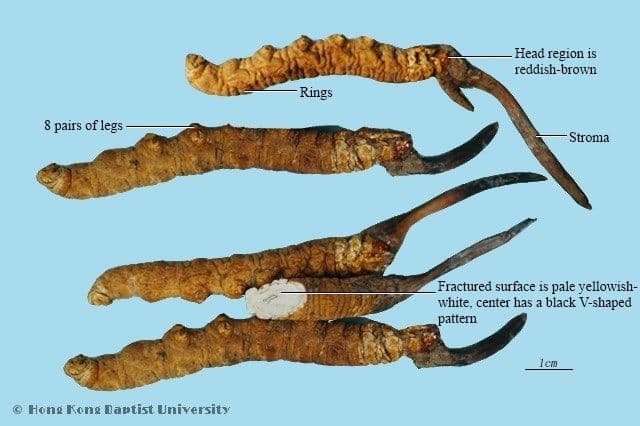
Imagine a rare fungus, emerging from the head of a caterpillar buried deep in the high-altitude plateaus of Tibet and Sichuan. This isn't the stuff of fantasy novels; it's the intriguing reality of Dong Chong Xia Cao (冬虫夏草), more commonly known as Cordyceps. Its name, translating to “winter worm, summer grass,” perfectly captures its paradoxical lifecycle and hints at the profound mystery and power it has held in Asian medicine for centuries.
This unique organism has long been a symbol of rejuvenation and vitality, whispered about in hushed tones for its ability to restore strength and longevity.
Dong Chong Xia Cao (Cordyceps), or Cordyceps sinensis, also known as Chinese Caterpillar Fungus, is a fascinating fungus used in Traditional Chinese Medicine (TCM) for its profound ability to tonify the Kidneys, strengthen Yang, augment Jing, nourish Lung Yin, transform Phlegm, and stop bleeding. It's a cornerstone herb for supporting deep energy, respiratory health, and overall constitutional strength, bridging the gap between ancient wisdom and modern wellness pursuits.
I remember a patient, a gentleman in his late 70s named Mr. Lee, who came to me feeling utterly depleted. His zest for life had waned, and chronic coughs left him breathless. He felt like his 'battery' was running on empty. After discussing his health history through both Western and TCM lenses, we decided to incorporate Cordyceps into his integrative plan. Within a few months, the change was remarkable.
He wasn't running marathons, but his cough eased, his afternoon slump vanished, and he started enjoying walks in his garden again. He often remarked, 'Dr. Chen, I feel like a younger man.' His story isn't unique; it echoes the ancient texts. As 《本草纲目》 (Compendium of Materia Medica) records, Cordyceps is '性平,味甘,具有益肺肾、止血化痰之效' – possessing a neutral nature, sweet flavor, and the efficacy to benefit the Lungs and Kidneys, stop bleeding, and transform phlegm.
In the intricate language of Traditional Chinese Medicine, Cordyceps is truly distinctive. Its Nature is described as Warm (Neutral), meaning it imparts a gentle, balancing warmth without being overly stimulating. This makes it suitable for a wider range of individuals, unlike some more intensely warming herbs. Its Flavor is Sweet, which in TCM signifies its nourishing and harmonizing properties, often associated with tonifying the body and moistening dryness. It’s a gentle yet profound fortifier.
The herb primarily enters the Lung and Kidney Meridians. This dual affinity is critical to understanding its broad benefits. In TCM, the Kidneys are considered the root of life, storing our fundamental essence (Jing) and governing growth, reproduction, and longevity. Tonifying the Kidneys with Cordyceps is like watering the root of a tree—it strengthens our deepest reserves, supporting hormonal balance, bone health, and our body's innate resilience.
As 《药性考》 (An Examination of Medicinal Properties) states, '冬虫夏草秘精益气,专补命门'—Cordyceps preserves essence and benefits qi, specifically tonifying the 'Gate of Vitality' (Mingmen), a key aspect of Kidney Yang.
Simultaneously, its connection to the Lungs addresses our respiratory system, governing our external defense (Wei Qi) and the distribution of vital energy throughout the body. By nourishing Lung Yin, Cordyceps helps to soothe chronic coughs, alleviate shortness of breath, and support overall respiratory integrity. This harmonizing effect on both the deep reserves (Kidneys) and the outer defenses (Lungs) makes Cordyceps a truly unique adaptogen, helping the body adapt to various stressors and maintain equilibrium.
If you've ever felt that persistent drag, a subtle fatigue that no amount of sleep seems to fix, Cordyceps might be calling to you. In TCM, this relates to a depletion of Kidney Yang and Jing—our core energetic reserves. From a functional medicine standpoint, this translates to supporting cellular energy production. Research suggests Cordyceps can enhance the body's production of adenosine triphosphate (ATP), the primary energy currency of our cells, which can improve oxygen utilization.
This is why athletes and those seeking to combat chronic fatigue often turn to Cordyceps. It’s not a stimulant, but rather a deep, foundational energy builder.
Chronic coughs, shortness of breath, or seasonal respiratory discomfort can significantly impact quality of life. Cordyceps' affinity for the Lung meridian makes it a traditional choice for these issues. It's believed to nourish Lung Yin, which helps to moisten the respiratory passages, transform phlegm, and alleviate persistent coughs. Modern studies have explored its potential anti-inflammatory and bronchodilatory effects, suggesting it could play a supportive role in managing conditions like asthma and COPD.
A 2025 network meta-analysis published in 《中国中药杂志》 indicated that Cordyceps preparations combined with Western medicine could significantly improve the FEV1/FVC ratio in COPD patients.
Our immune system is our body's shield, constantly defending against pathogens. In TCM, strong Kidney Jing is foundational to robust immunity. Cordyceps is well-regarded for its immunomodulatory properties, meaning it helps to balance rather than simply boost the immune response. This makes it potentially beneficial for those with underactive immunity or even those grappling with overactive immune responses, such as allergies. Researchers at National Taiwan University, including Hui-Chen Lo, have extensively reviewed Cordyceps' immunomodulatory bioactivities.
The Kidneys are central to filtering waste and maintaining fluid balance. Traditional use of Cordyceps to 'tonify the Kidneys' aligns with modern findings on its potential nephroprotective effects. A significant Cochrane review by Zhang, HW et al. (2014) investigated Cordyceps preparations for chronic kidney disease (CKD). While acknowledging the low quality of evidence, their findings suggested that Cordyceps, as an adjuvant therapy, showed potential to decrease serum creatinine, increase creatinine clearance, and reduce proteinuria in non-dialysis CKD patients.
This offers a compelling area for continued research and clinical application.
The scientific community has taken a keen interest in Cordyceps, moving beyond anecdotal evidence to uncover its molecular mechanisms. A systematic review published in 2013 by Hui-Chen Lo, Chien-Yan Hsieh, and Fang-Yi Lin, among others, identified an impressive array of over 30 reported bioactivities—including immunomodulatory, antitumor, anti-inflammatory, and antioxidant effects—and over 20 bioactive ingredients in Ophiocordyceps sinensis. This extensive list underscores the complex pharmacology of this unique fungus.
One of the most clinically relevant areas of study has been its effect on kidney health. The 2014 Cochrane Library review by Zhang, HW et al., involving numerous studies and nearly a thousand participants, found that Cordyceps preparations significantly decreased serum creatinine levels by a mean difference of -60.76 μmol/L in non-dialysis CKD patients. While the evidence quality was low, these findings are promising enough to warrant further high-quality trials, offering hope for a complementary approach to kidney care.
Beyond kidney support, a comprehensive meta-analysis by Miguel Fernandez, anticipated for publication in 2025, highlights Cordyceps sinensis' anti-cancer, anti-inflammatory, anti-tumor, anti-fibrotic, and antioxidant properties. This review particularly notes compounds like cordycepin, a key active ingredient, for its ability to induce apoptosis (programmed cell death) and cell cycle arrest in cancer cells.
Emerging Chinese research further explores specific mechanisms, such as a 2022 study in 《中国实验方剂学杂志》 showing Cordyceps achieves 'treating different diseases with the same method' for bronchial asthma and chronic renal failure via Akt1, Src, and PI3K/Akt pathways. Even more specifically, a 2023 study from the Northwest Plateau Institute of Biology in Journal of Ethnopharmacology demonstrated in mouse experiments that Cordyceps significantly inhibited lung adenocarcinoma xenograft growth by suppressing BRCA1/CCNE1 expression, achieving a tumor inhibition rate of 62.3%.
It’s clear that while the ancient wisdom surrounding Cordyceps is vast, modern science is steadily catching up, revealing the intricate pathways through which this remarkable fungus exerts its effects.
Incorporating Cordyceps into your daily health regimen can be a straightforward and enriching experience. Its mild, sweet flavor makes it versatile for various preparations. For dried Cordyceps, the traditional dosage ranges from 3 to 14 grams. If you're using a tincture, 2-4 ml is a common recommendation, often taken 1-3 times daily.
One of my patients, a busy architect named Sarah, initially struggled with how to fit Cordyceps into her hectic schedule. We explored different options. She found that adding 5 grams of dried Cordyceps to her morning bone broth or a hearty soup during the weekend was an easy way to get her dose. On weekdays, a high-quality powdered extract mixed into her smoothie became her go-to.
The key is finding a method that aligns with your lifestyle, ensuring consistency for the best results.
When preparing Cordyceps as a tea or decoction, gently rinse 5-10g of the dried herb. Place it in a non-metallic pot (like ceramic or glass) with 2-3 cups of filtered water. Bring it to a boil, then reduce the heat to a simmer and let it gently extract for 30-60 minutes. You can drink the liquid, and the Cordyceps pieces can even be re-decocted or consumed directly.
For powdered forms, simply stir 1-3g into warm water, juice, or your morning smoothie. If you opt for capsules or extracts, always follow the dosage instructions provided by the manufacturer, as concentrations can vary significantly.
While Cordyceps is generally considered safe and well-tolerated, there are critical considerations to ensure its appropriate use. As an integrative physician, I always prioritize safety and encourage open communication with your healthcare provider before introducing any new supplement.
Contraindications:
Use caution for those with Exterior conditions. In TCM, an Exterior condition refers to the initial stages of an illness, often characterized by acute symptoms like fever, chills, body aches, or a runny nose (e.g., the common cold or flu). During these acute phases, tonifying herbs like Cordyceps can sometimes 'trap' the pathogen, prolonging the illness. It's best to wait until the acute symptoms have resolved before starting Cordyceps.
Drug Interactions:
Laboratory studies suggest Cordyceps may have additive hypoglycemic effects when taken with hypoglycemics or insulin. This means it could potentially lower blood sugar levels too much, leading to hypoglycemia. If you are taking medication for diabetes, monitor your blood sugar closely and consult your doctor before using Cordyceps. Additionally, due to its immunomodulatory properties, individuals on immunosuppressant drugs or those with autoimmune conditions should exercise caution and seek medical advice, as Cordyceps could theoretically interfere with these medications or conditions.
Pregnancy and Lactation:
There is insufficient reliable information about the safety of taking Cordyceps if you are pregnant or breastfeeding. As a precaution, it is best to avoid use during these periods.
The story of Cordyceps, from its enigmatic origins to its revered place in traditional healing and its growing validation in scientific labs, is a testament to the enduring wisdom of nature. As an integrative physician, I find its ability to nourish the deepest reserves of our being—our Kidney Jing and Lung Yin—while offering tangible support for modern health challenges truly inspiring.
It's a powerful example of how ancient concepts, once dismissed as mere folklore, can offer profound insights when viewed through the lens of modern science.
My hope is that by understanding herbs like Cordyceps, we can all become more attuned to our bodies, drawing from a richer, more holistic understanding of health. It’s about building resilience from within, embracing the delicate balance that allows us to thrive, not just survive.
Imagine a rare fungus, emerging from the head of a caterpillar buried deep in the high-altitude plateaus of Tibet and Sichuan. This isn't the stuff of fantasy novels; it's the intriguing reality of Dong Chong Xia Cao (冬虫夏草), more commonly known as Cordyceps. Its name, translating to “winter worm, summer grass,” perfectly captures its paradoxical lifecycle and hints at the profound mystery and power it has held in Asian medicine for centuries.
This unique organism has long been a symbol of rejuvenation and vitality, whispered about in hushed tones for its ability to restore strength and longevity.
Dong Chong Xia Cao (Cordyceps), or Cordyceps sinensis, also known as Chinese Caterpillar Fungus, is a fascinating fungus used in Traditional Chinese Medicine (TCM) for its profound ability to tonify the Kidneys, strengthen Yang, augment Jing, nourish Lung Yin, transform Phlegm, and stop bleeding. It's a cornerstone herb for supporting deep energy, respiratory health, and overall constitutional strength, bridging the gap between ancient wisdom and modern wellness pursuits.
I remember a patient, a gentleman in his late 70s named Mr. Lee, who came to me feeling utterly depleted. His zest for life had waned, and chronic coughs left him breathless. He felt like his 'battery' was running on empty. After discussing his health history through both Western and TCM lenses, we decided to incorporate Cordyceps into his integrative plan. Within a few months, the change was remarkable.
He wasn't running marathons, but his cough eased, his afternoon slump vanished, and he started enjoying walks in his garden again. He often remarked, 'Dr. Chen, I feel like a younger man.' His story isn't unique; it echoes the ancient texts. As 《本草纲目》 (Compendium of Materia Medica) records, Cordyceps is '性平,味甘,具有益肺肾、止血化痰之效' – possessing a neutral nature, sweet flavor, and the efficacy to benefit the Lungs and Kidneys, stop bleeding, and transform phlegm.
In the intricate language of Traditional Chinese Medicine, Cordyceps is truly distinctive. Its Nature is described as Warm (Neutral), meaning it imparts a gentle, balancing warmth without being overly stimulating. This makes it suitable for a wider range of individuals, unlike some more intensely warming herbs. Its Flavor is Sweet, which in TCM signifies its nourishing and harmonizing properties, often associated with tonifying the body and moistening dryness. It’s a gentle yet profound fortifier.
The herb primarily enters the Lung and Kidney Meridians. This dual affinity is critical to understanding its broad benefits. In TCM, the Kidneys are considered the root of life, storing our fundamental essence (Jing) and governing growth, reproduction, and longevity. Tonifying the Kidneys with Cordyceps is like watering the root of a tree—it strengthens our deepest reserves, supporting hormonal balance, bone health, and our body's innate resilience.
As 《药性考》 (An Examination of Medicinal Properties) states, '冬虫夏草秘精益气,专补命门'—Cordyceps preserves essence and benefits qi, specifically tonifying the 'Gate of Vitality' (Mingmen), a key aspect of Kidney Yang.
Simultaneously, its connection to the Lungs addresses our respiratory system, governing our external defense (Wei Qi) and the distribution of vital energy throughout the body. By nourishing Lung Yin, Cordyceps helps to soothe chronic coughs, alleviate shortness of breath, and support overall respiratory integrity. This harmonizing effect on both the deep reserves (Kidneys) and the outer defenses (Lungs) makes Cordyceps a truly unique adaptogen, helping the body adapt to various stressors and maintain equilibrium.
If you've ever felt that persistent drag, a subtle fatigue that no amount of sleep seems to fix, Cordyceps might be calling to you. In TCM, this relates to a depletion of Kidney Yang and Jing—our core energetic reserves. From a functional medicine standpoint, this translates to supporting cellular energy production. Research suggests Cordyceps can enhance the body's production of adenosine triphosphate (ATP), the primary energy currency of our cells, which can improve oxygen utilization.
This is why athletes and those seeking to combat chronic fatigue often turn to Cordyceps. It’s not a stimulant, but rather a deep, foundational energy builder.
Chronic coughs, shortness of breath, or seasonal respiratory discomfort can significantly impact quality of life. Cordyceps' affinity for the Lung meridian makes it a traditional choice for these issues. It's believed to nourish Lung Yin, which helps to moisten the respiratory passages, transform phlegm, and alleviate persistent coughs. Modern studies have explored its potential anti-inflammatory and bronchodilatory effects, suggesting it could play a supportive role in managing conditions like asthma and COPD.
A 2025 network meta-analysis published in 《中国中药杂志》 indicated that Cordyceps preparations combined with Western medicine could significantly improve the FEV1/FVC ratio in COPD patients.
Our immune system is our body's shield, constantly defending against pathogens. In TCM, strong Kidney Jing is foundational to robust immunity. Cordyceps is well-regarded for its immunomodulatory properties, meaning it helps to balance rather than simply boost the immune response. This makes it potentially beneficial for those with underactive immunity or even those grappling with overactive immune responses, such as allergies. Researchers at National Taiwan University, including Hui-Chen Lo, have extensively reviewed Cordyceps' immunomodulatory bioactivities.
The Kidneys are central to filtering waste and maintaining fluid balance. Traditional use of Cordyceps to 'tonify the Kidneys' aligns with modern findings on its potential nephroprotective effects. A significant Cochrane review by Zhang, HW et al. (2014) investigated Cordyceps preparations for chronic kidney disease (CKD). While acknowledging the low quality of evidence, their findings suggested that Cordyceps, as an adjuvant therapy, showed potential to decrease serum creatinine, increase creatinine clearance, and reduce proteinuria in non-dialysis CKD patients.
This offers a compelling area for continued research and clinical application.
The scientific community has taken a keen interest in Cordyceps, moving beyond anecdotal evidence to uncover its molecular mechanisms. A systematic review published in 2013 by Hui-Chen Lo, Chien-Yan Hsieh, and Fang-Yi Lin, among others, identified an impressive array of over 30 reported bioactivities—including immunomodulatory, antitumor, anti-inflammatory, and antioxidant effects—and over 20 bioactive ingredients in Ophiocordyceps sinensis. This extensive list underscores the complex pharmacology of this unique fungus.
One of the most clinically relevant areas of study has been its effect on kidney health. The 2014 Cochrane Library review by Zhang, HW et al., involving numerous studies and nearly a thousand participants, found that Cordyceps preparations significantly decreased serum creatinine levels by a mean difference of -60.76 μmol/L in non-dialysis CKD patients. While the evidence quality was low, these findings are promising enough to warrant further high-quality trials, offering hope for a complementary approach to kidney care.
Beyond kidney support, a comprehensive meta-analysis by Miguel Fernandez, anticipated for publication in 2025, highlights Cordyceps sinensis' anti-cancer, anti-inflammatory, anti-tumor, anti-fibrotic, and antioxidant properties. This review particularly notes compounds like cordycepin, a key active ingredient, for its ability to induce apoptosis (programmed cell death) and cell cycle arrest in cancer cells.
Emerging Chinese research further explores specific mechanisms, such as a 2022 study in 《中国实验方剂学杂志》 showing Cordyceps achieves 'treating different diseases with the same method' for bronchial asthma and chronic renal failure via Akt1, Src, and PI3K/Akt pathways. Even more specifically, a 2023 study from the Northwest Plateau Institute of Biology in Journal of Ethnopharmacology demonstrated in mouse experiments that Cordyceps significantly inhibited lung adenocarcinoma xenograft growth by suppressing BRCA1/CCNE1 expression, achieving a tumor inhibition rate of 62.3%.
It’s clear that while the ancient wisdom surrounding Cordyceps is vast, modern science is steadily catching up, revealing the intricate pathways through which this remarkable fungus exerts its effects.
Incorporating Cordyceps into your daily health regimen can be a straightforward and enriching experience. Its mild, sweet flavor makes it versatile for various preparations. For dried Cordyceps, the traditional dosage ranges from 3 to 14 grams. If you're using a tincture, 2-4 ml is a common recommendation, often taken 1-3 times daily.
One of my patients, a busy architect named Sarah, initially struggled with how to fit Cordyceps into her hectic schedule. We explored different options. She found that adding 5 grams of dried Cordyceps to her morning bone broth or a hearty soup during the weekend was an easy way to get her dose. On weekdays, a high-quality powdered extract mixed into her smoothie became her go-to.
The key is finding a method that aligns with your lifestyle, ensuring consistency for the best results.
When preparing Cordyceps as a tea or decoction, gently rinse 5-10g of the dried herb. Place it in a non-metallic pot (like ceramic or glass) with 2-3 cups of filtered water. Bring it to a boil, then reduce the heat to a simmer and let it gently extract for 30-60 minutes. You can drink the liquid, and the Cordyceps pieces can even be re-decocted or consumed directly.
For powdered forms, simply stir 1-3g into warm water, juice, or your morning smoothie. If you opt for capsules or extracts, always follow the dosage instructions provided by the manufacturer, as concentrations can vary significantly.
While Cordyceps is generally considered safe and well-tolerated, there are critical considerations to ensure its appropriate use. As an integrative physician, I always prioritize safety and encourage open communication with your healthcare provider before introducing any new supplement.
Contraindications:
Use caution for those with Exterior conditions. In TCM, an Exterior condition refers to the initial stages of an illness, often characterized by acute symptoms like fever, chills, body aches, or a runny nose (e.g., the common cold or flu). During these acute phases, tonifying herbs like Cordyceps can sometimes 'trap' the pathogen, prolonging the illness. It's best to wait until the acute symptoms have resolved before starting Cordyceps.
Drug Interactions:
Laboratory studies suggest Cordyceps may have additive hypoglycemic effects when taken with hypoglycemics or insulin. This means it could potentially lower blood sugar levels too much, leading to hypoglycemia. If you are taking medication for diabetes, monitor your blood sugar closely and consult your doctor before using Cordyceps. Additionally, due to its immunomodulatory properties, individuals on immunosuppressant drugs or those with autoimmune conditions should exercise caution and seek medical advice, as Cordyceps could theoretically interfere with these medications or conditions.
Pregnancy and Lactation:
There is insufficient reliable information about the safety of taking Cordyceps if you are pregnant or breastfeeding. As a precaution, it is best to avoid use during these periods.
The story of Cordyceps, from its enigmatic origins to its revered place in traditional healing and its growing validation in scientific labs, is a testament to the enduring wisdom of nature. As an integrative physician, I find its ability to nourish the deepest reserves of our being—our Kidney Jing and Lung Yin—while offering tangible support for modern health challenges truly inspiring.
It's a powerful example of how ancient concepts, once dismissed as mere folklore, can offer profound insights when viewed through the lens of modern science.
My hope is that by understanding herbs like Cordyceps, we can all become more attuned to our bodies, drawing from a richer, more holistic understanding of health. It’s about building resilience from within, embracing the delicate balance that allows us to thrive, not just survive.
This information is for educational purposes only and is not intended as medical advice. Always consult a qualified healthcare practitioner before using any herbal remedy.