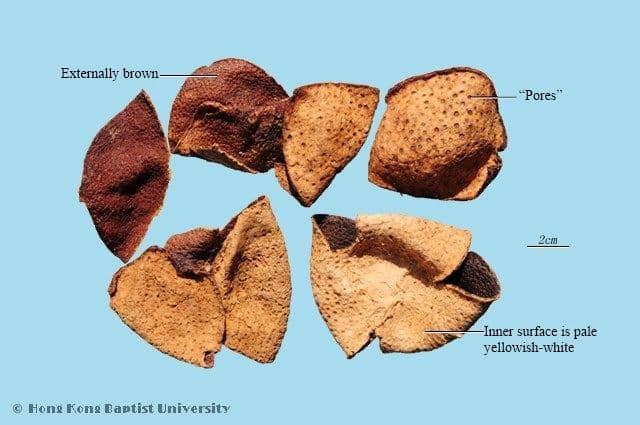

Aged Tangerine Peel
Warm (温)陈皮 · Chen Pi (ju Pi)
Pericarpium Citri Reticulatae
TCM Properties
Nature (四气)
Warm (温)Flavor (五味)
Pungent (辛)Bitter (苦)
Meridian Tropism
LungSpleenStomach
陈皮 · Chen Pi (ju Pi)
Pericarpium Citri Reticulatae
Discover Chen Pi, or aged tangerine peel, a revered herb in Traditional Chinese Medicine known for harmonizing digestion, clearing phlegm, and offering profound metabolic support. Learn how modern science validates its ancient wisdom.
3-9g Tincture: 1-4ml Essential Oil: 2-3 drops in a gel cap topped with olive oil
3-9g Tincture: 1-4ml Essential Oil: 2-3 drops in a gel cap topped with olive oil
For a simple therapeutic tea, steep 3-9 grams of dried Chen Pi slices in 8-12 ounces of hot water for 15-20 minutes. For a more potent decoction, simmer the slices in 2-3 cups of water for 20-30 minutes until reduced by half. Strain and drink warm.
Finely grind dried Chen Pi into a powder. A typical dosage is 1-3 grams, taken 1-3 times daily, often mixed into warm water or blended into smoothies. Always start with a lower dose to assess your body's response.
Follow product-specific instructions for tinctures, which are concentrated liquid extracts. A common dosage range is 1-4 ml, 2-3 times daily. Tinctures offer a convenient way to integrate Chen Pi, ensuring consistent potency.
Chen Pi essential oil is highly concentrated and should be used with extreme caution. For internal use, typically 2-3 drops can be placed in a gel cap and topped with olive oil, taken once daily. This method should only be undertaken under the guidance of a qualified practitioner due to the potency of essential oils.
For a simple therapeutic tea, steep 3-9 grams of dried Chen Pi slices in 8-12 ounces of hot water for 15-20 minutes. For a more potent decoction, simmer the slices in 2-3 cups of water for 20-30 minutes until reduced by half. Strain and drink warm.
Finely grind dried Chen Pi into a powder. A typical dosage is 1-3 grams, taken 1-3 times daily, often mixed into warm water or blended into smoothies. Always start with a lower dose to assess your body's response.
Follow product-specific instructions for tinctures, which are concentrated liquid extracts. A common dosage range is 1-4 ml, 2-3 times daily. Tinctures offer a convenient way to integrate Chen Pi, ensuring consistent potency.
Chen Pi essential oil is highly concentrated and should be used with extreme caution. For internal use, typically 2-3 drops can be placed in a gel cap and topped with olive oil, taken once daily. This method should only be undertaken under the guidance of a qualified practitioner due to the potency of essential oils.
Clinical evidence for Chen Pi is growing, moving beyond traditional use to explore its mechanisms. Research indicates significant benefits in modulating gut microbiota, improving lipid metabolism in dyslipidemia, and offering vascular protective effects in diabetic models. Studies also highlight the enhanced antioxidant properties with longer aging.
Moderate — Some clinical studies
Clinical evidence for Chen Pi is growing, moving beyond traditional use to explore its mechanisms. Research indicates significant benefits in modulating gut microbiota, improving lipid metabolism in dyslipidemia, and offering vascular protective effects in diabetic models. Studies also highlight the enhanced antioxidant properties with longer aging.
Moderate — Some clinical studies
Insufficient Data
Insufficient Data
The scent hits you first – not the bright, fleeting zest of a freshly peeled orange, but something deeper, more complex. It's an aroma that speaks of history, of patient transformation: earthy, subtly sweet, with a comforting warmth that hints at ancient wisdom. This is the essence of Chen Pi (Pericarpium Citri Reticulatae), also known as aged tangerine peel or ripe tangerine rind.
Beyond a simple culinary ingredient, Chen Pi is a revered cornerstone of Traditional Chinese Medicine (TCM), a category of herb primarily used for its profound ability to regulate vital energy (Qi), harmonize digestion, and resolve stubborn phlegm.
For centuries, families in southern China have meticulously dried and aged mandarin orange peels, often for decades, passing down these aromatic treasures through generations. My own grandmother kept a jar of 20-year-old Chen Pi, bringing it out for special occasions or when someone needed a gentle digestive reset. She'd explain its magic not in scientific terms, but through the feeling it evoked – a clearing of internal fog, a lightness after a heavy meal.
Today, as an integrative medicine physician, my role is to bridge that ancient wisdom with modern scientific understanding, revealing how Chen Pi’s traditional uses are increasingly validated by contemporary research. It’s a remarkable journey from humble fruit peel to powerful therapeutic agent.
What Makes Chen Pi So Special?
In TCM, we understand Chen Pi as an herb with a warm nature, and flavors that are acrid, bitter, and profoundly aromatic. Think of 'warm' not as spicy heat, but as a gentle internal fire that supports healthy function, much like a well-regulated metabolism helps maintain core body temperature. The 'acrid' flavor signifies its ability to disperse and move stagnation, while 'bitter' points to its drying and descending qualities.
Its aromatic nature is key; it helps to 'awaken' the Spleen and Stomach, clearing away mental fogginess and digestive heaviness.
When we say Chen Pi enters the Lung, Spleen, and Stomach meridians, we're describing its energetic pathways and primary therapeutic targets. The Lung meridian governs respiration and fluid metabolism; the Spleen and Stomach meridians are the epicenter of digestion and nutrient absorption. This direct connection means Chen Pi is uniquely positioned to address issues stemming from what we call 'Dampness' and 'Qi Stagnation' in these vital systems.
Imagine a patient, let's call her Sarah, who came to me with persistent bloating, a heavy feeling after meals, and a chronic, productive cough. In Western terms, she might be dealing with sluggish digestion and excessive mucus production. From a TCM perspective, her Spleen Qi was struggling to transform food and fluids, leading to an accumulation of Dampness and Phlegm. This is precisely where Chen Pi shines.
As the classical text 《神农本草经》 noted centuries ago, "橘柚,味辛,温。主胸中瘕热、逆气,利水谷。久服去臭,下气。" – highlighting its ability to address chest discomfort, rebellious Qi, and improve fluid metabolism. This ancient observation resonates with modern understanding of how herbs can influence gut-brain axis communication and immune response. Furthermore, 《本草纲目》 states: "橘皮,苦能泄能燥,辛能散,温能和。其治百病,总是取其理气燥湿之功。" which beautifully encapsulates Chen Pi's multifaceted actions of regulating Qi and drying dampness, making it a truly foundational herb.
Top Benefits of Chen Pi for Your Health
For Digestive Harmony & Gut Balance
Do you often feel bloated after meals, experience indigestion, or simply feel a heaviness in your stomach? Chen Pi is a powerful ally. Its primary action in TCM is to Regulate Qi and adjust the Middle, which translates to improving the smooth flow of energy and function within your digestive system. It helps the stomach and spleen efficiently process food, preventing stagnation that can lead to gas, bloating, and discomfort. In a compelling 2020 study by Q. Huang et al.
at Rutgers University and Wuyi University, aged citrus peel extract dynamically altered colonic microbiota in obese mice, increasing beneficial short-chain fatty acids like acetic acid (43% increase) and propionic acid (86% increase). It also decreased harmful Proteobacteria by 88%, suggesting a significant impact on gut health and anti-obesity mechanisms. This research provides a modern lens through which to view Chen Pi's traditional role in 'harmonizing the middle burner.
For Respiratory Comfort & Phlegm Relief
If you've ever dealt with a lingering cough or excessive phlegm, especially after a cold, Chen Pi can offer significant relief. Its ability to Dry Dampness and transform Phlegm makes it an excellent expectorant. It helps to break down sticky mucus, making it easier to expel, thereby clearing the airways and reducing congestion. I often recommend it for patients with a persistent, productive cough where the phlegm feels heavy and difficult to move.
It's a gentle yet effective way to restore clear breathing, working synergistically with your body's natural cleansing processes.
For Metabolic Support & Vascular Health
Beyond its well-known digestive and respiratory benefits, Chen Pi is gaining attention for its potential role in metabolic health. The impact on gut microbiota, as seen in the Rutgers study, has broader implications for obesity and metabolic syndrome. A forthcoming clinical study published in Frontiers (2025) on Chenpi Jiaosu (CPJS) demonstrated a significant decrease in body weight and triglycerides in dyslipidemia patients over 8 weeks, indicating its positive influence on lipid metabolism.
Furthermore, a 2022 study in MDPI found that Chenpi extract significantly mitigated hypertension and protected against endothelial dysfunction and vascular inflammation in type 2 diabetic rats. These findings highlight Chen Pi's potential to support cardiovascular and metabolic wellness, aligning with its traditional use for improving overall circulation and preventing stagnation.
What the Science Says About Chen Pi
The scientific community is increasingly investigating the complex compounds within Chen Pi, validating many of its traditional applications. The aging process, a cornerstone of its TCM preparation, is not merely for flavor; it profoundly impacts its chemical profile and efficacy. Research by Q. Huang and colleagues at Rutgers University and Wuyi University in 2020, published in Food & Function, provided compelling evidence for Chen Pi’s effect on the gut microbiome.
Their study showed that aged citrus peel extract in high-fat diet-induced obese mice led to a remarkable 43% increase in acetic acid, an 86% increase in propionic acid (both beneficial short-chain fatty acids), an 88% decrease in Proteobacteria, and a 70% decrease in the Firmicutes to Bacteroidetes ratio – all significant indicators of improved gut health and anti-obesity mechanisms.
Looking ahead, a clinical study slated for 2025 publication in Frontiers explores Chenpi Jiaosu (CPJS), a fermented form. This pilot trial, involving patients with dyslipidemia, demonstrated a significant decrease in body weight and triglycerides after just eight weeks. This suggests a direct influence on human lipid metabolism and regulation of intestinal microorganisms, moving beyond animal models to human clinical application.
Furthermore, a 2022 study in MDPI investigated Chenpi extract's role in vascular health. Researchers found that a daily dose of 400 mg/kg of Chenpi extract for four weeks significantly mitigated systolic blood pressure in type 2 diabetic rats. It also offered protection against endothelial dysfunction and vascular inflammation, underscoring its potential in managing complications associated with diabetes and hypertension.
The importance of aging is further underscored by Chinese research. A 2024 study by 田长城 et al. found that polysaccharide-phenol conjugates in 10-year-old Chen Pi exhibited significantly higher antioxidant activity than those in 1-year and 5-year aged peels, with a 30% increase in DPPH free radical scavenging rate in 10-year Chen Pi compared to 1-year. This confirms the traditional belief that older Chen Pi is indeed more medicinally potent.
Additionally, 魏悦's 2023 review highlighted the rich volatile oil components in Xinhui Chen Pi, noting limonene content at 15.2-25.7%, significantly higher than ordinary Chen Pi (8.4-12.1%), linking specific compounds to its observed therapeutic effects.
How to Incorporate Chen Pi into Your Routine
Chen Pi is remarkably versatile and can be enjoyed in various forms, making it easy to integrate into your daily wellness practices. Its aromatic qualities lend themselves beautifully to both culinary and therapeutic applications.
As a Warming Tea
This is perhaps the most common and simplest method. Take 3-9 grams of dried Chen Pi slices and steep them in 8-12 ounces of hot water for 15-20 minutes. You can adjust the steeping time for a stronger or milder flavor. I often recommend this after a heavy meal to aid digestion or in the morning to gently awaken the digestive system. It pairs wonderfully with ginger, hawthorn berries, or even Pu'er tea for enhanced benefits.
In Powder Form
For a more concentrated approach, Chen Pi can be ground into a fine powder. A typical dosage ranges from 1-3 grams, taken 1-3 times daily. This can be mixed directly into warm water, a smoothie, or even sprinkled onto food. Ensure the powder is from a reputable source to guarantee purity and potency.
Tinctures and Essential Oils
For those seeking convenience or a more targeted application, Chen Pi tinctures are available, with a common dosage of 1-4 ml taken 2-3 times a day. Chen Pi essential oil is highly potent; for internal use, typically 2-3 drops can be placed in a gel cap and topped with olive oil. This method should only be used under the guidance of a qualified practitioner due to the concentrated nature of essential oils.
Culinary Applications
Don't forget Chen Pi's incredible culinary value! It's a staple in Chinese cooking, adding a unique aromatic depth to both savory and sweet dishes. I love adding a few pieces to slow-cooked stews like braised beef or duck, where its warmth helps cut through richness and aids digestion. It also elevates desserts like red bean soup or traditional steamed puddings, offering a subtle citrusy counterpoint.
You can also simply add a small piece to your rice cooker for a fragrant, healthy twist on plain rice.
Safety & Who Should Avoid Chen Pi
As with any powerful herb, understanding Chen Pi’s contraindications and precautions is crucial for safe and effective use. While generally well-tolerated when used appropriately, certain conditions warrant caution or complete avoidance.
Contraindications:
– Dry cough due to Yin or Qi Deficiency: Chen Pi's drying nature can exacerbate dryness.
– Stomach Fire causing nausea and vomiting: Its warm and drying properties can intensify heat.
– Use with herbs that are warm, hot, aromatic, or drying: This combination can lead to excessive dryness or heat.
– Spasmodic abdominal pain: Its moving nature might worsen spasms.
– No Damp-Phlegm symptoms: If there's no excess dampness or phlegm, Chen Pi is unnecessary and could lead to dryness.
Use with Caution:
– Heat from Excess (red tongue): Could aggravate existing heat conditions.
– Hot Phlegm, Dry Heat coughs, or spitting of Blood: Its warming and drying actions are unsuitable for these heat-related conditions.
– Fluid Deficiency: Chen Pi's drying nature can worsen conditions of insufficient bodily fluids.
– Long-term use: Extended, continuous use can injure Yuan Qi (original Qi), which is foundational energy. It's best used therapeutically for specific conditions rather than as an everyday tonic without professional guidance.
Pregnancy and Drug Interactions:
Pregnant women should generally avoid Chen Pi due to its strong Qi-moving properties. Regarding drug interactions, Chen Pi can influence digestive and metabolic pathways. If you are taking prescription medications, especially for blood sugar, cholesterol, or blood pressure, it is always essential to consult your healthcare provider before incorporating Chen Pi to avoid potential interactions.
A Bridge Between Worlds
Chen Pi stands as a testament to the profound wisdom embedded in ancient healing traditions, a simple citrus peel transformed by time into a complex therapeutic agent. Its journey from the sun-drenched orchards of China to our modern understanding of gut microbiota and vascular health is a powerful example of how integrative medicine can bridge seemingly disparate worlds.
As we continue to unravel the intricate mechanisms behind its actions, we gain not just new remedies, but a deeper appreciation for the holistic interplay between our bodies, our food, and the patient hand of nature. It reminds me that sometimes, the most potent medicines are those that have been quietly perfecting themselves for generations, waiting for us to truly listen.
The scent hits you first – not the bright, fleeting zest of a freshly peeled orange, but something deeper, more complex. It's an aroma that speaks of history, of patient transformation: earthy, subtly sweet, with a comforting warmth that hints at ancient wisdom. This is the essence of Chen Pi (Pericarpium Citri Reticulatae), also known as aged tangerine peel or ripe tangerine rind.
Beyond a simple culinary ingredient, Chen Pi is a revered cornerstone of Traditional Chinese Medicine (TCM), a category of herb primarily used for its profound ability to regulate vital energy (Qi), harmonize digestion, and resolve stubborn phlegm.
For centuries, families in southern China have meticulously dried and aged mandarin orange peels, often for decades, passing down these aromatic treasures through generations. My own grandmother kept a jar of 20-year-old Chen Pi, bringing it out for special occasions or when someone needed a gentle digestive reset. She'd explain its magic not in scientific terms, but through the feeling it evoked – a clearing of internal fog, a lightness after a heavy meal.
Today, as an integrative medicine physician, my role is to bridge that ancient wisdom with modern scientific understanding, revealing how Chen Pi’s traditional uses are increasingly validated by contemporary research. It’s a remarkable journey from humble fruit peel to powerful therapeutic agent.
What Makes Chen Pi So Special?
In TCM, we understand Chen Pi as an herb with a warm nature, and flavors that are acrid, bitter, and profoundly aromatic. Think of 'warm' not as spicy heat, but as a gentle internal fire that supports healthy function, much like a well-regulated metabolism helps maintain core body temperature. The 'acrid' flavor signifies its ability to disperse and move stagnation, while 'bitter' points to its drying and descending qualities.
Its aromatic nature is key; it helps to 'awaken' the Spleen and Stomach, clearing away mental fogginess and digestive heaviness.
When we say Chen Pi enters the Lung, Spleen, and Stomach meridians, we're describing its energetic pathways and primary therapeutic targets. The Lung meridian governs respiration and fluid metabolism; the Spleen and Stomach meridians are the epicenter of digestion and nutrient absorption. This direct connection means Chen Pi is uniquely positioned to address issues stemming from what we call 'Dampness' and 'Qi Stagnation' in these vital systems.
Imagine a patient, let's call her Sarah, who came to me with persistent bloating, a heavy feeling after meals, and a chronic, productive cough. In Western terms, she might be dealing with sluggish digestion and excessive mucus production. From a TCM perspective, her Spleen Qi was struggling to transform food and fluids, leading to an accumulation of Dampness and Phlegm. This is precisely where Chen Pi shines.
As the classical text 《神农本草经》 noted centuries ago, "橘柚,味辛,温。主胸中瘕热、逆气,利水谷。久服去臭,下气。" – highlighting its ability to address chest discomfort, rebellious Qi, and improve fluid metabolism. This ancient observation resonates with modern understanding of how herbs can influence gut-brain axis communication and immune response. Furthermore, 《本草纲目》 states: "橘皮,苦能泄能燥,辛能散,温能和。其治百病,总是取其理气燥湿之功。" which beautifully encapsulates Chen Pi's multifaceted actions of regulating Qi and drying dampness, making it a truly foundational herb.
Top Benefits of Chen Pi for Your Health
For Digestive Harmony & Gut Balance
Do you often feel bloated after meals, experience indigestion, or simply feel a heaviness in your stomach? Chen Pi is a powerful ally. Its primary action in TCM is to Regulate Qi and adjust the Middle, which translates to improving the smooth flow of energy and function within your digestive system. It helps the stomach and spleen efficiently process food, preventing stagnation that can lead to gas, bloating, and discomfort. In a compelling 2020 study by Q. Huang et al.
at Rutgers University and Wuyi University, aged citrus peel extract dynamically altered colonic microbiota in obese mice, increasing beneficial short-chain fatty acids like acetic acid (43% increase) and propionic acid (86% increase). It also decreased harmful Proteobacteria by 88%, suggesting a significant impact on gut health and anti-obesity mechanisms. This research provides a modern lens through which to view Chen Pi's traditional role in 'harmonizing the middle burner.
For Respiratory Comfort & Phlegm Relief
If you've ever dealt with a lingering cough or excessive phlegm, especially after a cold, Chen Pi can offer significant relief. Its ability to Dry Dampness and transform Phlegm makes it an excellent expectorant. It helps to break down sticky mucus, making it easier to expel, thereby clearing the airways and reducing congestion. I often recommend it for patients with a persistent, productive cough where the phlegm feels heavy and difficult to move.
It's a gentle yet effective way to restore clear breathing, working synergistically with your body's natural cleansing processes.
For Metabolic Support & Vascular Health
Beyond its well-known digestive and respiratory benefits, Chen Pi is gaining attention for its potential role in metabolic health. The impact on gut microbiota, as seen in the Rutgers study, has broader implications for obesity and metabolic syndrome. A forthcoming clinical study published in Frontiers (2025) on Chenpi Jiaosu (CPJS) demonstrated a significant decrease in body weight and triglycerides in dyslipidemia patients over 8 weeks, indicating its positive influence on lipid metabolism.
Furthermore, a 2022 study in MDPI found that Chenpi extract significantly mitigated hypertension and protected against endothelial dysfunction and vascular inflammation in type 2 diabetic rats. These findings highlight Chen Pi's potential to support cardiovascular and metabolic wellness, aligning with its traditional use for improving overall circulation and preventing stagnation.
What the Science Says About Chen Pi
The scientific community is increasingly investigating the complex compounds within Chen Pi, validating many of its traditional applications. The aging process, a cornerstone of its TCM preparation, is not merely for flavor; it profoundly impacts its chemical profile and efficacy. Research by Q. Huang and colleagues at Rutgers University and Wuyi University in 2020, published in Food & Function, provided compelling evidence for Chen Pi’s effect on the gut microbiome.
Their study showed that aged citrus peel extract in high-fat diet-induced obese mice led to a remarkable 43% increase in acetic acid, an 86% increase in propionic acid (both beneficial short-chain fatty acids), an 88% decrease in Proteobacteria, and a 70% decrease in the Firmicutes to Bacteroidetes ratio – all significant indicators of improved gut health and anti-obesity mechanisms.
Looking ahead, a clinical study slated for 2025 publication in Frontiers explores Chenpi Jiaosu (CPJS), a fermented form. This pilot trial, involving patients with dyslipidemia, demonstrated a significant decrease in body weight and triglycerides after just eight weeks. This suggests a direct influence on human lipid metabolism and regulation of intestinal microorganisms, moving beyond animal models to human clinical application.
Furthermore, a 2022 study in MDPI investigated Chenpi extract's role in vascular health. Researchers found that a daily dose of 400 mg/kg of Chenpi extract for four weeks significantly mitigated systolic blood pressure in type 2 diabetic rats. It also offered protection against endothelial dysfunction and vascular inflammation, underscoring its potential in managing complications associated with diabetes and hypertension.
The importance of aging is further underscored by Chinese research. A 2024 study by 田长城 et al. found that polysaccharide-phenol conjugates in 10-year-old Chen Pi exhibited significantly higher antioxidant activity than those in 1-year and 5-year aged peels, with a 30% increase in DPPH free radical scavenging rate in 10-year Chen Pi compared to 1-year. This confirms the traditional belief that older Chen Pi is indeed more medicinally potent.
Additionally, 魏悦's 2023 review highlighted the rich volatile oil components in Xinhui Chen Pi, noting limonene content at 15.2-25.7%, significantly higher than ordinary Chen Pi (8.4-12.1%), linking specific compounds to its observed therapeutic effects.
How to Incorporate Chen Pi into Your Routine
Chen Pi is remarkably versatile and can be enjoyed in various forms, making it easy to integrate into your daily wellness practices. Its aromatic qualities lend themselves beautifully to both culinary and therapeutic applications.
As a Warming Tea
This is perhaps the most common and simplest method. Take 3-9 grams of dried Chen Pi slices and steep them in 8-12 ounces of hot water for 15-20 minutes. You can adjust the steeping time for a stronger or milder flavor. I often recommend this after a heavy meal to aid digestion or in the morning to gently awaken the digestive system. It pairs wonderfully with ginger, hawthorn berries, or even Pu'er tea for enhanced benefits.
In Powder Form
For a more concentrated approach, Chen Pi can be ground into a fine powder. A typical dosage ranges from 1-3 grams, taken 1-3 times daily. This can be mixed directly into warm water, a smoothie, or even sprinkled onto food. Ensure the powder is from a reputable source to guarantee purity and potency.
Tinctures and Essential Oils
For those seeking convenience or a more targeted application, Chen Pi tinctures are available, with a common dosage of 1-4 ml taken 2-3 times a day. Chen Pi essential oil is highly potent; for internal use, typically 2-3 drops can be placed in a gel cap and topped with olive oil. This method should only be used under the guidance of a qualified practitioner due to the concentrated nature of essential oils.
Culinary Applications
Don't forget Chen Pi's incredible culinary value! It's a staple in Chinese cooking, adding a unique aromatic depth to both savory and sweet dishes. I love adding a few pieces to slow-cooked stews like braised beef or duck, where its warmth helps cut through richness and aids digestion. It also elevates desserts like red bean soup or traditional steamed puddings, offering a subtle citrusy counterpoint.
You can also simply add a small piece to your rice cooker for a fragrant, healthy twist on plain rice.
Safety & Who Should Avoid Chen Pi
As with any powerful herb, understanding Chen Pi’s contraindications and precautions is crucial for safe and effective use. While generally well-tolerated when used appropriately, certain conditions warrant caution or complete avoidance.
Contraindications:
– Dry cough due to Yin or Qi Deficiency: Chen Pi's drying nature can exacerbate dryness.
– Stomach Fire causing nausea and vomiting: Its warm and drying properties can intensify heat.
– Use with herbs that are warm, hot, aromatic, or drying: This combination can lead to excessive dryness or heat.
– Spasmodic abdominal pain: Its moving nature might worsen spasms.
– No Damp-Phlegm symptoms: If there's no excess dampness or phlegm, Chen Pi is unnecessary and could lead to dryness.
Use with Caution:
– Heat from Excess (red tongue): Could aggravate existing heat conditions.
– Hot Phlegm, Dry Heat coughs, or spitting of Blood: Its warming and drying actions are unsuitable for these heat-related conditions.
– Fluid Deficiency: Chen Pi's drying nature can worsen conditions of insufficient bodily fluids.
– Long-term use: Extended, continuous use can injure Yuan Qi (original Qi), which is foundational energy. It's best used therapeutically for specific conditions rather than as an everyday tonic without professional guidance.
Pregnancy and Drug Interactions:
Pregnant women should generally avoid Chen Pi due to its strong Qi-moving properties. Regarding drug interactions, Chen Pi can influence digestive and metabolic pathways. If you are taking prescription medications, especially for blood sugar, cholesterol, or blood pressure, it is always essential to consult your healthcare provider before incorporating Chen Pi to avoid potential interactions.
A Bridge Between Worlds
Chen Pi stands as a testament to the profound wisdom embedded in ancient healing traditions, a simple citrus peel transformed by time into a complex therapeutic agent. Its journey from the sun-drenched orchards of China to our modern understanding of gut microbiota and vascular health is a powerful example of how integrative medicine can bridge seemingly disparate worlds.
As we continue to unravel the intricate mechanisms behind its actions, we gain not just new remedies, but a deeper appreciation for the holistic interplay between our bodies, our food, and the patient hand of nature. It reminds me that sometimes, the most potent medicines are those that have been quietly perfecting themselves for generations, waiting for us to truly listen.
This information is for educational purposes only and is not intended as medical advice. Always consult a qualified healthcare practitioner before using any herbal remedy.