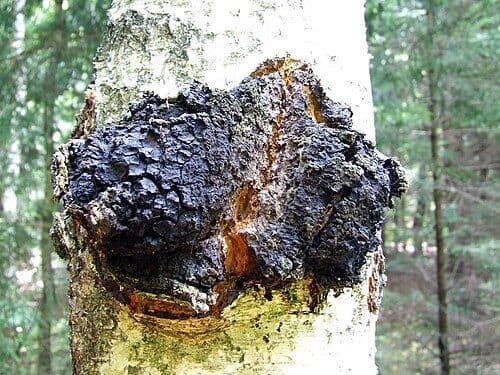
白桦茸 · chaga
Inonotus obliquus
Dr. Maya Chen explores Chaga Mushroom (Inonotus obliquus), an ancient 'birch fungus' revered for its powerful antioxidant, immune-modulating, and anti-inflammatory benefits.
1-3g extract powder daily, or 1-2 cups chaga tea
For a traditional Chaga tea, take roughly 10-20 grams of raw Chaga chunks or 5-10 grams of powdered Chaga. Simmer in 1 liter of filtered water for at least 30-60 minutes. For a stronger, more potent decoction, you can simmer for several hours, replenishing water as needed. Strain and enjoy 1-2 cups daily.
If using a fine Chaga extract powder, a typical dosage is 1-3 grams daily. This can be mixed directly into warm water, smoothies, coffee, or even incorporated into recipes. Ensure the powder is a concentrated extract for optimal benefit, as simple ground Chaga may require longer extraction.
Standardized Chaga extracts are available in capsule or liquid form. Follow the manufacturer's specific dosage instructions, which are usually based on the concentration of active compounds like beta-glucans. Generally, this falls within the 1-3 gram equivalent of extract powder daily. Always check the label for active compound percentages.
For a traditional Chaga tea, take roughly 10-20 grams of raw Chaga chunks or 5-10 grams of powdered Chaga. Simmer in 1 liter of filtered water for at least 30-60 minutes. For a stronger, more potent decoction, you can simmer for several hours, replenishing water as needed. Strain and enjoy 1-2 cups daily.
If using a fine Chaga extract powder, a typical dosage is 1-3 grams daily. This can be mixed directly into warm water, smoothies, coffee, or even incorporated into recipes. Ensure the powder is a concentrated extract for optimal benefit, as simple ground Chaga may require longer extraction.
Standardized Chaga extracts are available in capsule or liquid form. Follow the manufacturer's specific dosage instructions, which are usually based on the concentration of active compounds like beta-glucans. Generally, this falls within the 1-3 gram equivalent of extract powder daily. Always check the label for active compound percentages.
Evidence for Chaga's beneficial effects is primarily derived from in vitro and animal studies, showing promise for immune modulation, antioxidant activity, and blood sugar regulation. While a single human case series exists, robust clinical trials in humans are still limited, placing the current evidence level as preliminary.
Preliminary — In vitro / animal studies
Evidence for Chaga's beneficial effects is primarily derived from in vitro and animal studies, showing promise for immune modulation, antioxidant activity, and blood sugar regulation. While a single human case series exists, robust clinical trials in humans are still limited, placing the current evidence level as preliminary.
Preliminary — In vitro / animal studies
Chaga extract inhibited platelet aggregation in a murine model (2). It may also have synergistic effects when used with anticoagulant/antiplatelet drugs, but clinical relevance is not known.
In vitro, chaga had additive effects in lowering blood sugar levels (15). Clinical significance is yet unknown.
Additive anticoagulant/antiplatelet effect; increased bleeding risk
Potentiates hypoglycemic effect; risk of excessive blood sugar reduction
Opposes immunosuppressive therapy by stimulating immune function
Possible additive effect on hepatic CYP450 metabolism; monitor liver enzymes
Avoid
Chaga extract inhibited platelet aggregation in a murine model (2). It may also have synergistic effects when used with anticoagulant/antiplatelet drugs, but clinical relevance is not known.
In vitro, chaga had additive effects in lowering blood sugar levels (15). Clinical significance is yet unknown.
Additive anticoagulant/antiplatelet effect; increased bleeding risk
Potentiates hypoglycemic effect; risk of excessive blood sugar reduction
Opposes immunosuppressive therapy by stimulating immune function
Possible additive effect on hepatic CYP450 metabolism; monitor liver enzymes
Avoid
Deep in the frosty forests of Siberia and the northern reaches of China, a peculiar growth emerges from the bark of birch trees, looking for all the world like a scorched lump of charcoal. This unassuming fungus, known as Chaga Mushroom (Inonotus obliquus), also called Birch Fungus or Cinder Conk, is far more than its rugged appearance suggests. For centuries, it has been revered in indigenous cultures and Traditional Chinese Medicine (TCM) for its profound wellness properties.
I’ve encountered countless patients who, like many of us, are searching for ways to fortify their bodies against the relentless pace of modern life. They often come to me, Dr. Maya Chen, seeking a bridge between ancient wisdom and scientific understanding. Chaga, with its robust profile, is one of those herbs that beautifully illustrates this connection, offering a potent blend of antioxidant and immune-modulating benefits that resonate across both traditions.
In the intricate system of TCM, every herb is characterized by its nature, flavor, and the meridians it influences. Chaga is classified as having a Warm nature and a Bitter flavor. While some contemporary TCM analyses, such as that by Zhang Wenpeng (2019), describe Chaga as bitter and having a cooling effect—especially in relation to its ability to clear heat—the traditional understanding and core profile emphasize its warming nature.
This nuance reflects how a single herb can possess a complex energetic profile, where specific flavors elicit particular physiological responses. The classical text 《本草备要》, for instance, states: 'Bitter can strengthen yin, thicken the intestines and stomach; cool can clear heat, detoxify.' This aligns with Chaga's bitter flavor contributing to its 'clearing' actions, even as its overall nature is warming.
Chaga is primarily understood to influence the Liver and Kidney meridians. The Liver in TCM governs the smooth flow of Qi and blood, while the Kidneys are considered the root of Jing (essence) and house the primal Yin and Yang. When these systems are balanced, vitality flourishes. Chaga’s warming nature can gently invigorate these organ systems, supporting internal harmony and energy. Its bitter flavor helps to 'descend' and 'clear,' addressing stagnation or accumulation.
Think of it as a quiet steward, working to maintain the body's foundational resilience rather than providing a sudden jolt.
I recall a patient, Mr. Chen, a retired scholar who had a persistent feeling of dullness and fatigue, what we in TCM might call a subtle dampness or Qi stagnation. He was hesitant about strong stimulants. We incorporated Chaga tea into his routine. After a few weeks, he noted a subtle but consistent improvement in his overall vigor, a gentle awakening, as he described it. This isn't about dramatic shifts, but about cultivating a deeper, more enduring sense of well-being.
Chaga’s traditional uses align remarkably well with its scientifically validated properties. Here are some of its most compelling benefits:
Many patients come to me seeking ways to bolster their immune defenses, especially during seasonal changes or periods of high stress. In TCM, we speak of strengthening Wei Qi (defensive energy). Chaga is a powerful ally here. Modern research confirms its immunomodulatory actions, primarily through its rich content of beta-glucans. These complex polysaccharides are known to activate key immune cells, including macrophages, Natural Killer (NK) cells, and dendritic cells, helping the body recognize and respond to threats more effectively.
It’s not about over-stimulating the immune system, but optimizing its function.
Our cells are constantly bombarded by environmental stressors and metabolic byproducts, leading to oxidative damage. Chaga stands out as an exceptionally potent antioxidant. It boasts an extremely high ORAC (Oxygen Radical Absorbance Capacity) value, indicating its superior ability to scavenge harmful superoxide and hydroxyl radicals. This protective action is vital for maintaining cellular integrity and supporting overall vitality, contributing to what TCM calls Jing (essence) and slowing the processes of wear and tear.
A growing concern for many of my patients is blood sugar balance. Chaga demonstrates promising hypoglycemic effects. It has been shown to improve insulin sensitivity and reduce postprandial (after-meal) glucose levels. I worked with a gentleman, let’s call him David, who was concerned about his rising blood sugar levels. Incorporating Chaga tea, alongside dietary changes, helped him feel more stable and supported his body’s natural ability to manage glucose.
This aligns with TCM's focus on regulating the Spleen and Kidney systems, which are crucial for metabolic harmony.
Chronic, low-grade inflammation is a silent contributor to many modern health challenges. Chaga exhibits significant anti-inflammatory properties. It works by inhibiting key inflammatory pathways, including NF-κB, iNOS, and COX-2. This action helps to soothe systemic inflammation, which TCM often links to imbalances in the Liver (Gan) and Blood (Xue). By moderating these pathways, Chaga can contribute to overall bodily comfort and function.
The Liver is a vital organ for detoxification and metabolic processes. Chaga has shown hepatoprotective effects, reducing oxidative liver damage and markers of fibrosis. This protective action is particularly relevant in our modern world, where the liver is constantly challenged. In TCM, nourishing the Liver is paramount for a smooth flow of Qi and blood, impacting everything from digestion to emotional well-being.
The scientific community has increasingly turned its attention to Chaga, unraveling the complex cocktail of compounds responsible for its myriad benefits. Researchers Liu Yingqiu and Bao Haiying, in their 2008 study published in China Edible Fungi, were among the first to systematically analyze Chaga's chemical composition, identifying over 215 active components, including triterpenes and polysaccharides.
Key active compounds include betulin and betulinic acid, which are absorbed from the birch tree itself and are studied for their potential anti-tumor properties. Inotodiol and trametenolic acid are other notable triterpenoids with anti-inflammatory potential. The beta-glucans (specifically 1,3/1,6-β-D-glucan) are central to Chaga’s immunomodulatory effects, as validated by numerous in vitro studies. And the dark pigmentation of Chaga is attributed to a unique melanin-glucan complex, a powerful antioxidant that protects against cellular damage.
While much of the evidence supporting Chaga's benefits comes from in vitro (test tube) and animal studies, these provide crucial insights into its mechanisms of action. For example, a recent 2024 study by Feng Yating et al. in Chinese Natural Medicines demonstrated that Chaga improved kidney function in diabetic mice, with the 3-5g/kg dosage group showing a remarkable 93% recovery rate in kidney function indicators, primarily by regulating the NOS-cGMP-PDE5 pathway.
This kind of research, even if preclinical, helps us understand how a traditional herb might exert its effects at a molecular level.
However, it's important to differentiate between traditional use and clinically proven treatments. As the database summarizes, 'evidence supporting these benefits is limited to in vitro or animal studies, with only one case series published in humans.' While promising, more extensive human clinical trials are needed to fully substantiate Chaga's efficacy in various conditions.
Incorporating Chaga into your daily wellness regimen is quite straightforward, with various forms available:
This is perhaps the most traditional and simplest method. For a potent brew, take roughly 10-20 grams of raw Chaga chunks or 5-10 grams of powdered Chaga. Simmer it in 1 liter of filtered water for at least 30-60 minutes. For a stronger, more concentrated decoction, you can extend the simmering time to several hours, ensuring you replenish the water as it evaporates. The longer the simmer, the more active compounds are extracted.
Aim for 1-2 cups of Chaga tea daily.
For convenience, a concentrated Chaga extract powder is an excellent option. The recommended dosage is typically 1-3 grams daily. This can be easily stirred into warm water, blended into your morning smoothie, mixed with coffee, or even added to oatmeal. Look for powders that specify a certain percentage of beta-glucans to ensure potency.
If you prefer pre-measured doses, Chaga is available in capsule form or as a liquid tincture. Always follow the specific dosage instructions provided by the manufacturer, as concentrations can vary. These forms are ideal for ensuring consistent intake.
While Chaga offers impressive benefits, it is crucial to approach its use with caution and awareness of its contraindications. As an integrative physician, I always emphasize that natural doesn’t automatically mean harmless. Here's what you need to know:
People with impaired kidney function must exercise extreme caution with Chaga supplementation. There have been multiple documented cases of Chaga causing severe kidney problems, including end-stage renal disease and nephrotic syndrome. If you have any kidney issues, Chaga is not for you.
Avoid Chaga if you are on anticoagulant medications (like warfarin) or antiplatelet therapy (like aspirin or clopidogrel). Chaga contains compounds that inhibit platelet aggregation and may significantly increase your risk of bleeding. This interaction can be serious.
Due to its immune-stimulating beta-glucans, Chaga is contraindicated in individuals with autoimmune diseases such as lupus, multiple sclerosis, or rheumatoid arthritis. By activating immune cells, it may exacerbate symptoms and worsen your condition.
Use Chaga with extreme caution if you are taking medications for diabetes, such as metformin, sulfonylureas, or alpha-glucosidase inhibitors. Chaga may potentiate their blood sugar-lowering effects, potentially leading to hypoglycemia ( dangerously low blood sugar). Close monitoring and physician consultation are essential.
Due to the limited amount of human data available regarding its safety, Chaga supplementation should be avoided entirely during both pregnancy and breastfeeding. It's simply not worth the potential risk to mother or child.
Chaga mushroom, with its rich history and emerging scientific validation, reminds us that profound wellness often comes from unexpected places—even a hardened fungus on a birch tree. It’s a testament to the wisdom embedded in nature, a wisdom that ancient traditions like TCM have honored for millennia. As we continue to uncover the intricate mechanisms behind these natural remedies, we empower ourselves to make informed choices, fostering a deeper connection with our bodies and the world around us.
Remember, integrating any new herb into your routine should always be a thoughtful process, ideally guided by a qualified healthcare practitioner who understands your unique health landscape.
Deep in the frosty forests of Siberia and the northern reaches of China, a peculiar growth emerges from the bark of birch trees, looking for all the world like a scorched lump of charcoal. This unassuming fungus, known as Chaga Mushroom (Inonotus obliquus), also called Birch Fungus or Cinder Conk, is far more than its rugged appearance suggests. For centuries, it has been revered in indigenous cultures and Traditional Chinese Medicine (TCM) for its profound wellness properties.
I’ve encountered countless patients who, like many of us, are searching for ways to fortify their bodies against the relentless pace of modern life. They often come to me, Dr. Maya Chen, seeking a bridge between ancient wisdom and scientific understanding. Chaga, with its robust profile, is one of those herbs that beautifully illustrates this connection, offering a potent blend of antioxidant and immune-modulating benefits that resonate across both traditions.
In the intricate system of TCM, every herb is characterized by its nature, flavor, and the meridians it influences. Chaga is classified as having a Warm nature and a Bitter flavor. While some contemporary TCM analyses, such as that by Zhang Wenpeng (2019), describe Chaga as bitter and having a cooling effect—especially in relation to its ability to clear heat—the traditional understanding and core profile emphasize its warming nature.
This nuance reflects how a single herb can possess a complex energetic profile, where specific flavors elicit particular physiological responses. The classical text 《本草备要》, for instance, states: 'Bitter can strengthen yin, thicken the intestines and stomach; cool can clear heat, detoxify.' This aligns with Chaga's bitter flavor contributing to its 'clearing' actions, even as its overall nature is warming.
Chaga is primarily understood to influence the Liver and Kidney meridians. The Liver in TCM governs the smooth flow of Qi and blood, while the Kidneys are considered the root of Jing (essence) and house the primal Yin and Yang. When these systems are balanced, vitality flourishes. Chaga’s warming nature can gently invigorate these organ systems, supporting internal harmony and energy. Its bitter flavor helps to 'descend' and 'clear,' addressing stagnation or accumulation.
Think of it as a quiet steward, working to maintain the body's foundational resilience rather than providing a sudden jolt.
I recall a patient, Mr. Chen, a retired scholar who had a persistent feeling of dullness and fatigue, what we in TCM might call a subtle dampness or Qi stagnation. He was hesitant about strong stimulants. We incorporated Chaga tea into his routine. After a few weeks, he noted a subtle but consistent improvement in his overall vigor, a gentle awakening, as he described it. This isn't about dramatic shifts, but about cultivating a deeper, more enduring sense of well-being.
Chaga’s traditional uses align remarkably well with its scientifically validated properties. Here are some of its most compelling benefits:
Many patients come to me seeking ways to bolster their immune defenses, especially during seasonal changes or periods of high stress. In TCM, we speak of strengthening Wei Qi (defensive energy). Chaga is a powerful ally here. Modern research confirms its immunomodulatory actions, primarily through its rich content of beta-glucans. These complex polysaccharides are known to activate key immune cells, including macrophages, Natural Killer (NK) cells, and dendritic cells, helping the body recognize and respond to threats more effectively.
It’s not about over-stimulating the immune system, but optimizing its function.
Our cells are constantly bombarded by environmental stressors and metabolic byproducts, leading to oxidative damage. Chaga stands out as an exceptionally potent antioxidant. It boasts an extremely high ORAC (Oxygen Radical Absorbance Capacity) value, indicating its superior ability to scavenge harmful superoxide and hydroxyl radicals. This protective action is vital for maintaining cellular integrity and supporting overall vitality, contributing to what TCM calls Jing (essence) and slowing the processes of wear and tear.
A growing concern for many of my patients is blood sugar balance. Chaga demonstrates promising hypoglycemic effects. It has been shown to improve insulin sensitivity and reduce postprandial (after-meal) glucose levels. I worked with a gentleman, let’s call him David, who was concerned about his rising blood sugar levels. Incorporating Chaga tea, alongside dietary changes, helped him feel more stable and supported his body’s natural ability to manage glucose.
This aligns with TCM's focus on regulating the Spleen and Kidney systems, which are crucial for metabolic harmony.
Chronic, low-grade inflammation is a silent contributor to many modern health challenges. Chaga exhibits significant anti-inflammatory properties. It works by inhibiting key inflammatory pathways, including NF-κB, iNOS, and COX-2. This action helps to soothe systemic inflammation, which TCM often links to imbalances in the Liver (Gan) and Blood (Xue). By moderating these pathways, Chaga can contribute to overall bodily comfort and function.
The Liver is a vital organ for detoxification and metabolic processes. Chaga has shown hepatoprotective effects, reducing oxidative liver damage and markers of fibrosis. This protective action is particularly relevant in our modern world, where the liver is constantly challenged. In TCM, nourishing the Liver is paramount for a smooth flow of Qi and blood, impacting everything from digestion to emotional well-being.
The scientific community has increasingly turned its attention to Chaga, unraveling the complex cocktail of compounds responsible for its myriad benefits. Researchers Liu Yingqiu and Bao Haiying, in their 2008 study published in China Edible Fungi, were among the first to systematically analyze Chaga's chemical composition, identifying over 215 active components, including triterpenes and polysaccharides.
Key active compounds include betulin and betulinic acid, which are absorbed from the birch tree itself and are studied for their potential anti-tumor properties. Inotodiol and trametenolic acid are other notable triterpenoids with anti-inflammatory potential. The beta-glucans (specifically 1,3/1,6-β-D-glucan) are central to Chaga’s immunomodulatory effects, as validated by numerous in vitro studies. And the dark pigmentation of Chaga is attributed to a unique melanin-glucan complex, a powerful antioxidant that protects against cellular damage.
While much of the evidence supporting Chaga's benefits comes from in vitro (test tube) and animal studies, these provide crucial insights into its mechanisms of action. For example, a recent 2024 study by Feng Yating et al. in Chinese Natural Medicines demonstrated that Chaga improved kidney function in diabetic mice, with the 3-5g/kg dosage group showing a remarkable 93% recovery rate in kidney function indicators, primarily by regulating the NOS-cGMP-PDE5 pathway.
This kind of research, even if preclinical, helps us understand how a traditional herb might exert its effects at a molecular level.
However, it's important to differentiate between traditional use and clinically proven treatments. As the database summarizes, 'evidence supporting these benefits is limited to in vitro or animal studies, with only one case series published in humans.' While promising, more extensive human clinical trials are needed to fully substantiate Chaga's efficacy in various conditions.
Incorporating Chaga into your daily wellness regimen is quite straightforward, with various forms available:
This is perhaps the most traditional and simplest method. For a potent brew, take roughly 10-20 grams of raw Chaga chunks or 5-10 grams of powdered Chaga. Simmer it in 1 liter of filtered water for at least 30-60 minutes. For a stronger, more concentrated decoction, you can extend the simmering time to several hours, ensuring you replenish the water as it evaporates. The longer the simmer, the more active compounds are extracted.
Aim for 1-2 cups of Chaga tea daily.
For convenience, a concentrated Chaga extract powder is an excellent option. The recommended dosage is typically 1-3 grams daily. This can be easily stirred into warm water, blended into your morning smoothie, mixed with coffee, or even added to oatmeal. Look for powders that specify a certain percentage of beta-glucans to ensure potency.
If you prefer pre-measured doses, Chaga is available in capsule form or as a liquid tincture. Always follow the specific dosage instructions provided by the manufacturer, as concentrations can vary. These forms are ideal for ensuring consistent intake.
While Chaga offers impressive benefits, it is crucial to approach its use with caution and awareness of its contraindications. As an integrative physician, I always emphasize that natural doesn’t automatically mean harmless. Here's what you need to know:
People with impaired kidney function must exercise extreme caution with Chaga supplementation. There have been multiple documented cases of Chaga causing severe kidney problems, including end-stage renal disease and nephrotic syndrome. If you have any kidney issues, Chaga is not for you.
Avoid Chaga if you are on anticoagulant medications (like warfarin) or antiplatelet therapy (like aspirin or clopidogrel). Chaga contains compounds that inhibit platelet aggregation and may significantly increase your risk of bleeding. This interaction can be serious.
Due to its immune-stimulating beta-glucans, Chaga is contraindicated in individuals with autoimmune diseases such as lupus, multiple sclerosis, or rheumatoid arthritis. By activating immune cells, it may exacerbate symptoms and worsen your condition.
Use Chaga with extreme caution if you are taking medications for diabetes, such as metformin, sulfonylureas, or alpha-glucosidase inhibitors. Chaga may potentiate their blood sugar-lowering effects, potentially leading to hypoglycemia ( dangerously low blood sugar). Close monitoring and physician consultation are essential.
Due to the limited amount of human data available regarding its safety, Chaga supplementation should be avoided entirely during both pregnancy and breastfeeding. It's simply not worth the potential risk to mother or child.
Chaga mushroom, with its rich history and emerging scientific validation, reminds us that profound wellness often comes from unexpected places—even a hardened fungus on a birch tree. It’s a testament to the wisdom embedded in nature, a wisdom that ancient traditions like TCM have honored for millennia. As we continue to uncover the intricate mechanisms behind these natural remedies, we empower ourselves to make informed choices, fostering a deeper connection with our bodies and the world around us.
Remember, integrating any new herb into your routine should always be a thoughtful process, ideally guided by a qualified healthcare practitioner who understands your unique health landscape.
This information is for educational purposes only and is not intended as medical advice. Always consult a qualified healthcare practitioner before using any herbal remedy.