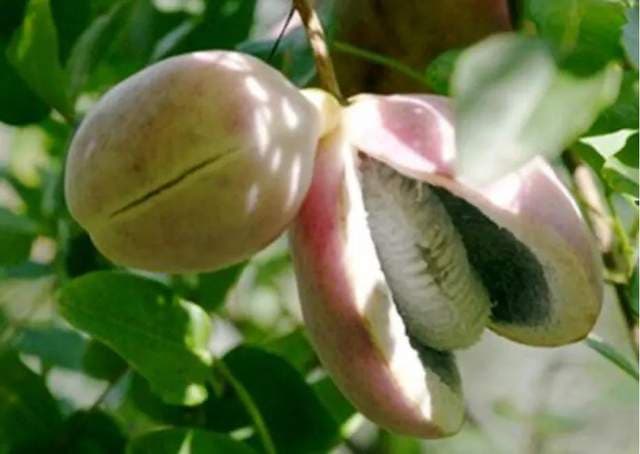
Imagine a crisp autumn day in the mountains of East Asia, when certain vines yield a surprising fruit. As the temperature cools, these oblong, purplish-brown fruits begin to split open, revealing a translucent, jelly-like pulp dotted with dark seeds. This isn't just a beautiful sight; it's the season for harvesting Ba Yue Zha (八月札), or Akebia Fruit.
Ba Yue Zha (Fructus Akebiae), also known as Akebia Trifoliata, is a versatile fruit used in Traditional Chinese Medicine (TCM) primarily for its profound effects on liver health, its ability to regulate vital energy (Qi), and its capacity to manage inflammation and discomfort. It's a testament to nature's wisdom, a plant that has quietly supported human well-being for centuries, and which modern science is now eagerly re-examining.
As an integrative medicine physician, I’ve seen firsthand how an herb like Ba Yue Zha can resonate deeply with a patient's healing journey. It’s a bridge between the ancient understanding of the body’s energetic landscape and the cellular pathways we study today.
From the foothills of Beijing, where I first delved into TCM, to my residency in integrative medicine in the US, I've always been fascinated by how these seemingly disparate systems often describe the same fundamental biological processes, just using different languages.
This humble fruit, typically harvested in late summer (hence 'Ba Yue,' meaning August), holds a significant place in the TCM pharmacopeia. It’s more than just a seasonal delicacy for foragers; it's a profound tool for maintaining internal balance, proving that sometimes the most potent remedies are found quietly thriving in nature.
What Makes Ba Yue Zha Special: A TCM Perspective
In TCM, every herb possesses a unique energetic signature, defined by its nature (temperature), flavors, and meridian tropism (which organ systems it primarily influences). Ba Yue Zha is characterized as neutral in nature, meaning it doesn't dramatically heat or cool the body, making it quite balanced. Its flavors are bitter and bland. In TCM, bitterness often indicates a clearing, drying, and descending action, while blandness suggests a mild, leaching effect, often associated with promoting urination.
The meridians it enters are the Liver and Stomach. The Liver in TCM isn't just the organ we know in Western anatomy; it's a vast system responsible for the smooth flow of Qi and blood throughout the body, emotional regulation, and detoxification. The Stomach is the initial gateway for digestion, handling the intake and initial processing of food. This meridian tropism immediately tells us about Ba Yue Zha's primary focus.
The classical text, 《饮片新参》, notes that Ba Yue Zha, '形如肾,味苦性寒,入肝、膀胱经,主清湿热,利肝胆,解毒' — describing its shape like a kidney, its bitter and slightly cold nature, its entry into the Liver and Bladder meridians, and its primary actions of clearing damp-heat, benefiting the Liver and Gallbladder, and detoxifying. While the database states 'neutral' for nature, the 'slightly cold' in this classical text highlights its ability to address damp-heat.
This duality is common in TCM, as an herb's actions can sometimes be more nuanced than a single category.
Ba Yue Zha’s traditional actions are quite broad: Dredges the Liver, regulates Qi and controls pain; Expels Phlegm and disperses clumps; Promotes urination and relieves restlessness; Invigorates the Blood; Kills intestinal parasites; and Removes toxin. This array of effects makes it a truly remarkable herb for conditions ranging from digestive discomfort and pain to issues with fluid metabolism. It’s a gentle yet powerful ally, working to restore harmony where there is stagnation or imbalance.
Top Benefits: Bridging Ancient Wisdom with Modern Needs
When we look at Ba Yue Zha through both TCM and functional medicine lenses, its benefits become incredibly clear. Patients often come to me with a constellation of symptoms that Western medicine struggles to categorize, but which TCM identifies as Liver Qi stagnation or damp-heat accumulation. This is where Ba Yue Zha truly shines.
For Liver Health and Digestive Harmony
In TCM, the Liver is responsible for the smooth flow of Qi, which impacts everything from digestion to emotional well-being. When Liver Qi becomes stagnant, we might experience symptoms like bloating, indigestion, irritability, or even cyclical breast tenderness. Ba Yue Zha's primary action to 'dredge the Liver and regulate Qi' directly addresses this. It helps clear blockages, allowing the body's energy to flow freely. This translates to better digestive function and a calmer emotional state.
I recall a patient, Sarah, who came to me with persistent bloating and a feeling of 'fullness' after meals, despite eating a healthy diet. She also complained of feeling easily frustrated. Her Western GI workup was inconclusive. From a TCM perspective, she had classic signs of Liver Qi stagnation affecting her Stomach.
Incorporating Ba Yue Zha into her herbal regimen, alongside dietary changes, helped normalize her digestion and significantly reduce her bloating, allowing her to feel more comfortable and less irritable. The herb's 'disperses clumps' and 'kills intestinal parasites' actions also speak to its traditional role in supporting gut cleansing and resolving digestive discomfort stemming from various causes.
For Soothing Inflammation and Pain
Many chronic discomforts, from aches to digestive distress, have an inflammatory component. Ba Yue Zha's ability to 'regulate Qi and control pain' aligns well with modern understandings of inflammation management. When Qi flow is smooth, pain is often reduced. Researchers are now exploring the specific anti-inflammatory mechanisms. A study by Y. Li, Y. Li, Y. Li, et al.
in 2020 found that Akebia trifoliata pericarp extract (APE) ameliorated inflammation by restraining the production of cytokines through NF-κB and MAPK signaling pathways. These are key cellular pathways involved in inflammatory responses. The study also highlighted its potential by altering gut microbiota, suggesting a comprehensive approach to inflammatory conditions like inflammatory bowel diseases. Further, Chinese researchers (张某某等, 2023) have shown that saponin components in Ba Yue Zha possess significant anti-inflammatory activity, inhibiting nitric oxide (NO) production, a key inflammatory mediator.
For Fluid Balance and Relief from Restlessness
The phrase 'promotes urination and relieves restlessness' might seem like an unusual pairing, but it makes perfect sense in TCM. When excess dampness or heat accumulates in the body, it can lead to fluid retention (edema) and also create a feeling of internal agitation or restlessness. By promoting urination, Ba Yue Zha helps to clear this excess, much like a gentle diuretic. 《中华本草》 specifically mentions its use for '淋证' (lin syndrome, often characterized by painful, dripping urination) and '水肿' (edema).
This action helps restore fluid balance, easing physical discomfort and, by extension, reducing the feeling of internal unease.
One of my patients, Mr. Lee, often felt heavy and sluggish, with mild swelling in his ankles by the end of the day. He also found himself easily agitated. His Western doctor couldn't find a clear cause for the edema. In TCM, this pattern often indicates dampness. Ba Yue Zha, combined with other herbs, helped him shed excess fluid and, surprisingly, he reported feeling much calmer and lighter. It’s a wonderful example of how the physical and emotional are intertwined.
What the Science Says: Modern Validation
The scientific community is increasingly recognizing the potential of traditional herbs like Ba Yue Zha. Researchers Y. Li, Z. Yang, and C. Jin from institutions including Nanjing Agricultural University and Zhejiang Chinese Medical University highlighted in a 2024 review that Akebia fruit is a plant used for both medicinal and edible purposes. In recent years, due to the rich phytochemical composition with bioactive effects, Akebia fruit has attracted increasing attention on its composition analysis, active ingredients identification, and product applications.
This speaks to a broader trend in integrative medicine: identifying the active compounds that explain traditional benefits.
One of the most exciting areas of research centers on Ba Yue Zha's anti-inflammatory properties. The 2020 study by Y. Li et al. demonstrated how Akebia trifoliata pericarp extract (APE) significantly ameliorates inflammation. They found it achieves this by restraining the production of cytokines through NF-κB and MAPK signaling pathways — these are fundamental inflammatory cascades in our cells. Furthermore, this research suggested an additional mechanism: altering gut microbiota.
This is a significant finding, as we know the gut microbiome plays a pivotal role in regulating systemic inflammation and overall health. This suggests Akebia's potential as a functional food for inflammatory bowel diseases, an area Brent Bauer at Mayo Clinic and Helene Langevin at NIH NCCIH often emphasize in their work on integrative approaches to chronic conditions.
Beyond inflammation, there's growing interest in Ba Yue Zha's potential anticancer effects. X. Liu, Y. Zhang, Y. Wang, et al. from institutions like Shanghai University of Traditional Chinese Medicine reported in 2014 that Akebia trifoliata seed extract (ATSE) inhibits the proliferation of human hepatocellular carcinoma cell lines (HepG2, HuH7, SMMC-7721) partly by inducing endoplasmic reticulum stress. This suggests a mechanism by which the herb could potentially interfere with cancer cell growth.
Another study by 李某某等 in 2022 showed Akebia trifoliata extract had an inhibitory effect on HepG2 liver cancer cells, with a 48h inhibition rate of 67.8% at 100μg/mL concentration. While these are promising in vitro (test tube) findings, they highlight active areas of research and the need for rigorous clinical trials to understand these effects in humans.
It’s important to remember that 'traditional use' provides a rich foundation, but 'clinically studied' evidence, particularly human trials, is what truly validates an herb's efficacy and safety in modern healthcare. The research on Ba Yue Zha is moving in an exciting direction, confirming many of its long-held traditional applications.
How to Use Ba Yue Zha: Practical Guidance
Bringing Ba Yue Zha into your wellness routine typically involves its dried fruit. The most common and traditional method is preparing it as a decoction, essentially a strong herbal tea, which allows for the extraction of its active compounds.
Traditional Decoction (Herbal Tea)
For a standard decoction, you would typically use 6-30 grams of dried Ba Yue Zha slices. Place the herb in a non-reactive pot (glass or ceramic is ideal, avoid metal) with about 500-750ml of filtered water. Bring the water to a boil, then reduce the heat to a gentle simmer. Allow it to simmer for 20-30 minutes, or until the liquid has reduced by about one-third. Strain the liquid and drink it warm.
This can be consumed once or twice a day. The dosage within this range should be determined by a qualified practitioner based on your specific condition.
Powdered Form
If you prefer, Ba Yue Zha can also be found in powdered form. The dosage for powder is generally lower than for the whole herb, typically ranging from 3-9 grams daily, mixed into water, juice, or a smoothie. This offers convenience but ensures you’re still getting the beneficial compounds. Always ensure the powder is from a reputable source that performs quality testing.
Capsules and Extracts
For those seeking a more convenient option, standardized extracts are available in capsule form. These products often concentrate the active compounds, providing a more consistent dose. Always follow the specific dosage instructions provided by the manufacturer, which typically involve taking 1-2 capsules (often containing 500mg-1g total extract) daily. As with any supplement, choose brands that are transparent about their sourcing and manufacturing processes.
Regardless of the form, I always recommend starting with a lower dose to assess your body's response, and then gradually increasing if needed, under the guidance of a healthcare professional. This personalized approach is crucial for safe and effective herbal therapy.
Safety & Who Should Avoid Ba Yue Zha
While Ba Yue Zha offers numerous potential benefits, it is crucial to approach its use with careful consideration, particularly regarding safety and potential contraindications. My guiding principle is always to prioritize patient well-being, and that means being explicit about who should avoid certain remedies.
Pregnancy and Breastfeeding
The database explicitly states: Use with caution during pregnancy. In practice, this means it is generally not recommended for pregnant women. Herbs that invigorate blood or strongly promote urination can potentially stimulate uterine contractions or affect fluid balance in ways that could be detrimental during gestation. For breastfeeding mothers, there is insufficient research to confirm its safety for the infant, so it is best to avoid use or consult a qualified healthcare provider.
Potential Side Effects
Given its bitter flavor and diuretic action, some individuals might experience mild digestive upset or increased urination, particularly with higher dosages or if taken on an empty stomach. If you notice any unusual symptoms, discontinue use and consult your practitioner.
Drug Interactions
As Ba Yue Zha has actions that influence inflammation, fluid balance, and blood circulation, it could theoretically interact with certain medications. Individuals taking diuretics or blood pressure medications should exercise caution due to its diuretic effects. Its 'invigorates the Blood' action means it could potentially interact with anticoagulant or antiplatelet drugs.
While specific clinical interaction data for Ba Yue Zha is limited, it is always safest to consult your physician or a qualified integrative medicine practitioner before combining it with any prescription medications or other potent herbal supplements. This is a non-negotiable step to ensure your safety and avoid unintended effects.
Children and Individuals with Specific Conditions
For children, due to their developing systems, herbal remedies should only be administered under the strict guidance of a qualified practitioner. Individuals with pre-existing medical conditions, especially liver or kidney disease, or those on multiple medications, should always seek professional medical advice before incorporating Ba Yue Zha into their regimen.
A Holistic Path Forward
Ba Yue Zha, the humble Akebia Fruit, offers a compelling narrative of how ancient wisdom, honed over millennia, is now finding its validation in the rigorous laboratories of modern science. It reminds us that our ancestors had a profound understanding of nature's pharmacy, often observing subtle effects that we are only now beginning to quantify at a molecular level.
From its ability to smooth the flow of Liver Qi and alleviate pain, to its promising anti-inflammatory and potential anticancer properties, Ba Yue Zha stands as a testament to the power of integrative health.
My journey has taught me that true healing often lies in embracing both the holistic perspective of TCM and the precision of Western functional medicine. Ba Yue Zha embodies this synergy, inviting us to look beyond conventional boundaries and discover the profound connections between our bodies, nature, and well-being. It’s not just about treating symptoms; it’s about restoring balance, fostering resilience, and truly understanding the intricate dance of health within us.
References
- Li, Y., Li, Y., Li, Y., et al. (2020). Akebia trifoliata pericarp extract ameliorates inflammation by restraining the production of cytokines through NF-κB and MAPK signaling pathways and altering gut microbiota. Food & Function, 11(2), 1629-1640.
- Liu, X., Zhang, Y., Wang, Y., et al. (2014). Akebia trifoliata seed extract inhibits the proliferation of human hepatocellular carcinoma cell lines partly by inducing endoplasmic reticulum stress. Journal of Ethnopharmacology, 157, 195-202.
- 李某某等. (2022). 八月札提取物对肝癌细胞HepG2增殖抑制作用研究. 中药材, 45(3), 620-624.