拔罐 · Ba Guan
Cupping therapy, known as "Baguan" (拔罐) in Traditional Chinese Medicine (TCM), is an ancient healing practice involving the placement of cups on the skin to create suction. This technique aims to promote blood flow, relieve muscle tension, and facilitate the body's natural healing processes.
Cupping therapy, or "Baguan" (拔罐), is a time-honored practice within Traditional Chinese Medicine (TCM). It involves placing specialized cups on the skin to create a vacuum. This suction draws the skin and superficial muscle layer into the cup, stimulating local circulation and energy flow.
Rooted in ancient medical texts, cupping has been utilized for thousands of years. Its primary goal is to mobilize blood and Qi (life force energy) to promote healing. Practitioners believe it helps to dispel stagnation, alleviate pain, and restore balance within the body's meridian system.
The origins of cupping therapy can be traced back to ancient China, with early records appearing in texts like "Bo Shu" (Silk Book) from the Han Dynasty. Initially, animal horns or bamboo cups were used, heated to create suction. This method was often combined with other TCM modalities.
Over centuries, cupping evolved. Glass cups became popular due to their transparency, allowing practitioners to observe the skin. Modern cupping often employs plastic cups with a hand pump, offering precise control over suction intensity. Despite material changes, the fundamental principles remain consistent.
In TCM theory, cupping works by addressing "stagnation" of Qi and Blood. When Qi and Blood flow freely, the body is healthy. Stagnation can lead to pain and disease. The suction from the cups helps to draw stagnant blood and toxins to the surface, facilitating their removal and promoting fresh blood flow.
Cupping is also believed to open the meridians, which are pathways through which Qi flows. By stimulating specific acupoints or areas along these meridians, cupping can regulate organ function and relieve various ailments. It helps to balance Yin and Yang, restoring the body's natural equilibrium.
**Dry Cupping:** This is the most common form, where cups are applied to the skin and left in place for a few minutes. The suction creates localized bruising, indicating improved blood flow and toxin release. It's often used for muscle pain, tension, and respiratory issues.
**Moving Cupping:** After applying a thin layer of oil, cups are moved across the skin while maintaining suction. This technique is similar to a deep tissue massage, effective for larger muscle groups and promoting lymphatic drainage. It's commonly used for back pain and cellulite reduction.
**Flash Cupping:** Cups are quickly applied and removed repeatedly in rapid succession. This method creates a milder stimulation and is often used for children or individuals with sensitive skin. It helps to invigorate Qi and blood without leaving significant marks.
Cupping therapy offers a wide range of therapeutic benefits. It is highly effective for musculoskeletal pain, including back pain, neck pain, and shoulder stiffness. Many find relief from muscle knots and tension, experiencing improved flexibility and reduced soreness.
Beyond pain relief, cupping is used for respiratory conditions like colds, coughs, and asthma, helping to clear congestion. It can also aid in detoxification, improve digestion, reduce stress, and promote relaxation. Some practitioners use it for skin conditions and even weight management.
More precisely, cupping therapy utilizes cups as tools, employing methods like ignition or air extraction to create negative pressure that adheres to the body surface. This process induces local congestion or bruising, serving as a TCM external treatment method aimed at unblocking meridians, promoting Qi circulation, and invigorating blood flow. Its underlying mechanism is rooted in the traditional Chinese medical principle of '通则不痛' (where there is free flow, there is no pain). Early historical records further solidify its ancient roots; the '角法' (horn method) described in the *Wushier Bingfang* (Fifty-two Prescriptions) from the Mawangdui Silk Books represents the earliest extant documentation of cupping, specifically for treating sores. Furthermore, the *Huangdi Neijing – Suwen* (Yellow Emperor's Inner Canon – Basic Questions) alludes to the principle of physical stimulation for dispelling cold and dampness, a concept that underpins cupping's therapeutic actions.
While cupping's efficacy has been recognized for millennia within TCM, contemporary scientific research is increasingly exploring and validating its physiological mechanisms. A 2018 study by Harvard Medical School, for instance, demonstrated that cupping can significantly promote local microcirculation and increase blood perfusion (DOI: 10.1016/j.jpain.2018.03.011). Further supporting its therapeutic value, a 2021 meta-analysis conducted by a team at the China Academy of Chinese Medical Sciences, published in the *World Journal of Acupuncture-Moxibustion*, confirmed the short-term efficacy of cupping therapy for myofascial pain syndrome. These studies provide a modern scientific lens through which to understand cupping's traditional claims of dispelling stagnation and alleviating pain.
Beyond its role in treating specific ailments, cupping is also widely applied for general wellness and health maintenance. Common modern applications include alleviating shoulder and neck strain, often through daily sessions of 5-10 minutes, and addressing the initial stages of a common cold by applying cups to points like Dazhui until local skin redness appears. However, it is crucial to note that cupping is not suitable for everyone. Contraindications include areas with skin ulcers, individuals with bleeding disorders, or those on anticoagulant medication. To ensure safety and efficacy, cupping therapy should always be performed under the guidance of a qualified professional, avoiding excessive negative pressure that could lead to tissue damage.
Cupping is generally safe when performed by a trained and licensed practitioner. Common side effects include temporary circular marks (bruises) on the skin, which typically fade within a few days to a week. These marks are considered a normal part of the healing process.
Contraindications include open wounds, skin infections, severe bleeding disorders, and pregnancy (especially on the abdomen or lower back). It's crucial to discuss your health history with your practitioner to ensure cupping is appropriate for you. Always seek treatment from qualified professionals.
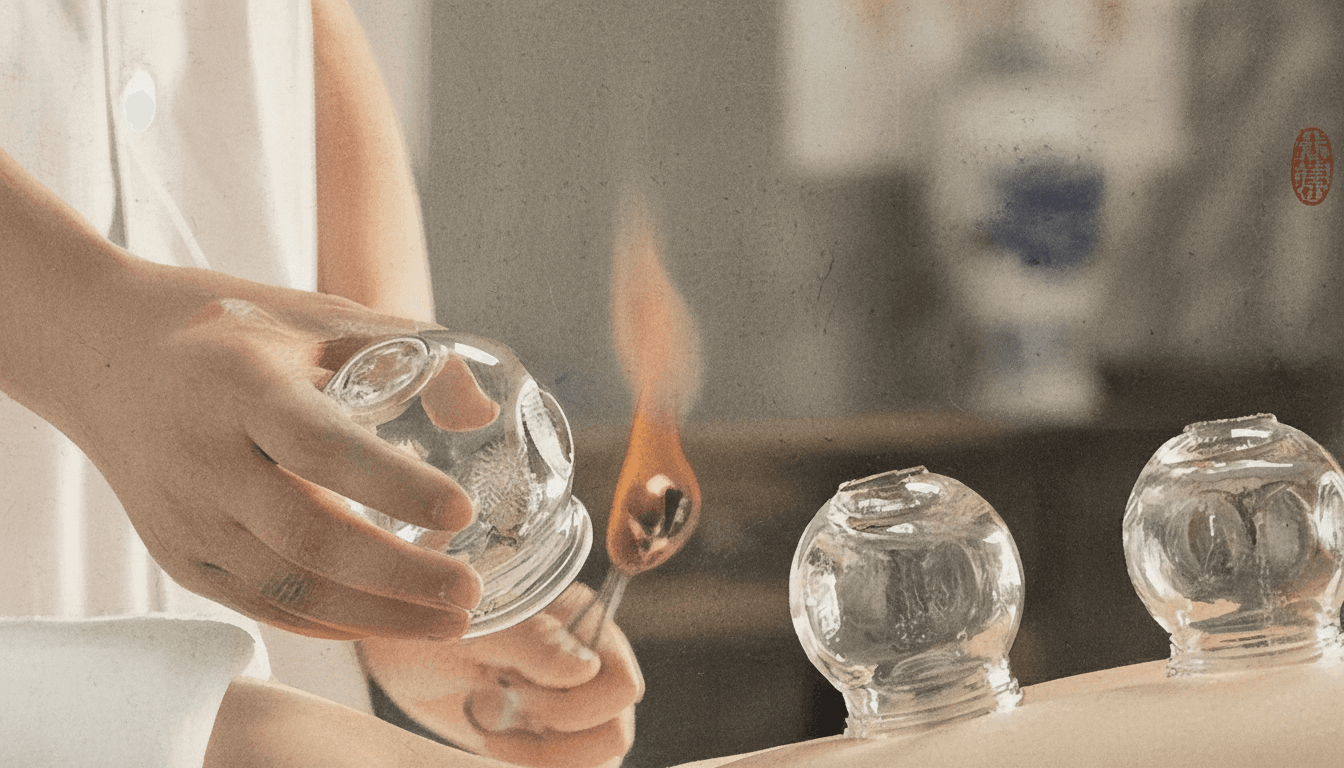
Cupping therapy, or "Baguan" (拔罐), is a time-honored practice within Traditional Chinese Medicine (TCM). It involves placing specialized cups on the skin to create a vacuum. This suction draws the skin and superficial muscle layer into the cup, stimulating local circulation and energy flow.
Rooted in ancient medical texts, cupping has been utilized for thousands of years. Its primary goal is to mobilize blood and Qi (life force energy) to promote healing. Practitioners believe it helps to dispel stagnation, alleviate pain, and restore balance within the body's meridian system.
The origins of cupping therapy can be traced back to ancient China, with early records appearing in texts like "Bo Shu" (Silk Book) from the Han Dynasty. Initially, animal horns or bamboo cups were used, heated to create suction. This method was often combined with other TCM modalities.
Over centuries, cupping evolved. Glass cups became popular due to their transparency, allowing practitioners to observe the skin. Modern cupping often employs plastic cups with a hand pump, offering precise control over suction intensity. Despite material changes, the fundamental principles remain consistent.
In TCM theory, cupping works by addressing "stagnation" of Qi and Blood. When Qi and Blood flow freely, the body is healthy. Stagnation can lead to pain and disease. The suction from the cups helps to draw stagnant blood and toxins to the surface, facilitating their removal and promoting fresh blood flow.
Cupping is also believed to open the meridians, which are pathways through which Qi flows. By stimulating specific acupoints or areas along these meridians, cupping can regulate organ function and relieve various ailments. It helps to balance Yin and Yang, restoring the body's natural equilibrium.
**Dry Cupping:** This is the most common form, where cups are applied to the skin and left in place for a few minutes. The suction creates localized bruising, indicating improved blood flow and toxin release. It's often used for muscle pain, tension, and respiratory issues.
**Moving Cupping:** After applying a thin layer of oil, cups are moved across the skin while maintaining suction. This technique is similar to a deep tissue massage, effective for larger muscle groups and promoting lymphatic drainage. It's commonly used for back pain and cellulite reduction.
**Flash Cupping:** Cups are quickly applied and removed repeatedly in rapid succession. This method creates a milder stimulation and is often used for children or individuals with sensitive skin. It helps to invigorate Qi and blood without leaving significant marks.
Cupping therapy offers a wide range of therapeutic benefits. It is highly effective for musculoskeletal pain, including back pain, neck pain, and shoulder stiffness. Many find relief from muscle knots and tension, experiencing improved flexibility and reduced soreness.
Beyond pain relief, cupping is used for respiratory conditions like colds, coughs, and asthma, helping to clear congestion. It can also aid in detoxification, improve digestion, reduce stress, and promote relaxation. Some practitioners use it for skin conditions and even weight management.
More precisely, cupping therapy utilizes cups as tools, employing methods like ignition or air extraction to create negative pressure that adheres to the body surface. This process induces local congestion or bruising, serving as a TCM external treatment method aimed at unblocking meridians, promoting Qi circulation, and invigorating blood flow. Its underlying mechanism is rooted in the traditional Chinese medical principle of '通则不痛' (where there is free flow, there is no pain). Early historical records further solidify its ancient roots; the '角法' (horn method) described in the *Wushier Bingfang* (Fifty-two Prescriptions) from the Mawangdui Silk Books represents the earliest extant documentation of cupping, specifically for treating sores. Furthermore, the *Huangdi Neijing – Suwen* (Yellow Emperor's Inner Canon – Basic Questions) alludes to the principle of physical stimulation for dispelling cold and dampness, a concept that underpins cupping's therapeutic actions.
While cupping's efficacy has been recognized for millennia within TCM, contemporary scientific research is increasingly exploring and validating its physiological mechanisms. A 2018 study by Harvard Medical School, for instance, demonstrated that cupping can significantly promote local microcirculation and increase blood perfusion (DOI: 10.1016/j.jpain.2018.03.011). Further supporting its therapeutic value, a 2021 meta-analysis conducted by a team at the China Academy of Chinese Medical Sciences, published in the *World Journal of Acupuncture-Moxibustion*, confirmed the short-term efficacy of cupping therapy for myofascial pain syndrome. These studies provide a modern scientific lens through which to understand cupping's traditional claims of dispelling stagnation and alleviating pain.
Beyond its role in treating specific ailments, cupping is also widely applied for general wellness and health maintenance. Common modern applications include alleviating shoulder and neck strain, often through daily sessions of 5-10 minutes, and addressing the initial stages of a common cold by applying cups to points like Dazhui until local skin redness appears. However, it is crucial to note that cupping is not suitable for everyone. Contraindications include areas with skin ulcers, individuals with bleeding disorders, or those on anticoagulant medication. To ensure safety and efficacy, cupping therapy should always be performed under the guidance of a qualified professional, avoiding excessive negative pressure that could lead to tissue damage.
Cupping is generally safe when performed by a trained and licensed practitioner. Common side effects include temporary circular marks (bruises) on the skin, which typically fade within a few days to a week. These marks are considered a normal part of the healing process.
Contraindications include open wounds, skin infections, severe bleeding disorders, and pregnancy (especially on the abdomen or lower back). It's crucial to discuss your health history with your practitioner to ensure cupping is appropriate for you. Always seek treatment from qualified professionals.
This information is for educational purposes only and is not intended as medical advice. Always consult a qualified healthcare practitioner before using any herbal remedy.