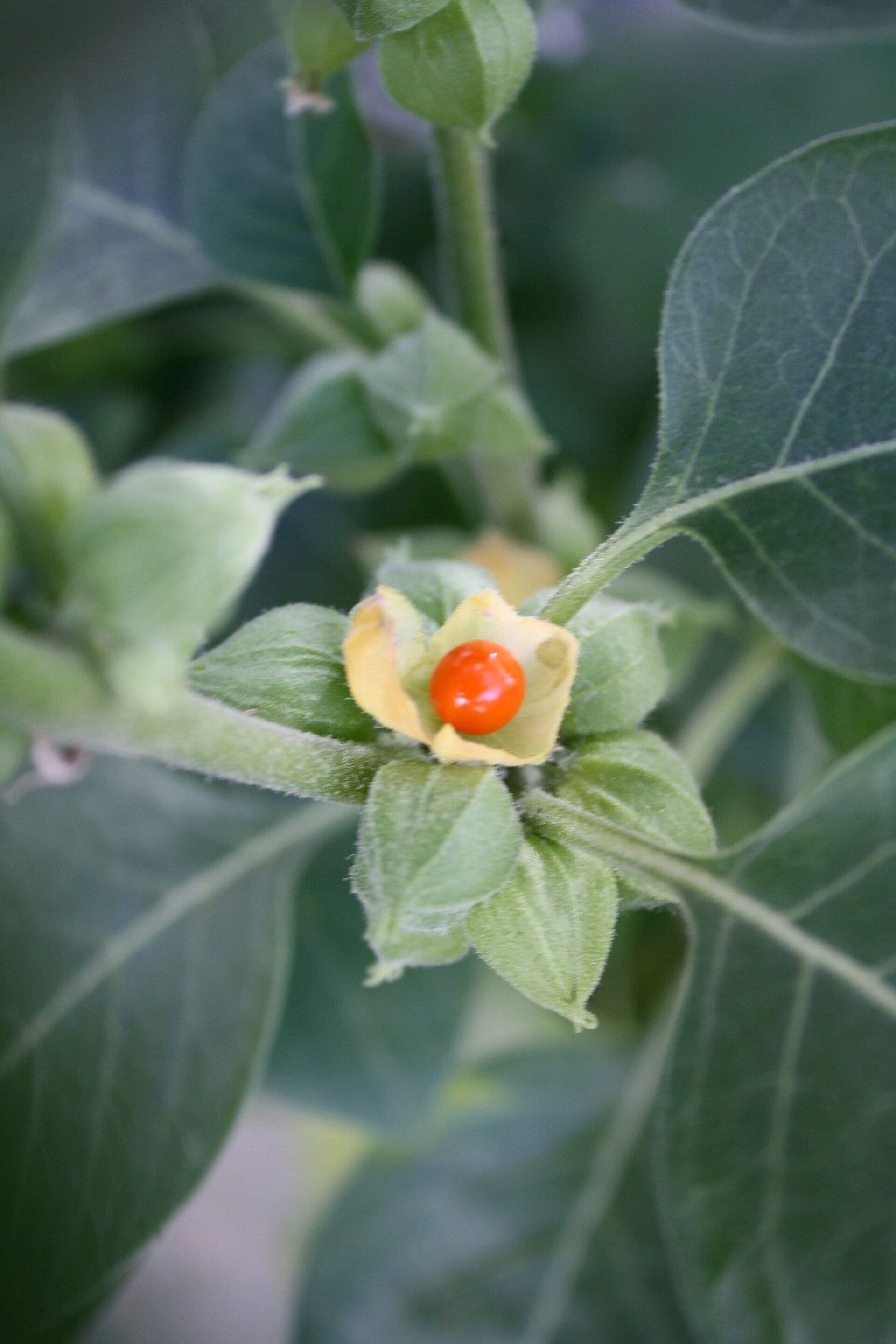
南非醉茄 · ashwagandha
Withania somnifera
Discover Ashwagandha (Withania somnifera), the 'Indian Ginseng,' an adaptogenic herb revered in Ayurveda, and explore how its benefits for stress, sleep, and vitality align with modern science and integrative health.
300-600mg standardized extract (root), or 3-6g root powder daily
Mix 3-6 grams of Ashwagandha root powder into warm milk, water, or a smoothie daily. It can be taken in a single dose or divided throughout the day, preferably with meals to minimize digestive upset.
Follow the manufacturer's instructions, typically 300-600mg of a standardized extract (e.g., containing at least 2.5-5% withanolides) daily. This is often taken in one or two doses, with or without food, depending on your tolerance and the product's recommendation.
Mix 3-6 grams of Ashwagandha root powder into warm milk, water, or a smoothie daily. It can be taken in a single dose or divided throughout the day, preferably with meals to minimize digestive upset.
Follow the manufacturer's instructions, typically 300-600mg of a standardized extract (e.g., containing at least 2.5-5% withanolides) daily. This is often taken in one or two doses, with or without food, depending on your tolerance and the product's recommendation.
The clinical evidence for Ashwagandha is growing, with systematic reviews highlighting its efficacy, particularly for stress, anxiety, and cognitive function. While promising, researchers like Adrian L. Lopresti and Qing-Xin Ng note that more robust, large-scale studies are needed to solidify some of its broader therapeutic applications.
Moderate — Some clinical studies
The clinical evidence for Ashwagandha is growing, with systematic reviews highlighting its efficacy, particularly for stress, anxiety, and cognitive function. While promising, researchers like Adrian L. Lopresti and Qing-Xin Ng note that more robust, large-scale studies are needed to solidify some of its broader therapeutic applications.
Moderate — Some clinical studies
Anticonvulsants, barbiturates, and benzodiazepines: Preclinical studies suggest that ashwagandha has sedative and GABAnergic properties, and may have additive effects (30) (49). Clinical relevance has yet to be determined.
Ashwagandha inhibited CYP2B6 in vitro, and may affect the intracellular concentration of drugs metabolized by this enzyme (58). Clinical relevance is yet to be determined.
Ashwagandha was found to be a moderate inducer of CYP3A4 in vitro, and can affect the intracellular levels of drugs metabolized by this enzyme (58). Clinical relevance is not known.
Avoid
Anticonvulsants, barbiturates, and benzodiazepines: Preclinical studies suggest that ashwagandha has sedative and GABAnergic properties, and may have additive effects (30) (49). Clinical relevance has yet to be determined.
Ashwagandha inhibited CYP2B6 in vitro, and may affect the intracellular concentration of drugs metabolized by this enzyme (58). Clinical relevance is yet to be determined.
Ashwagandha was found to be a moderate inducer of CYP3A4 in vitro, and can affect the intracellular levels of drugs metabolized by this enzyme (58). Clinical relevance is not known.
Avoid
I remember a patient, let’s call her Maria, who came to me years ago overwhelmed by the relentless pace of her life. She was a single mother, working two jobs, perpetually exhausted, and caught in a cycle of anxiety that robbed her of restful sleep. Her Western lab work was largely unremarkable, yet her body was clearly struggling to keep up. When I suggested Ashwagandha, her eyebrows furrowed, Ashwa-what? she asked, smiling wearily.
Maria’s experience is far from unique; many of us feel adrift, seeking a natural anchor in a world that demands so much.
Ashwagandha (南非醉茄) (Withania somnifera), also known as Indian Ginseng or Winter Cherry, is a cornerstone adaptogenic herb in Ayurvedic medicine, the traditional healing system of India. While it doesn't appear in classical Traditional Chinese Medicine (TCM) texts like the Bencao Gangmu, its profound actions on stress, energy, and cognitive function offer fascinating parallels to how we understand balancing the body in TCM.
My mission, as an integrative physician, is precisely to illuminate these cross-cultural connections, helping you understand how ancient wisdom, regardless of its origin, maps onto modern health science.
In Ayurvedic medicine, Ashwagandha is revered as a rasayana, a rejuvenative tonic that promotes longevity and vitality. From a TCM lens, while not directly classified, its energetic profile tells a compelling story. Its nature is described as Warm and its flavors are Bitter and Astringent.
A 'Warm' nature suggests a capacity to gently invigorate and fortify the body's vital functions, similar to how we use certain Qi-tonifying herbs in TCM. This warmth can help to counter depletion and coldness, supporting overall energy and metabolic processes. The 'Bitter' flavor, in TCM, often indicates a clearing or drying action, while 'Astringent' points to a consolidating or holding effect.
When we combine these, Ashwagandha's energetic signature hints at an herb that can both address underlying depletion and help the body retain its precious resources, particularly its essence and spirit (Jing and Shen).
This makes sense when we look at its adaptogenic actions—helping the body adapt to various stressors. It's not just a stimulant; it's a modulator. Dr. Andrew Weil, a pioneer in integrative medicine at the University of Arizona, often emphasizes this balance: herbs that don't just push the body, but help it find its own equilibrium.
Ashwagandha doesn't feature in contemporary TCM pharmacology textbooks because it is an external herb, but its properties are readily understood when we apply TCM principles to its effects. It's truly a bridge between traditions.
For Stress & Anxiety Relief: This is arguably Ashwagandha's most celebrated benefit. Many of my patients, like Maria, struggle with chronic stress, which can lead to a cascade of physical and emotional symptoms. From a Western functional perspective, Ashwagandha modulates the hypothalamic-pituitary-adrenal (HPA) axis, our central stress response system. It helps to regulate cortisol output, preventing the excessive spikes that can wreak havoc on our bodies.
Its GABAergic activity means it can also calm the nervous system, similar to how some pharmaceutical anxiolytics work, but often with a gentler touch. In TCM terms, this might be seen as nourishing Kidney Yin and calming the Shen (spirit) agitated by excessive Liver Yang or Qi stagnation from prolonged stress.
For Restful Sleep: Connected to its stress-reducing properties, Ashwagandha can significantly improve sleep quality. The very name somnifera means 'sleep-inducing.' Its calming effect on the nervous system helps quiet the racing thoughts that often prevent us from falling asleep. One recent clinical trial, highlighted by 家医大健康 in 2025, showed that a standardized root extract could shorten sleep latency by 5 minutes, and a daily 600mg dose improved sleep quality scores by 29% in a study of 80 participants.
From a TCM viewpoint, this aligns with calming the Heart-Shen and nourishing the Yin to allow for a peaceful descent into sleep.
For Physical Vitality & Recovery: Often called 'Indian Ginseng,' Ashwagandha shares Ginseng's reputation for enhancing strength and stamina. It’s considered anabolic, meaning it can promote muscle strength and recovery. This is particularly appealing to athletes or those experiencing general physical debility. It may also modestly increase testosterone levels, which contributes to its reputation for supporting male reproductive health and overall vitality.
In TCM, this would align with tonifying Kidney Jing (essence) and strengthening the Spleen Qi, which are foundational for physical endurance and recovery.
For Cognitive Clarity & Neuroprotection: Modern research is exploring Ashwagandha's potential to support brain health. Its neuroprotective actions include inhibiting acetylcholinesterase, an enzyme that breaks down acetylcholine (a neurotransmitter crucial for memory), and promoting nerve regeneration. Patients often tell me they feel a subtle but noticeable improvement in focus and mental resilience when taking it. This could be interpreted through a TCM lens as strengthening the Sea of Marrow (brain) and nourishing the Heart-Shen, which governs mental clarity and memory.
For Immune Balance: Ashwagandha isn't just about stress; it's also an immunomodulator. It has been shown to enhance Natural Killer (NK) cell activity and immunoglobulin production, bolstering the body's natural defenses. For someone like Maria, whose immune system was likely taxed by chronic stress, this balancing effect could be profoundly beneficial. In TCM, this might relate to strengthening Defensive Qi (Wei Qi) and supporting the Spleen and Kidney functions that are central to immune vitality.
The scientific community has taken increasing interest in Ashwagandha, moving beyond its traditional Ayurvedic uses to understand its mechanisms. The herb’s primary active compounds, known as withanolides (including withaferin A and withanolide D), along with withanosides and sitoindosides, are believed to be responsible for many of its therapeutic effects.
A comprehensive systematic review by Adrian L. Lopresti and colleagues at Murdoch University, Australia, published in the Journal of Herbal Medicine in 2021, analyzed 41 human trials. They concluded that Ashwagandha has a 'potentially large array of therapeutic applications,' with the strongest evidence supporting its efficacy for alleviating stress and anxiety symptoms. However, they rightly pointed out the need for more robust research due to study heterogeneity and small sample sizes.
For cognitive benefits, a 2020 systematic review by Qing-Xin Ng from MOH Holdings Pte Ltd., Singapore, in Phytotherapy Research, examined five clinical studies. This review suggested early evidence, primarily from randomized, placebo-controlled trials, supporting improvements in cognitive tasks, executive function, attention, and reaction time. It also highlighted good tolerability and minimal side effects.
Another systematic review from 2014 by M. A. Pratte and colleagues at the University of New England, USA, specifically focused on anxiety. Published in the Journal of Alternative and Complementary Medicine, it found that Ashwagandha significantly improved measures of anxiety compared to control groups in most of the five randomized, controlled clinical trials reviewed. Still, they too cautioned about methodological flaws and small sample sizes, a common theme in herbal research as it gains traction.
Preclinical studies, referenced by Biogeek 百吉膳食补充剂官网, have indicated that Ashwagandha works by regulating neurotransmitter pathways to improve anxiety and cognitive function, with clinical trials showing daily doses of 120mg-2g of root powder can lower cortisol and elevate testosterone. While the scientific journey is ongoing, the evidence base for Ashwagandha's adaptogenic and calming properties is steadily building.
Ashwagandha is most commonly available as a root powder or in standardized extract capsules. Choosing the right form depends on your preference for taste, convenience, and desired potency.
If you opt for the pure root powder, the typical daily dosage ranges from 3 to 6 grams. You can mix this into warm milk (often called 'Moon Milk' in Ayurvedic tradition), water, juice, or a smoothie. I often suggest my patients start with a smaller amount, perhaps 1.5-2 grams twice daily with meals, to assess their tolerance before increasing the dose. Its earthy, slightly bitter flavor can be masked with honey or other spices.
For those seeking convenience and precise dosing, standardized extracts are an excellent choice. The recommended daily dosage for these capsules is typically 300-600mg. These extracts are often standardized to contain a certain percentage of withanolides, the active compounds. Many clinical trials use specific patented extracts like KSM-66 or Sensoril. These are often taken once or twice daily, with or without food, depending on your individual sensitivity and the product's instructions.
Always follow the specific guidance on your chosen product for optimal results.
While Ashwagandha is generally well-tolerated, it is crucial to understand its contraindications and potential drug interactions. This isn't a herb to take lightly; its potent actions demand respect and caution.
Organ Transplant Recipients: Ashwagandha has immune-stimulating properties. There is a documented case report of a kidney transplant recipient experiencing organ rejection two weeks after starting Ashwagandha, despite being stable for two years prior. Therefore, individuals with organ transplants and those taking immunosuppressant medications must absolutely avoid Ashwagandha.
Hormone-Sensitive Prostate Cancer: Ashwagandha may increase testosterone levels. For patients with hormone-sensitive prostate cancer, this could be problematic and Ashwagandha should be avoided.
Sedative Medications: Due to its GABAergic and sedative effects, Ashwagandha may enhance the effects of medications like benzodiazepines, anticonvulsants, and barbiturates. Patients taking these drugs should likely avoid Ashwagandha or use it only under strict medical supervision.
Pregnancy: Pregnant women should avoid Ashwagandha. While animal models haven't consistently shown maternal or fetal adverse effects at high doses, the safety in human pregnancy has not been established. There is concern that higher doses may induce abortion. Until robust human data is available, avoidance is the safest course.
Always consult with a qualified healthcare professional, especially if you have existing health conditions, are on medication, or are considering Ashwagandha for a specific therapeutic purpose. This ensures its safe and appropriate integration into your health regimen.
Ashwagandha offers a compelling example of how ancient herbal wisdom can profoundly impact our modern well-being. It’s not simply a quick fix, but a botanical ally that encourages the body’s innate capacity for balance and resilience. For many, like Maria, who eventually found a calmer stride and more restorative sleep, it becomes a crucial part of managing the demands of life.
My work at the intersection of TCM and Western functional medicine continually reminds me that healing is a deeply personal journey, one that benefits immensely from understanding our bodies through multiple valuable lenses. Ashwagandha, though not from the classical Chinese pharmacopeia, speaks a universal language of adaptation and restoration, a language we are only just beginning to fully appreciate through the rigorous lens of science.
I remember a patient, let’s call her Maria, who came to me years ago overwhelmed by the relentless pace of her life. She was a single mother, working two jobs, perpetually exhausted, and caught in a cycle of anxiety that robbed her of restful sleep. Her Western lab work was largely unremarkable, yet her body was clearly struggling to keep up. When I suggested Ashwagandha, her eyebrows furrowed, Ashwa-what? she asked, smiling wearily.
Maria’s experience is far from unique; many of us feel adrift, seeking a natural anchor in a world that demands so much.
Ashwagandha (南非醉茄) (Withania somnifera), also known as Indian Ginseng or Winter Cherry, is a cornerstone adaptogenic herb in Ayurvedic medicine, the traditional healing system of India. While it doesn't appear in classical Traditional Chinese Medicine (TCM) texts like the Bencao Gangmu, its profound actions on stress, energy, and cognitive function offer fascinating parallels to how we understand balancing the body in TCM.
My mission, as an integrative physician, is precisely to illuminate these cross-cultural connections, helping you understand how ancient wisdom, regardless of its origin, maps onto modern health science.
In Ayurvedic medicine, Ashwagandha is revered as a rasayana, a rejuvenative tonic that promotes longevity and vitality. From a TCM lens, while not directly classified, its energetic profile tells a compelling story. Its nature is described as Warm and its flavors are Bitter and Astringent.
A 'Warm' nature suggests a capacity to gently invigorate and fortify the body's vital functions, similar to how we use certain Qi-tonifying herbs in TCM. This warmth can help to counter depletion and coldness, supporting overall energy and metabolic processes. The 'Bitter' flavor, in TCM, often indicates a clearing or drying action, while 'Astringent' points to a consolidating or holding effect.
When we combine these, Ashwagandha's energetic signature hints at an herb that can both address underlying depletion and help the body retain its precious resources, particularly its essence and spirit (Jing and Shen).
This makes sense when we look at its adaptogenic actions—helping the body adapt to various stressors. It's not just a stimulant; it's a modulator. Dr. Andrew Weil, a pioneer in integrative medicine at the University of Arizona, often emphasizes this balance: herbs that don't just push the body, but help it find its own equilibrium.
Ashwagandha doesn't feature in contemporary TCM pharmacology textbooks because it is an external herb, but its properties are readily understood when we apply TCM principles to its effects. It's truly a bridge between traditions.
For Stress & Anxiety Relief: This is arguably Ashwagandha's most celebrated benefit. Many of my patients, like Maria, struggle with chronic stress, which can lead to a cascade of physical and emotional symptoms. From a Western functional perspective, Ashwagandha modulates the hypothalamic-pituitary-adrenal (HPA) axis, our central stress response system. It helps to regulate cortisol output, preventing the excessive spikes that can wreak havoc on our bodies.
Its GABAergic activity means it can also calm the nervous system, similar to how some pharmaceutical anxiolytics work, but often with a gentler touch. In TCM terms, this might be seen as nourishing Kidney Yin and calming the Shen (spirit) agitated by excessive Liver Yang or Qi stagnation from prolonged stress.
For Restful Sleep: Connected to its stress-reducing properties, Ashwagandha can significantly improve sleep quality. The very name somnifera means 'sleep-inducing.' Its calming effect on the nervous system helps quiet the racing thoughts that often prevent us from falling asleep. One recent clinical trial, highlighted by 家医大健康 in 2025, showed that a standardized root extract could shorten sleep latency by 5 minutes, and a daily 600mg dose improved sleep quality scores by 29% in a study of 80 participants.
From a TCM viewpoint, this aligns with calming the Heart-Shen and nourishing the Yin to allow for a peaceful descent into sleep.
For Physical Vitality & Recovery: Often called 'Indian Ginseng,' Ashwagandha shares Ginseng's reputation for enhancing strength and stamina. It’s considered anabolic, meaning it can promote muscle strength and recovery. This is particularly appealing to athletes or those experiencing general physical debility. It may also modestly increase testosterone levels, which contributes to its reputation for supporting male reproductive health and overall vitality.
In TCM, this would align with tonifying Kidney Jing (essence) and strengthening the Spleen Qi, which are foundational for physical endurance and recovery.
For Cognitive Clarity & Neuroprotection: Modern research is exploring Ashwagandha's potential to support brain health. Its neuroprotective actions include inhibiting acetylcholinesterase, an enzyme that breaks down acetylcholine (a neurotransmitter crucial for memory), and promoting nerve regeneration. Patients often tell me they feel a subtle but noticeable improvement in focus and mental resilience when taking it. This could be interpreted through a TCM lens as strengthening the Sea of Marrow (brain) and nourishing the Heart-Shen, which governs mental clarity and memory.
For Immune Balance: Ashwagandha isn't just about stress; it's also an immunomodulator. It has been shown to enhance Natural Killer (NK) cell activity and immunoglobulin production, bolstering the body's natural defenses. For someone like Maria, whose immune system was likely taxed by chronic stress, this balancing effect could be profoundly beneficial. In TCM, this might relate to strengthening Defensive Qi (Wei Qi) and supporting the Spleen and Kidney functions that are central to immune vitality.
The scientific community has taken increasing interest in Ashwagandha, moving beyond its traditional Ayurvedic uses to understand its mechanisms. The herb’s primary active compounds, known as withanolides (including withaferin A and withanolide D), along with withanosides and sitoindosides, are believed to be responsible for many of its therapeutic effects.
A comprehensive systematic review by Adrian L. Lopresti and colleagues at Murdoch University, Australia, published in the Journal of Herbal Medicine in 2021, analyzed 41 human trials. They concluded that Ashwagandha has a 'potentially large array of therapeutic applications,' with the strongest evidence supporting its efficacy for alleviating stress and anxiety symptoms. However, they rightly pointed out the need for more robust research due to study heterogeneity and small sample sizes.
For cognitive benefits, a 2020 systematic review by Qing-Xin Ng from MOH Holdings Pte Ltd., Singapore, in Phytotherapy Research, examined five clinical studies. This review suggested early evidence, primarily from randomized, placebo-controlled trials, supporting improvements in cognitive tasks, executive function, attention, and reaction time. It also highlighted good tolerability and minimal side effects.
Another systematic review from 2014 by M. A. Pratte and colleagues at the University of New England, USA, specifically focused on anxiety. Published in the Journal of Alternative and Complementary Medicine, it found that Ashwagandha significantly improved measures of anxiety compared to control groups in most of the five randomized, controlled clinical trials reviewed. Still, they too cautioned about methodological flaws and small sample sizes, a common theme in herbal research as it gains traction.
Preclinical studies, referenced by Biogeek 百吉膳食补充剂官网, have indicated that Ashwagandha works by regulating neurotransmitter pathways to improve anxiety and cognitive function, with clinical trials showing daily doses of 120mg-2g of root powder can lower cortisol and elevate testosterone. While the scientific journey is ongoing, the evidence base for Ashwagandha's adaptogenic and calming properties is steadily building.
Ashwagandha is most commonly available as a root powder or in standardized extract capsules. Choosing the right form depends on your preference for taste, convenience, and desired potency.
If you opt for the pure root powder, the typical daily dosage ranges from 3 to 6 grams. You can mix this into warm milk (often called 'Moon Milk' in Ayurvedic tradition), water, juice, or a smoothie. I often suggest my patients start with a smaller amount, perhaps 1.5-2 grams twice daily with meals, to assess their tolerance before increasing the dose. Its earthy, slightly bitter flavor can be masked with honey or other spices.
For those seeking convenience and precise dosing, standardized extracts are an excellent choice. The recommended daily dosage for these capsules is typically 300-600mg. These extracts are often standardized to contain a certain percentage of withanolides, the active compounds. Many clinical trials use specific patented extracts like KSM-66 or Sensoril. These are often taken once or twice daily, with or without food, depending on your individual sensitivity and the product's instructions.
Always follow the specific guidance on your chosen product for optimal results.
While Ashwagandha is generally well-tolerated, it is crucial to understand its contraindications and potential drug interactions. This isn't a herb to take lightly; its potent actions demand respect and caution.
Organ Transplant Recipients: Ashwagandha has immune-stimulating properties. There is a documented case report of a kidney transplant recipient experiencing organ rejection two weeks after starting Ashwagandha, despite being stable for two years prior. Therefore, individuals with organ transplants and those taking immunosuppressant medications must absolutely avoid Ashwagandha.
Hormone-Sensitive Prostate Cancer: Ashwagandha may increase testosterone levels. For patients with hormone-sensitive prostate cancer, this could be problematic and Ashwagandha should be avoided.
Sedative Medications: Due to its GABAergic and sedative effects, Ashwagandha may enhance the effects of medications like benzodiazepines, anticonvulsants, and barbiturates. Patients taking these drugs should likely avoid Ashwagandha or use it only under strict medical supervision.
Pregnancy: Pregnant women should avoid Ashwagandha. While animal models haven't consistently shown maternal or fetal adverse effects at high doses, the safety in human pregnancy has not been established. There is concern that higher doses may induce abortion. Until robust human data is available, avoidance is the safest course.
Always consult with a qualified healthcare professional, especially if you have existing health conditions, are on medication, or are considering Ashwagandha for a specific therapeutic purpose. This ensures its safe and appropriate integration into your health regimen.
Ashwagandha offers a compelling example of how ancient herbal wisdom can profoundly impact our modern well-being. It’s not simply a quick fix, but a botanical ally that encourages the body’s innate capacity for balance and resilience. For many, like Maria, who eventually found a calmer stride and more restorative sleep, it becomes a crucial part of managing the demands of life.
My work at the intersection of TCM and Western functional medicine continually reminds me that healing is a deeply personal journey, one that benefits immensely from understanding our bodies through multiple valuable lenses. Ashwagandha, though not from the classical Chinese pharmacopeia, speaks a universal language of adaptation and restoration, a language we are only just beginning to fully appreciate through the rigorous lens of science.
This information is for educational purposes only and is not intended as medical advice. Always consult a qualified healthcare practitioner before using any herbal remedy.