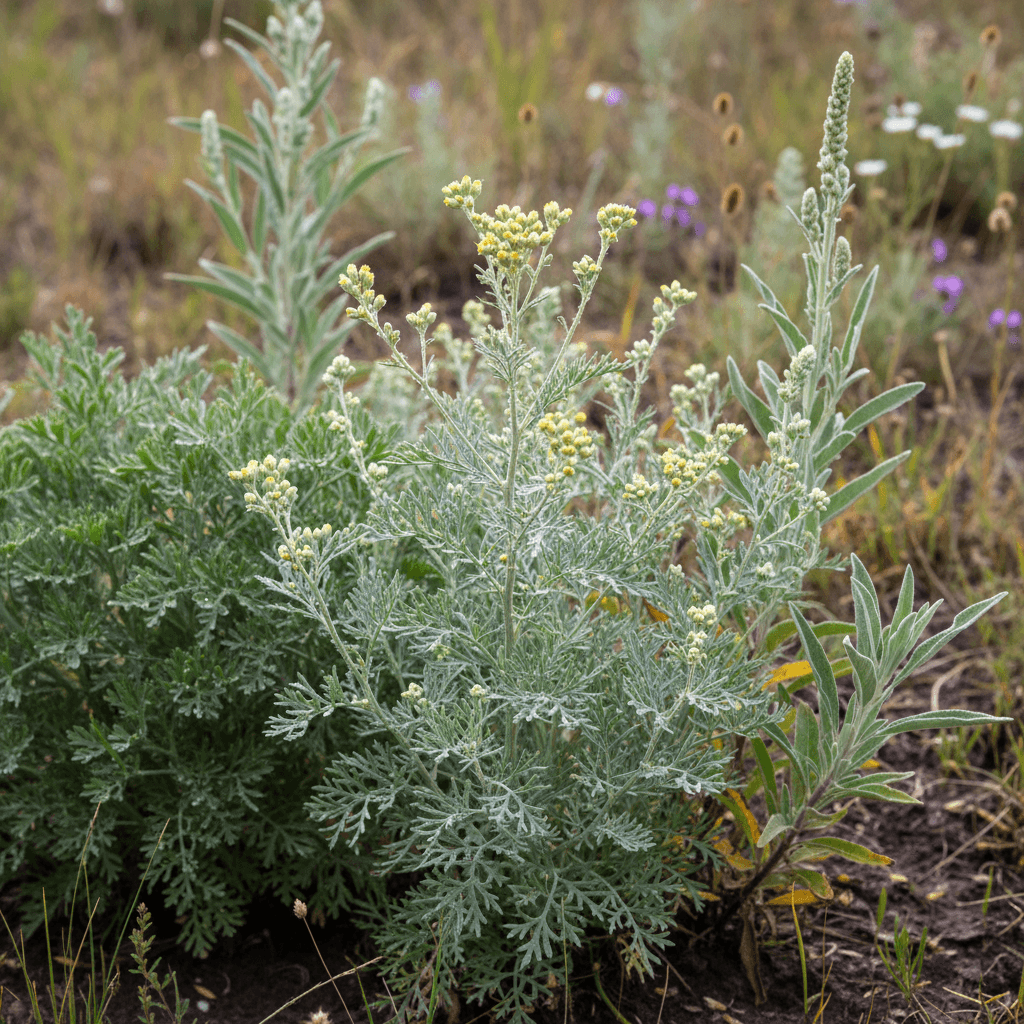
I recall a chilly autumn evening in Beijing during my studies. The air was crisp, carrying the faint, comforting scent of burning mugwort – a smell that permeated many homes and clinics. It wasn't incense, but the smoke from moxibustion, a traditional therapy using Ai Ye. This herb, with its silvery underside and distinctive aroma, has been a silent guardian of health for millennia, deeply woven into the fabric of Chinese culture.
From ancient texts describing its efficacy to grandmothers passing down home remedies, Ai Ye embodies the practical wisdom of Traditional Chinese Medicine.
Ai Ye (Folium Artemisiae Argyi), also known as Artemisia, Mugwort Leaf, or Argyi Wormwood Leaf, is a warm, bitter, acrid, aromatic herb used in Traditional Chinese Medicine (TCM) primarily for warming channels, stopping bleeding, calming the fetus, and dispelling cold. As the 《神农本草经》, one of China's earliest pharmacological texts, notes, "艾味苦,寒,主灸百病,止下血,安胎" – highlighting its profound ability to stop bleeding and calm the womb.
For me, it's a perfect example of how ancient remedies, once understood through the lens of energetic balance, now reveal fascinating biochemical underpinnings.
What Makes Ai Ye Special: A TCM Perspective
In the intricate language of TCM, Ai Ye is described as having a warm nature and bitter, acrid, aromatic flavors. Imagine these qualities interacting with your body's internal landscape. Its warmth acts like a gentle internal heater, counteracting what we call "Cold" – a TCM pattern that can manifest as various discomforts from joint stiffness to menstrual cramps. Its bitter flavor helps to dry dampness, while its acrid and aromatic qualities promote movement, dispersing stagnation and pain.
This combination allows it to enter the Spleen, Liver, Kidney, and Lung meridians.
What does this mean for us in a modern context? When we say Ai Ye "warms the channels," we're talking about enhancing circulation and energy flow, much like how improved blood flow brings warmth and nutrients to tissues in Western physiology. Its affinity for the Liver meridian helps regulate qi (vital energy) and blood, which is crucial for women's health. The Kidney meridian connection reinforces its role in reproductive health and warming the "womb palace.
" And its Spleen and Lung meridian actions relate to digestion and respiratory function, helping clear phlegm and support overall vitality. I often tell patients, "Think of Ai Ye as your body's comforting blanket, particularly useful when you feel a chill deep within, whether it's literal cold or a functional sluggishness." I remember a patient, a young woman named Sarah, who suffered from persistent, cold-like menstrual cramps.
After a few cycles of incorporating Ai Ye into her regimen, she remarked, "It felt like my body finally remembered how to be warm again.
As the 《本草纲目》, a comprehensive materia medica by Li Shizhen, observed: "艾叶生则微苦太辛,熟则微辛太苦,可升可降,能曲能伸" – meaning fresh Ai Ye is slightly bitter and very pungent, while aged Ai Ye becomes slightly pungent and very bitter, capable of rising and falling, bending and extending. This speaks to its versatility and dynamic effects within the body's systems, adapting to various needs based on preparation and context.
Top Benefits: Bridging Ancient Wisdom and Modern Wellness
For Women's Health & Comfort
One of Ai Ye's most celebrated roles in TCM is its profound impact on women's health. It "warms the womb, stops bleeding and calms the fetus." For many women experiencing menstrual discomfort, this means relief. Cold patterns in the uterus can lead to severe cramps, irregular periods, and even fertility challenges. By gently warming the reproductive system, Ai Ye helps alleviate this cold, improving blood flow and reducing pain.
I've seen it make a significant difference for patients with dysmenorrhea, where their periods are heavy and painful, especially when cold aggravates their symptoms. Its ability to "stop bleeding" also makes it a valuable herb for excessive menstrual flow, often used in a carbonized form (Ai Ye Tan) to enhance this hemostatic effect.
Traditionally, moxibustion with Ai Ye is also famously used to encourage breech babies to turn, a practice now gaining attention in integrative obstetrics, though it should always be done under professional guidance.
For Pain & Inflammation Relief
The herb's capacity to "disperse Cold and alleviate pain" extends far beyond the reproductive system. Many types of chronic pain, particularly those worsened by cold weather or damp environments, can benefit from Ai Ye. Think of conditions like arthritis, muscle aches, or even nerve pain that feels sharp and constricting. Its warming, acrid nature helps to open up constricted channels, moving stagnated energy and blood that contribute to pain.
This isn't just a TCM concept; chronic inflammation is often linked to poor local circulation and metabolic stagnation, areas where a warming, circulating herb like Ai Ye could offer support.
For Respiratory & Skin Support
Ai Ye isn't just for internal warmth; it also "resolves Phlegm and stops cough and asthma" and "eliminates Dampness and stops itching." For respiratory issues, particularly those with a clear phlegmy component or worsened by cold, Ai Ye can be helpful. Its aromatic compounds may help to clear congestion and soothe airways. Topically, its damp-drying and anti-itching properties have made it a popular ingredient in washes and poultices for various skin conditions, from eczema to fungal infections.
This aligns with modern understanding of botanical agents with anti-inflammatory and antimicrobial properties.
What the Science Says: Modern Validation of Ancient Wisdom
Modern scientific inquiry is increasingly illuminating the mechanisms behind Ai Ye's traditional uses, bridging the gap between ancient wisdom and contemporary understanding. Researchers have focused on the rich array of bioactive compounds within Artemisia argyi, including flavonoids, terpenoids, and phenolics.
One notable study by Toru Nakasugi, Mika Nakashima, and Koichiro Komai, published in the Journal of Agricultural and Food Chemistry in 2000, found that a methanol extract from silvery wormwood significantly reduced the mutagenicity of Salmonella typhimurium. Furthermore, flavones isolated from Artemisia Argyi demonstrated an anti-tumor effect, offering a glimpse into its potential chemopreventive properties. This early research suggested a potent biochemical activity.
More recently, in 2023, a study published in PMC titled "Elucidation of Anti-Obesity Mechanisms of Phenolics in Artemisiae argyi Folium (Aiye) by Integrating LC-MS, Network Pharmacology, and Molecular Docking" identified 30 phenolics in an Ai Ye water extract. This research proposed anti-obesity mechanisms through the modulation of significant cellular pathways, including PI3K-Akt signaling, MAPK, prolactin, and cAMP signaling pathways. This level of detail offers a fascinating look into how traditional remedies might influence complex metabolic processes.
Further summarizing the herb's broad pharmacological effects, a 2024 review on ResearchGate highlighted Artemisia argyi Folium's anti-inflammatory, anti-tumor, antioxidant, and antibacterial properties. This comprehensive review identified 136 compounds, including 23 new terpenoids and 2 new flavonoids, underscoring the plant's rich phytochemical profile. Clinical applications were noted across respiratory, immune, digestive, nervous systems, and gynecology, echoing many of its traditional uses.
In China, research teams are pushing boundaries. For instance, in a 2025 publication from 《中医中药》, researchers led by Tang Da (汤达) explored Ai Ye's anti-inflammatory action, suggesting it works by inhibiting the MAPK/PI3K-AKT signaling pathway. Their findings indicated that the flavonoid components significantly reduced the expression levels of pro-inflammatory markers like TNF-α and IL-6.
Meanwhile, Han Xuan's (韩暄) team at 《南京中医药大学学报》 in 2024 used AI to screen 14 non-toxic and orally bioavailable active components from Ai Ye, identifying 5 core targets (like SRC and EGFR) through advanced molecular fragmentation algorithms (BRICS/RECAP). And the team from the China Academy of Chinese Medical Sciences (中国中医科学院团队) in 2023 demonstrated a threefold increase in the antibacterial activity of Ai Ye volatile oil nanoparticles, with AAEO-NLCs boosting the inhibition rate against Gram-negative bacteria to 82.4%.
These studies exemplify the innovative blend of traditional knowledge and cutting-edge technology.
How to Use Ai Ye: Practical Applications
Incorporating Ai Ye into your wellness routine can take several forms, depending on your specific needs. Always source high-quality, preferably organic, Ai Ye from reputable suppliers.
For Internal Use (Tea/Decoction)
For a traditional decoction, you'll typically use 3-10 grams of dried Ai Ye. Place the dried leaves in a non-metallic pot (like ceramic or glass) with about 2-3 cups of water. Bring to a boil, then reduce heat and simmer gently for 15-20 minutes, allowing the liquid to reduce by about a third. Strain and drink the warm tea. The standard dosage range for dried Ai Ye in a decoction is 3-10g per day.
For tinctures, follow the product-specific instructions, generally 1-4ml, 1-3 times daily. I often recommend starting at the lower end of the dose and gradually increasing as needed, observing your body's response.
For Topical Applications (Moxibustion & Washes)
This is perhaps the most iconic use of Ai Ye. The dried herb is processed into a fluffy, cotton-like material called moxa. It's then compressed into sticks, cones, or used loose. Moxibustion involves burning the moxa near specific acupuncture points or areas of the body, creating a gentle, penetrating warmth without direct contact with the skin.
For conditions like menstrual pain or cold limbs, a moxa stick can be held a few inches above the skin for 10-15 minutes, until the area feels comfortably warm and slightly pink. This should ideally be done under the guidance of a licensed practitioner, especially for specific conditions like turning a breech baby.
For skin conditions involving dampness and itching, a strong decoction of Ai Ye can be used as a topical wash. Simmer 10-30g of Ai Ye in a liter of water for 30 minutes, let it cool, then apply to the affected area with a clean cloth. You can also make a poultice by grinding the dried herb into a powder, mixing it with a little water to form a paste, and applying it directly.
Safety & Who Should Avoid Ai Ye
While Ai Ye is a treasured herb with a long history of safe use, it is crucial to approach its application with informed caution, just as with any potent medicine.
Contraindications
Ai Ye has a warming nature. For individuals with a TCM pattern of Blood Heat, which might manifest as excessive thirst, red tongue, flushed face, or a rapid pulse, internal use of Ai Ye could exacerbate these symptoms. Similarly, those with Yin Deficiency, characterized by symptoms like night sweats, dry mouth, hot flashes, or a feeling of internal heat, should use Ai Ye with caution. Its warming and drying properties could further deplete Yin.
Pregnancy
While moxibustion with Ai Ye is traditionally used for turning breech babies under strict supervision, internal consumption during pregnancy should be approached with extreme caution. Always consult your healthcare provider or a qualified TCM practitioner before using Ai Ye if you are pregnant or breastfeeding. The database states it "calms the fetus," but this is a specific traditional application, not a blanket endorsement for general use during pregnancy.
Potential Side Effects
When applied topically, such as in washes or moxibustion, Ai Ye may cause localized redness or itching in sensitive individuals. Always perform a patch test on a small area of skin before extensive use. Internally, some individuals may experience an increase in appetite and food consumption. This is generally not a concern unless you are actively trying to manage your weight.
Drug Interactions
Specific drug interactions with Ai Ye extracts are not extensively documented in Western pharmaceutical literature. However, given its properties that influence blood circulation and potentially inflammation, I advise caution. If you are taking anticoagulant medications (blood thinners) like warfarin or aspirin, or other anti-inflammatory drugs, discuss Ai Ye use with your physician or pharmacist. Its warming and blood-moving properties could theoretically interact. Always inform your healthcare providers about all herbs and supplements you are taking.
Closing Thoughts
Ai Ye stands as a testament to the profound insights held within Traditional Chinese Medicine, an herb whose ancient applications are increasingly validated by modern scientific exploration. From the comforting smoke of moxibustion to the complex phenolic compounds analyzed in a lab, Ai Ye invites us to look beyond simplistic categories and appreciate the intricate dance between nature's wisdom and our body's healing capacity.
As we continue to unravel its secrets, remember that true wellness often lies at the intersection of reverence for tradition and curiosity for what science can reveal. It's a journey of understanding, much like understanding ourselves.
References
- 汤达等,《中医中药》. 艾叶通过抑制MAPK/PI3K-AKT信号通路发挥抗炎作用.
- 韩暄团队,《南京中医药大学学报》. 基于AI筛选出14种无毒且口服利用度好的艾叶活性成分.
- 中国中医科学院团队,《中国中药杂志》. 艾叶挥发油纳米颗粒抗菌活性提升3倍.
- 《神农本草经》
- 《本草纲目》