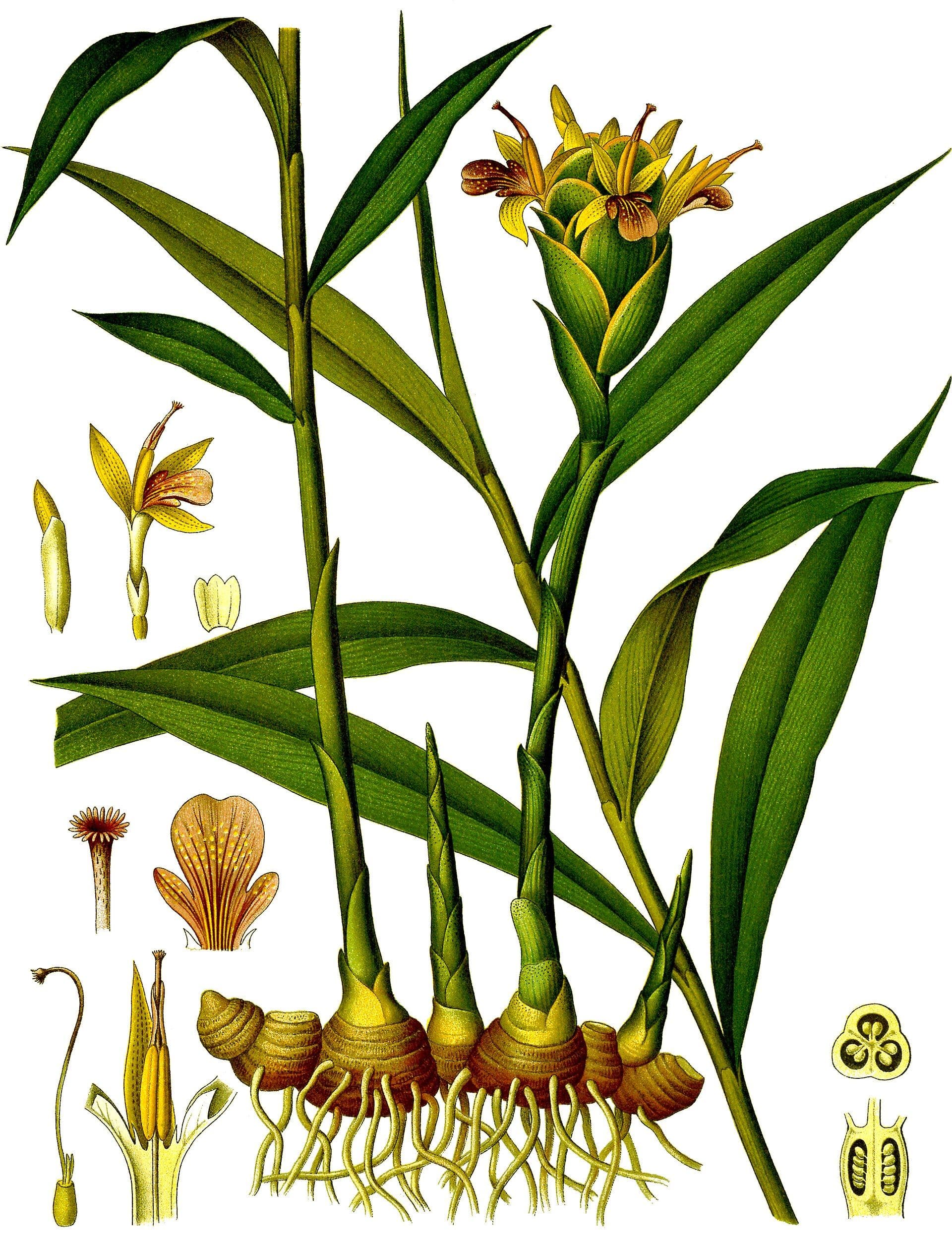
生姜 · Sheng Jiang
Rhizoma Zingiberis Recens
Fresh ginger, or Sheng Jiang, is a revered herb in Traditional Chinese Medicine, known for its ability to soothe digestion, combat colds, and harmonize the body. Modern science is now validating its potent benefits.
Wind-Cold
Cold in Stomach with vomiting
Wind-Cold cough; Lung Deficiency cough with Phlegm
Herb/seafood poisoning
Tai Yang Zhong Feng (Wind-Cold with Deficiency)
Wind-Cold
Cold in Stomach with vomiting
Wind-Cold cough; Lung Deficiency cough with Phlegm
Herb/seafood poisoning
Tai Yang Zhong Feng (Wind-Cold with Deficiency)
1-10g; Tincture: 1-2ml
For a warming tea or to soothe digestion, thinly slice 5-10 grams of fresh ginger rhizome. Steep in 1 cup (240ml) of hot water for 15-20 minutes. Strain and sip. You may add a touch of honey or lemon to taste. This can be consumed 1-3 times daily.
As a concentrated extract, follow the product-specific instructions. A common dosage for ginger tincture is 1-2 ml, taken as needed or directed by your healthcare provider, typically 1-3 times a day.
Grate or finely chop 1-5 grams of fresh ginger and incorporate it into stir-fries, soups, stews, smoothies, or marinades. It not only adds flavor but also imparts its medicinal properties, warming the dish and aiding digestion.
Fresh ginger is incredibly versatile in the kitchen. It can be grated into salad dressings, blended into smoothies and juices for a spicy kick, or simmered in broths and soups. It's excellent in Asian-inspired dishes like stir-fries and curries, and can even be used in baking for a unique flavor profile, though its medicinal properties are best preserved when not subjected to prolonged high heat. Try a simple ginger-lemon hot water in the morning to kickstart your digestion.
For a warming tea or to soothe digestion, thinly slice 5-10 grams of fresh ginger rhizome. Steep in 1 cup (240ml) of hot water for 15-20 minutes. Strain and sip. You may add a touch of honey or lemon to taste. This can be consumed 1-3 times daily.
As a concentrated extract, follow the product-specific instructions. A common dosage for ginger tincture is 1-2 ml, taken as needed or directed by your healthcare provider, typically 1-3 times a day.
Grate or finely chop 1-5 grams of fresh ginger and incorporate it into stir-fries, soups, stews, smoothies, or marinades. It not only adds flavor but also imparts its medicinal properties, warming the dish and aiding digestion.
Fresh ginger is incredibly versatile in the kitchen. It can be grated into salad dressings, blended into smoothies and juices for a spicy kick, or simmered in broths and soups. It's excellent in Asian-inspired dishes like stir-fries and curries, and can even be used in baking for a unique flavor profile, though its medicinal properties are best preserved when not subjected to prolonged high heat. Try a simple ginger-lemon hot water in the morning to kickstart your digestion.
Clinical evidence for ginger's efficacy is moderate, with strong support for its anti-emetic properties, particularly for nausea and vomiting associated with pregnancy and chemotherapy. Preliminary studies also suggest benefits for metabolic syndrome and pain relief, though more high-quality, well-designed research is needed to confirm these broader applications.
Moderate — Some clinical studies
Clinical evidence for ginger's efficacy is moderate, with strong support for its anti-emetic properties, particularly for nausea and vomiting associated with pregnancy and chemotherapy. Preliminary studies also suggest benefits for metabolic syndrome and pain relief, though more high-quality, well-designed research is needed to confirm these broader applications.
Moderate — Some clinical studies
Ginger may increase bleeding risk with concomitant use of drugs such as diclofenac or ibuprofen (26).
Because ginger can inhibit thromboxane formation and platelet aggregation, simultaneous use with anticoagulants may increase bleeding risk (51), although a systematic review determined that current evidence is inconclusive. Further study is warranted (57).
Ginger may cause additive reductions in blood glucose (7). Clinical relevance is not known.
Pretreatment with ginger increased plasma levels of tacrolimus (52). Clinical relevance is not known.
Concomitant ginger use resulted in decreased blood concentrations of cyclosporine in vivo (54). Clinical relevance is not known.
If you take any type of medicine, talk with your health care provider before using ginger or any other herbal products; some herbs and medicines interact in harmful ways.
Generally Safe
The use of ginger dietary supplements during pregnancy may be safe. As with all herbal supplements, if you’re considering using ginger while pregnant, consult your health care provider. Little is known about whether it’s safe to use ginger while breastfeeding.
Ginger may increase bleeding risk with concomitant use of drugs such as diclofenac or ibuprofen (26).
Because ginger can inhibit thromboxane formation and platelet aggregation, simultaneous use with anticoagulants may increase bleeding risk (51), although a systematic review determined that current evidence is inconclusive. Further study is warranted (57).
Ginger may cause additive reductions in blood glucose (7). Clinical relevance is not known.
Pretreatment with ginger increased plasma levels of tacrolimus (52). Clinical relevance is not known.
Concomitant ginger use resulted in decreased blood concentrations of cyclosporine in vivo (54). Clinical relevance is not known.
If you take any type of medicine, talk with your health care provider before using ginger or any other herbal products; some herbs and medicines interact in harmful ways.
Generally Safe
The use of ginger dietary supplements during pregnancy may be safe. As with all herbal supplements, if you’re considering using ginger while pregnant, consult your health care provider. Little is known about whether it’s safe to use ginger while breastfeeding.
When selecting fresh ginger, look for rhizomes that are firm, smooth-skinned, and heavy for their size. Avoid any pieces that are shriveled, moldy, or have soft spots. The skin should be thin enough to easily scratch off with a fingernail, indicating freshness. A strong, pungent aroma is also a good sign of quality.
I remember a patient, Sarah, who came to me utterly exhausted, suffering from persistent nausea after a particularly challenging course of chemotherapy. She was skeptical of anything beyond her Western medical regimen, but her oncologist suggested exploring complementary therapies. When I recommended fresh ginger, Sheng Jiang, her eyes widened. "Ginger? Like, for cookies?" she asked, a hint of desperation in her voice. It's a common reaction.
For many, fresh ginger (Rhizoma Zingiberis Recens), also known as Sheng Jiang or simply fresh ginger rhizome, is a familiar kitchen spice. Yet, in Traditional Chinese Medicine (TCM), it holds a revered place as a versatile herbal medicine, primarily used to release exterior conditions, warm the middle, and stop vomiting.
This humble root, with its pungent aroma and warming bite, has been a cornerstone of healing for millennia, its wisdom passed down through generations. From ancient texts like the Shennong Ben Cao Jing (The Divine Farmer's Materia Medica Classic), which notes its "acrid, warm" nature and ability to "dispel cold and expel dampness," to modern laboratories meticulously analyzing its active compounds, Sheng Jiang bridges worlds. It’s a powerful testament to how ancient wisdom often aligns with contemporary scientific understanding.
My mission, as an integrative physician, is to illuminate these connections, helping you understand how this everyday ingredient can be a profound ally in your health journey.
In TCM, Sheng Jiang's unique profile is precisely why it’s so valued. Its nature is described as "slightly warm," and its flavor "acrid." Think of "acrid" not just as spicy, but as having a dispersive quality—it helps to move things, to open up. This combination means it gently encourages circulation and warmth without being overly hot or drying. The meridians it targets are the Lung, Spleen, and Stomach.
This isn't just anatomical mapping; it speaks to its energetic actions within the body.
The Lung meridian, for instance, governs your defensive energy (Wei Qi) and respiration. When Wei Qi is compromised, perhaps by a sudden chill, Sheng Jiang helps "release the exterior," inducing a gentle perspiration that can expel the invading cold. It’s like a warm embrace for your immune system, helping it push out unwelcome guests.
For the Spleen and Stomach meridians, Sheng Jiang acts as a powerful digestive aid. In TCM, the Spleen and Stomach are central to transforming food into usable energy and nutrients. If these organs are cold or sluggish, you might experience nausea, bloating, or indigestion. Sheng Jiang's warming and acrid properties help ignite the "digestive fire," facilitating smoother function and stopping vomiting. I often explain it to patients as jump-starting a cold engine.
This distinction between fresh and dried ginger is crucial here. As researchers at Chengdu University of Traditional Chinese Medicine highlighted in a 2024 analysis, fresh ginger (Sheng Jiang) "effectively stimulates movement, alleviates vomiting, induces sweating, and relieves external syndromes," whereas dried ginger (Gan Jiang) focuses more on enhancing internal temperature and Yang energy. This nuanced understanding allows us to select the right form for the right imbalance.
This is perhaps Sheng Jiang’s most celebrated role. If you’ve ever reached for ginger ale during a stomach upset, you’ve instinctively tapped into this ancient wisdom. In TCM, Sheng Jiang "warms the Middle" and "stops vomiting." This translates to its remarkable ability to soothe an unsettled stomach, particularly when symptoms are related to coldness or dampness. I’ve seen countless patients, like Sarah, find relief from post-chemotherapy nausea with ginger. It's also incredibly effective for morning sickness or motion sickness.
The active compounds, notably 6-gingerol, are believed to interact with serotonin receptors in the gut, which are key players in nausea. Research, including a systematic review published in 2019 by the Clinical Medical College of Traditional Chinese Medicine of Gansu Province, consistently points to ginger as a promising herbal medicine for nausea and vomiting.
When you feel that familiar chill creeping in, perhaps a runny nose and a slight cough, Sheng Jiang is your ally. Its action of "releasing the exterior" and "inducing perspiration" is precisely what you need. In TCM, this means helping your body push out the "external cold" that causes initial cold symptoms. It's not about suppressing symptoms, but about helping your body complete its natural defense mechanism.
I often recommend a simple ginger tea at the first sign of a sniffle. It warms you from the inside out, helping to clear nasal passages and ease early-stage coughs by "warming Lungs and stopping coughing." This is especially relevant during seasonal transitions when your body might be more susceptible to external influences.
The Jing Gui Yao Lue (Synopsis of Prescriptions of the Golden Cabinet) even features 'Sheng Jiang Ban Xia Tang' (Fresh Ginger and Pinellia Decoction) for treating phlegm-fluid vomiting, cementing its historical role in respiratory and digestive health.
Sheng Jiang has a fascinating, less-known function: "reducing the toxicity of herbs and seafood." In TCM herbal formulas, it's often included in small amounts to mitigate potential side effects of other herbs or to harmonize the overall formula. For instance, if a formula contains a slightly harsh herb, Sheng Jiang can temper its effects, making it more palatable and digestible. This speaks to its role in "adjusting the Ying and Wei"—balancing the internal nutritive (Ying) and defensive (Wei) energies.
It’s a master harmonizer, ensuring the body can better integrate the therapeutic properties of what it consumes.
Modern scientific inquiry has begun to unravel the sophisticated mechanisms behind Sheng Jiang’s traditional uses. Researchers are particularly interested in its active compounds, primarily a group called gingerols, and their interaction with our physiological systems.
A 2024 analysis from the Department of Pharmacy at Chengdu University of Traditional Chinese Medicine highlighted the distinct pharmacological profiles of fresh versus dried ginger. This study, led by researchers like Wei-hao Wang and Zhi-min Wang, reinforced that fresh ginger, Sheng Jiang, is particularly adept at stimulating gastrointestinal movement and inducing perspiration, aligning perfectly with its TCM actions of stopping vomiting and releasing the exterior. A concurrent study by Yang Xiujuan et al.
in Zhong Yao Xin Yao Yu Lin Chuang Yao Li (2024) specifically pinpointed 6-gingerol as the predominant active compound in fresh ginger, noting its significant antioxidant and anti-emetic (anti-vomiting) properties. They found that fresh ginger contained the highest concentration of 6-gingerol (229.46 μg/g), a concentration that tends to decrease with processing. This offers a chemical basis for Sheng Jiang’s efficacy in nausea relief.
Beyond its immediate effects on digestion and cold symptoms, ginger's broader health benefits are also gaining traction. A systematic review from 2019 by the Clinical Medical College of Traditional Chinese Medicine of Gansu Province noted ginger's potential benefits for metabolic syndrome and pain, though they rightly called for more well-designed studies to solidify these findings. This aligns with the broader integrative medicine movement championed by figures like Dr.
Andrew Weil at the University of Arizona, who advocates for evidence-informed natural therapies.
The National Center for Complementary and Integrative Health (NCCIH) at the NIH, under the leadership of experts like Dr. Helene Langevin, continues to support research into natural products. While specific large-scale studies on Sheng Jiang's full spectrum of benefits are ongoing, the consistent findings on its anti-inflammatory and antioxidant properties, largely attributed to gingerols and shogaols, are compelling. These compounds help combat oxidative stress and inflammation at a cellular level, processes that are foundational to many chronic Western diseases.
It’s a beautiful example of how TCM's holistic view of warming and moving energy translates into measurable biochemical effects.
Incorporating Sheng Jiang into your daily routine is delightfully simple, whether you're seeking digestive comfort or a boost against an impending cold. The key is using it fresh to harness its specific properties.
For general digestive support or to help ward off a cold, a classic ginger tea is highly effective. I recommend using 5-10 grams of thinly sliced fresh ginger rhizome. Simply steep these slices in hot water for 15-20 minutes. You can add a slice of lemon or a touch of honey for taste. This dosage falls comfortably within the traditional range of 1-10g and is often enough to feel its warming and settling effects.
If you prefer it in a tincture form, the typical dosage is 1-2 ml, taken as directed by your healthcare provider. Tinctures offer a convenient, concentrated way to consume ginger, especially when you're on the go.
Sheng Jiang is also wonderful in your cooking. Think of it as a culinary medicine. Adding fresh, grated ginger to stir-fries, soups, or even smoothies not only enhances flavor but also imparts its medicinal actions. For instance, a hearty chicken soup with plenty of fresh ginger is a time-honored remedy for colds and chills.
You can even make a simple ginger broth by simmering 10g of sliced ginger in a few cups of water for 20-30 minutes, then straining and sipping. This method is particularly useful when you need to "warm the Middle" to stop nausea or stimulate appetite.
Remember, the emphasis with Sheng Jiang is on its fresh form. While dried ginger (Gan Jiang) has its own powerful applications, its chemical profile and therapeutic focus are different. For the specific actions of releasing the exterior, inducing perspiration, and stopping vomiting, fresh is best.
While Sheng Jiang is generally safe and well-tolerated for most individuals, it is crucial to understand its contraindications and potential drug interactions. As an integrative physician, I cannot stress enough the importance of personalized guidance.
Sheng Jiang is contraindicated for individuals experiencing:
Spontaneous sweating from Exterior Deficiency: If you sweat easily and without exertion, especially when feeling weak or fatigued, Sheng Jiang's diaphoretic action could worsen this.
Lung Heat: Symptoms like a barking cough, yellow sputum, or a feeling of heat in the chest mean Sheng Jiang, with its warming nature, could aggravate the condition.
Stomach Heat with vomiting: If vomiting is accompanied by burning sensations, thirst, or a red tongue, Sheng Jiang could intensify the heat.
Yin Deficiency with Heat signs: This pattern involves symptoms like night sweats, dry mouth, hot flashes, or a rapid pulse. Introducing more warmth from Sheng Jiang would be detrimental.
Patients currently taking certain medications must exercise caution:
NSAIDs (Non-Steroidal Anti-Inflammatory Drugs): Ginger may increase the risk of bleeding when used concomitantly with drugs such as diclofenac or ibuprofen.
Anticoagulants / Antiplatelets: Because ginger can inhibit thromboxane formation and platelet aggregation, simultaneous use with blood-thinning medications could significantly increase bleeding risk.
Hypoglycemics / Insulin: Ginger may cause additive reductions in blood glucose. While the clinical relevance of this is not fully known, individuals with diabetes should monitor blood sugar closely and consult their doctor.
The use of ginger dietary supplements during pregnancy may be safe, particularly for nausea. However, as with all herbal supplements, if you’re considering using ginger while pregnant, consult your health care provider. Little is known about whether it’s safe to use ginger while breastfeeding, so caution is advised.
Always discuss any herbal supplements with your healthcare provider, especially if you have existing health conditions or are on medication.
Sheng Jiang, the humble fresh ginger rhizome, reminds us that profound medicine often hides in plain sight, woven into the fabric of our culinary traditions. It’s a testament to the enduring wisdom of Traditional Chinese Medicine, which, through careful observation over millennia, understood the nuanced power of this root long before modern science could isolate its gingerols.
As we continue to bridge the ancient and the modern, Sheng Jiang stands as a vibrant example of how a deeper understanding of our food as medicine can empower us to foster greater health and resilience. It's more than just a spice; it's an invitation to listen to our bodies, to respect the cycles of nature, and to embrace the warming, moving energy that this remarkable plant offers.
I remember a patient, Sarah, who came to me utterly exhausted, suffering from persistent nausea after a particularly challenging course of chemotherapy. She was skeptical of anything beyond her Western medical regimen, but her oncologist suggested exploring complementary therapies. When I recommended fresh ginger, Sheng Jiang, her eyes widened. "Ginger? Like, for cookies?" she asked, a hint of desperation in her voice. It's a common reaction.
For many, fresh ginger (Rhizoma Zingiberis Recens), also known as Sheng Jiang or simply fresh ginger rhizome, is a familiar kitchen spice. Yet, in Traditional Chinese Medicine (TCM), it holds a revered place as a versatile herbal medicine, primarily used to release exterior conditions, warm the middle, and stop vomiting.
This humble root, with its pungent aroma and warming bite, has been a cornerstone of healing for millennia, its wisdom passed down through generations. From ancient texts like the Shennong Ben Cao Jing (The Divine Farmer's Materia Medica Classic), which notes its "acrid, warm" nature and ability to "dispel cold and expel dampness," to modern laboratories meticulously analyzing its active compounds, Sheng Jiang bridges worlds. It’s a powerful testament to how ancient wisdom often aligns with contemporary scientific understanding.
My mission, as an integrative physician, is to illuminate these connections, helping you understand how this everyday ingredient can be a profound ally in your health journey.
In TCM, Sheng Jiang's unique profile is precisely why it’s so valued. Its nature is described as "slightly warm," and its flavor "acrid." Think of "acrid" not just as spicy, but as having a dispersive quality—it helps to move things, to open up. This combination means it gently encourages circulation and warmth without being overly hot or drying. The meridians it targets are the Lung, Spleen, and Stomach.
This isn't just anatomical mapping; it speaks to its energetic actions within the body.
The Lung meridian, for instance, governs your defensive energy (Wei Qi) and respiration. When Wei Qi is compromised, perhaps by a sudden chill, Sheng Jiang helps "release the exterior," inducing a gentle perspiration that can expel the invading cold. It’s like a warm embrace for your immune system, helping it push out unwelcome guests.
For the Spleen and Stomach meridians, Sheng Jiang acts as a powerful digestive aid. In TCM, the Spleen and Stomach are central to transforming food into usable energy and nutrients. If these organs are cold or sluggish, you might experience nausea, bloating, or indigestion. Sheng Jiang's warming and acrid properties help ignite the "digestive fire," facilitating smoother function and stopping vomiting. I often explain it to patients as jump-starting a cold engine.
This distinction between fresh and dried ginger is crucial here. As researchers at Chengdu University of Traditional Chinese Medicine highlighted in a 2024 analysis, fresh ginger (Sheng Jiang) "effectively stimulates movement, alleviates vomiting, induces sweating, and relieves external syndromes," whereas dried ginger (Gan Jiang) focuses more on enhancing internal temperature and Yang energy. This nuanced understanding allows us to select the right form for the right imbalance.
This is perhaps Sheng Jiang’s most celebrated role. If you’ve ever reached for ginger ale during a stomach upset, you’ve instinctively tapped into this ancient wisdom. In TCM, Sheng Jiang "warms the Middle" and "stops vomiting." This translates to its remarkable ability to soothe an unsettled stomach, particularly when symptoms are related to coldness or dampness. I’ve seen countless patients, like Sarah, find relief from post-chemotherapy nausea with ginger. It's also incredibly effective for morning sickness or motion sickness.
The active compounds, notably 6-gingerol, are believed to interact with serotonin receptors in the gut, which are key players in nausea. Research, including a systematic review published in 2019 by the Clinical Medical College of Traditional Chinese Medicine of Gansu Province, consistently points to ginger as a promising herbal medicine for nausea and vomiting.
When you feel that familiar chill creeping in, perhaps a runny nose and a slight cough, Sheng Jiang is your ally. Its action of "releasing the exterior" and "inducing perspiration" is precisely what you need. In TCM, this means helping your body push out the "external cold" that causes initial cold symptoms. It's not about suppressing symptoms, but about helping your body complete its natural defense mechanism.
I often recommend a simple ginger tea at the first sign of a sniffle. It warms you from the inside out, helping to clear nasal passages and ease early-stage coughs by "warming Lungs and stopping coughing." This is especially relevant during seasonal transitions when your body might be more susceptible to external influences.
The Jing Gui Yao Lue (Synopsis of Prescriptions of the Golden Cabinet) even features 'Sheng Jiang Ban Xia Tang' (Fresh Ginger and Pinellia Decoction) for treating phlegm-fluid vomiting, cementing its historical role in respiratory and digestive health.
Sheng Jiang has a fascinating, less-known function: "reducing the toxicity of herbs and seafood." In TCM herbal formulas, it's often included in small amounts to mitigate potential side effects of other herbs or to harmonize the overall formula. For instance, if a formula contains a slightly harsh herb, Sheng Jiang can temper its effects, making it more palatable and digestible. This speaks to its role in "adjusting the Ying and Wei"—balancing the internal nutritive (Ying) and defensive (Wei) energies.
It’s a master harmonizer, ensuring the body can better integrate the therapeutic properties of what it consumes.
Modern scientific inquiry has begun to unravel the sophisticated mechanisms behind Sheng Jiang’s traditional uses. Researchers are particularly interested in its active compounds, primarily a group called gingerols, and their interaction with our physiological systems.
A 2024 analysis from the Department of Pharmacy at Chengdu University of Traditional Chinese Medicine highlighted the distinct pharmacological profiles of fresh versus dried ginger. This study, led by researchers like Wei-hao Wang and Zhi-min Wang, reinforced that fresh ginger, Sheng Jiang, is particularly adept at stimulating gastrointestinal movement and inducing perspiration, aligning perfectly with its TCM actions of stopping vomiting and releasing the exterior. A concurrent study by Yang Xiujuan et al.
in Zhong Yao Xin Yao Yu Lin Chuang Yao Li (2024) specifically pinpointed 6-gingerol as the predominant active compound in fresh ginger, noting its significant antioxidant and anti-emetic (anti-vomiting) properties. They found that fresh ginger contained the highest concentration of 6-gingerol (229.46 μg/g), a concentration that tends to decrease with processing. This offers a chemical basis for Sheng Jiang’s efficacy in nausea relief.
Beyond its immediate effects on digestion and cold symptoms, ginger's broader health benefits are also gaining traction. A systematic review from 2019 by the Clinical Medical College of Traditional Chinese Medicine of Gansu Province noted ginger's potential benefits for metabolic syndrome and pain, though they rightly called for more well-designed studies to solidify these findings. This aligns with the broader integrative medicine movement championed by figures like Dr.
Andrew Weil at the University of Arizona, who advocates for evidence-informed natural therapies.
The National Center for Complementary and Integrative Health (NCCIH) at the NIH, under the leadership of experts like Dr. Helene Langevin, continues to support research into natural products. While specific large-scale studies on Sheng Jiang's full spectrum of benefits are ongoing, the consistent findings on its anti-inflammatory and antioxidant properties, largely attributed to gingerols and shogaols, are compelling. These compounds help combat oxidative stress and inflammation at a cellular level, processes that are foundational to many chronic Western diseases.
It’s a beautiful example of how TCM's holistic view of warming and moving energy translates into measurable biochemical effects.
Incorporating Sheng Jiang into your daily routine is delightfully simple, whether you're seeking digestive comfort or a boost against an impending cold. The key is using it fresh to harness its specific properties.
For general digestive support or to help ward off a cold, a classic ginger tea is highly effective. I recommend using 5-10 grams of thinly sliced fresh ginger rhizome. Simply steep these slices in hot water for 15-20 minutes. You can add a slice of lemon or a touch of honey for taste. This dosage falls comfortably within the traditional range of 1-10g and is often enough to feel its warming and settling effects.
If you prefer it in a tincture form, the typical dosage is 1-2 ml, taken as directed by your healthcare provider. Tinctures offer a convenient, concentrated way to consume ginger, especially when you're on the go.
Sheng Jiang is also wonderful in your cooking. Think of it as a culinary medicine. Adding fresh, grated ginger to stir-fries, soups, or even smoothies not only enhances flavor but also imparts its medicinal actions. For instance, a hearty chicken soup with plenty of fresh ginger is a time-honored remedy for colds and chills.
You can even make a simple ginger broth by simmering 10g of sliced ginger in a few cups of water for 20-30 minutes, then straining and sipping. This method is particularly useful when you need to "warm the Middle" to stop nausea or stimulate appetite.
Remember, the emphasis with Sheng Jiang is on its fresh form. While dried ginger (Gan Jiang) has its own powerful applications, its chemical profile and therapeutic focus are different. For the specific actions of releasing the exterior, inducing perspiration, and stopping vomiting, fresh is best.
While Sheng Jiang is generally safe and well-tolerated for most individuals, it is crucial to understand its contraindications and potential drug interactions. As an integrative physician, I cannot stress enough the importance of personalized guidance.
Sheng Jiang is contraindicated for individuals experiencing:
Spontaneous sweating from Exterior Deficiency: If you sweat easily and without exertion, especially when feeling weak or fatigued, Sheng Jiang's diaphoretic action could worsen this.
Lung Heat: Symptoms like a barking cough, yellow sputum, or a feeling of heat in the chest mean Sheng Jiang, with its warming nature, could aggravate the condition.
Stomach Heat with vomiting: If vomiting is accompanied by burning sensations, thirst, or a red tongue, Sheng Jiang could intensify the heat.
Yin Deficiency with Heat signs: This pattern involves symptoms like night sweats, dry mouth, hot flashes, or a rapid pulse. Introducing more warmth from Sheng Jiang would be detrimental.
Patients currently taking certain medications must exercise caution:
NSAIDs (Non-Steroidal Anti-Inflammatory Drugs): Ginger may increase the risk of bleeding when used concomitantly with drugs such as diclofenac or ibuprofen.
Anticoagulants / Antiplatelets: Because ginger can inhibit thromboxane formation and platelet aggregation, simultaneous use with blood-thinning medications could significantly increase bleeding risk.
Hypoglycemics / Insulin: Ginger may cause additive reductions in blood glucose. While the clinical relevance of this is not fully known, individuals with diabetes should monitor blood sugar closely and consult their doctor.
The use of ginger dietary supplements during pregnancy may be safe, particularly for nausea. However, as with all herbal supplements, if you’re considering using ginger while pregnant, consult your health care provider. Little is known about whether it’s safe to use ginger while breastfeeding, so caution is advised.
Always discuss any herbal supplements with your healthcare provider, especially if you have existing health conditions or are on medication.
Sheng Jiang, the humble fresh ginger rhizome, reminds us that profound medicine often hides in plain sight, woven into the fabric of our culinary traditions. It’s a testament to the enduring wisdom of Traditional Chinese Medicine, which, through careful observation over millennia, understood the nuanced power of this root long before modern science could isolate its gingerols.
As we continue to bridge the ancient and the modern, Sheng Jiang stands as a vibrant example of how a deeper understanding of our food as medicine can empower us to foster greater health and resilience. It's more than just a spice; it's an invitation to listen to our bodies, to respect the cycles of nature, and to embrace the warming, moving energy that this remarkable plant offers.
This information is for educational purposes only and is not intended as medical advice. Always consult a qualified healthcare practitioner before using any herbal remedy.