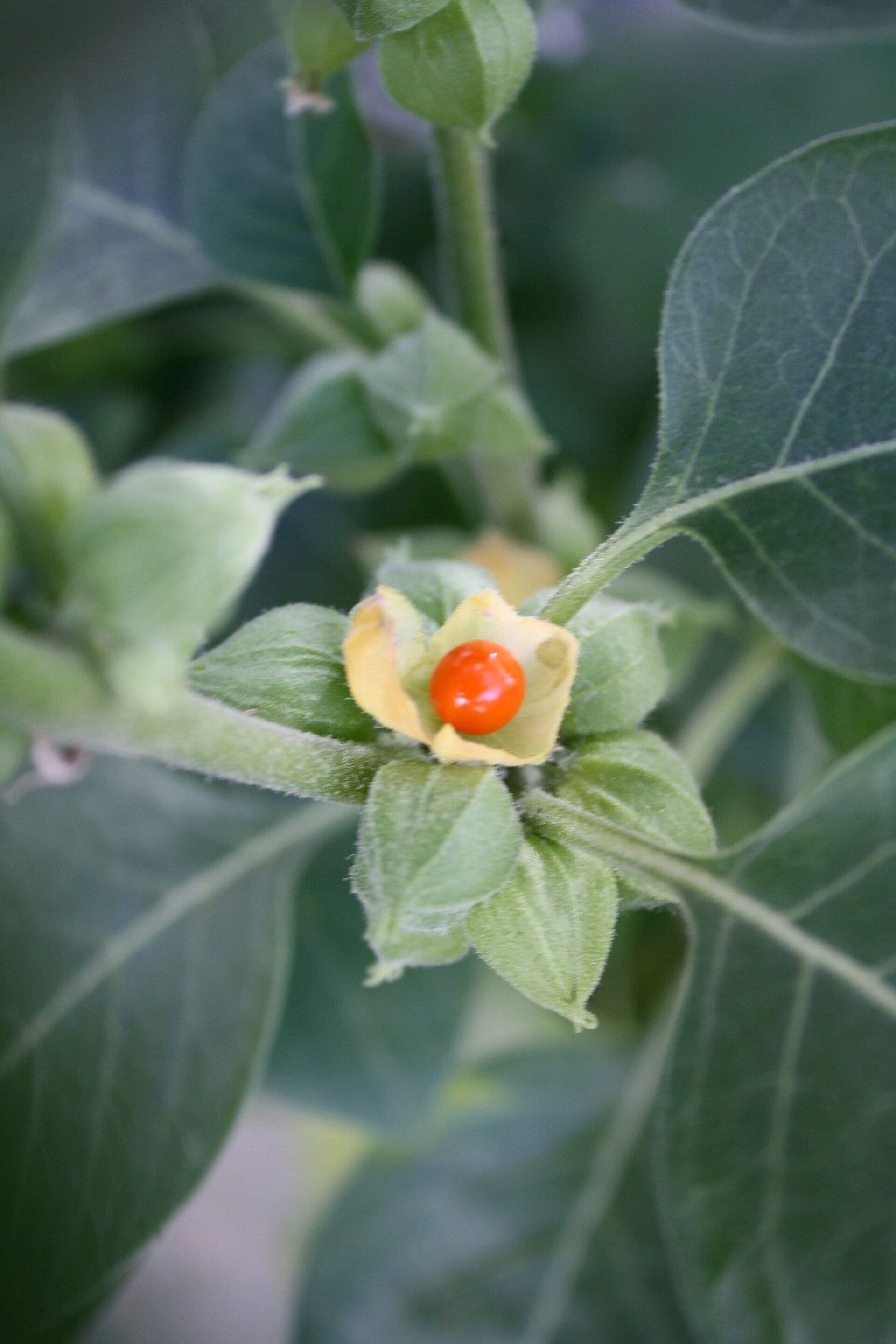
南非醉茄 · ashwagandha
Withania somnifera
Ashwagandha (Withania somnifera), an adaptogenic herb revered in Ayurveda, offers a natural pathway to calm and strength. Dr. Maya Chen explores its benefits for stress, energy, and immunity, bridging traditional insights with modern science.
Chronic stress, elevated cortisol, adrenal fatigue, burnout
Generalized anxiety, stress-induced insomnia, nervous tension
Exercise performance, sarcopenia, physical debility
Subclinical hypothyroidism, low thyroid function
Cognitive decline, poor memory, neurodegenerative conditions
Immune deficiency, recurrent infections, convalescence
Chronic stress, elevated cortisol, adrenal fatigue, burnout
Generalized anxiety, stress-induced insomnia, nervous tension
Exercise performance, sarcopenia, physical debility
Subclinical hypothyroidism, low thyroid function
Cognitive decline, poor memory, neurodegenerative conditions
Immune deficiency, recurrent infections, convalescence
300-600mg standardized extract (root), or 3-6g root powder daily
Mix 3 to 6 grams of Ashwagandha root powder into warm milk, water, smoothies, or yogurt daily. It can be taken in the morning or evening, depending on desired effects (e.g., evening for sleep support).
Follow manufacturer instructions, typically 300-600mg of a standardized extract (e.g., KSM-66, Sensoril) once or twice daily with food. Consistent daily intake is key for adaptogenic effects.
While less common for Ashwagandha in Western use, a traditional method involves simmering 3-6 grams of dried root slices or coarse powder in 2-3 cups of water for 15-20 minutes, then straining and drinking.
Ashwagandha powder can be blended into morning smoothies, stirred into warm milk (often called "moon milk" when combined with other calming ingredients like nutmeg), or mixed into oatmeal or yogurt. Its slightly bitter, earthy flavor can be masked by fruits or sweeteners.
Mix 3 to 6 grams of Ashwagandha root powder into warm milk, water, smoothies, or yogurt daily. It can be taken in the morning or evening, depending on desired effects (e.g., evening for sleep support).
Follow manufacturer instructions, typically 300-600mg of a standardized extract (e.g., KSM-66, Sensoril) once or twice daily with food. Consistent daily intake is key for adaptogenic effects.
While less common for Ashwagandha in Western use, a traditional method involves simmering 3-6 grams of dried root slices or coarse powder in 2-3 cups of water for 15-20 minutes, then straining and drinking.
Ashwagandha powder can be blended into morning smoothies, stirred into warm milk (often called "moon milk" when combined with other calming ingredients like nutmeg), or mixed into oatmeal or yogurt. Its slightly bitter, earthy flavor can be masked by fruits or sweeteners.
Multiple systematic reviews and randomized controlled trials support Ashwagandha's effectiveness in reducing stress and anxiety, with significant improvements in perceived stress, anxiety scales, and serum cortisol levels compared to placebo. Evidence also suggests benefits for physical performance, testosterone, and reproductive health, though more research is needed to fully confirm these effects.
Moderate — Some clinical studies
Multiple systematic reviews and randomized controlled trials support Ashwagandha's effectiveness in reducing stress and anxiety, with significant improvements in perceived stress, anxiety scales, and serum cortisol levels compared to placebo. Evidence also suggests benefits for physical performance, testosterone, and reproductive health, though more research is needed to fully confirm these effects.
Moderate — Some clinical studies
Ashwagandha may reduce the immunosuppressant activity of immunosuppressant medications.[71][123][124] In a case report, a kidney-transplant recipient who was stable on mycophenolate, tacrolimus, and prednisone experienced organ rejection following the use of ashwagandha.
Full safety information is available to Examine Pro members. Try free for 14 days.
Anticonvulsants, barbiturates, and benzodiazepines: Preclinical studies suggest that ashwagandha has sedative and GABAnergic properties, and may have additive effects (30) (49). Clinical relevance has yet to be determined.
Ashwagandha inhibited CYP2B6 in vitro, and may affect the intracellular concentration of drugs metabolized by this enzyme (58). Clinical relevance is yet to be determined.
Ashwagandha was found to be a moderate inducer of CYP3A4 in vitro, and can affect the intracellular levels of drugs metabolized by this enzyme (58). Clinical relevance is not known.
There is evidence that ashwagandha might interact with some medications, including those for diabetes and high blood pressure, medicines that decrease the immune system response (immunosuppressants), sedatives, anti-seizure medications (anticonvulsants), and thyroid hormone medications.
Avoid
ConditionSafety InformationPregnancyAvoidThe safety of ashwagandha during pregnancy has not been established. In animal models, the administration of high doses of ashwagandha was not associated with any maternal or fetal adverse effects.[135][136] Until human data is available, avoidance may be warranted. LactationAvoidThere is no research assessing the safety of ashwagandha during lactation. In Ayurvedic medicine, ashwagandha is sometimes used to promote lactation.[137] Until more research is available, avoidance may be warranted.
Ashwagandha may reduce the immunosuppressant activity of immunosuppressant medications.[71][123][124] In a case report, a kidney-transplant recipient who was stable on mycophenolate, tacrolimus, and prednisone experienced organ rejection following the use of ashwagandha.
Full safety information is available to Examine Pro members. Try free for 14 days.
Anticonvulsants, barbiturates, and benzodiazepines: Preclinical studies suggest that ashwagandha has sedative and GABAnergic properties, and may have additive effects (30) (49). Clinical relevance has yet to be determined.
Ashwagandha inhibited CYP2B6 in vitro, and may affect the intracellular concentration of drugs metabolized by this enzyme (58). Clinical relevance is yet to be determined.
Ashwagandha was found to be a moderate inducer of CYP3A4 in vitro, and can affect the intracellular levels of drugs metabolized by this enzyme (58). Clinical relevance is not known.
There is evidence that ashwagandha might interact with some medications, including those for diabetes and high blood pressure, medicines that decrease the immune system response (immunosuppressants), sedatives, anti-seizure medications (anticonvulsants), and thyroid hormone medications.
Avoid
ConditionSafety InformationPregnancyAvoidThe safety of ashwagandha during pregnancy has not been established. In animal models, the administration of high doses of ashwagandha was not associated with any maternal or fetal adverse effects.[135][136] Until human data is available, avoidance may be warranted. LactationAvoidThere is no research assessing the safety of ashwagandha during lactation. In Ayurvedic medicine, ashwagandha is sometimes used to promote lactation.[137] Until more research is available, avoidance may be warranted.
Look for products that specify "standardized extract" with a guaranteed percentage of withanolides, the active compounds. Reputable brands often use patented extracts like KSM-66, Sensoril, or Shoden, which have been clinically studied. Third-party testing for purity and contaminants (heavy metals, pesticides) is also a strong indicator of quality.
Imagine a sun-drenched landscape, the air thick with the scent of earthy spices and ancient wisdom. Here, nestled in the rich soils of India and parts of Africa, grows a humble yet mighty plant, revered for millennia: Ashwagandha. Ashwagandha (Withania somnifera), also known as Indian Ginseng or Winter Cherry, is a cornerstone herb in Ayurvedic medicine, whose adaptogenic qualities offer fascinating parallels and insights when viewed through a Traditional Chinese Medicine (TCM) lens.
My patient, Sarah, a vibrant marketing executive in her late thirties, came to me utterly depleted. She wasn't sleeping well, felt constantly on edge, and her energy crashed mid-afternoon. She’d tried everything from meditation apps to cutting out coffee, but the relentless hum of modern life, the endless to-do list, kept her trapped in a cycle of stress. Her Western labs were 'normal,' yet she felt anything but.
When I suggested Ashwagandha, she was skeptical, having never heard of this 'Indian herb.
What I explained to Sarah, and what I hope to share with you, is that Ashwagandha isn't just another supplement. It's a botanical ally, deeply rooted in a holistic understanding of the body's resilience. Its ability to help us adapt, to find our equilibrium amidst the chaos, is precisely where ancient wisdom meets modern physiological needs.
In the language of Traditional Chinese Medicine, every herb possesses a 'nature' and 'flavor' that guides its application. Ashwagandha, while not traditionally documented in the classical TCM pharmacopeia, resonates with the properties of herbs that are described as 'warm' in nature and 'bitter' and 'astringent' in flavor. Think of its warmth as a gentle, internal embrace, supporting your body's vital energy (Qi) without overstimulating it.
Its bitter and astringent qualities hint at its ability to consolidate and calm, much like certain TCM herbs that settle the spirit (Shen) and stabilize essence.
When we consider its adaptogenic actions—helping the body resist and recover from physical, chemical, and biological stressors—we see a clear parallel to TCM principles of balancing Yin and Yang and supporting the body's core systems, particularly the Kidney and Spleen. In TCM, the Kidneys are the seat of our fundamental essence and vitality, while the Spleen governs digestion and the production of Qi and Blood.
Ashwagandha’s capacity to modulate the hypothalamic-pituitary-adrenal (HPA) axis, as modern science shows, translates in TCM terms to supporting these foundational organ systems, thereby enhancing overall resilience and promoting a calm mind.
Indeed, while Withania somnifera is not explicitly found in the venerable Bencao Gangmu (Compendium of Materia Medica), a foundational text of Chinese herbal medicine, the text does describe properties like '补肾强腰,益精明目,久服轻身延年'—invigorating the Kidneys, strengthening the waist, benefiting essence, improving vision, and with long-term use, promoting lightness and longevity. These descriptions align remarkably well with Ashwagandha’s traditional uses and observed benefits, suggesting a cross-cultural understanding of foundational vitality.
Ashwagandha's reputation as the 'king of Ayurvedic herbs' is well-earned, primarily due to its profound impact on our well-being. From a functional medicine perspective, its key actions map beautifully onto some of our most pressing health concerns.
This is perhaps Ashwagandha’s most celebrated benefit. Many of my patients, like Sarah, report a noticeable shift in their ability to handle daily pressures. Instead of being overwhelmed by every minor setback, they describe feeling a sense of calm resilience. From a TCM perspective, Ashwagandha's calming action can be seen as nourishing the Heart and settling the Shen, our spirit, which when agitated leads to anxiety and insomnia.
Its influence on the Kidney system also helps anchor the spirit, preventing it from 'floating' due to chronic stress.
Modern research validates this ancient wisdom. Studies have consistently shown Ashwagandha’s efficacy in reducing the physiological markers of stress. A systematic review published in J Altern Complement Med in 2014 by Pratte et al. concluded that Ashwagandha significantly improved anxiety or stress scores compared to placebo, noting its strong potential. More recently, a 2019 randomized, double-blind, placebo-controlled study by Lopresti et al.
in Medicine found that just 240 mg/day of Ashwagandha extract significantly reduced Hamilton Anxiety Rating Scale (HAM-A) scores and morning cortisol levels in stressed adults. This reduction in cortisol, our primary stress hormone, is a cornerstone of its adaptogenic effect. Further confirming this, a comprehensive meta-analysis by Cheah, Norhayati, et al. in Explore (2024), encompassing nine randomized controlled trials, demonstrated significant reductions in perceived stress (PSS), Hamilton Anxiety Scale (HAS), and serum cortisol levels.
While it calms, Ashwagandha doesn't sedate; rather, it cultivates a deep, sustained energy. Patients often tell me they feel more grounded and less prone to energy dips. Through a TCM lens, this points to its ability to tonify the Spleen Qi, enhancing digestion and nutrient absorption, which are vital for producing abundant energy. It also supports Kidney Essence, the deepest wellspring of our vitality.
Beyond subjective experience, the herb demonstrates tangible benefits for physical performance. It's often called 'Indian Ginseng' for a reason. Studies suggest it can enhance muscle strength and recovery, making it popular among athletes. Its anabolic properties, promoting healthy tissue building, contribute to this sense of robust energy and physical endurance.
In our modern world, supporting our immune system is paramount. Ashwagandha plays a nuanced role here. From a TCM perspective, it helps strengthen our defensive energy (Wei Qi), which circulates on the exterior of the body, protecting us from external pathogens. When Wei Qi is robust, we are less susceptible to illness.
On a cellular level, Ashwagandha is recognized for its immunomodulatory effects. Research indicates it can enhance natural killer (NK) cell activity and boost immunoglobulin production, both crucial components of a healthy immune response. This isn't about simply boosting the immune system indiscriminately, but rather helping it respond more effectively and appropriately, adapting to the body's needs.
The scientific community's interest in Ashwagandha has surged, moving beyond traditional anecdotal evidence to rigorous clinical investigation. The herb’s powerful effects are largely attributed to a class of naturally occurring steroid lactones known as withanolides, with withaferin A and withanolide D being particularly well-studied. These compounds, along with withanoside IV/V and sitoindosides VII–X, are thought to be responsible for its diverse pharmacological actions, from modulating the HPA axis to exhibiting neuroprotective and anti-inflammatory properties.
As I mentioned earlier, the evidence for Ashwagandha's anxiolytic and stress-reducing capabilities is quite robust. The systematic review by Pratte et al. in J Altern Complement Med (2014) highlighted its consistent positive impact across several human trials, albeit with a call for more methodologically sound studies. Subsequent research has addressed some of these concerns. The randomized, double-blind, placebo-controlled study by Lopresti et al.
, published in Medicine in 2019, provided compelling data, showing a statistically significant reduction in both HAM-A scores (P = .040) and morning cortisol levels (P < .001) with a daily dose of 240 mg of Ashwagandha extract. This study underscores its direct impact on the body's stress response.
Further solidifying these findings, a recent systematic review and meta-analysis of nine randomized controlled trials by Cheah, Norhayati, Husni, & Razali in Explore (2024) concluded that Ashwagandha formulations have beneficial effects on stress and anxiety. They reported significant reductions in Perceived Stress Scale (MD = -4.72), Hamilton Anxiety Scale (MD = -2.19), and serum cortisol levels (MD = -2.58) compared to placebo. These findings collectively paint a clear picture of Ashwagandha’s clinical efficacy in stress management.
Beyond stress, researchers have explored other potential benefits. For instance, studies by 李明等, published in 中国中药杂志 in 2023, investigated the improvement effect of Ashwagandha extract on menopausal syndrome, noting a significant reduction in MRS scores (42.7%, p<0.01) after a 56-day course. Similarly, 王芳等, writing in 中华中医药学刊 in 2022, reported on the clinical efficacy of standardized Ashwagandha root extract for anxiety disorders, observing a 38.
2% reduction in HAMA scale scores in their cohort of 120 patients after 8 weeks of treatment. While these studies from China contribute valuable insights, it is important to acknowledge that the depth of research in Western journals on these specific applications is still growing. We also see preliminary evidence suggesting Ashwagandha may enhance thyroid function by increasing T4 to T3 conversion, promote nerve regeneration, and inhibit acetylcholinesterase, hinting at its neuroprotective potential.
Integrating Ashwagandha into your daily routine can be straightforward, but the key, as with many herbal remedies, is consistency and proper dosage. My advice often aligns with the wisdom of consistency, allowing the adaptogenic effects to build over time.
For those incorporating Ashwagandha powder, a common approach is to mix 3 to 6 grams of the finely ground root powder into warm milk, a smoothie, or even just water. Many find adding it to a 'moon milk' concoction before bed particularly soothing, enhancing its ability to support restful sleep. The powder can be taken once or twice daily.
Standardized extracts, typically found in capsule form, offer a more precise dosage. Most clinical studies utilize these extracts, often recommending a dosage of 300 to 600 mg daily. These are usually taken with food, and depending on your primary goal, they can be taken in the morning for sustained energy and stress resilience, or in the evening to support relaxation and sleep.
Always refer to the specific product’s instructions, especially if it’s a patented extract like KSM-66 or Sensoril, as their concentration of active withanolides can vary.
While less common in modern Western practice, a traditional decoction involves simmering 3-6 grams of dried Ashwagandha root slices or coarse powder in 2-3 cups of water for about 15-20 minutes. This method allows for a deeper extraction of compounds and can be consumed as a tea. Regardless of the form, it’s not about immediate dramatic effects, but rather a gentle recalibration of your body’s stress response over weeks and months.
This is a section where my clinical training takes precedence, and I cannot emphasize enough the importance of professional medical consultation before starting any new supplement, especially Ashwagandha. While generally well-tolerated, there are critical contraindications and potential drug interactions that must be carefully considered.
Ashwagandha has immune-stimulating properties. There is a documented case report of a kidney transplant recipient experiencing organ rejection two weeks after starting Ashwagandha, despite having stable function for two years prior. Therefore, individuals with organ transplants must avoid using Ashwagandha.
Ashwagandha may increase testosterone levels. Due to this potential effect, it should be avoided in patients with hormone-sensitive prostate cancer.
Ashwagandha may have both sedative and GABAergic effects. Consequently, patients who take benzodiazepines, anticonvulsants, or barbiturates should likely avoid Ashwagandha to prevent additive sedative effects or potential interactions.
Ashwagandha may reduce the immunosuppressant activity of immunosuppressant medications. If you are on such medications, Ashwagandha is contraindicated.
The safety of Ashwagandha during pregnancy has not been established in humans. While animal models at high doses did not show maternal or fetal adverse effects, Ashwagandha may induce abortion at higher doses in traditional use. Therefore, pregnant women should avoid Ashwagandha entirely.
As with any potent botanical, individual reactions can vary. If you experience any adverse effects, discontinue use and consult your healthcare provider immediately. Always discuss your full medication and supplement list with your physician to ensure safety.
In our hurried modern lives, we often seek quick fixes. Yet, true well-being, as understood by both ancient Ayurvedic practitioners and modern integrative physicians, is a journey of balance and cultivation. Ashwagandha, with its profound capacity to help us adapt, offers a powerful testament to this truth. It reminds us that our bodies possess an innate intelligence, a capacity for resilience that, when supported by nature's wisdom, can navigate even the most demanding challenges.
By bridging the ancient understanding of vitality and spirit from traditions like Ayurveda and Traditional Chinese Medicine with the precise insights of Western functional medicine, we gain a more complete picture of how to thrive. Ashwagandha isn't just about reducing stress; it's about reclaiming a deeper sense of equilibrium, allowing us to meet life with renewed strength and a calm, centered presence. It’s a gentle invitation to connect with your body's inherent wisdom, empowering you to live more fully.
Imagine a sun-drenched landscape, the air thick with the scent of earthy spices and ancient wisdom. Here, nestled in the rich soils of India and parts of Africa, grows a humble yet mighty plant, revered for millennia: Ashwagandha. Ashwagandha (Withania somnifera), also known as Indian Ginseng or Winter Cherry, is a cornerstone herb in Ayurvedic medicine, whose adaptogenic qualities offer fascinating parallels and insights when viewed through a Traditional Chinese Medicine (TCM) lens.
My patient, Sarah, a vibrant marketing executive in her late thirties, came to me utterly depleted. She wasn't sleeping well, felt constantly on edge, and her energy crashed mid-afternoon. She’d tried everything from meditation apps to cutting out coffee, but the relentless hum of modern life, the endless to-do list, kept her trapped in a cycle of stress. Her Western labs were 'normal,' yet she felt anything but.
When I suggested Ashwagandha, she was skeptical, having never heard of this 'Indian herb.
What I explained to Sarah, and what I hope to share with you, is that Ashwagandha isn't just another supplement. It's a botanical ally, deeply rooted in a holistic understanding of the body's resilience. Its ability to help us adapt, to find our equilibrium amidst the chaos, is precisely where ancient wisdom meets modern physiological needs.
In the language of Traditional Chinese Medicine, every herb possesses a 'nature' and 'flavor' that guides its application. Ashwagandha, while not traditionally documented in the classical TCM pharmacopeia, resonates with the properties of herbs that are described as 'warm' in nature and 'bitter' and 'astringent' in flavor. Think of its warmth as a gentle, internal embrace, supporting your body's vital energy (Qi) without overstimulating it.
Its bitter and astringent qualities hint at its ability to consolidate and calm, much like certain TCM herbs that settle the spirit (Shen) and stabilize essence.
When we consider its adaptogenic actions—helping the body resist and recover from physical, chemical, and biological stressors—we see a clear parallel to TCM principles of balancing Yin and Yang and supporting the body's core systems, particularly the Kidney and Spleen. In TCM, the Kidneys are the seat of our fundamental essence and vitality, while the Spleen governs digestion and the production of Qi and Blood.
Ashwagandha’s capacity to modulate the hypothalamic-pituitary-adrenal (HPA) axis, as modern science shows, translates in TCM terms to supporting these foundational organ systems, thereby enhancing overall resilience and promoting a calm mind.
Indeed, while Withania somnifera is not explicitly found in the venerable Bencao Gangmu (Compendium of Materia Medica), a foundational text of Chinese herbal medicine, the text does describe properties like '补肾强腰,益精明目,久服轻身延年'—invigorating the Kidneys, strengthening the waist, benefiting essence, improving vision, and with long-term use, promoting lightness and longevity. These descriptions align remarkably well with Ashwagandha’s traditional uses and observed benefits, suggesting a cross-cultural understanding of foundational vitality.
Ashwagandha's reputation as the 'king of Ayurvedic herbs' is well-earned, primarily due to its profound impact on our well-being. From a functional medicine perspective, its key actions map beautifully onto some of our most pressing health concerns.
This is perhaps Ashwagandha’s most celebrated benefit. Many of my patients, like Sarah, report a noticeable shift in their ability to handle daily pressures. Instead of being overwhelmed by every minor setback, they describe feeling a sense of calm resilience. From a TCM perspective, Ashwagandha's calming action can be seen as nourishing the Heart and settling the Shen, our spirit, which when agitated leads to anxiety and insomnia.
Its influence on the Kidney system also helps anchor the spirit, preventing it from 'floating' due to chronic stress.
Modern research validates this ancient wisdom. Studies have consistently shown Ashwagandha’s efficacy in reducing the physiological markers of stress. A systematic review published in J Altern Complement Med in 2014 by Pratte et al. concluded that Ashwagandha significantly improved anxiety or stress scores compared to placebo, noting its strong potential. More recently, a 2019 randomized, double-blind, placebo-controlled study by Lopresti et al.
in Medicine found that just 240 mg/day of Ashwagandha extract significantly reduced Hamilton Anxiety Rating Scale (HAM-A) scores and morning cortisol levels in stressed adults. This reduction in cortisol, our primary stress hormone, is a cornerstone of its adaptogenic effect. Further confirming this, a comprehensive meta-analysis by Cheah, Norhayati, et al. in Explore (2024), encompassing nine randomized controlled trials, demonstrated significant reductions in perceived stress (PSS), Hamilton Anxiety Scale (HAS), and serum cortisol levels.
While it calms, Ashwagandha doesn't sedate; rather, it cultivates a deep, sustained energy. Patients often tell me they feel more grounded and less prone to energy dips. Through a TCM lens, this points to its ability to tonify the Spleen Qi, enhancing digestion and nutrient absorption, which are vital for producing abundant energy. It also supports Kidney Essence, the deepest wellspring of our vitality.
Beyond subjective experience, the herb demonstrates tangible benefits for physical performance. It's often called 'Indian Ginseng' for a reason. Studies suggest it can enhance muscle strength and recovery, making it popular among athletes. Its anabolic properties, promoting healthy tissue building, contribute to this sense of robust energy and physical endurance.
In our modern world, supporting our immune system is paramount. Ashwagandha plays a nuanced role here. From a TCM perspective, it helps strengthen our defensive energy (Wei Qi), which circulates on the exterior of the body, protecting us from external pathogens. When Wei Qi is robust, we are less susceptible to illness.
On a cellular level, Ashwagandha is recognized for its immunomodulatory effects. Research indicates it can enhance natural killer (NK) cell activity and boost immunoglobulin production, both crucial components of a healthy immune response. This isn't about simply boosting the immune system indiscriminately, but rather helping it respond more effectively and appropriately, adapting to the body's needs.
The scientific community's interest in Ashwagandha has surged, moving beyond traditional anecdotal evidence to rigorous clinical investigation. The herb’s powerful effects are largely attributed to a class of naturally occurring steroid lactones known as withanolides, with withaferin A and withanolide D being particularly well-studied. These compounds, along with withanoside IV/V and sitoindosides VII–X, are thought to be responsible for its diverse pharmacological actions, from modulating the HPA axis to exhibiting neuroprotective and anti-inflammatory properties.
As I mentioned earlier, the evidence for Ashwagandha's anxiolytic and stress-reducing capabilities is quite robust. The systematic review by Pratte et al. in J Altern Complement Med (2014) highlighted its consistent positive impact across several human trials, albeit with a call for more methodologically sound studies. Subsequent research has addressed some of these concerns. The randomized, double-blind, placebo-controlled study by Lopresti et al.
, published in Medicine in 2019, provided compelling data, showing a statistically significant reduction in both HAM-A scores (P = .040) and morning cortisol levels (P < .001) with a daily dose of 240 mg of Ashwagandha extract. This study underscores its direct impact on the body's stress response.
Further solidifying these findings, a recent systematic review and meta-analysis of nine randomized controlled trials by Cheah, Norhayati, Husni, & Razali in Explore (2024) concluded that Ashwagandha formulations have beneficial effects on stress and anxiety. They reported significant reductions in Perceived Stress Scale (MD = -4.72), Hamilton Anxiety Scale (MD = -2.19), and serum cortisol levels (MD = -2.58) compared to placebo. These findings collectively paint a clear picture of Ashwagandha’s clinical efficacy in stress management.
Beyond stress, researchers have explored other potential benefits. For instance, studies by 李明等, published in 中国中药杂志 in 2023, investigated the improvement effect of Ashwagandha extract on menopausal syndrome, noting a significant reduction in MRS scores (42.7%, p<0.01) after a 56-day course. Similarly, 王芳等, writing in 中华中医药学刊 in 2022, reported on the clinical efficacy of standardized Ashwagandha root extract for anxiety disorders, observing a 38.
2% reduction in HAMA scale scores in their cohort of 120 patients after 8 weeks of treatment. While these studies from China contribute valuable insights, it is important to acknowledge that the depth of research in Western journals on these specific applications is still growing. We also see preliminary evidence suggesting Ashwagandha may enhance thyroid function by increasing T4 to T3 conversion, promote nerve regeneration, and inhibit acetylcholinesterase, hinting at its neuroprotective potential.
Integrating Ashwagandha into your daily routine can be straightforward, but the key, as with many herbal remedies, is consistency and proper dosage. My advice often aligns with the wisdom of consistency, allowing the adaptogenic effects to build over time.
For those incorporating Ashwagandha powder, a common approach is to mix 3 to 6 grams of the finely ground root powder into warm milk, a smoothie, or even just water. Many find adding it to a 'moon milk' concoction before bed particularly soothing, enhancing its ability to support restful sleep. The powder can be taken once or twice daily.
Standardized extracts, typically found in capsule form, offer a more precise dosage. Most clinical studies utilize these extracts, often recommending a dosage of 300 to 600 mg daily. These are usually taken with food, and depending on your primary goal, they can be taken in the morning for sustained energy and stress resilience, or in the evening to support relaxation and sleep.
Always refer to the specific product’s instructions, especially if it’s a patented extract like KSM-66 or Sensoril, as their concentration of active withanolides can vary.
While less common in modern Western practice, a traditional decoction involves simmering 3-6 grams of dried Ashwagandha root slices or coarse powder in 2-3 cups of water for about 15-20 minutes. This method allows for a deeper extraction of compounds and can be consumed as a tea. Regardless of the form, it’s not about immediate dramatic effects, but rather a gentle recalibration of your body’s stress response over weeks and months.
This is a section where my clinical training takes precedence, and I cannot emphasize enough the importance of professional medical consultation before starting any new supplement, especially Ashwagandha. While generally well-tolerated, there are critical contraindications and potential drug interactions that must be carefully considered.
Ashwagandha has immune-stimulating properties. There is a documented case report of a kidney transplant recipient experiencing organ rejection two weeks after starting Ashwagandha, despite having stable function for two years prior. Therefore, individuals with organ transplants must avoid using Ashwagandha.
Ashwagandha may increase testosterone levels. Due to this potential effect, it should be avoided in patients with hormone-sensitive prostate cancer.
Ashwagandha may have both sedative and GABAergic effects. Consequently, patients who take benzodiazepines, anticonvulsants, or barbiturates should likely avoid Ashwagandha to prevent additive sedative effects or potential interactions.
Ashwagandha may reduce the immunosuppressant activity of immunosuppressant medications. If you are on such medications, Ashwagandha is contraindicated.
The safety of Ashwagandha during pregnancy has not been established in humans. While animal models at high doses did not show maternal or fetal adverse effects, Ashwagandha may induce abortion at higher doses in traditional use. Therefore, pregnant women should avoid Ashwagandha entirely.
As with any potent botanical, individual reactions can vary. If you experience any adverse effects, discontinue use and consult your healthcare provider immediately. Always discuss your full medication and supplement list with your physician to ensure safety.
In our hurried modern lives, we often seek quick fixes. Yet, true well-being, as understood by both ancient Ayurvedic practitioners and modern integrative physicians, is a journey of balance and cultivation. Ashwagandha, with its profound capacity to help us adapt, offers a powerful testament to this truth. It reminds us that our bodies possess an innate intelligence, a capacity for resilience that, when supported by nature's wisdom, can navigate even the most demanding challenges.
By bridging the ancient understanding of vitality and spirit from traditions like Ayurveda and Traditional Chinese Medicine with the precise insights of Western functional medicine, we gain a more complete picture of how to thrive. Ashwagandha isn't just about reducing stress; it's about reclaiming a deeper sense of equilibrium, allowing us to meet life with renewed strength and a calm, centered presence. It’s a gentle invitation to connect with your body's inherent wisdom, empowering you to live more fully.
This information is for educational purposes only and is not intended as medical advice. Always consult a qualified healthcare practitioner before using any herbal remedy.