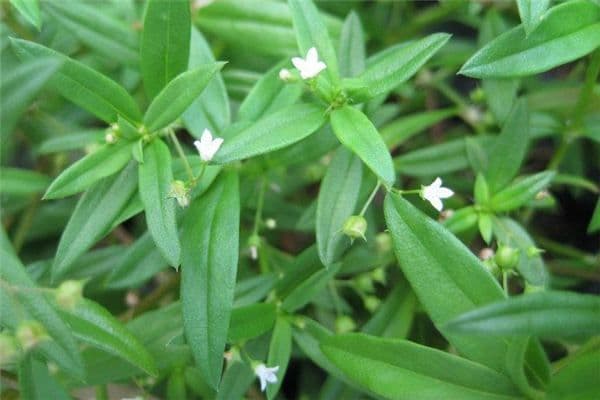
白花蛇舌草 · Bai Hua She She Cao
Herba Hedyotis Diffusae
اكتشف باي هوا شي شي تساو (Bai Hua She She Cao)، وهي عشبة قديمة من الطب الصيني التقليدي (TCM) تُبجل لخصائصها في إزالة السموم، وتحظى الآن باهتمام علمي لدورها في دعم صحة الخلايا ومكافحة الالتهاب.
15-60g 75-150g for cancers Tincture: 2-5ml
The memory of Mrs. Li often brings a smile to my face. She came to me years ago, burdened by persistent, low-grade inflammation that manifested as chronic skin flare-ups and a general feeling of being 'overheated.' She had tried various conventional approaches, but nothing seemed to fully address the underlying imbalance she felt. After a thorough assessment, I suggested an herbal formula that included Bai Hua She She Cao.
Within weeks, her skin began to clear, and she reported feeling a profound sense of cooling and calm throughout her body. It was a beautiful illustration of how ancient wisdom, when applied thoughtfully, can bring remarkable relief.
This humble herb, often overlooked in the bustling world of medicinal plants, holds a special place in Traditional Chinese Medicine (TCM). Bai Hua She She Cao (Herba Hedyotis Diffusae), also known as Hedyotis, Oldenlandia, or Snaketongue Grass Herb, is a traditional Chinese medicine herb used primarily for clearing heat, relieving fire toxins, and promoting urination.
It's an herb I often reach for when a patient’s constitution shows signs of what we call 'internal heat' or 'damp-heat'—conditions that in Western terms might manifest as inflammation, certain types of infections, or even cellular imbalances.
The name itself, 'White Flower Snake Tongue Grass,' evokes its appearance—delicate white flowers and narrow leaves—but it hints at its potent ability to counter 'snake venom' or 'fire toxins,' a TCM metaphor for severe inflammation or infection. As the esteemed 《广西中药志》 notes, Bai Hua She She Cao's 'bitter and sweet flavor, cold nature, enters the Liver and Stomach meridians, clearing heat and detoxifying, invigorating blood and relieving pain.' This classical description perfectly encapsulates its powerful actions.
In the intricate philosophy of Traditional Chinese Medicine, every herb has a unique energetic signature—its 'nature' and 'flavors'—and specific 'meridians' or energy pathways it influences. Bai Hua She She Cao is characterized by its cold nature and bitter and sweet flavors. Imagine a cooling breeze on a sweltering day; that's the 'cold nature' at work, effectively combating heat and inflammation in the body.
The 'bitter' flavor signals its detoxifying capabilities, helping to purge what TCM calls 'fire toxins'—think of acute infections, abscesses, or systemic inflammation. The 'sweet' flavor provides a harmonizing effect, making it less harsh than some purely bitter herbs.
This herb casts a wide net across the body's energetic landscape, influencing the liver, stomach, large intestine, small intestine, heart, spleen, and urinary bladder meridians. What does this mean for your health? When we talk about the liver meridian, we're considering its role in detoxification and the smooth flow of energy. The stomach and intestines speak to its impact on digestion and elimination.
Its influence on the heart meridian relates to clearing heat that might manifest as agitation or certain skin conditions, while its action on the spleen and urinary bladder supports fluid metabolism and waste removal. This broad action allows it to address systemic imbalances rather than just isolated symptoms.
In essence, Bai Hua She She Cao acts as a powerful internal cleanser. It's like a focused, gentle cleansing stream that washes away accumulated 'heat' and 'toxins,' restoring balance and promoting healthy function across multiple organ systems. This multifaceted approach is a hallmark of TCM and precisely why I find it so compelling in my integrative practice.
Many of my patients come in with symptoms of chronic inflammation—persistent redness, swelling, or even just that feeling of being perpetually 'run down.' In TCM, we interpret these as signs of 'internal heat' or 'fire toxins.' Bai Hua She She Cao excels here. Its cold nature directly addresses these patterns, helping to cool systemic inflammation. Modern science supports this, showing its potent anti-inflammatory and antioxidant effects.
This means it can help neutralize harmful free radicals and calm inflammatory pathways, much like a targeted detox support system.
Perhaps the most exciting area of contemporary research for Bai Hua She She Cao is its potential role in integrative cancer care. Traditionally, it’s been used for reducing abscesses and swellings, which in a broad sense, can be seen as addressing abnormal growths. Today, researchers are actively investigating its cytotoxic and anti-proliferative effects on various cancer cell lines.
This doesn't mean it's a standalone cure, but rather a powerful botanical that can potentially complement conventional treatments, enhancing their efficacy and supporting the body's natural defenses.
In TCM, when the body holds onto excess fluid, it's often attributed to impaired 'dampness' metabolism, sometimes linked to the spleen and kidney systems. Bai Hua She She Cao helps to 'clear heat and promote urination,' effectively acting as a gentle diuretic. This makes it valuable for conditions involving fluid retention or difficulty with urination, helping the body shed excess water and toxins naturally. It supports the urinary bladder meridian, assisting in the efficient removal of waste.
The scientific community is increasingly turning its attention to herbs like Bai Hua She She Cao, seeking to understand the molecular mechanisms behind their traditional efficacy. A significant integrative study published in Frontiers in 2024 combined real-world clinical data with experimental validation. Researchers analyzed 85,437 electronic medical records, including 318 lung adenocarcinoma (LUAD) patients, and found that Hedyotis diffusa significantly reduced proliferation and promoted apoptosis (programmed cell death) in LUAD cells, with a concentration-dependent effect.
This study also noted improved symptoms in LUAD patients, offering compelling evidence for its integrative use.
Further reinforcing these findings, a comprehensive review in the Biomedical and Pharmacology Journal in 2025 detailed Hedyotis diffusa's anticancer effects. It highlighted mechanisms such as apoptosis induction, metastasis suppression, and angiogenesis inhibition, alongside the modulation of key molecular pathways like NF-κB, STAT3, and VEGF—pathways central to cancer growth and spread. This review also pointed out its common traditional use in breast and colon cancer. For example, methylanthraquinone, a compound found in H.
Diffusa, was shown to inhibit MCF7 breast cancer cells at an EC50 of 18.62 ± 2.71 µM within 24 hours.
A scoping review and network pharmacology analysis published in PMC (2026) further clarified how Hedyotis diffusa suppresses cancer cell growth, reduces inflammation, and supports anticancer immune activity through multiple biological pathways, including PI3K-Akt, STAT3, EGFR, and SRC, identifying 94 intersecting immune- and tumor microenvironment-related targets. This provides a scientific framework for understanding its broad therapeutic potential.
Chinese researchers have also focused on its synergistic effects when combined with other herbs. Studies by Zhang Xiaowei and colleagues in 《中国临床药理学与治疗学》 (2024) demonstrated that the herbal pair of Bai Hua She She Cao and Ban Zhi Lian (Scutellaria barbata) exerts anti-gastric cancer effects by inducing apoptosis and inhibiting angiogenesis. Xu Meng and others, writing in 《南方医科大学学报》 (2025), found that ursolic acid was a core active component in this herb pair for treating liver cancer.
This combination is often employed in TCM, and these studies provide contemporary pharmacological validation for its traditional uses.
Incorporating Bai Hua She She Cao into your health regimen typically involves preparing it as a decoction or using standardized extracts. I always emphasize that the exact dosage and preparation method should be tailored to your individual needs and health goals, ideally under the guidance of a qualified integrative medicine practitioner.
This is the most traditional way to use the dried herb. For general support, you might use 15-60g of dried Bai Hua She She Cao. For more intensive applications, particularly in integrative cancer support, the dosage can range from 75-150g, but this must be done under strict professional supervision. Simply place the dried herb in a non-metallic pot, add 4-6 cups of filtered water, bring to a boil, then reduce the heat and simmer gently for 20-30 minutes.
Strain the liquid and drink it warm, usually divided into 2-3 doses throughout the day.
For those seeking a more convenient option, Bai Hua She She Cao is available as tinctures or in capsule form. A typical tincture dosage is 2-5ml, 2-3 times daily. When using capsules, follow the manufacturer's instructions, ensuring the product comes from a reputable brand that prioritizes quality and purity. These forms offer a standardized dose, which can be beneficial for consistent therapeutic effects.
In many TCM applications, Bai Hua She She Cao is often combined with other herbs, such as Ban Zhi Lian (Scutellaria barbata), to enhance its effects or to create a more balanced formula. This synergistic approach is a cornerstone of TCM formulary, allowing for a broader therapeutic impact and sometimes mitigating potential side effects of individual herbs.
As an integrative physician, my priority is always patient safety. While Bai Hua She She Cao is generally well-tolerated, its potent nature means it's not suitable for everyone, and caution is always advised. Its 'cold' energy can sometimes lead to digestive upset, such as loose stools or stomach discomfort, especially in individuals with a naturally 'cold' constitution or pre-existing digestive weaknesses. If you experience these symptoms, reducing the dosage or discontinuing use is recommended.
Use caution during pregnancy. I strongly advise against using Bai Hua She She Cao during pregnancy or breastfeeding. There is insufficient definitive safety data for these critical periods, and out of an abundance of caution, it is best to avoid it entirely to protect both the mother and the developing child.
While specific, large-scale human studies on Bai Hua She She Cao's interactions with conventional medications are still limited, it’s a crucial area for discussion. Many herbs, especially those with anti-inflammatory or detoxification properties, can theoretically interact with medications. One particular area of concern often raised for many botanicals is their potential to affect blood thinners (anticoagulants or antiplatelet drugs like warfarin, aspirin, or clopidogrel).
If you are taking any such medication, or indeed any prescription medication, you must consult with your prescribing physician or an integrative medical doctor before incorporating Bai Hua She She Cao into your regimen. This ensures your safety and prevents potential adverse effects or altered medication efficacy.
Bai Hua She She Cao stands as a powerful testament to the enduring wisdom of Traditional Chinese Medicine, now increasingly illuminated by the rigorous lens of modern scientific inquiry. As a physician who bridges these two worlds, I find immense value in herbs like this—botanicals that offer profound detoxification, anti-inflammatory, and cellular support, grounded in centuries of empirical observation and fortified by contemporary research.
It’s a reminder that our bodies possess an incredible capacity for healing when given the right tools, whether those tools are drawn from ancient texts or cutting-edge laboratories. Understanding and respecting both traditions allows us to create truly holistic and effective paths to wellness, helping each individual find their unique balance.
My hope is that by shedding light on herbs like Bai Hua She She Cao, we empower more people to explore these integrative pathways to health with confidence and discernment.
The memory of Mrs. Li often brings a smile to my face. She came to me years ago, burdened by persistent, low-grade inflammation that manifested as chronic skin flare-ups and a general feeling of being 'overheated.' She had tried various conventional approaches, but nothing seemed to fully address the underlying imbalance she felt. After a thorough assessment, I suggested an herbal formula that included Bai Hua She She Cao.
Within weeks, her skin began to clear, and she reported feeling a profound sense of cooling and calm throughout her body. It was a beautiful illustration of how ancient wisdom, when applied thoughtfully, can bring remarkable relief.
This humble herb, often overlooked in the bustling world of medicinal plants, holds a special place in Traditional Chinese Medicine (TCM). Bai Hua She She Cao (Herba Hedyotis Diffusae), also known as Hedyotis, Oldenlandia, or Snaketongue Grass Herb, is a traditional Chinese medicine herb used primarily for clearing heat, relieving fire toxins, and promoting urination.
It's an herb I often reach for when a patient’s constitution shows signs of what we call 'internal heat' or 'damp-heat'—conditions that in Western terms might manifest as inflammation, certain types of infections, or even cellular imbalances.
The name itself, 'White Flower Snake Tongue Grass,' evokes its appearance—delicate white flowers and narrow leaves—but it hints at its potent ability to counter 'snake venom' or 'fire toxins,' a TCM metaphor for severe inflammation or infection. As the esteemed 《广西中药志》 notes, Bai Hua She She Cao's 'bitter and sweet flavor, cold nature, enters the Liver and Stomach meridians, clearing heat and detoxifying, invigorating blood and relieving pain.' This classical description perfectly encapsulates its powerful actions.
In the intricate philosophy of Traditional Chinese Medicine, every herb has a unique energetic signature—its 'nature' and 'flavors'—and specific 'meridians' or energy pathways it influences. Bai Hua She She Cao is characterized by its cold nature and bitter and sweet flavors. Imagine a cooling breeze on a sweltering day; that's the 'cold nature' at work, effectively combating heat and inflammation in the body.
The 'bitter' flavor signals its detoxifying capabilities, helping to purge what TCM calls 'fire toxins'—think of acute infections, abscesses, or systemic inflammation. The 'sweet' flavor provides a harmonizing effect, making it less harsh than some purely bitter herbs.
This herb casts a wide net across the body's energetic landscape, influencing the liver, stomach, large intestine, small intestine, heart, spleen, and urinary bladder meridians. What does this mean for your health? When we talk about the liver meridian, we're considering its role in detoxification and the smooth flow of energy. The stomach and intestines speak to its impact on digestion and elimination.
Its influence on the heart meridian relates to clearing heat that might manifest as agitation or certain skin conditions, while its action on the spleen and urinary bladder supports fluid metabolism and waste removal. This broad action allows it to address systemic imbalances rather than just isolated symptoms.
In essence, Bai Hua She She Cao acts as a powerful internal cleanser. It's like a focused, gentle cleansing stream that washes away accumulated 'heat' and 'toxins,' restoring balance and promoting healthy function across multiple organ systems. This multifaceted approach is a hallmark of TCM and precisely why I find it so compelling in my integrative practice.
Many of my patients come in with symptoms of chronic inflammation—persistent redness, swelling, or even just that feeling of being perpetually 'run down.' In TCM, we interpret these as signs of 'internal heat' or 'fire toxins.' Bai Hua She She Cao excels here. Its cold nature directly addresses these patterns, helping to cool systemic inflammation. Modern science supports this, showing its potent anti-inflammatory and antioxidant effects.
This means it can help neutralize harmful free radicals and calm inflammatory pathways, much like a targeted detox support system.
Perhaps the most exciting area of contemporary research for Bai Hua She She Cao is its potential role in integrative cancer care. Traditionally, it’s been used for reducing abscesses and swellings, which in a broad sense, can be seen as addressing abnormal growths. Today, researchers are actively investigating its cytotoxic and anti-proliferative effects on various cancer cell lines.
This doesn't mean it's a standalone cure, but rather a powerful botanical that can potentially complement conventional treatments, enhancing their efficacy and supporting the body's natural defenses.
In TCM, when the body holds onto excess fluid, it's often attributed to impaired 'dampness' metabolism, sometimes linked to the spleen and kidney systems. Bai Hua She She Cao helps to 'clear heat and promote urination,' effectively acting as a gentle diuretic. This makes it valuable for conditions involving fluid retention or difficulty with urination, helping the body shed excess water and toxins naturally. It supports the urinary bladder meridian, assisting in the efficient removal of waste.
The scientific community is increasingly turning its attention to herbs like Bai Hua She She Cao, seeking to understand the molecular mechanisms behind their traditional efficacy. A significant integrative study published in Frontiers in 2024 combined real-world clinical data with experimental validation. Researchers analyzed 85,437 electronic medical records, including 318 lung adenocarcinoma (LUAD) patients, and found that Hedyotis diffusa significantly reduced proliferation and promoted apoptosis (programmed cell death) in LUAD cells, with a concentration-dependent effect.
This study also noted improved symptoms in LUAD patients, offering compelling evidence for its integrative use.
Further reinforcing these findings, a comprehensive review in the Biomedical and Pharmacology Journal in 2025 detailed Hedyotis diffusa's anticancer effects. It highlighted mechanisms such as apoptosis induction, metastasis suppression, and angiogenesis inhibition, alongside the modulation of key molecular pathways like NF-κB, STAT3, and VEGF—pathways central to cancer growth and spread. This review also pointed out its common traditional use in breast and colon cancer. For example, methylanthraquinone, a compound found in H.
Diffusa, was shown to inhibit MCF7 breast cancer cells at an EC50 of 18.62 ± 2.71 µM within 24 hours.
A scoping review and network pharmacology analysis published in PMC (2026) further clarified how Hedyotis diffusa suppresses cancer cell growth, reduces inflammation, and supports anticancer immune activity through multiple biological pathways, including PI3K-Akt, STAT3, EGFR, and SRC, identifying 94 intersecting immune- and tumor microenvironment-related targets. This provides a scientific framework for understanding its broad therapeutic potential.
Chinese researchers have also focused on its synergistic effects when combined with other herbs. Studies by Zhang Xiaowei and colleagues in 《中国临床药理学与治疗学》 (2024) demonstrated that the herbal pair of Bai Hua She She Cao and Ban Zhi Lian (Scutellaria barbata) exerts anti-gastric cancer effects by inducing apoptosis and inhibiting angiogenesis. Xu Meng and others, writing in 《南方医科大学学报》 (2025), found that ursolic acid was a core active component in this herb pair for treating liver cancer.
This combination is often employed in TCM, and these studies provide contemporary pharmacological validation for its traditional uses.
Incorporating Bai Hua She She Cao into your health regimen typically involves preparing it as a decoction or using standardized extracts. I always emphasize that the exact dosage and preparation method should be tailored to your individual needs and health goals, ideally under the guidance of a qualified integrative medicine practitioner.
This is the most traditional way to use the dried herb. For general support, you might use 15-60g of dried Bai Hua She She Cao. For more intensive applications, particularly in integrative cancer support, the dosage can range from 75-150g, but this must be done under strict professional supervision. Simply place the dried herb in a non-metallic pot, add 4-6 cups of filtered water, bring to a boil, then reduce the heat and simmer gently for 20-30 minutes.
Strain the liquid and drink it warm, usually divided into 2-3 doses throughout the day.
For those seeking a more convenient option, Bai Hua She She Cao is available as tinctures or in capsule form. A typical tincture dosage is 2-5ml, 2-3 times daily. When using capsules, follow the manufacturer's instructions, ensuring the product comes from a reputable brand that prioritizes quality and purity. These forms offer a standardized dose, which can be beneficial for consistent therapeutic effects.
In many TCM applications, Bai Hua She She Cao is often combined with other herbs, such as Ban Zhi Lian (Scutellaria barbata), to enhance its effects or to create a more balanced formula. This synergistic approach is a cornerstone of TCM formulary, allowing for a broader therapeutic impact and sometimes mitigating potential side effects of individual herbs.
As an integrative physician, my priority is always patient safety. While Bai Hua She She Cao is generally well-tolerated, its potent nature means it's not suitable for everyone, and caution is always advised. Its 'cold' energy can sometimes lead to digestive upset, such as loose stools or stomach discomfort, especially in individuals with a naturally 'cold' constitution or pre-existing digestive weaknesses. If you experience these symptoms, reducing the dosage or discontinuing use is recommended.
Use caution during pregnancy. I strongly advise against using Bai Hua She She Cao during pregnancy or breastfeeding. There is insufficient definitive safety data for these critical periods, and out of an abundance of caution, it is best to avoid it entirely to protect both the mother and the developing child.
While specific, large-scale human studies on Bai Hua She She Cao's interactions with conventional medications are still limited, it’s a crucial area for discussion. Many herbs, especially those with anti-inflammatory or detoxification properties, can theoretically interact with medications. One particular area of concern often raised for many botanicals is their potential to affect blood thinners (anticoagulants or antiplatelet drugs like warfarin, aspirin, or clopidogrel).
If you are taking any such medication, or indeed any prescription medication, you must consult with your prescribing physician or an integrative medical doctor before incorporating Bai Hua She She Cao into your regimen. This ensures your safety and prevents potential adverse effects or altered medication efficacy.
Bai Hua She She Cao stands as a powerful testament to the enduring wisdom of Traditional Chinese Medicine, now increasingly illuminated by the rigorous lens of modern scientific inquiry. As a physician who bridges these two worlds, I find immense value in herbs like this—botanicals that offer profound detoxification, anti-inflammatory, and cellular support, grounded in centuries of empirical observation and fortified by contemporary research.
It’s a reminder that our bodies possess an incredible capacity for healing when given the right tools, whether those tools are drawn from ancient texts or cutting-edge laboratories. Understanding and respecting both traditions allows us to create truly holistic and effective paths to wellness, helping each individual find their unique balance.
My hope is that by shedding light on herbs like Bai Hua She She Cao, we empower more people to explore these integrative pathways to health with confidence and discernment.
هذه المعلومات لأغراض تعليمية فقط ولا تُعد نصيحة طبية. استشر دائماً ممارساً صحياً مؤهلاً قبل استخدام أي علاج عشبي.